Farhan Pambudi
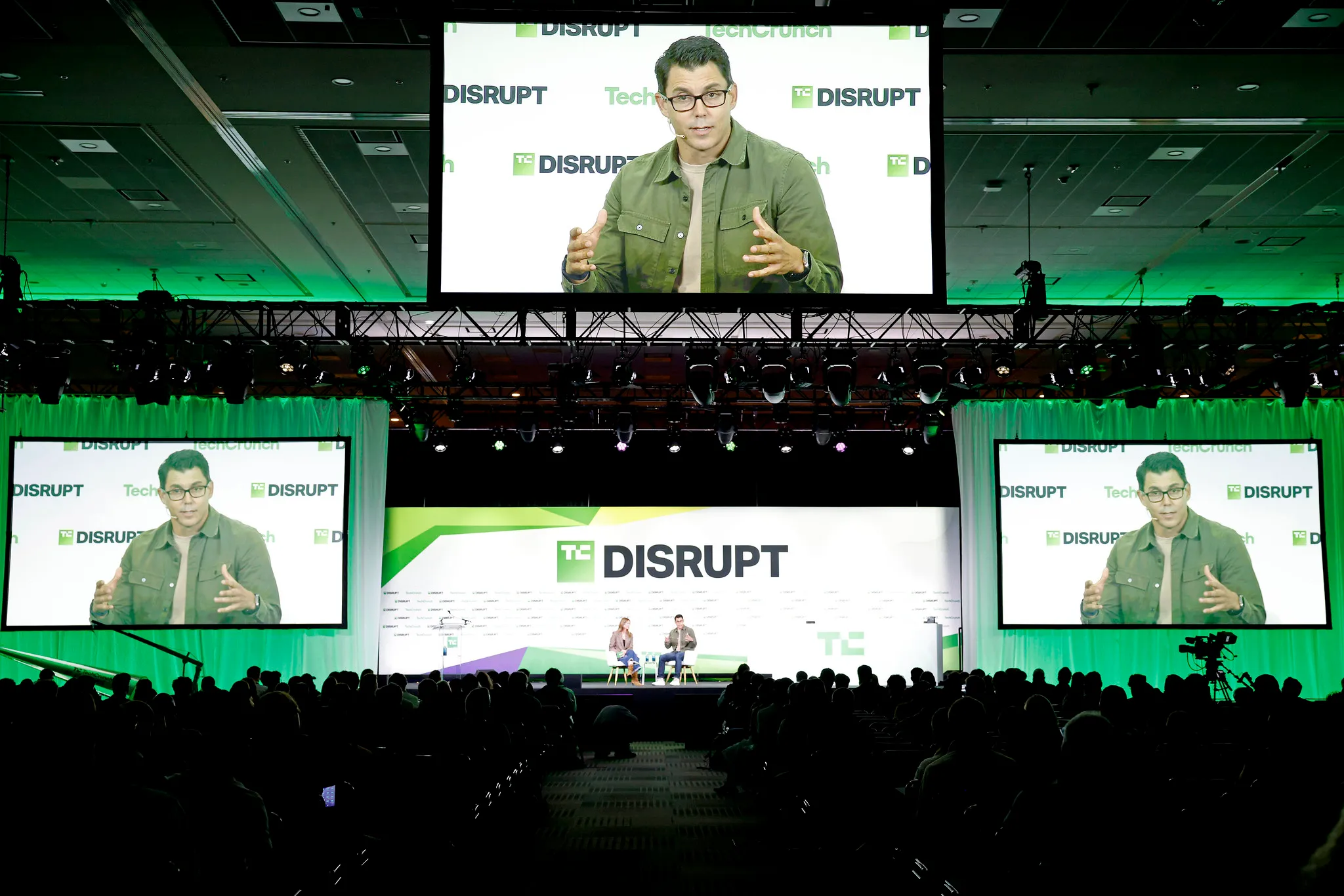
The second day of TechCrunch Disrupt 2026 commenced at San Francisco’s Moscone West, drawing a global community of more than 10,000 founders, investors, and technology leaders to the heart of the world’s primary innovation hub. As the flagship event entered its middle phase, the focus shifted from broad industry overviews to the granular realities of scaling startups in a post-generative AI landscape. With over 300 startups represented in the Expo Hall and a rigorous schedule of live pitches and high-stakes stage sessions, Day 2 served as a barometer for the current state of the global venture ecosystem. The day’s proceedings were characterized by a transition from theoretical AI applications to physical implementations, highlighted by robotics demonstrations and deep-dive analyses into the "sovereign AI" movement.
Strategic Networking and the Expo Hall Ecosystem
The doors opened at 8:00 a.m. for registration and badge pickup, with the Level 1 lobby serving as the primary entry point for a diverse cohort of attendees. The Expo Hall on Level 2 remained the center of gravity for tangible innovation, featuring a curated selection of 300+ startups ranging from early-stage seed ventures to late-stage solution providers. This year’s layout emphasized cross-pollination, encouraging investors and corporate partners to explore technologies outside their immediate verticals.

Central to the networking experience was the deployment of AI-powered matchmaking tools through the TechCrunch Events app. This technology facilitated thousands of targeted connections, allowing founders to bypass traditional gatekeepers and engage directly with venture capitalists and potential enterprise customers. The Networking Lounge, supported by Signify Business Cash from Wells Fargo, operated at full capacity, underscoring the event’s role as a critical venue for deal-making. For those with specialized access, the Deal Flow Café provided a secluded environment for high-level negotiations between Founder and Investor pass holders, a feature designed to streamline the fundraising process during a period of increased market scrutiny.
The Disrupt Stage: Public Safety and Venture Philosophy
The morning’s headline sessions on the Disrupt Stage provided a dual focus on the societal implications of surveillance technology and the internal philosophies of top-tier venture firms. Garrett Langley, CEO of Flock Safety, led a provocative discussion on the intersection of AI, surveillance, and public safety. Langley’s presentation addressed the growing reliance on automated license plate recognition and facial analytics by law enforcement agencies, sparking a broader conversation about the balance between community security and individual privacy rights.
In a rare public appearance, the full partnership of Benchmark—including Jack Altman, Peter Fenton, Chetan Puttagunta, Everett Randle, and Eric Vishria—shared the stage to discuss "What We Believe Now." The partners provided a transparent look at their current investment thesis, noting a shift toward companies that demonstrate "capital efficiency over growth-at-all-costs." This session was particularly significant given Benchmark’s historical reputation for backing era-defining companies like Uber and Twitter. Their collective stance suggested that the next breakout startups will likely emerge from sectors that integrate AI into existing industrial workflows rather than purely digital consumer platforms.

Furthering the technical discourse, Anna Goldie and Azalia Mirhoseini of Ricursive Intelligence explored the feedback loop of machine learning, specifically focusing on the moment AI begins to design its own hardware. This technical evolution marks a significant milestone in computing, potentially accelerating the development of specialized chips that could outperform current general-purpose GPUs.
Startup Battlefield 200: The Search for the Next Unicorn
The Startup Battlefield 200 continued its high-intensity competition on Day 2, focusing on the Health Tech, Life Sciences, Enterprise, and Security sectors. As one of the most prestigious startup competitions globally, the Battlefield provides a platform for 200 hand-picked companies to pitch before a panel of expert judges. Today’s contenders faced rigorous questioning regarding their unit economics, intellectual property moats, and scalability.
Historically, the Startup Battlefield has served as a launchpad for companies that have collectively raised billions in follow-on funding. The 2026 cohort appears heavily weighted toward bio-manufacturing and "zero-trust" security architectures. The finalists are vying for the coveted Disrupt Cup and a $100,000 equity-free cash prize. Industry analysts observing the pitches noted that the quality of "day zero" startups has improved significantly as founders adapt to the more disciplined funding environment of 2026.

Real World AI: Robotics and Physical Deployment
One of the most anticipated segments of the day occurred on the Real World AI Stage, where the discussion moved from the cloud to the physical environment. Raquel Urtasun of Waabi, Nathan Michael of Shield AI, and Mikell Taylor of General Motors participated in a panel titled "Building AI Systems When Failure Is Not an Option." The session highlighted the unique challenges of deploying autonomous systems in mission-critical environments, such as defense and urban transportation, where software errors can have life-threatening consequences.
The afternoon featured a series of live robot demonstrations that captivated the audience. Aaron Edsinger of Hello Robot introduced the "Stretch 4," a mobile manipulator designed for domestic and light industrial tasks. Unlike highly edited promotional videos often seen on social media, the live demo showcased the robot’s ability to navigate unpredictable human environments in real-time. This was followed by a joint appearance by Jonathan Hurst of Agility Robotics and "Digit," a bipedal humanoid robot. The demonstration focused on Digit’s ability to handle logistics tasks in warehouse settings, signaling that humanoid robots are moving from R&D labs into commercial production.
Les Karpas of Nvidia provided critical context for these developments, arguing that robotics is currently awaiting its "ChatGPT moment"—a point where generalized models allow robots to perform tasks they haven’t been explicitly programmed for. Karpas suggested that the convergence of massive simulation data and improved edge computing is bringing the industry closer to this tipping point than ever before.

The Builders Stage: Navigating the 2027 Funding Cycle
On the Builders Stage, the focus was squarely on the practicalities of startup survival and growth. A panel featuring representatives from Index Ventures, Peak XV, and Bessemer Venture Partners discussed "The Series A in 2027." The consensus among the speakers was that while seed funding remains accessible for AI-native companies, the bridge to Series A has become significantly steeper. Investors are now looking for "product-market resonance" rather than just "product-market fit," requiring founders to show repeatable sales cycles and clear paths to profitability.
Other notable sessions included "The Zero-to-1K Playbook," where leaders from GV (Google Ventures) and Gamma discussed how to acquire the first 1,000 customers without a traditional marketing budget. This session emphasized the importance of community-led growth and founder-led sales in the early stages of a company’s lifecycle. Additionally, the "AI Disruptors 60" reveal highlighted the companies that are successfully moving beyond simple chatbot interfaces to create complex "agentic" systems capable of autonomous decision-making in the enterprise.
Global Perspectives: Sovereign AI and Institutional Trends
The afternoon breakout sessions introduced a geopolitical dimension to the conference. A session on "Sovereign AI" featured representatives from Turkcell and the Office of the Presidency of the Republic of Türkiye, alongside Hewlett Packard Enterprise. The discussion centered on the growing trend of nations seeking to build their own independent AI infrastructure to protect national data and foster local innovation. This movement toward localized intelligence stacks represents a shift away from the centralized dominance of a few global tech giants.

For the investor community, the StrictlyVC track offered exclusive insights into the changing landscape of limited partners (LPs). Experts from Truebridge Capital and LGT Capital Partners discussed how family offices are increasingly bypassing traditional VC funds to make direct investments in startups. This trend is reshaping the venture capital hierarchy, forcing established firms to provide more value-add services to remain competitive.
Chronology of Day 2: Key Milestones
- 08:00 – 09:00: Doors open; registration and initial networking at Moscone West.
- 09:30 – 10:30: Disrupt Stage: Flock Safety and Benchmark Partnership sessions.
- 11:00 – 12:30: Startup Battlefield 200: Health Tech and Life Sciences preliminary rounds.
- 13:00 – 14:30: Real World AI Stage: Live robotics demonstrations (Hello Robot, Agility Robotics).
- 15:00 – 16:00: Builders Stage: Series A 2027 outlook and the "Zero-to-1K" playbook.
- 16:00 – 17:00: StrictlyVC: Family office and LP priority discussions.
- 17:00 – Late: Side events and mixers (Ecosystem Mixer, The Afterburn, Liquid Assets).
Analysis: The Maturation of the AI Cycle
The activities on Day 2 of TechCrunch Disrupt 2026 suggest a significant maturation of the artificial intelligence sector. While the 2024 and 2025 iterations of the event were dominated by the novelty of Large Language Models (LLMs), the 2026 conference is defined by "Real World AI." This transition involves the integration of intelligence into hardware, the rise of agentic workflows in the enterprise, and a renewed focus on the security and ethics of autonomous systems.
The presence of heavyweights like Nvidia and Benchmark, alongside emerging players in the "sovereign AI" space, indicates that the industry is moving toward a more fragmented but robust global ecosystem. For founders, the message of Day 2 was clear: the era of "growth at any cost" has been replaced by an era of "intelligent efficiency." As the conference moves into its final day, the focus will likely turn toward the announcement of the Startup Battlefield winner and the long-term outlook for tech IPOs in late 2026 and 2027.

The event continues through October 15, with Day 3 expected to feature the final rounds of the Startup Battlefield and closing keynotes on the future of decentralized computing. Attendees can still secure passes at the registration desk or online, with specialized Expo+ and Conference passes available to facilitate different levels of access to the Moscone West facility.