Farhan Pambudi
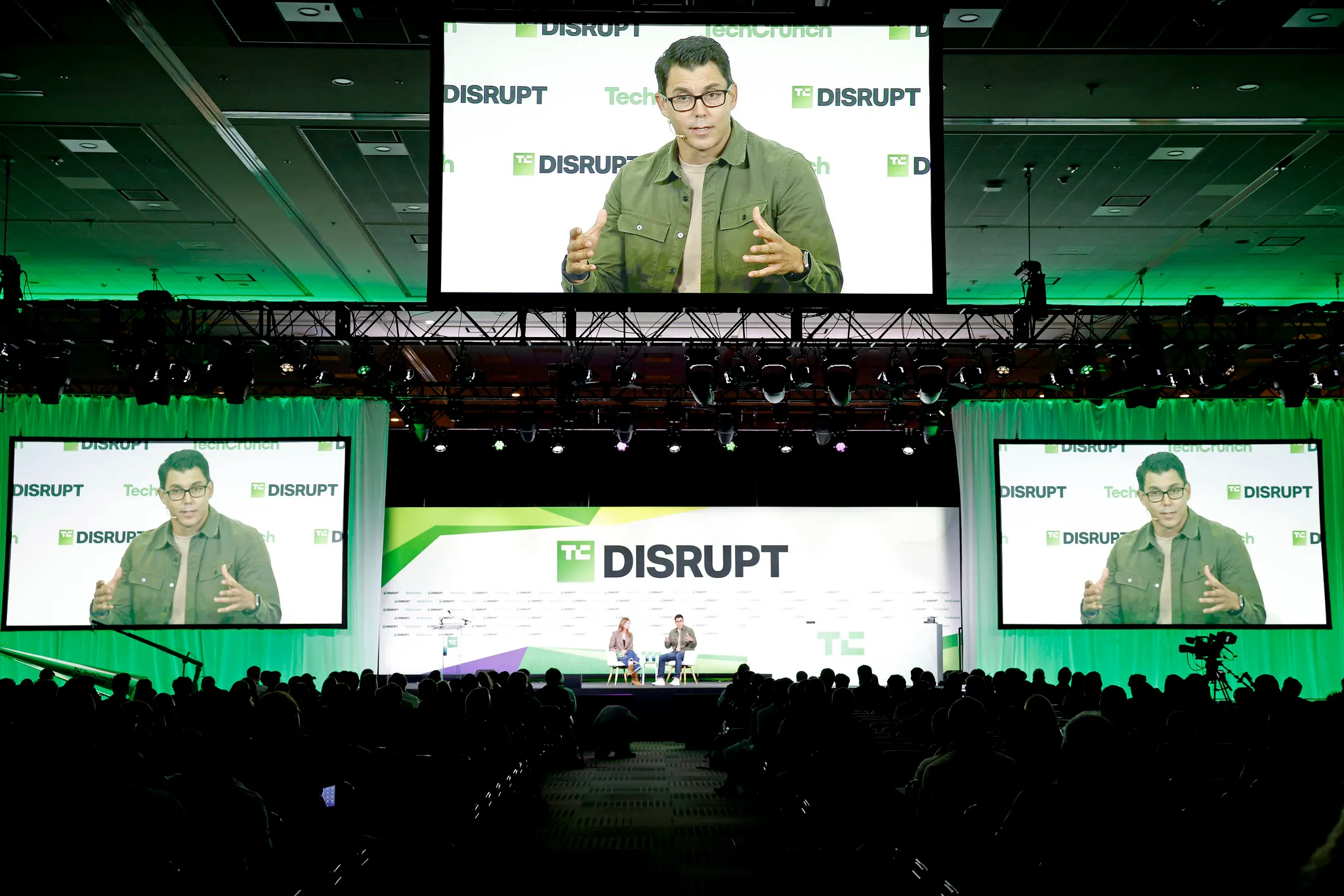
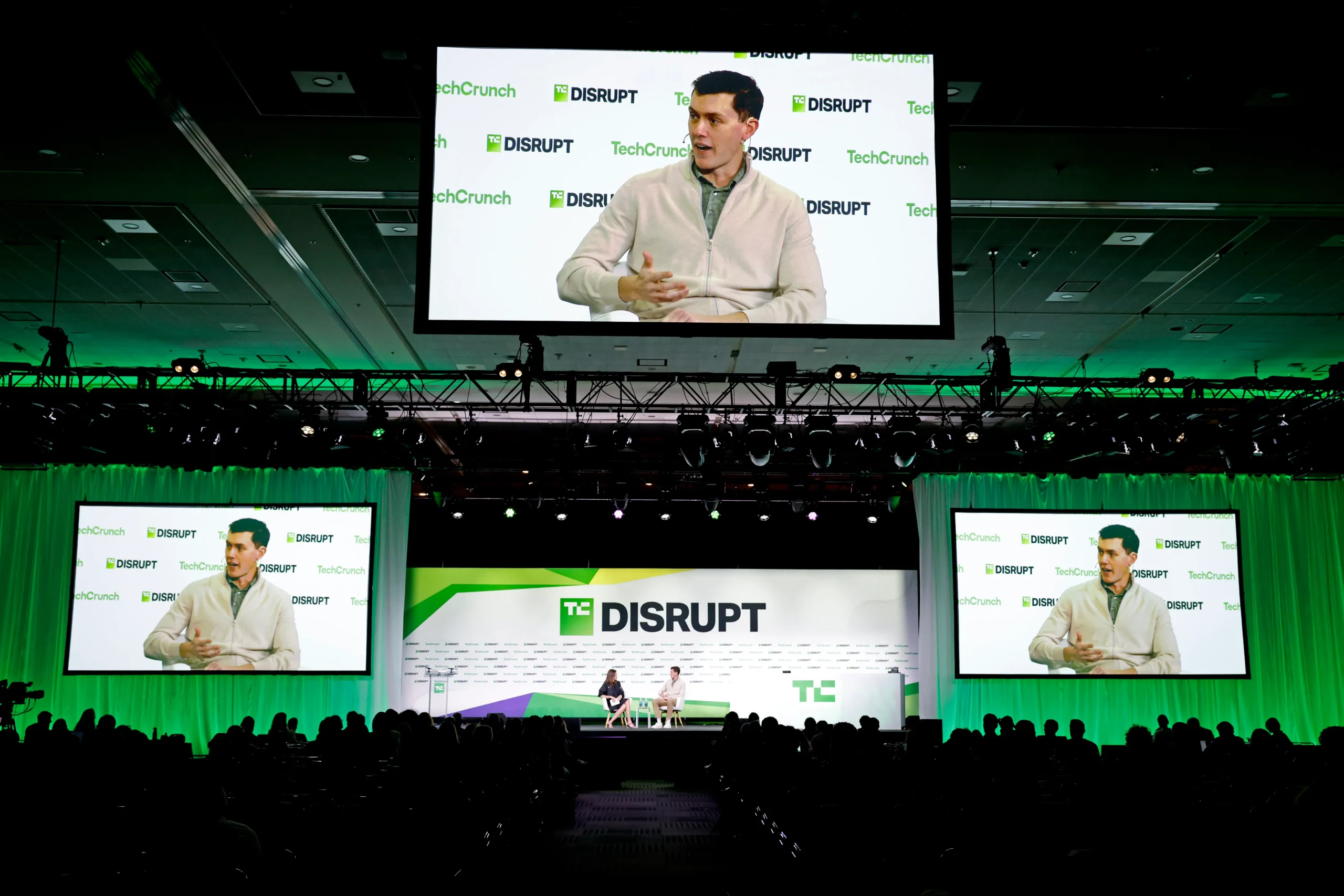
TechCrunch Disrupt 2026 continued its three-day residency at San Francisco’s Moscone West on Wednesday, marking the second day of what has become the year’s most pivotal gathering for the global startup ecosystem. With an estimated attendance exceeding 10,000 founders, investors, and technology leaders, the event’s second day shifted its focus toward the practical integration of artificial intelligence into physical environments, the evolving mechanics of venture capital, and the emergence of "Sovereign AI" as a geopolitical and economic priority. As the tech industry moves past the initial hype of generative AI, Day 2 served as a showcase for "agentic" systems and hardware-software synergy, reflecting a market that increasingly demands tangible utility and sustainable growth models.
The day’s proceedings underscored a significant shift in the Silicon Valley narrative. While previous years focused on digital-first SaaS models, the 2026 agenda highlights a return to "hard tech" and "deep tech," where AI interacts with the real world through robotics, surveillance, and orbital infrastructure. This transition is set against a backdrop of a more disciplined investment climate, where the criteria for Series A and Series B rounds have tightened significantly compared to the early 2020s.

The Evolution of the Startup Battlefield 200
A central pillar of the day was the continuation of the Startup Battlefield 200, the world-renowned competition where 200 hand-picked startups vie for the Disrupt Cup and a $100,000 equity-free grand prize. Day 2 sessions focused heavily on the Health Tech, Life Sciences, Enterprise, and Security sectors. The 2026 cohort reflects a sophisticated trend in biotechnology, with several contenders presenting AI-driven platforms for drug discovery and organ-on-a-chip technologies.
In the Enterprise and Security tracks, the emphasis moved away from simple threat detection toward "autonomous defense" systems. These startups are pitching solutions that can not only identify breaches in real-time but also execute counter-measures without human intervention. For investors, the Battlefield serves as a high-stakes litmus test for market viability. Historical data suggests that Battlefield alumni have collectively raised billions in follow-on funding, making these pitches a primary destination for scouts from Tier-1 venture firms.
Strategic Insights from the Disrupt Stage
The Disrupt Stage hosted some of the most anticipated conversations of the conference, featuring a rare full-partnership appearance by Benchmark. Partners Jack Altman, Peter Fenton, Chetan Puttagunta, Everett Randle, and Eric Vishria took the stage for a session titled "What We Believe Now." The discussion offered a transparent look at the firm’s current investment thesis, which emphasizes lean operations and the pursuit of "outlier" founders over momentum-based investing.

The morning also featured Garrett Langley, CEO of Flock Safety, who addressed the controversial but rapidly growing intersection of AI, surveillance, and public safety. Langley’s discussion on the future of municipal surveillance highlighted the tension between technological efficacy and civil liberties—a theme that resonated throughout the day as AI moves into the public square.
Later, Ricursive Intelligence’s Anna Goldie and Azalia Mirhoseini provided a deep dive into the technical frontiers of silicon design. Their session, "When AI Starts Designing Its Own Hardware," explored the feedback loop where machine learning models are used to optimize the very chips they run on. This "AI-for-AI" development cycle is seen by analysts as the only way to keep pace with the exponential demand for compute power while managing energy constraints.
Real World AI: From Chatbots to Physical Agents
One of the most crowded areas of Moscone West was the Real World AI Stage, which focused on the transition of intelligence from screens to the physical world. The day featured several live demonstrations, most notably the "Stretch" robot by Hello Robot. Unlike the highly edited demo reels common on social media, the live showcase by Aaron Edsinger demonstrated the robot’s ability to navigate unpredictable domestic environments, a key milestone for the commercialization of home-care robotics.

Nvidia’s Les Karpas also took the stage to explain why robotics is currently awaiting its "ChatGPT moment." According to Karpas, while large language models (LLMs) have mastered text, the "world model" for physical interaction requires a different scale of data and simulation. This session highlighted Nvidia’s role not just as a chipmaker, but as a foundational platform provider for the next generation of autonomous machines.
The afternoon sessions on this stage took a turn toward the celestial, with experts from The Aerospace Corporation and Portal Space Systems discussing the deployment of AI in orbital infrastructure. The consensus among panelists was that the "Edge" of computing has now extended into low Earth orbit, where AI is used to process satellite data in-situ to reduce latency for terrestrial applications.
Navigating the 2026-2027 Funding Landscape
On the Builders Stage, the conversation was decidedly more pragmatic, focusing on the financial health of the startup ecosystem. A panel featuring partners from Index Ventures, Peak XV, and Bessemer Venture Partners discussed "The Series A in 2027," providing a forward-looking roadmap for founders currently in the seed stage. The panelists noted that the "entry fee" for institutional capital has risen; investors are now looking for clear paths to $100 million in Annual Recurring Revenue (ARR) and sustainable unit economics from the outset.

The "How to Win When You’re Not Building AI" session provided a necessary counterpoint to the day’s dominant theme. Investors from General Catalyst and Baillie Gifford argued that while AI is a horizontal enabler, there remains significant "alpha" in solving fundamental problems in logistics, energy, and manufacturing that do not rely solely on generative models.
Sovereign AI and Global Infrastructure
A new and significant addition to the 2026 agenda was the focus on "Sovereign AI." This concept, which involves nations building their own localized AI infrastructure to ensure data privacy and national security, was the subject of a high-level breakout session. Representatives from Turkcell, Hewlett Packard Enterprise, and the Office of the Presidency of the Republic of Türkiye discussed the geopolitical implications of AI.
The shift toward Sovereign AI represents a move away from the centralized cloud dominance of a few Silicon Valley giants. For startups, this opens new markets as governments seek local partners to build out national "intelligence grids." Analysts suggest that the next decade of tech growth may be defined by these regional ecosystems rather than a single globalized platform.

Networking and the "Deal Flow Café"
Beyond the stages, the Expo Hall hosted over 300 startups, providing a hands-on look at the technologies discussed in the keynotes. The networking component of Disrupt remained a primary draw, facilitated by an AI-powered matchmaking app that coordinated thousands of one-on-one meetings. The "Deal Flow Café," exclusive to Founder and Investor pass holders, served as the nerve center for term-sheet negotiations and partnership discussions.
The presence of major corporate partners, including Wells Fargo and AWS, signaled the continued interest of traditional industry in the startup space. These incumbents are no longer just service providers but are actively looking for acquisition targets and strategic partners to help them navigate their own AI transformations.
Chronology of Day 2 Events
- 08:00 AM: Registration opens; Expo Hall begins showcasing 300+ startups.
- 09:30 AM: Startup Battlefield 200 kicks off with Health Tech and Life Sciences.
- 10:30 AM: Benchmark Partnership takes the Disrupt Stage to outline the 2026 investment thesis.
- 12:00 PM: Live robotics demonstrations begin on the Real World AI Stage.
- 01:30 PM: Builders Stage hosts sessions on the Series A landscape and "Zero-to-1K" customer acquisition.
- 03:00 PM: StrictlyVC (Investor-only) sessions begin, focusing on the IPO market and Family Offices.
- 05:00 PM: Expo Hall closes; transition to official Side Events across San Francisco.
Implications for the Tech Industry
The developments on Day 2 of TechCrunch Disrupt 2026 suggest an industry in a state of mature transition. The "move fast and break things" ethos has been replaced by a more calculated "build for reality" approach. The heavy focus on hardware, robotics, and sovereign infrastructure indicates that the next phase of the digital revolution will be defined by how intelligence is embedded into the physical and political fabric of society.

For founders, the message from Disrupt 2026 is clear: the bar for excellence has been raised. Capital is available, but it is reserved for those who can demonstrate not just technical novelty, but structural resilience and a clear understanding of the complex regulatory and physical environments in which they operate. As the conference moves into its final day, the industry looks toward the Startup Battlefield finals to see which of these visions will be crowned the leader of the next generation.