Gilang Muhammad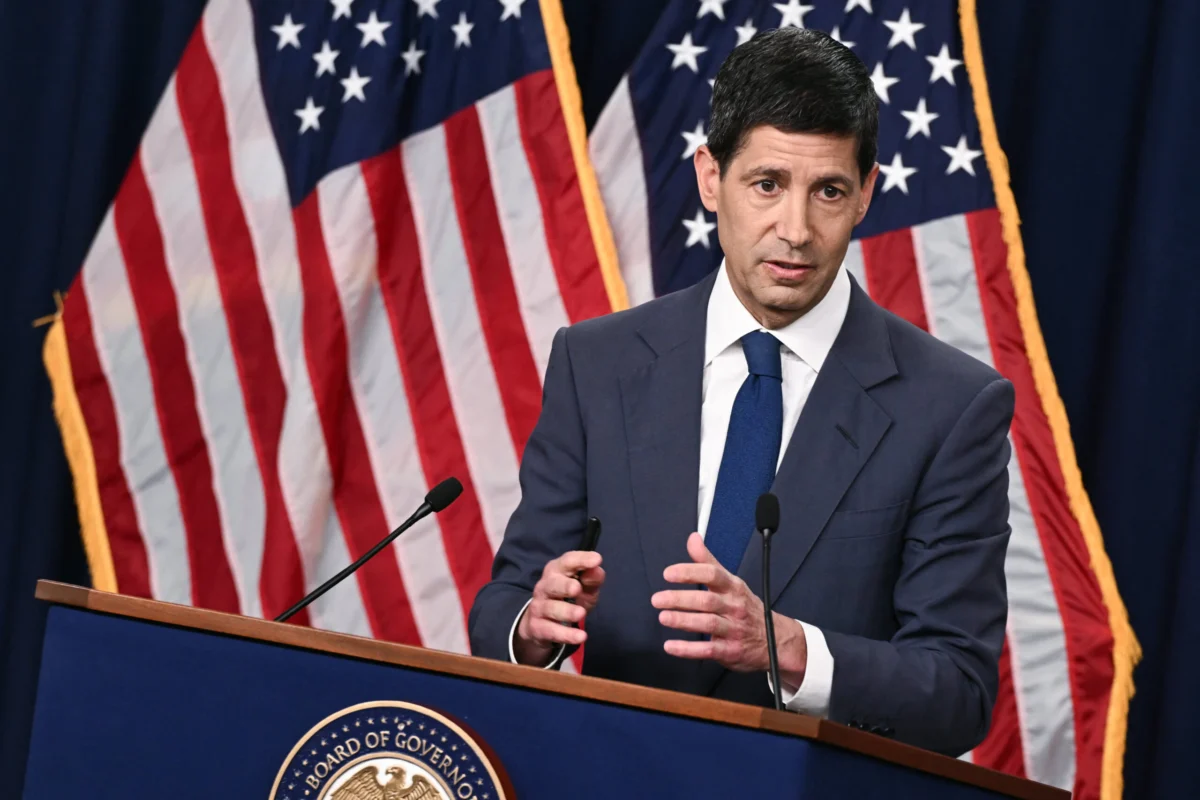
Federal Reserve Chairman Kevin Warsh delivered a closely watched address at the annual Jackson Hole Economic Symposium on Friday, expressing significant concern over persistent inflation and strongly implying that further interest rate increases might be necessary if price pressures do not abate more decisively. His remarks, devoid of explicit forward guidance or a clear reaction function, nevertheless resonated with a hawkish tone, prompting a notable recalibration of market expectations for future monetary policy.
Chairman Warsh’s address, titled "In Our Time," carefully navigated the complexities of current economic conditions while outlining his evolving philosophy for Federal Reserve communications. While acknowledging some recent improvements in inflation readings, he stated unequivocally, "while this summer’s [inflation] readings were better than expected, they do not tell me that underlying trends have meaningfully improved." This stark assessment underscored the central bank’s commitment to its primary mandate of price stability, suggesting that the fight against inflation is far from over. "We must be confident that underlying inflation is moving to our objective, clearly and at sufficient speed. Otherwise, we have work to do. That’s our job, our mandate and our charge to keep," Warsh affirmed, signaling a willingness to act decisively.
Immediate Market Repercussions and Analyst Reactions
Markets reacted swiftly to the Chairman’s pointed comments. Stock market indexes, after an initial period of digestion following the 10 a.m. ET speech, climbed modestly, indicating a measure of relief that Warsh did not signal an immediate aggressive hike, but also an acceptance of the likely trajectory. However, the bond market, often a more direct barometer of interest rate expectations, saw substantial movements. The policy-sensitive 2-year Treasury note yield soared nearly 8 basis points, or 0.08 percentage point, reaching 4.31% – its highest level since late July. This sharp increase reflects traders’ revised outlook, pricing in a higher probability of tighter monetary policy in the near term.
According to the CME Group’s FedWatch tool, the probability of a rate hike at the upcoming September policy meeting surged to 55.7%, a significant leap of approximately 20 percentage points from just a day prior. This dramatic shift highlights how Warsh’s carefully chosen words, despite their deliberate ambiguity regarding specific policy actions, were interpreted as a strong signal of the Fed’s prevailing hawkish bias.
Economists were quick to interpret the implications. Heather Long, chief economist at Navy Federal Credit Union, commented, "Warsh ‘opened the door to a Fed rate hike. A hike probably won’t come in September, but it will by October or December." She further emphasized, "Warsh explicitly said this summer’s encouraging inflation readings don’t indicate ‘meaningful’ improvement on inflation. Bond markets reacted swiftly by pricing in a hike." This sentiment was echoed by other analysts, who noted that while the Chairman avoided pre-committing to specific actions, his emphasis on the need for "sufficient speed" in inflation reduction was a clear indication of potential future tightening.
Jackson Hole: A Historical Platform for Monetary Policy Shifts
The Jackson Hole Economic Symposium, hosted annually by the Federal Reserve Bank of Kansas City in Wyoming, holds a unique and revered place in the global financial calendar. For decades, it has served as a crucial forum for central bankers, economists, academics, and policymakers to discuss pressing economic issues, often becoming the stage for significant monetary policy pronouncements. Historically, speeches delivered by Federal Reserve chairs at Jackson Hole have frequently offered vital cues on the direction of monetary policy, broad changes to the Fed’s framework, or the introduction of new approaches to economic challenges.
Past events have seen watershed moments, such as former Chair Alan Greenspan’s reflections on the "irrational exuberance" of markets in 1996, or Ben Bernanke’s discussions on unconventional monetary policy tools during the financial crisis era. More recently, in 2025, then-Chair Jerome Powell’s remarks hinted at forthcoming interest rate cuts, catalyzing an aggressive rally on Wall Street as markets anticipated looser financial conditions. Given this rich history, Chairman Warsh’s speech was scrutinized intensely, with market participants and analysts dissecting every phrase for subtle shifts in the Fed’s posture. His decision to use this high-profile platform to articulate a more cautious stance on inflation, even while eschewing explicit guidance, underscores the gravity of the current economic situation and the Fed’s steadfast resolve.
A New Paradigm for Fed Communication: The "Quieter Fed"

A central theme of Warsh’s address was his philosophical approach to central bank communications, which he described as a move towards a "quieter Fed, more purposeful in its communications." Since assuming the chairmanship in May – marking his 100th day in office – Warsh has initiated five task forces aimed at re-evaluating various Fed functions. An overriding objective of these efforts has been to wean markets off their perceived over-reliance on every utterance from policymakers, fostering a more independent and data-driven market analysis.
Warsh has been a vocal critic of what he calls "forward guidance," the practice of offering verbal cues about the Fed’s future intentions regarding interest rates. He famously quipped, "You can call it an outline, you can call it a trail map, just don’t call it forward guidance," adding that the practice "has overstayed its welcome." He views forward guidance as a form of "hand-holding" for markets that should instead be interpreting economic data independently, rather than hinging on Fed rhetoric.
His philosophy extends to the concept of a "reaction function" – the idea that the Fed should explicitly outline the economic signals that would warrant an adjustment in rates. While acknowledging the market’s desire for such clarity, Warsh asserted, "our knowledge just doesn’t extend that far – at least not yet – and the factors most relevant to the proper conduct of monetary policy change over time." He cautioned against committing to rigid rules, emphasizing the dynamic nature of the global economy. "In my term as Chairman, my colleagues and I will endeavor to construct more reliable models and more robust rules to guide policy decisions. We’ll do this knowing that accuracy in economic forecasting is still just an aspiration. With so much changing so fast in geopolitics, global supply chains, and technology, it’s wise to be modest about what we can and cannot know," he explained. This approach signals a preference for flexibility and adaptability over predictable, pre-committed policy paths, which he believes can stifle genuine market discovery and create undue dependence on the central bank.
Underlying Economic Strength Amidst Persistent Inflation
Beyond the immediate inflation concerns, Warsh largely expressed confidence in the broader economic landscape. He noted that the economy "appears to have strengthened," citing resilient business and consumer spending. Despite acknowledging a slowdown in hiring, he attributed this primarily to a flattening labor supply rather than a significant weakening of demand. Recent data, for instance, showed a July unemployment rate holding steady at 3.8%, with non-farm payrolls adding a respectable 175,000 jobs, a deceleration from earlier in the year but still indicative of a tight labor market. Wage growth, while showing signs of moderation, has remained elevated at an annual rate of 4.3%, contributing to the sticky inflation environment.
Warsh also reiterated his long-standing view on the transformative potential of artificial intelligence (AI), suggesting its long-term benefits for productivity and economic growth. This forward-looking perspective highlights a potential future where technological advancements could provide a disinflationary impetus, even as the current focus remains firmly on taming immediate price pressures. However, the Chairman made it clear that the promise of future productivity gains does not alleviate the current imperative to achieve price stability.
Broader Implications and Unspoken Dynamics
The Chairman’s Jackson Hole speech carries significant implications for monetary policy and market dynamics. By clearly prioritizing inflation control and signaling a willingness to hike rates further, Warsh has effectively reset market expectations, moving them away from any lingering hopes of a dovish pivot. His emphasis on "discipline, not a decision" reinforces his commitment to a data-dependent approach, but one with a clear bias towards ensuring inflation returns to the Fed’s 2% target.
One notable omission from Warsh’s speech was any mention of Treasury Secretary Scott Bessent’s recent announcement of accelerated buybacks of government debt. This move, aimed at enhancing liquidity and market functioning, might be seen by some as contrary to Warsh’s desire for less government involvement and intervention in markets. The silence could be interpreted in several ways: a deliberate effort to maintain the Fed’s independence from fiscal policy, a subtle disagreement with the Treasury’s approach, or simply a strategic decision to keep the focus squarely on monetary policy and the Fed’s mandates. The interplay between fiscal and monetary policy, particularly in managing the national debt and ensuring market stability, remains a complex and often unspoken dynamic that will continue to shape the economic landscape.
Looking ahead, the market’s focus will now intensify on incoming economic data, particularly inflation reports and labor market indicators, to gauge the likelihood and timing of the next rate hike. While a September hike is now considered a coin toss, the consensus among analysts following Warsh’s remarks points to a high probability of further tightening by October or December. The "quieter Fed" era, as envisioned by Chairman Warsh, promises a period where market participants will need to sharpen their analytical tools, moving beyond relying on explicit Fed guidance to independently assess economic fundamentals and anticipate the central bank’s next move in its determined fight against inflation. The journey to price stability, Warsh’s speech made clear, demands continued vigilance and potentially, further resolute action.