Putri Inara
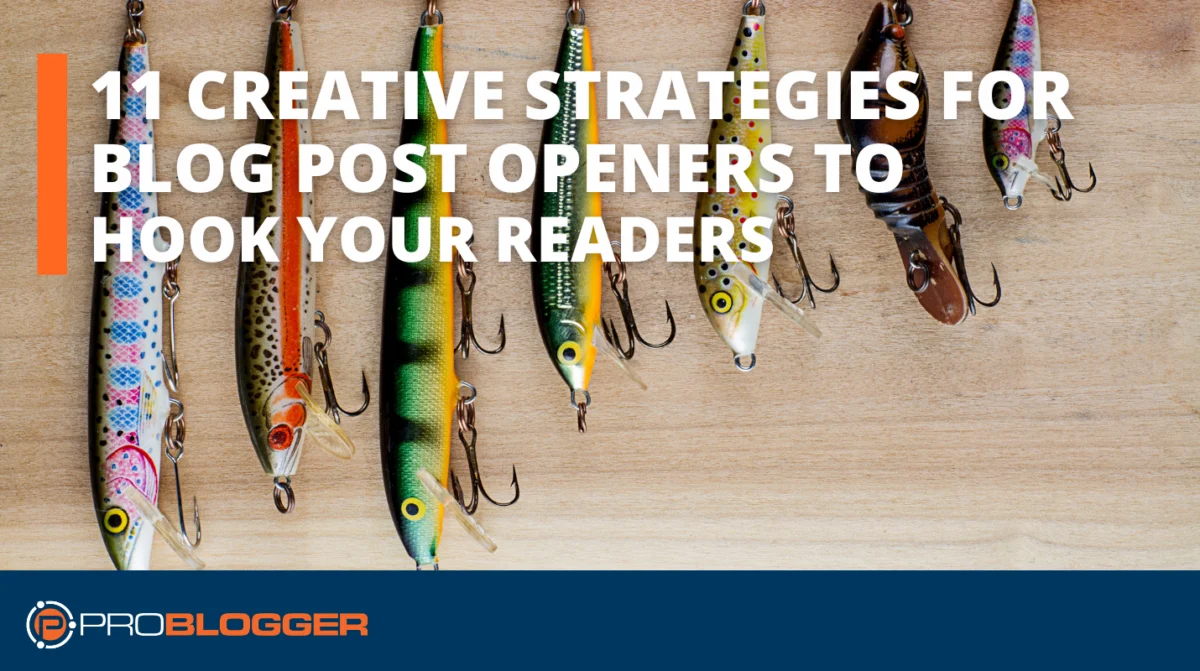
The digital publishing landscape is undergoing a fundamental transformation as content creators and media organizations grapple with an increasingly saturated information market and diminishing consumer attention spans. Industry analysis suggests that the initial interaction between a reader and a piece of digital content is the most critical determinant of long-term engagement and conversion. To address this challenge, a comprehensive framework detailing 11 specific strategies for crafting blog post openers has been established, emphasizing the psychological and structural requirements of modern digital journalism. This methodology prioritizes the "second most important words" of any post—the opening line—which serves as the essential bridge between a compelling headline and the core body of the content.
The Critical Role of the "Lead" in Modern Digital Media
In the traditional inverted pyramid structure of journalism, the "lead" or "lede" has always carried the weight of the story. However, in the context of the modern attention economy, the requirements for an effective opening have evolved beyond simple fact-delivery. Data from the Nielsen Norman Group indicates that users typically stay on a webpage for less than 10 to 20 seconds unless a clear value proposition is established immediately. Consequently, the opening line must perform a dual function: it must validate the promise made by the headline and provide a compelling reason for the reader to invest further time.
The framework released by digital content experts identifies the opening line as the primary tool for "drawing people deep within the post." By analyzing user behavior patterns, researchers have found that the transition from the title to the first paragraph is where the highest percentage of reader "churn" occurs. Therefore, the 11 strategies outlined in this report are designed to trigger specific cognitive responses that mitigate bounce rates and foster a sense of connection or curiosity.
A Chronological Evolution of Digital Engagement Strategies
The strategies employed by content creators have shifted significantly over the last two decades. In the early 2000s, during the nascent stages of the "blogosphere," opening lines were often conversational or diary-like, reflecting the personal nature of the medium. As the internet matured into a primary source of information and commerce, these openers became increasingly optimized for Search Engine Optimization (SEO), sometimes at the expense of human readability.
By the mid-2010s, the rise of social media platforms necessitated a "clickbait" approach, characterized by sensationalism. However, the current era, beginning around 2020, has seen a return to "Helpful Content" as prioritized by search engine algorithms like Google’s. The modern strategy, as evidenced by the 11 identified methods, focuses on authority, empathy, and immediate utility. This evolution reflects a broader trend in media where trust and engagement are valued over raw click-through rates.
Technical Breakdown of the 11 Engagement Strategies
The following strategies represent the core of the newly formalized engagement framework, categorized by their psychological impact on the reader.
1. The Identification of Urgent Needs
The first strategy involves the immediate identification of a reader’s problem or requirement. By acknowledging a specific "pain point," the writer establishes an immediate rapport. This technique relies on the "Problem-Agitation-Solution" (PAS) copywriting formula. While the solution is rarely provided in the first sentence, the promise of a solution serves as the hook.
2. The "Yes-Set" Psychological Trigger
Utilizing one-answer questions—specifically those that elicit a "yes" response—creates a psychological state of agreement. This technique, often used in sales and persuasive writing, aligns the reader’s mindset with the author’s perspective from the outset. For example, asking if a reader has ever struggled with engagement forces an internal admission of the problem, making them more receptive to the subsequent advice.
3. The Information Gap Theory
Posing an intriguing question leverages the "Information Gap" theory of curiosity, developed by George Loewenstein in the early 1990s. By highlighting a gap between what the reader knows and what they want to know, the opening line creates a "mental itch" that can only be scratched by reading further into the text.
4. Pattern Interruption through Surprise
The use of unexpected facts or personal anecdotes serves as a "pattern interrupt." In a digital environment where many posts follow a predictable structure, a surprising opening—such as a personal mistake or a counter-intuitive statistic—forces the reader’s brain to switch from passive scanning to active processing.
5. Narrative Transportation via Storytelling
Storytelling and the use of analogies transform abstract concepts into relatable narratives. Neurological studies suggest that when a reader is immersed in a story, their brain activity mirrors that of the storyteller, a phenomenon known as "neural coupling." This creates a deep level of engagement that purely factual reporting often lacks.
6. The Bold Assertion
Starting with a strong claim or a significant promise of results establishes immediate authority. This strategy is particularly effective for "how-to" content and professional advice. However, analysts warn that this approach requires the content to deliver on its promise to avoid damaging the publisher’s credibility.
7. Strategic Controversy
Stirring controversy by challenging a common industry belief or stating a strong opinion on a product or trend is a high-risk, high-reward strategy. It demands attention by provoking a reaction, whether of agreement or disagreement, which often leads to higher comment volume and social sharing.
8. Sensory Visualization
Painting a vivid picture encourages readers to use their imagination. By engaging the senses, writers can make abstract problems feel more tangible. This technique is often used to contrast a "current state" (often negative) with a "future state" (positive) that the article promises to help the reader achieve.
9. Data-Driven Authority
Leading with a startling statistic provides immediate objective weight to a post. Statistics act as social proof and create a sense of urgency. For instance, citing low engagement rates for the average blog post immediately justifies the need for an article on how to improve those rates.
10. The Borrowed Authority of Quotes
A well-chosen quote from a recognized figure lends instant credibility to a piece of content. This allows the writer to align their message with established wisdom or contemporary thought leaders, setting a sophisticated tone for the remainder of the article.
11. Visual-First Engagement
Leading with an impactful image recognizes the "Picture Superiority Effect," which posits that humans remember images better than words. In visual-heavy mediums, the image acts as the primary "opening line," with the text serving to explain or expand upon the visual prompt.
Supporting Data and Industry Implications
Recent data from content marketing institutes suggest that articles utilizing these diversified opening strategies see an average increase in "time on page" of 25% to 35%. Furthermore, the "F-shaped" reading pattern, where users read the top of the page and then scan down the left side, reinforces the necessity of a strong opening. If the first two paragraphs fail to capture interest, the "scanning" behavior becomes more erratic, leading to a higher probability of the user exiting the site.
Industry experts emphasize that these techniques are not merely stylistic choices but are essential for SEO. Search engines increasingly use "dwell time" and "pogo-sticking" (when a user clicks a result and immediately returns to the search page) as signals for content quality. A post that successfully "hooks" a reader and keeps them on the page is more likely to rank higher in search results over time.
Professional Reactions and Expert Analysis
Media analysts suggest that the democratization of these copywriting techniques has leveled the playing field between traditional news outlets and independent digital creators. "The ability to hook a reader is no longer a dark art reserved for Madison Avenue advertisers," noted one digital media consultant. "It is now a fundamental literacy for anyone publishing on the web."
However, some critics argue that the over-reliance on these strategies can lead to a homogenization of digital content. When every post begins with a "yes" question or a startling statistic, the effectiveness of the "pattern interrupt" diminishes. The challenge for future content creators will be to apply these 11 strategies with enough creativity and genuine voice to remain distinct in a crowded marketplace.
Broader Impact on Digital Communication
The implementation of these 11 strategies extends beyond blogging into corporate communications, email marketing, and social media. As professional communication becomes increasingly digital, the ability to command attention in the first sentence has become a vital skill for internal corporate memos and external PR releases alike.
In conclusion, the formalization of these engagement strategies reflects a broader move toward data-backed, psychologically informed content creation. By prioritizing the opening line as a critical infrastructure of the digital post, creators can significantly improve their ability to communicate effectively in an era of unprecedented information density. The success of digital content in the coming years will likely depend not just on the quality of the information provided, but on the ability of the author to secure the reader’s attention within the first few seconds of the encounter.