Gilang Muhammad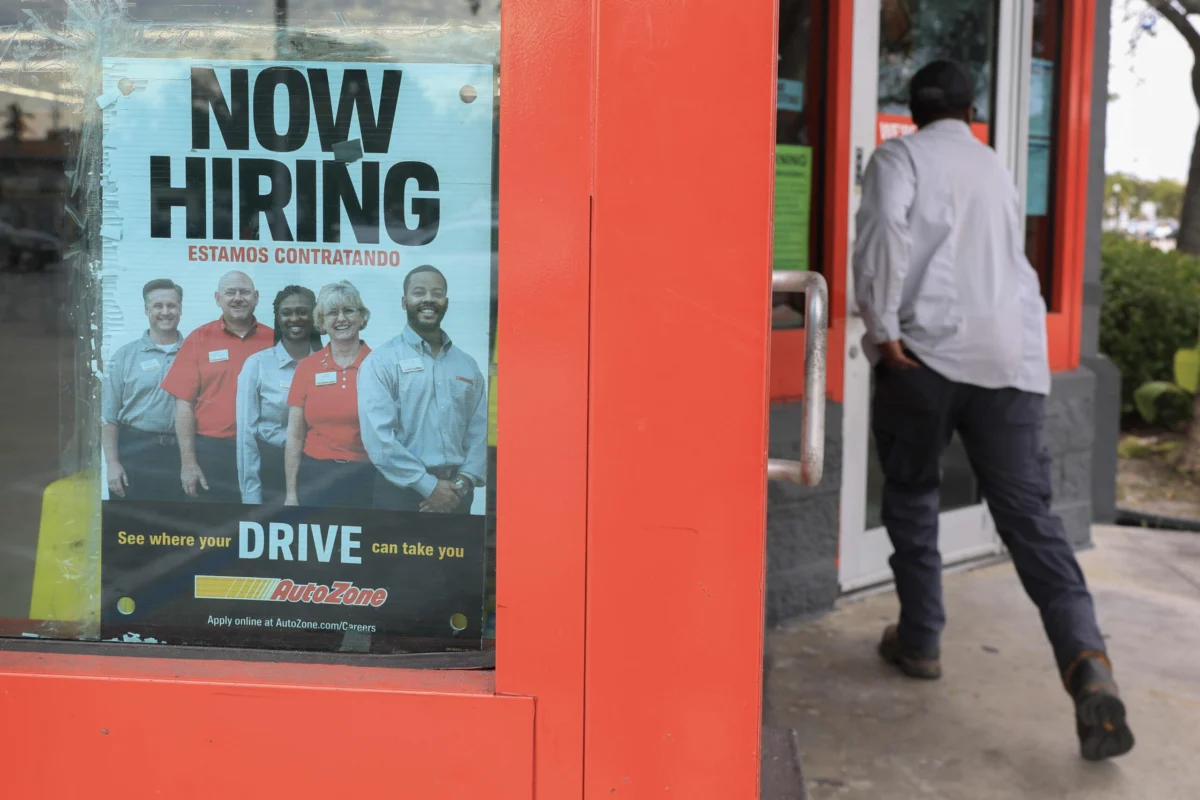
The United States economy demonstrated remarkable resilience in August, adding a robust 162,000 nonfarm payrolls and significantly surpassing economists’ expectations, signaling a vigorous reversal of a summer slowdown in hiring. The Bureau of Labor Statistics (BLS) reported on Friday that the national unemployment rate, as anticipated, remained stable at 4.1%. This substantial job creation figure was a stark contrast to the Dow Jones consensus forecast of a mere 53,000 new jobs, marking the strongest monthly gain since March and injecting fresh dynamism into the ongoing economic narrative.
A Deeper Look at the August Jobs Report
The latest employment report paints a picture of a labor market that is not only robust but also expanding, defying concerns of an imminent economic deceleration. Chris Rupkey, chief economist at Fwdbonds, encapsulated the sentiment, stating, "Net, net, the labor market is alive and well and generating thousands of new jobs to help keep economic growth squarely in the plus column." This strong performance aligns with the Federal Reserve’s assessment of a stable labor market, now shifting the central bank’s focus squarely onto upcoming inflation data to inform its pivotal interest rate decision later this month.
Beyond the headline numbers, the report revealed encouraging revisions for prior months, underscoring a stronger underlying trend in job growth than previously understood. July’s payroll figures were revised upward by a substantial margin, swinging from an initial reported loss of 23,000 jobs to a positive gain of 21,000. Similarly, June’s numbers saw an upward adjustment, increasing by 11,000 to a revised total gain of 31,000. These cumulative revisions add a further 55,000 jobs to the economy over the past two months, suggesting a deeper well of economic momentum.
Unemployment and Broader Labor Market Health
While the stability of the 4.1% unemployment rate might appear static, a closer examination reveals positive underlying trends. Policymakers typically monitor the unemployment rate as a primary indicator of labor market health. This rate has demonstrated consistent stability over the past several years, notably down 0.2 percentage points from a year ago. Crucially, this steady jobless level was maintained even as the labor force participation rate — a key measure of those either employed or actively seeking employment — increased by 0.2 percentage points. This indicates that more individuals are entering or re-entering the job market and successfully finding work, a healthy sign of economic confidence and opportunity.
The household survey, which forms the basis for calculating the unemployment rate, provided further evidence of this expanding workforce. It showed a significant increase of 569,000 in overall employment, coupled with a surge of 683,000 individuals entering the labor force. This robust influx suggests that economic opportunities are drawing more people back into active participation, contributing to a broader and more resilient labor pool. Moreover, an alternative measure of unemployment, known as U-6, which includes discouraged workers and those holding part-time jobs for economic reasons, also saw a positive development. The U-6 rate fell to 7.7%, a decrease of 0.2 percentage points and its lowest level since June 2025, indicating a reduction in underemployment and hidden joblessness.
Sectoral Dynamics and Wage Growth
Unlike some previous months characterized by concentrated job gains, August’s growth was notably broad-based, reflecting widespread strength across various sectors of the economy. The leisure and hospitality sector, particularly restaurants and bars, led the charge with a significant addition of 59,000 new jobs, highlighting renewed consumer confidence and activity. Government education also contributed substantially, adding 42,000 positions, while the manufacturing sector continued its steady recovery with a gain of 16,000 jobs.
However, not all sectors experienced the same pace of growth. Healthcare, traditionally a primary engine of job creation, saw a more modest gain of just 13,000 jobs, falling below its monthly average of 32,000 over the prior 12 months. This could suggest a normalization after post-pandemic surges or a temporary deceleration. A notable point of concern emerged from information-related industries, which reported a loss of 23,000 jobs in August. This figure contributes to a 12-month average loss of 8,000 for the sector, raising questions about the nascent impact of technological shifts, potentially including artificial intelligence, on certain segments of the workforce. While the long-term effects of AI are still unfolding, these figures provide an early glimpse into potential reconfigurations within the labor market.
Accompanying the strong job growth, average hourly earnings rose by 0.3% for the month, precisely in line with consensus expectations. On an annual basis, wages increased by 3.1%, slightly exceeding forecasts by 0.1 percentage point. This sustained wage growth, while positive for workers, adds another layer of complexity to the Federal Reserve’s inflation considerations, as robust wage gains can contribute to inflationary pressures if they outpace productivity improvements.

The Federal Reserve’s Looming Decision and Market Reactions
The robust August jobs report has undoubtedly intensified the debate within the Federal Reserve regarding the trajectory of interest rates. With the Federal Open Market Committee (FOMC) scheduled to meet on September 15-16, the strong employment data now serves as a critical input. While a healthy labor market is a positive sign for the economy, it can also fuel concerns about overheating and persistent inflation, which has run above the Fed’s 2% target for the past five and a half years. The FOMC has not adjusted the federal funds rate since three cuts implemented in the latter part of 2025, making the upcoming decision particularly significant.
Immediately following the release of the jobs report, financial markets reacted swiftly. Stock market futures moved mostly lower, reflecting investor apprehension about the increased likelihood of a rate hike which could slow economic growth and reduce corporate earnings. Conversely, Treasury yields, particularly at the short end of the curve where Fed policy exerts its greatest influence, rose sharply. This upward movement in yields indicates that bond investors are pricing in higher future interest rates, making fixed-income investments more attractive relative to equities. According to the CME Group’s FedWatch tool, traders are now pricing in approximately 60% odds of a quarter-percentage-point increase at the central bank’s upcoming policy meeting, a noticeable shift in sentiment.
The focus now definitively shifts to next week’s inflation reports – the Producer Price Index (PPI) and Consumer Price Index (CPI) – scheduled for Thursday and Friday, respectively. These figures are widely considered the "final determinant" for the Fed’s decision. Ellen Zentner, chief economic strategist at Morgan Stanley Wealth Management, articulated this sentiment: "An upside surprise in payrolls will likely ramp up concerns about a rate hike, but that outcome is in the hands of next week’s inflation numbers. If those come in cooler than expected, the Fed will likely feel comfortable discounting potentially inflationary signals coming out of the labor market."
Divergent Views and Political Pressures
The Federal Reserve, tasked with maintaining maximum employment and price stability, faces a delicate balancing act, further complicated by internal disagreements and external political pressure. Recent statements from various Fed officials highlight the internal divergence of opinions. Last week, remarks by Fed Chairman Kevin Warsh had led traders to price in a strong expectation of a quarter-percentage-point hike. However, subsequent comments this week from Governor Christopher Waller, who indicated he would support holding rates steady if inflation moderates monthly, and New York Fed President John Williams, who stated he is in "wait-and-see" mode, have introduced greater uncertainty. Governor Michael Barr also echoed this conditional stance, indicating he would be content to stay on hold as long as inflation is "moderating," but both Barr and Waller affirmed their readiness to raise rates if the data does not cooperate.
Adding another layer of complexity to the Fed’s deliberations, President Donald Trump weighed in on the jobs report, praising it as a "great jobs number" but vehemently calling for the Fed to lower rates, rather than hike them. In a series of social media posts, Trump urged the Fed Board and its "great new leader" to "get smart – BE PATRIOTS for a change," arguing that "High interest rates put the U.S.A. at a very unfair disadvantage, and I won’t allow that to happen!" The President went further, threatening to cut off trading relationships with countries with which the U.S. has a deficit unless the Fed cuts rates, citing a Supreme Court decision as justification for his authority. This direct political intervention underscores the ongoing tension between an independent central bank and executive branch desires, a recurring theme in economic policy discussions.
Broader Economic Implications and Outlook
The August jobs report is more than just a snapshot of the labor market; it offers significant insights into the broader health and trajectory of the U.S. economy. The strong job creation suggests that underlying demand remains robust, potentially alleviating fears of an impending recession that have periodically surfaced. A healthy labor market, characterized by more people working and earning higher wages, typically translates into stronger consumer spending, which is a primary driver of economic growth. Businesses, in turn, may feel more confident to invest and expand, creating a virtuous cycle.
Globally, a strong U.S. economy can have mixed implications. It can boost demand for imports, benefiting trading partners, but also potentially strengthen the dollar, making U.S. exports more expensive. The current economic strength, however, must be viewed through the lens of persistent inflationary pressures. The Federal Reserve’s challenge is to temper inflation without stifling the evident economic momentum. An overly aggressive rate hike could cool the economy too much, potentially leading to job losses and slower growth, while insufficient action could allow inflation to become entrenched, eroding purchasing power.
The path ahead for the U.S. economy remains subject to the delicate interplay of labor market dynamics, inflation trends, and monetary policy responses. All eyes will be on the upcoming inflation data and the Federal Reserve’s subsequent decision, which will undoubtedly shape the economic landscape for the remainder of the year and beyond. The August jobs report has firmly placed the spotlight on the central bank, underscoring the critical importance of its upcoming actions in navigating the current economic climate.