Gilang Muhammad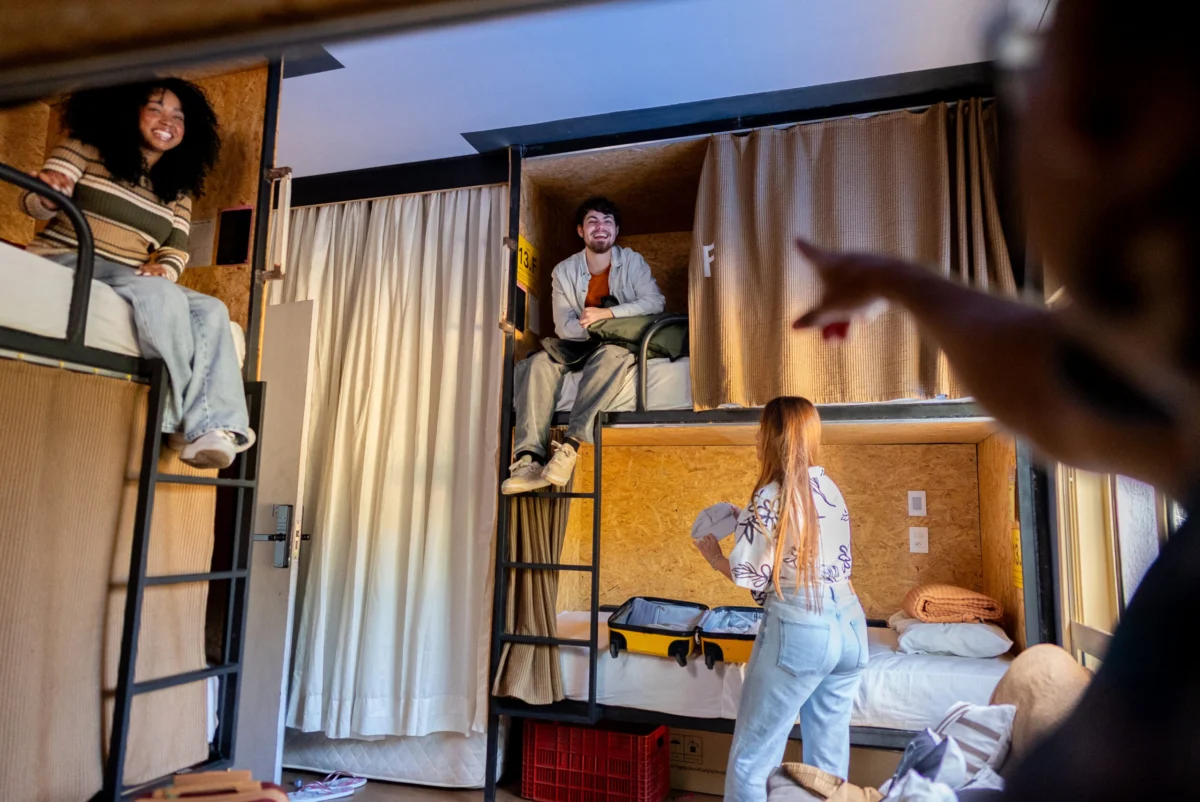
In a striking testament to consumer resilience and the evolving perception of travel from luxury to perceived necessity, Americans are continuing to prioritize vacations despite a backdrop of escalating prices and significant geopolitical tensions, notably the ongoing U.S. war with Iran. This unwavering demand for experiences, particularly within the budget-conscious segment, underscores a fundamental shift in spending priorities, challenging conventional economic wisdom that predicted a slowdown in discretionary travel during inflationary periods.
The phenomenon is vividly illustrated by individuals like Jami Hagerman, a 29-year-old hairstylist from Oklahoma City, who, alongside her husband, recently ventured into the realm of "mystery vacations." Spending approximately $400 on Groupon vouchers, the couple secured accommodations and airfare to an undisclosed destination, which ultimately revealed itself as New Orleans. Their spontaneous trip, devoid of destination choice but rich in cultural exploration through museums, walking tours, and culinary delights like the city’s famous beignets, exemplified the burgeoning appeal of value-driven travel. "I feel like the value was great for the trip," Hagerman commented, reflecting a sentiment increasingly echoed across various income brackets. "It was fun."
The Economic Paradox: Spending Surges Amidst Price Pressures
The steadfast commitment to travel is particularly notable among lower-income clients, defined as those with annual earnings below $36,675. Data exclusively analyzed for CNBC by PNC card services reveals that this demographic allocated more monthly funds to travel earlier in 2026 than at any point since at least 2019. Specifically, spending in July for this cohort witnessed a robust 7% increase compared to the same month in the previous year. This trend defies the prevailing economic headwinds, which include record-high gas prices projected for Labor Day, having surged approximately 30% annually according to AAA, and airline fares climbing over 25% year-over-year as of July, as reported by the Bureau of Labor Statistics.
Adding to the complexity, the broader economic landscape of 2026 has been marked by persistent inflationary pressures across various sectors. The U.S. economy, while demonstrating pockets of strength, has navigated elevated consumer price indices, impacting everything from groceries to housing. Against this backdrop, the sustained spending on travel, an inherently discretionary category, presents an intriguing economic paradox. It suggests that for a significant portion of the population, the value proposition of travel, even when constrained by budget, outweighs the immediate financial pressures of daily living.
The Rise of Experiential Value: Groupon’s Mystery Vacations Lead the Way
One of the most prominent facilitators of this budget-friendly travel boom is Groupon. What began as a limited "mystery vacation" offering for North America has rapidly expanded into a comprehensive portfolio. In the second quarter of 2026, this expanded program recorded approximately 5,500 orders, marking a more than five-fold increase from its inception as a flagship product in the first quarter of 2025. These packages, advertised with discounts of up to 50%, range from $199 to $299 per person, depending on the departure airport, promising an adventure without the upfront cost certainty of a chosen destination.
While a small percentage of lucky participants find themselves jetting off to international locales like Singapore or Paris, the majority are directed to domestic hubs such as Las Vegas, Atlanta, or Orlando. The element of surprise, coupled with the affordability, appears to be a key draw. Tammy Wales, a Georgia-based travel agent, recounted her mystery vacation experience to Orlando, a city she admitted wouldn’t have been her top choice. Yet, she emphasized, "as long as I’m gone, I don’t really care. The biggest thing was being able to take a trip and have the element of surprise." This highlights a shift in consumer priorities, where the act of traveling and the novelty of a new experience trump the meticulous planning and specific destination preferences often associated with traditional vacations.
Industry Adaptation: Balancing Luxury and Affordability
The travel industry, recognizing this bifurcated market, has responded with varied strategies. While some major airlines, including Delta and Southwest, have heavily invested in premium offerings such as expanded first-class cabins and exclusive lounges to cater to high-end travelers and secure higher margins, the value segment remains a crucial and growing market. Industry data provider OAG noted that low-cost airlines had gained market share in 2025 compared to pre-pandemic levels, though the unexpected shutdown of Spirit Airlines in May 2026 could introduce a temporary disruption to this trend.
Similarly, in the hospitality sector, despite a recent uptick in luxury hotel development, the majority of new room additions continue to fall within more affordable tiers, as observed by Jay Morrow, head of hospitality advisory at Walker & Dunlop. This strategic balance reflects a nuanced understanding of the market, where catering to diverse economic realities is essential for sustained growth. The industry’s ability to innovate and provide accessible travel options is crucial in an environment where even aspirational experiences are being reframed as attainable.
The Broader Spectrum of Value Travel

Beyond Groupon’s innovative model, other value-centric travel platforms are also experiencing significant growth. Hostelworld, a global booking platform specializing in hostels and other low-cost accommodations, reported a 10% increase in transactions from U.S. and Canadian consumers in the first half of 2026 compared to the previous year. Concurrently, the Ireland-based company observed a climb in its net average transaction value across regions, indicating that even within the budget segment, consumers are willing to spend slightly more for enhanced experiences or longer stays.
Ewout Steenbergen, the finance chief at Booking Holdings, parent company of Booking.com, highlighted a positive trend in April, noting that average daily rates for their lower-end segment had stabilized, marking an improvement after a period of negative readings. This suggests a firming up of demand even at the most price-sensitive end of the market.
Cruise lines, traditionally a strong contender in the value travel space, are also capitalizing on this trend. Carnival Corp., known for its budget-friendly cruises, has reported robust demand for the remainder of 2026 and beyond, surpassing prior-year comparison periods. David Bernstein, Carnival’s finance chief, emphasized the company’s "recession-resilient" nature, attributing it partly to the accessibility of its departure ports. He noted that approximately half of the U.S. population resides within a five-hour drive of a Carnival cruise port, effectively allowing many travelers to bypass costly airfares.
This strategic advantage resonates deeply with families like Kenny Wilson’s. The Texas-based stay-at-home mom annually drives her two children hours to a Galveston cruise port, capping their total vacation cost at $1,000 by leveraging deals that allow children to sail free with paying adults. "In this economy for the middle class, it’s very, very hard to get vacations in there," Wilson, 27, stated. "I’m just so grateful that I figured out a way out that I could still give my kids a beautiful childhood and memories for cheap." Her experience underscores the critical role that value travel plays in enabling middle-class families to create cherished memories amidst economic constraints.
From Luxury to Necessity: A Post-Pandemic Paradigm Shift
The persistence of travel spending, even among those facing financial challenges, suggests a deeper societal shift. A March survey by Snap Finance, which polled nearly 1,400 "credit-challenged" consumers, revealed that more than one in ten had spent at least $300 on vacation or travel expenses in the preceding six months. This is particularly striking given that over 40% of this group reported experiencing some degree of financial instability.
The U.S. Travel Association attributes some of this sustained spending to larger tax refunds, a byproduct of President Donald Trump’s "big beautiful bill." The association projects that lower-income consumers could collectively inject half a billion dollars from their increased returns into travel this year, providing a significant boost to the sector.
While consumers are undoubtedly seeking ways to mitigate costs – Expedia reported a staggering 1,200% increase in searches using budget filters over the past 12 months, and Vrbo noted a 16% year-over-year rise in bookings made within two weeks, indicative of a hunt for last-minute deals – the underlying desire to travel remains potent.
Brian LeBlanc, a senior economist at PNC, acknowledges that while consumers are "swiping the cards," they may not always "feel good about it" due to eye-popping numbers. The University of Michigan’s consumer sentiment survey in August, which registered 11% lower than a year prior, explicitly cited expectations for higher fuel prices as a drag on confidence. This suggests a psychological burden associated with current costs, even as the act of spending persists.
LeBlanc also highlighted that PNC’s analysis showed higher earners were spending more compared to 2019 than other income groups, further illustrating the "K-shaped economy" – an uneven post-pandemic recovery where different segments of the population experience diverging economic fortunes. Yet, the resilience of budget travel spending across all income levels indicates that the desire for experiences is a powerful, unifying force.
Tarik Dogru, an associate professor at Florida State University’s hospitality school, offers a compelling explanation for this unwavering propensity to travel. He posits that the post-pandemic "revenge travel" phenomenon, initially viewed as a temporary fad, has now solidified into a "new normal." Dogru argues that travel is no longer perceived as a mere luxury but has fundamentally transformed into a "necessity" in the wake of prolonged lockdowns and restrictions. The psychological imperative to explore, reconnect, and create memories has become deeply ingrained in consumer behavior.
For individuals like Jami Hagerman, this explanation rings true. After years spent primarily within her home state during the pandemic, Hagerman consciously chose to forgo upsizing her house to keep rent costs manageable, redirecting those savings to finance trips to destinations like Hawaii and Washington. She is even considering another Groupon mystery vacation, appreciating the opportunity to escape without financial strain. While she hopes for a new destination, having already visited New Orleans twice, her sentiment encapsulates the prevailing attitude: "I’m really not that picky. I just feel fortunate that we got to go anywhere." This reflects a broader consumer mindset where the act of traveling itself, regardless of the specific locale, has become an indispensable component of well-being and life satisfaction in the current economic climate.