Gilang Muhammad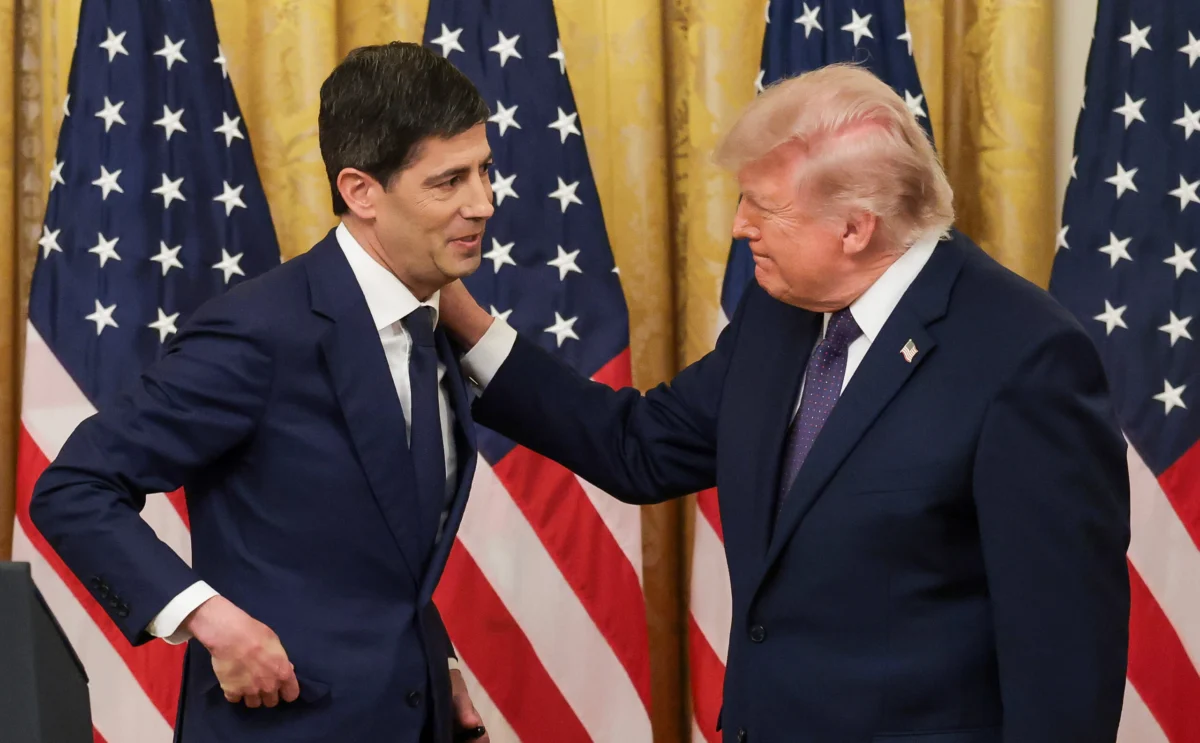
Washington D.C. – Ten days before a pivotal Federal Reserve meeting where a significant interest rate hike is widely anticipated, the Trump administration has launched an unprecedented, full-court press campaign to dissuade the central bank from tightening monetary policy. This highly coordinated public effort, involving the President, Vice President, Treasury Secretary, and a senior economic advisor, marks an unusual escalation in political interference with the Fed’s traditional independence, even by the standards of President Donald Trump’s long-standing criticisms of the institution. The intense lobbying comes as markets grapple with inflationary pressures and a robust jobs report, while the Fed’s new chairman, Kevin Warsh, navigates the delicate balance between political demands and his mandate for price stability.
An Unprecedented Public Campaign Against a Rate Hike
The past week has seen a flurry of high-level statements from the Trump administration, each designed to pressure the Federal Reserve, and specifically its new chairman, Kevin Warsh, to either halt an impending rate hike or consider rate cuts. This concerted effort stands out not only for its breadth but also for its directness and, in some instances, its confrontational tone.
On Friday, President Donald Trump significantly escalated the stakes, moving beyond his usual rhetoric to issue a direct threat. In a post on Truth Social, the President declared his intention to halt trade with countries maintaining trade surpluses with the United States unless the Federal Reserve lowered interest rates. This marks a new frontier in the administration’s pressure tactics, explicitly linking trade policy, a core executive prerogative, to independent monetary policy decisions. While President Trump has meticulously avoided directly criticizing Chairman Warsh, a stark contrast to his past vocal attacks on former Chair Jay Powell, this indirect threat casts a long shadow over the central bank’s upcoming deliberations.
Following the President’s bold statement, senior economic counselor Peter Navarro delivered a scathing critique of the Federal Open Market Committee (FOMC) members. In an interview with former Trump advisor Steve Bannon, Navarro warned that a rate hike would be "careless" and would "hit precisely the sectors America needs to prosper most." He did not mince words, reportedly referring to certain FOMC members as "clowns" while simultaneously praising Chairman Warsh for attempting to "do the right thing." Navarro’s comments underscored the administration’s ideological stance, suggesting a disconnect between the Fed’s perceived actions and the nation’s economic well-being as envisioned by the White House.
Earlier in the week, Vice President JD Vance weighed in, stating unequivocally, "We believe that the Fed should be lowering interest rates." He added, "We’re doing a lot of things to try to keep those interest rates down, but it would be nice to have some help from the Federal Reserve." Vance’s remarks highlighted the administration’s frustration and its desire for alignment between fiscal and monetary policies.
Treasury Secretary Scott Bessent also contributed to the chorus, offering a more nuanced, albeit pointed, argument during a CNBC interview. Bessent noted that the Fed typically refrains from raising rates during a supply shock until second- or third-order inflationary effects become evident. His comments implicitly suggested that current inflationary pressures might primarily stem from supply-side issues, implying that rate hikes would be an inappropriate response. This argument resonates with the administration’s broader economic philosophy, which emphasizes supply-side solutions over demand-side adjustments.
The Federal Reserve’s Mandate and the Principle of Independence
At the heart of this confrontation lies the fundamental principle of central bank independence. The Federal Reserve operates under a dual mandate from Congress: to achieve maximum employment and maintain price stability. To effectively pursue these goals, the Fed has traditionally been shielded from short-term political pressures, allowing it to make decisions based purely on economic data and long-term stability. This independence is crucial for maintaining credibility, both domestically and internationally, ensuring that monetary policy is not swayed by electoral cycles or partisan agendas.

Chairman Kevin Warsh, appointed to his role in May 2026, has publicly affirmed the Fed’s independence. In July congressional testimony, he cited the central bank’s decision to hold rates steady, rather than cutting them, as evidence of its autonomy. However, Warsh has also acknowledged that politicians have a right to comment on Fed policy, a position that some analysts view as an attempt to de-escalate tensions while firmly asserting the institution’s ultimate decision-making authority.
The Wall Street Journal reported last month that President Trump had engaged in repeated conversations with Warsh since his appointment, a claim publicly corroborated by several presidential aides. While Trump himself denied these reports, asserting he had spoken only once to Warsh in office, the perception of frequent communication, coupled with the current public pressure campaign, raises significant questions about the boundaries of central bank independence. Such interactions, regardless of their content, fuel speculation about potential influence, eroding public trust in the Fed’s impartiality.
Economic Philosophies Collide: Growth, Inflation, and Interest Rates
The administration’s pressure campaign is underpinned by a distinct economic philosophy that directly challenges conventional central banking wisdom. President Trump and his advisors argue that robust economic growth, particularly when fueled by supply-side improvements, does not inherently lead to inflation. Instead, they contend that policies like tax cuts and strong capital investment expand the economy’s productive capacity, allowing for greater growth without generating inflationary pressures. This perspective suggests that the U.S. economy, currently experiencing significant expansion, should therefore benefit from the lowest possible interest rates globally.
To support their argument, administration officials have highlighted specific inflation metrics. They point to the recent three-month annualized rate of the core Consumer Price Index (CPI), which stood at a modest 1.6%. This figure is notably lower than the three-month annualized rate of the core Personal Consumption Expenditures (PCE) price index, the Fed’s preferred inflation gauge, which registered just over 3%. The administration’s focus on the lower CPI figure aims to downplay the urgency of rate hikes, suggesting that inflationary pressures are not as pervasive as the Fed might perceive.
However, several Federal Reserve officials have voiced considerable concern over persistent inflation. They note that inflation has remained substantially above the Fed’s 2% target for five consecutive years. Furthermore, they identify signs of broad-based inflationary pressures extending beyond the impacts of Trump’s tariffs and rising energy costs attributed to the ongoing U.S. war with Iran. At the July FOMC meeting, where interest rates were left unchanged, three members – Beth Hammack, Neel Kashkari, and Lorie Logan – dissented, advocating for a quarter-point rate hike, underscoring the internal debate and the seriousness with which some officials view the inflation outlook.
Chairman Warsh, in his much-watched speech at the Jackson Hole economic symposium, reiterated the Fed’s unwavering focus on inflation. He provided compelling data, noting that 54% of the 199 components within the PCE price measure had risen by more than 3% over the preceding 12 months. This broad-based increase challenges the administration’s narrative of contained inflation and suggests deeply embedded price pressures.
The administration’s rejection of a direct link between growth and inflation directly contradicts a foundational concept in economics: that an economy growing beyond its productive capacity risks generating inflation. The most prominent theory articulating this relationship is the Phillips Curve, which posits that tight labor markets and rising wages are major conduits for inflation. This theoretical framework explains why markets reacted to Friday’s strong jobs report by raising the probability of a Fed rate hike. The report, which showed significant payroll increases, signaled a robust labor market. Despite this, wage growth remained relatively contained, with average hourly earnings rising 0.3% in August and 3.1% from a year earlier, and the unemployment rate holding steady at 4.1%. This nuanced data presents a challenge for both sides of the debate, as strong employment typically indicates inflationary pressure, yet moderate wage growth might suggest otherwise.
The administration’s argument for increased supply-side capacity, while theoretically sound, faces a timing problem. While substantial investments in artificial intelligence (AI) are projected to boost productivity significantly in the long run, current data indicates that the immediate demand for equipment and infrastructure required to build out AI capabilities is, in fact, contributing to rising prices. This short-term inflationary effect from a long-term productivity enhancer complicates the immediate monetary policy calculus.
Market Outlook and Political Stakes

The financial markets are closely attuned to the unfolding drama. Currently, the CME FedWatch Tool indicates a roughly 60% probability of a rate hike at the September 15-16 meeting, a figure bolstered by the surprisingly strong jobs report released on Friday. However, the market’s cautious stance suggests lingering uncertainty, perhaps influenced by the sheer weight of the administration’s pressure.
The impending Fed decision also carries significant political weight, occurring just two months before the crucial November midterm elections. Polls indicate widespread voter dissatisfaction with higher prices and rising interest rates, placing immense pressure on the incumbent administration. A rate hike, potentially slowing economic activity further or increasing borrowing costs for consumers and businesses, could exacerbate these political headwinds. Conversely, the Fed’s perceived capitulation to political pressure could undermine its credibility and trigger market instability.
Historical Context and Precedent
This is not the first time President Trump’s administration has publicly pressured the Federal Reserve. In May 2019, during Trump’s first term, Vice President Mike Pence, then-Treasury Secretary Steve Mnuchin, and economic advisor Larry Kudlow all publicly advocated for the Fed to consider cutting rates. While the Fed did not immediately yield to that pressure, it ultimately cut rates two months later. This historical precedent may embolden the current administration, leading them to believe that sustained public pressure can eventually sway the central bank’s decisions. However, the current economic landscape, characterized by persistent inflation and a different Fed chair, presents a distinct challenge.
Chairman Warsh’s Dilemma and Broader Implications
Chairman Kevin Warsh finds himself in an unenviable position, tasked with upholding the Fed’s independence while navigating an intense political maelstrom. His response to the repeated calls from the White House, and his public statements emphasizing the Fed’s autonomy, will be scrutinized by domestic and international observers alike. The outcome of the September meeting will not only dictate the immediate trajectory of U.S. monetary policy but also serve as a critical test of the Federal Reserve’s institutional fortitude against executive branch influence.
The broader implications of this standoff are far-reaching. A perception that the Fed is succumbing to political pressure could severely damage its credibility, both at home and abroad. International markets rely on the stability and independence of major central banks, and any erosion of this trust could lead to capital flight, currency volatility, and increased risk premiums for U.S. assets. Furthermore, it could set a dangerous precedent for future administrations, blurring the lines between monetary and fiscal policy and potentially leading to a politicization of economic decision-making. The President’s direct threat of tariffs linked to interest rates introduces an unprecedented level of policy entanglement, raising concerns about the coherence and predictability of U.S. economic governance.
As the September 15-16 FOMC meeting approaches, all eyes will be on the Federal Reserve. Markets will particularly focus on the upcoming Friday CPI report, which Fed officials have indicated will be a critical gauge in determining whether inflationary pressures are easing or continuing to accelerate. This data, coupled with the administration’s relentless pressure, will ultimately shape Chairman Warsh’s decision, a decision that carries profound implications for the U.S. economy, the integrity of its institutions, and the global financial system. The stakes could not be higher.