Lina Wu
Weak car-buyer demand in China is driving more of the country’s electric vehicle makers into Europe, with Seres Group and Li Auto preparing for their debuts on the continent in 2027. This strategic pivot underscores a significant shift in the global automotive landscape, as Chinese EV manufacturers, emboldened by their domestic success and increasingly aggressive pricing, seek new growth avenues beyond their saturated home market. The move also signals a competitive challenge to established European automakers who are still navigating the complex transition to electrification.
The Shifting Tides of the Chinese EV Market

For years, China has been the undisputed global leader in electric vehicle production and adoption. Driven by strong government incentives, a burgeoning middle class, and a rapidly expanding charging infrastructure, the Chinese EV market has experienced explosive growth. However, recent data suggests a slowdown in this once-unstoked fire. The domestic market, while still substantial, is facing headwinds. Intensifying price wars, a maturing consumer base, and a cooling economy have contributed to a plateauing of sales growth for many local manufacturers. This saturation has forced companies to look outward, seeking to replicate their domestic triumphs on a global scale.
BYD, the undisputed titan of the Chinese EV industry, has already demonstrated the viability and potential of this international expansion. The Shenzhen-based company has seen remarkable success in overseas markets, particularly in Europe, where it has aggressively introduced a range of affordable and technologically advanced electric vehicles. BYD’s rapid expansion has not only captured market share but has also put significant pressure on legacy automakers, forcing them to accelerate their own electrification plans and consider new competitive strategies. The success of BYD serves as a powerful testament to the capabilities of Chinese EV manufacturers and acts as a potent catalyst for others to follow suit.
Seres Group and Li Auto: The New European Contenders

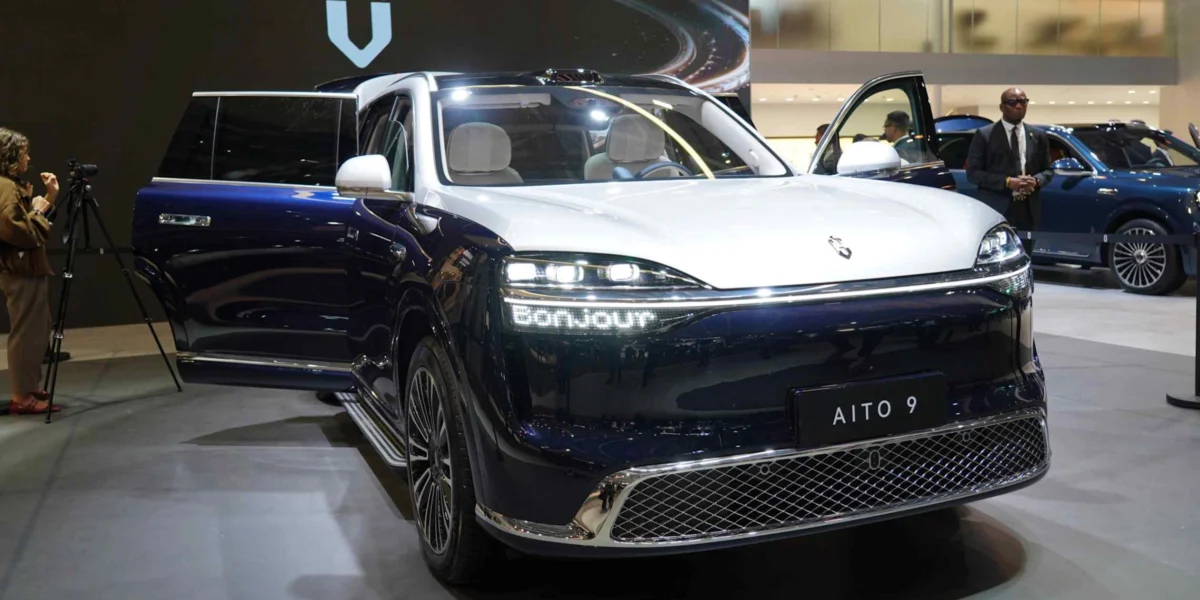
The announcement that Seres Group and Li Auto are set to launch their European operations in 2027 is a significant development. Seres Group, known for its Aito brand, which it develops in partnership with Huawei, showcased its Aito 9 SUV at the Paris Motor Show in October. This public display signals a clear intent to engage with European consumers and gauge market reception. The Aito 9, with its premium positioning and integrated smart technology, is likely to be a flagship offering, aiming to compete in a segment that has historically been dominated by European luxury brands.
Li Auto, another prominent Chinese EV startup, has also been making strategic moves that suggest an imminent European push. While specific launch details for Li Auto remain under wraps, industry observers anticipate a similar approach, focusing on innovative vehicle designs and advanced driver-assistance systems. The company’s existing portfolio of extended-range electric vehicles (EREVs) and pure electric vehicles (BEVs) could offer a diverse range of options to cater to different European consumer preferences and charging habits.
Why Europe? A Strategic Calculation

Europe represents a logical next frontier for Chinese EV makers for several compelling reasons. Firstly, the continent has a strong commitment to decarbonization and ambitious targets for EV adoption. Governments across Europe offer various incentives, including subsidies and tax breaks, to encourage the purchase of electric vehicles. This policy environment creates a fertile ground for new entrants.
Secondly, European consumers are increasingly open to considering non-traditional automotive brands, especially when offered compelling value propositions. The growing awareness and acceptance of Chinese brands, partly due to the success of companies like BYD, have lowered the barrier to entry. Furthermore, the demand for technologically advanced and feature-rich vehicles aligns well with the strengths of many Chinese EV manufacturers, who often integrate cutting-edge infotainment systems and driver-assistance technologies as standard.
Thirdly, Europe is a mature automotive market with a sophisticated consumer base that appreciates quality, design, and performance. For Chinese companies aiming to establish themselves as global players, successfully competing in Europe is a crucial validation of their product capabilities and manufacturing prowess. It offers a benchmark against which their products can be measured by a discerning international audience.

Challenges and Opportunities Ahead
Despite the promising outlook, the path to success in Europe is not without its hurdles. Chinese automakers will need to navigate a complex regulatory landscape, stringent safety standards, and evolving emissions regulations. Building brand awareness and trust among European consumers, who often have deep-seated loyalties to established brands, will require significant marketing investment and a consistent commitment to quality and customer service.
Furthermore, the spectre of protectionism and geopolitical tensions cannot be ignored. While Europe has generally maintained an open market, concerns about fair competition and intellectual property rights could lead to increased scrutiny or potential trade barriers. Chinese manufacturers will need to demonstrate their commitment to localizing production, creating jobs, and adhering to European business practices to foster goodwill and mitigate potential backlash.

The established European automakers are not standing still. Companies like Volkswagen, BMW, Mercedes-Benz, and Stellantis are investing heavily in their own EV portfolios, aiming to defend their market share. They are also looking to leverage their established brand equity, dealer networks, and extensive experience in global markets. The competition is expected to be fierce, characterized by aggressive product development, innovative marketing strategies, and a continuous drive for cost efficiency.
Data-Driven Insights into the EV Landscape
The global electric vehicle market has witnessed exponential growth in recent years. According to the International Energy Agency (IEA), global electric car sales reached approximately 10 million in 2022, a significant increase from previous years. China remains the largest EV market, accounting for roughly 60% of global sales in 2022. However, the growth rate in China, while still strong, has shown signs of moderating compared to the hyper-growth of preceding years.

Europe has emerged as the second-largest market for electric vehicles, with sales consistently rising. In 2022, electric car sales in Europe surpassed 2.5 million units. This robust demand, coupled with supportive government policies and increasing consumer interest, makes it an attractive target for international automakers.
BYD’s performance exemplifies the potential for success. In the first half of 2023, BYD surpassed Tesla in global EV sales, delivering over 1.2 million vehicles. Crucially, a significant portion of BYD’s international sales have been recorded in Europe, indicating a growing appetite for its offerings. The company’s strategy of offering a wide range of models, from affordable sedans to more premium SUVs, at competitive price points has resonated with European buyers.
Analyzing the Broader Implications

The increasing presence of Chinese EV manufacturers in Europe has several broader implications for the automotive industry and the global economy.
- Accelerated Electrification: The intensified competition from Chinese brands will likely force established European automakers to accelerate their own EV development and production timelines. This could lead to a faster transition to electric mobility across the continent, contributing to climate goals.
- Price Wars and Consumer Benefits: The influx of competitively priced Chinese EVs could trigger further price reductions in the European market, making electric vehicles more accessible to a wider segment of the population. This could democratize EV ownership and speed up adoption rates.
- Technological Innovation: Chinese automakers are often at the forefront of battery technology, software integration, and advanced driver-assistance systems. Their entry into Europe could foster greater innovation and knowledge sharing, benefiting the entire industry.
- Supply Chain Dynamics: As Chinese companies establish a stronger foothold in Europe, there could be shifts in global automotive supply chains. Increased demand for components like batteries and semiconductors from China could influence sourcing strategies and investment decisions worldwide.
- Geopolitical Considerations: The expansion of Chinese automotive brands into Europe also brings geopolitical considerations to the forefront. The European Union will need to balance its commitment to open markets with concerns about industrial policy, fair competition, and national security. The development of the relationship between Chinese EV makers and European regulators and consumers will be closely watched.
The Road Ahead: A Competitive and Evolving Landscape
The decision by Seres Group and Li Auto to enter the European market in 2027 signifies a maturing phase for the Chinese EV industry. No longer content with domestic dominance, these companies are now setting their sights on becoming global automotive players. Their success will depend on their ability to adapt to local market demands, build strong brand reputations, and navigate the intricate web of European regulations and consumer preferences.

For European consumers, this increased competition promises more choice, potentially lower prices, and access to cutting-edge technology. For established automakers, it presents a formidable challenge that will undoubtedly spur innovation and drive the evolution of the automotive landscape. The coming years will be a critical period for the global automotive industry, marked by intense competition, rapid technological advancement, and a redefinition of market leadership. The success of Chinese automakers in Europe will be a key indicator of the shifting balance of power in the automotive world.