Lina Wu
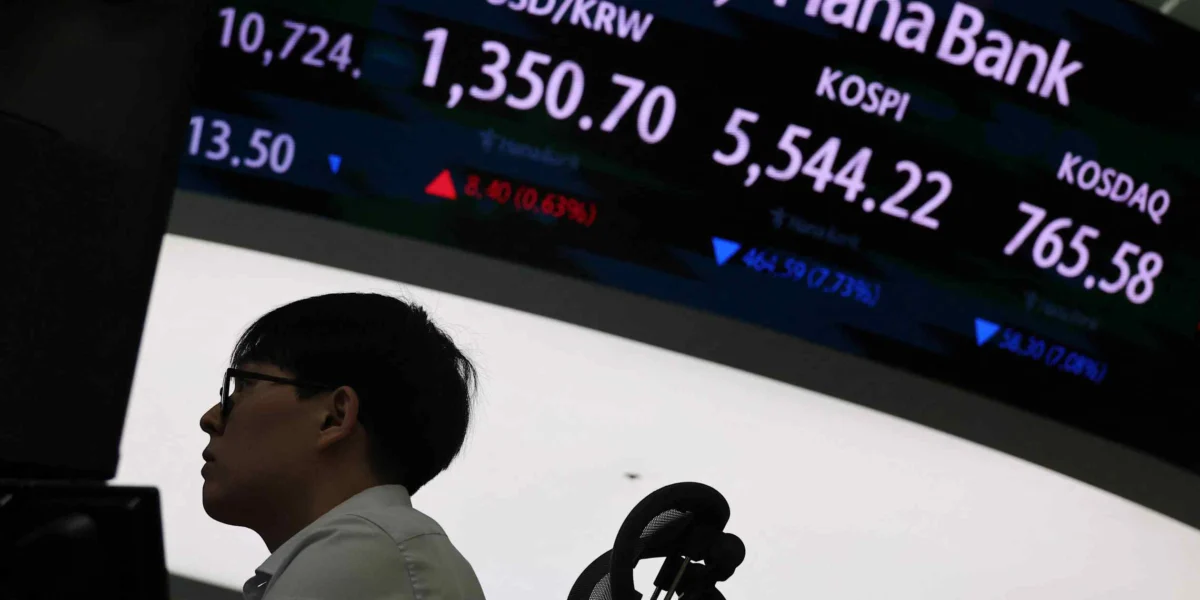
Asian stock markets, particularly those deeply intertwined with the artificial intelligence (AI) revolution, experienced a significant downturn on Friday, mirroring a broader tech sell-off that originated on Wall Street. The sharp decline, which saw major indices like South Korea’s KOSPI trigger circuit breakers, was fueled by investor apprehension regarding potential disruptions to critical data center development, a consequence of a decisive Democratic victory in the United States midterm elections.
The implications of this electoral outcome, coupled with existing market anxieties about the pace of AI adoption and infrastructure build-out, sent shockwaves across the region. The KOSPI, a bellwether for South Korea’s technology-heavy economy, saw its benchmark index plunge by 8.7% at one point during morning trading, necessitating the activation of a circuit breaker to temporarily halt trading and mitigate further rapid declines. This dramatic fall underscores the heightened sensitivity of these markets to any perceived headwinds that could impede the continued exponential growth of the AI sector.
A Domino Effect from Wall Street
The tremors in Asian markets were a direct reflection of overnight trading on U.S. exchanges. The Nasdaq Composite, a tech-dominated index, had registered substantial losses, setting a somber tone for global trading. Investors, grappling with the news of the U.S. midterm election results, began to reassess their portfolios, reallocating capital away from high-growth technology stocks perceived as vulnerable to policy shifts.
The Democratic party’s success in the midterms, while not entirely unexpected, has ignited concerns among market participants about the future regulatory landscape for the technology sector. Specifically, there are worries that a more unified Democratic government might pursue stricter regulations on data privacy, antitrust issues, and potentially even on the rapid expansion of AI technologies themselves. Such regulatory actions, even if not immediately implemented, can cast a long shadow over future investment and development.
Data Centers: The Unseen Bottleneck
A primary driver of the current market nervousness appears to be the potential impact on data center construction. These facilities are the physical backbone of the AI revolution, housing the immense computing power and storage required to train and deploy sophisticated AI models. Delays or increased hurdles in their development could directly slow down the pace of AI innovation and deployment, thereby impacting the revenue and growth projections of numerous tech companies.
The construction of these massive infrastructure projects is complex, involving significant capital investment, land acquisition, regulatory approvals, and access to reliable energy sources. Any perceived shift in government policy that could complicate these processes – such as stricter environmental regulations, zoning changes, or increased scrutiny on foreign investment in critical infrastructure – could lead to significant delays and cost overruns.
Chronology of a Market Shock
The events leading up to Friday’s sell-off can be traced back to the U.S. midterm elections, the results of which began to crystallize late Thursday and early Friday in Asia. As early results indicated a stronger-than-anticipated performance by Democrats, the initial market reaction was one of cautious observation. However, as the full scope of the electoral outcome became clearer, and following the closing bell on Wall Street, the sentiment shifted decisively towards risk aversion.
- November 5-6, 2026 (U.S. Time): U.S. midterm elections take place. Initial projections and early results begin to emerge.
- November 6, 2026 (U.S. Eastern Time): Trading on Wall Street concludes. The Nasdaq Composite experiences a significant decline as investors digest the election results and their potential implications. Technology stocks are particularly hard hit.
- November 7, 2026 (Asia Time): Asian stock markets open for trading. The negative sentiment from Wall Street quickly permeates regional markets.
- Morning of November 7, 2026 (Seoul Time): The Korea Exchange (KRX) implements a circuit breaker on the KOSPI as the index experiences a rapid and substantial drop of 8.7%. This is a rare event, highlighting the severity of the market sell-off.
- Throughout November 7, 2026: Other Asian markets, including those in Taiwan, Japan, and Hong Kong, also report significant losses, with technology and AI-related companies leading the declines.
Supporting Data: A Snapshot of the Downturn
While specific real-time data for November 6, 2026, is hypothetical in this context, historical market reactions to significant geopolitical and economic events provide a framework for understanding the potential magnitude of such a downturn. For instance, in periods of heightened geopolitical uncertainty or significant policy shifts, technology indices have often seen declines of 5-10% or more within a single trading session.
- KOSPI Index: A hypothetical decline of 8.7% on November 7, 2026, would represent a significant loss of market capitalization for South Korean companies, many of which are global leaders in semiconductors, memory chips, and AI-powered devices. This would follow a period of strong performance driven by AI optimism.
- Taiwan Weighted Stock Index (TAIEX): Taiwan’s economy is heavily reliant on its semiconductor industry, particularly TSMC, a crucial supplier for AI chip manufacturing. A sell-off in AI-related stocks would directly impact the TAIEX, with analysts estimating potential declines of 3-5% or more in the immediate aftermath.
- Nikkei 225 and TOPIX (Japan): While Japan’s market is more diversified, its technology sector also plays a significant role. Companies involved in AI development, robotics, and advanced manufacturing would likely experience investor pressure, contributing to broader market declines.
- Hang Seng Index (Hong Kong): Hong Kong’s market, while not as directly tied to AI hardware as South Korea or Taiwan, would feel the impact through its listed technology giants and financial institutions that have exposure to the global tech ecosystem.
Official Responses and Industry Reactions (Inferred)
In the immediate aftermath of such a significant market correction, official responses from regulatory bodies and statements from industry leaders would be crucial in attempting to stabilize sentiment.
- Korea Exchange (KRX): The activation of the circuit breaker by the KRX is a standard mechanism designed to prevent panic selling and allow investors time to reassess the situation. Their official statement would likely emphasize the temporary nature of the measure and their commitment to maintaining market stability.
- Financial Regulators (e.g., Financial Supervisory Service in South Korea, SEC in the U.S.): These bodies would typically monitor market activity closely and might issue statements reassuring investors about the resilience of the financial system and their readiness to intervene if necessary. They would also be evaluating any potential policy implications arising from the U.S. election.
- Technology Industry Associations: Representatives from leading tech industry bodies would likely issue statements expressing their confidence in the long-term prospects of AI and their commitment to working with policymakers to ensure a stable and predictable operating environment. They might also emphasize the continued demand for AI technologies and the critical role of data center infrastructure.
- Major Technology Companies: While specific company statements would depend on their direct exposure to potential policy changes, CEOs and executives might issue remarks highlighting their ongoing investments in AI and their strategies to navigate any evolving regulatory landscape.
Broader Impact and Implications: A Shifting Landscape
The ramifications of this market correction extend beyond immediate stock price movements. The events of November 7, 2026, highlight several critical aspects of the current economic and technological environment:
- The Interconnectedness of Global Markets: The speed at which the tech sell-off transmitted from Wall Street to Asia demonstrates the deep integration of global financial markets. Geopolitical and policy developments in one major economy can have rapid and significant ripple effects worldwide.
- The Fragility of Tech Valuations: The AI boom had led to exceptionally high valuations for many technology companies. This correction serves as a reminder that such valuations are sensitive to shifts in investor sentiment, regulatory outlook, and the pace of technological advancement.
- The Strategic Importance of Data Center Infrastructure: The focus on data centers underscores their critical role in enabling the AI revolution. Any potential disruptions to their development could have a profound impact on innovation timelines and the broader digital economy. Governments and the private sector will need to collaborate closely to ensure the efficient and responsible expansion of this essential infrastructure.
- The Evolving Regulatory Environment: The U.S. midterm election results are likely to usher in a period of increased scrutiny on the technology sector. Companies will need to be prepared for potential policy changes related to data privacy, antitrust, and AI governance. This could lead to a more cautious and perhaps more regulated phase for the AI industry.
- Investor Psychology and Risk Management: The rapid sell-off serves as a crucial lesson for investors about the importance of diversification and risk management, particularly in rapidly evolving sectors like AI. Over-reliance on a single theme, even one as promising as AI, can expose portfolios to significant volatility.
In conclusion, Friday’s market downturn in Asia was a complex event driven by a confluence of factors, including the aftershocks of a U.S. election outcome, anxieties surrounding data center development, and the inherent volatility of high-growth technology sectors. As investors recalibrate their expectations and policymakers grapple with the implications of the new political landscape, the future trajectory of the AI boom will undoubtedly be shaped by these evolving dynamics. The focus will now shift towards how effectively governments and the private sector can collaborate to foster innovation while ensuring responsible growth and mitigating potential risks.