Lina Wu
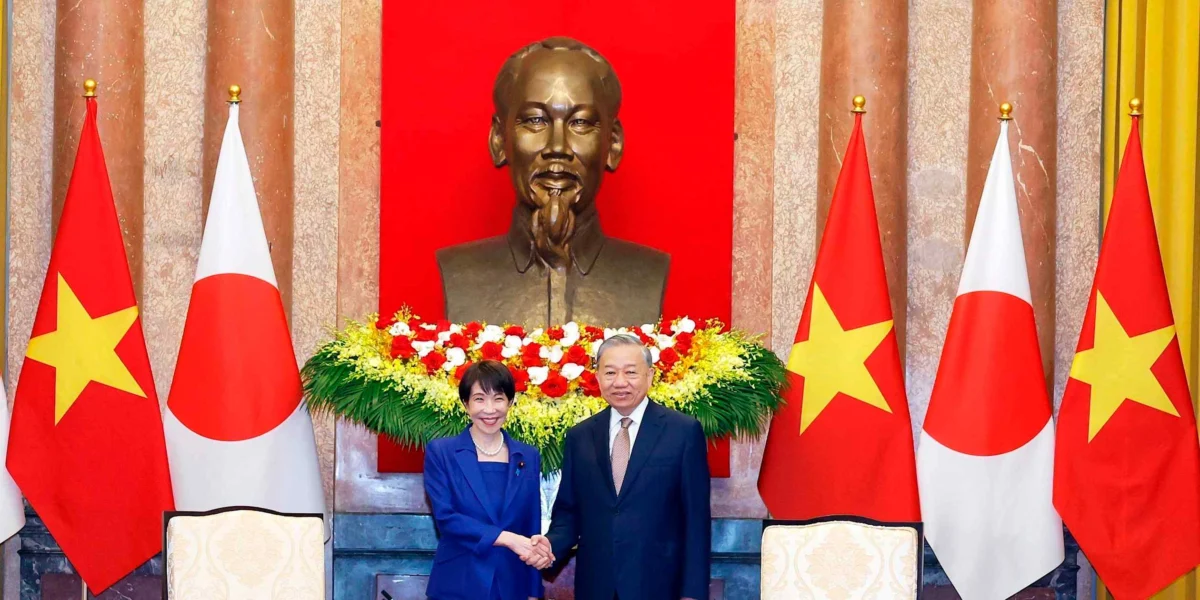
VIETNAM’S COMMUNIST PARTY CHIEF TO LAM ARRIVED IN JAPAN ON SUNDAY AGAINST THE BACKDROP OF A BILATERAL RELATIONSHIP THAT LOOKS VERY DIFFERENT FROM THE ONE BUILT OVER PREVIOUS DECADES. The visit by To Lam, a prominent figure in Vietnam’s political landscape, underscores the deepening strategic and economic partnership between Hanoi and Tokyo, a relationship that has evolved significantly from its post-war origins. The nuances of this evolving dynamic, marked by shifts in trade, investment, development aid, and burgeoning people-to-people connections, are central to understanding the contemporary geopolitical and economic landscape of Southeast Asia and its engagement with East Asia.
A Shifting Foundation: From Aid Recipient to Strategic Partner
The arrival of To Lam in Tokyo on November 8, 2026, marks a pivotal moment in the Japan-Vietnam relationship. Decades ago, Japan played a crucial role in Vietnam’s post-war reconstruction, primarily through Official Development Assistance (ODA). This aid was instrumental in rebuilding infrastructure, fostering economic growth, and laying the groundwork for Vietnam’s eventual integration into the global economy. Today, the relationship has transformed into a multifaceted partnership characterized by robust trade, substantial Japanese investment in Vietnam, and a shared strategic outlook, particularly in the context of regional security.
In the early days of engagement, Japan was a primary benefactor, offering vital financial and technical assistance to Vietnam. This period, spanning from the late 1980s and early 1990s, saw ODA flows from Japan significantly contribute to Vietnam’s economic reforms and modernization efforts. By the early 2000s, this relationship began to mature, with trade and investment taking center stage. Vietnam, with its rapidly growing economy, burgeoning workforce, and strategic location, became an increasingly attractive destination for Japanese companies seeking to diversify their supply chains and tap into new markets.
Economic Interdependence: Trade and Investment Flows
The economic dimension of the Japan-Vietnam relationship has witnessed exponential growth. Japan has consistently ranked among Vietnam’s top trading partners and foreign investors. For Vietnam, Japan represents a crucial market for its exports, ranging from textiles and footwear to electronics and agricultural products. Conversely, Vietnam imports machinery, vehicles, and consumer goods from Japan.
Supporting Data:
- Trade Volume: Bilateral trade between Japan and Vietnam has surged over the past two decades. In 2023, trade reached approximately $50 billion USD, with projections indicating continued growth. Japanese exports to Vietnam include high-value manufactured goods, while Vietnam’s exports to Japan are dominated by labor-intensive products and increasingly, components for the electronics industry.
- Japanese Investment: Japan is a leading source of foreign direct investment (FDI) in Vietnam. As of the end of 2023, cumulative Japanese FDI in Vietnam exceeded $60 billion USD, spread across various sectors including manufacturing, electronics, automotive, energy, and infrastructure. Major Japanese corporations have established significant manufacturing bases in Vietnam, leveraging its cost-competitiveness and access to regional markets.
- Sectoral Distribution of Investment: Key sectors attracting Japanese investment include electronics manufacturing (e.g., Samsung’s substantial operations, though South Korean, have influenced the broader ecosystem), automotive assembly, textiles and apparel, and food processing. More recently, investment has expanded into renewable energy, logistics, and high-tech industries, signaling a move up the value chain.
This economic interdependence is not merely transactional; it represents a strategic alignment where Japan seeks to secure its supply chains and diversify away from over-reliance on single markets, while Vietnam benefits from technology transfer, job creation, and integration into global value chains.
Strategic Convergence: Security and Regional Stability
Beyond economic ties, the relationship between Japan and Vietnam has acquired significant strategic depth. Both nations share a common interest in maintaining peace and stability in the Indo-Pacific region, particularly in the face of rising geopolitical tensions. Vietnam’s increasing assertiveness in defending its maritime sovereignty, especially in the South China Sea, has found resonance with Japan’s own security concerns.
Japan has been a vocal proponent of a "free and open Indo-Pacific," a vision that aligns with Vietnam’s desire for a rules-based international order. This shared perspective has led to increased cooperation in defense and security dialogues. While not a formal military alliance, the two countries engage in joint exercises, personnel exchanges, and capacity-building initiatives. Japan has provided Vietnam with patrol vessels and maritime security equipment, enhancing Vietnam’s coast guard capabilities.
Background Context:
The genesis of this strategic convergence can be traced back to the early 2000s, when both countries recognized the evolving regional security environment. The growing influence of China and its assertive actions in the South China Sea became a significant concern for both Japan and Vietnam. Japan, with its pacifist constitution, has been cautiously expanding its defense capabilities and seeking like-minded partners to bolster regional security. Vietnam, while maintaining its non-aligned foreign policy, has been increasingly pragmatic in forging security partnerships to safeguard its interests.
People-to-People Ties: A Foundation for Deeper Understanding
The human element of the bilateral relationship is as crucial as its economic and strategic dimensions. There has been a significant increase in people-to-people exchanges, including tourism, education, and labor migration. This growing interaction fosters mutual understanding and strengthens the cultural bonds between the two nations.
Timeline/Chronology of Key Developments:
- 1973: Diplomatic relations established between Japan and Vietnam.
- Late 1980s – Early 1990s: Japan becomes a leading provider of Official Development Assistance (ODA) to Vietnam, supporting its economic reforms.
- 1990s: Japanese investment begins to grow, focusing on manufacturing and infrastructure.
- 2000s: Bilateral trade and investment accelerate significantly. The "Japan-Vietnam Economic Partnership Agreement" (JVEPA) is signed in 2009, further liberalizing trade and investment.
- 2010s: Strategic dialogues and security cooperation begin to intensify, particularly concerning regional maritime security. Japan enhances its ODA to include defense-related assistance.
- 2014: The bilateral relationship is elevated to a "Strategic Partnership," underscoring the depth and breadth of cooperation.
- 2010s – Present: Continued surge in trade and investment. Growing number of Vietnamese laborers working in Japan, and increased Japanese tourism to Vietnam. Discussions on potential collaborations in advanced technology and digital economy.
Supporting Data:
- Tourism: Pre-pandemic, Japanese tourist arrivals in Vietnam were consistently high, and Vietnamese tourism to Japan has also seen a substantial rise. Post-pandemic recovery has seen these numbers rebound. In 2023, over 1 million Japanese tourists visited Vietnam, and a significant number of Vietnamese visited Japan, driven by visa facilitation and cultural affinity.
- Labor Mobility: Japan has become a popular destination for Vietnamese skilled and unskilled labor. As of 2023, there were over 500,000 Vietnamese working and studying in Japan, contributing significantly to both economies. Japan’s aging population and labor shortages have made Vietnamese workers an increasingly vital component of its workforce.
Official Responses and Inferred Expectations
While the original article mentions Japanese Prime Minister Sanae Takaichi shaking hands with To Lam, a more comprehensive analysis would involve inferring the nature of their discussions and the broader official stance.
Statements/Reactions (Inferred):
- From the Japanese Side (Inferred): Prime Minister Takaichi would likely have reiterated Japan’s commitment to supporting Vietnam’s continued economic development and its role as a key partner in regional stability. Discussions would have likely focused on opportunities for enhanced Japanese investment in Vietnam’s burgeoning high-tech sectors, infrastructure development, and renewable energy projects. Furthermore, Prime Minister Takaichi would have emphasized the shared importance of upholding a rules-based maritime order and the need for peaceful resolution of disputes in the South China Sea. Cooperation in areas such as digital transformation, cybersecurity, and climate change adaptation would also be high on the agenda.
- From the Vietnamese Side (Inferred): To Lam would have likely expressed Vietnam’s appreciation for Japan’s consistent support and investment. He would have highlighted Vietnam’s economic achievements and its strategic importance within ASEAN and the broader Indo-Pacific. Discussions would have focused on attracting further Japanese investment, particularly in areas that support Vietnam’s industrialization and technological advancement. Vietnam would also likely have sought Japanese support in areas such as human resource development, education, and potentially, defense modernization. The importance of maintaining peace and stability in the region and Vietnam’s commitment to its foreign policy of non-alignment while fostering strong partnerships would have been conveyed.
Broader Impact and Implications
The evolving Japan-Vietnam relationship has significant implications for regional dynamics and global economic flows.
Fact-Based Analysis of Implications:
- Regional Stability: The deepening strategic partnership between Japan and Vietnam contributes to a more balanced security architecture in the Indo-Pacific. It provides a counterweight to assertive regional powers and reinforces the principles of international law and freedom of navigation.
- Economic Diversification: For Japan, Vietnam serves as a crucial hub for diversifying its supply chains, reducing reliance on any single country. This enhances Japan’s economic resilience in an increasingly unpredictable global environment.
- Vietnam’s Economic Ascent: For Vietnam, the relationship with Japan is a key driver of its economic growth and integration into the global economy. It provides access to capital, technology, and markets, propelling Vietnam up the value chain.
- ASEAN Dynamics: The strong bilateral ties between Japan and Vietnam can influence the dynamics within the Association of Southeast Asian Nations (ASEAN), potentially fostering greater regional cooperation and collective security initiatives.
- Global Value Chains: The collaboration in manufacturing and technology transfer positions both countries to play a more significant role in shaping global value chains, particularly in the electronics and advanced manufacturing sectors.
The visit of To Lam to Japan is not merely a diplomatic event; it is a testament to a robust and evolving partnership that has moved far beyond its initial foundations. As both nations navigate the complexities of the 21st century, their strengthened ties are poised to play an increasingly vital role in shaping the economic and geopolitical landscape of the Indo-Pacific region. The continued evolution of this relationship will be closely watched by regional powers and global stakeholders alike, as it serves as a model for pragmatic and mutually beneficial international cooperation.