Lina Wu
TOKYO — Asia will take center stage for summit diplomacy in November, as U.S. President Donald Trump arrives in Asia dealing with the fallout of the U.S. midterm elections. The region is bracing for significant diplomatic engagements, with the Asia-Pacific Economic Cooperation (APEC) summit in Shenzhen, China, from November 18th to 19th, poised to be a focal point. This gathering, traditionally a platform for economic cooperation and dialogue among Pacific Rim economies, is expected to be overshadowed by burgeoning geopolitical tensions and the domestic political landscape of a key participating nation.
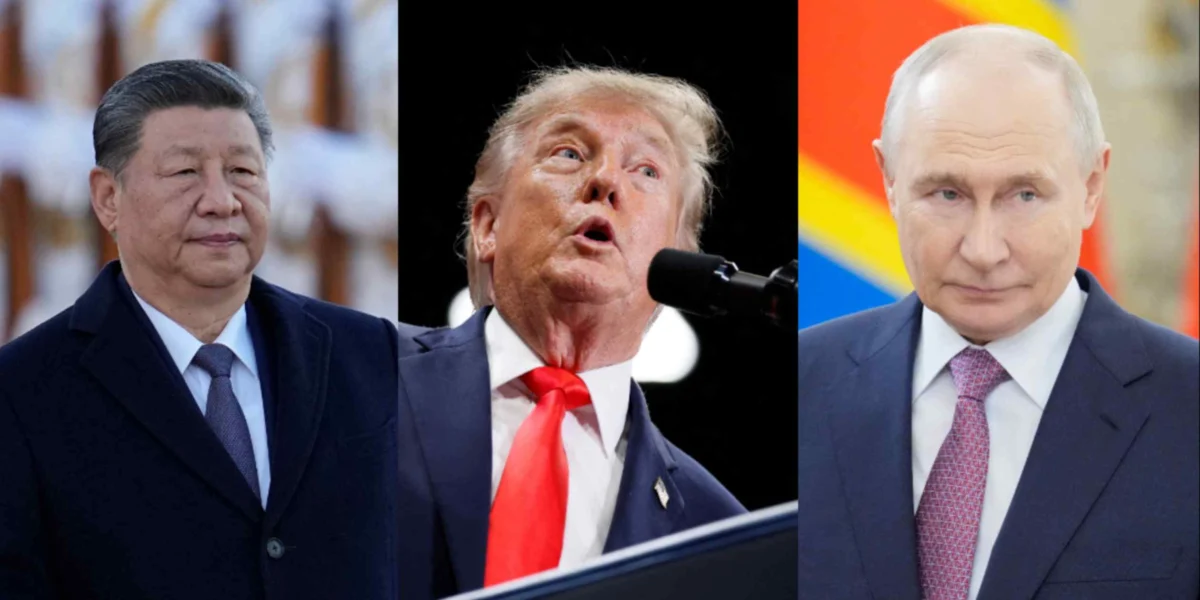
The potential for a historic three-way summit between U.S. President Donald Trump, Chinese President Xi Jinping, and Russian President Vladimir Putin on the sidelines of the APEC summit in Shenzhen has sent ripples through international diplomatic circles. While officially unconfirmed by any of the involved governments, the mere possibility of such a meeting underscores the complex and evolving geopolitical chessboard in the Indo-Pacific. This hypothetical encounter, if it materializes, would represent a significant moment, bringing together leaders of three of the world’s most influential and often adversarial powers. The agenda, unspoken but widely anticipated, would likely encompass trade disputes, regional security concerns, and the overarching implications of their respective national interests on the global stage.
The Stakes: APEC in a Fractured World
The APEC summit in Shenzhen arrives at a critical juncture for both the Asia-Pacific region and the global order. For decades, APEC has served as a vital forum for fostering economic integration, promoting free trade, and facilitating dialogue on shared challenges. However, the current geopolitical climate, marked by rising protectionism, increasing competition between major powers, and the lingering effects of global health crises, has placed significant strain on these multilateral frameworks.
The United States, under President Trump, has pursued an "America First" foreign policy, characterized by a transactional approach to international relations and a skepticism towards existing multilateral agreements. The recent U.S. midterm elections, which could result in significant shifts in congressional power, will undoubtedly cast a shadow over President Trump’s diplomatic engagements in Asia. The outcome of these elections will influence his administration’s policy flexibility and its ability to negotiate effectively on the international stage. A weakened mandate at home could embolden rivals and complicate efforts to forge consensus abroad.
China, the host nation for this year’s APEC summit, has been steadily asserting its influence in the region and globally. Under President Xi Jinping, China has championed its Belt and Road Initiative, a massive infrastructure development and investment strategy, and has sought to reshape global governance in line with its own strategic objectives. Shenzhen, a city synonymous with China’s economic reforms and technological prowess, provides a fitting backdrop for Beijing to showcase its growing capabilities and diplomatic ambitions.
Russia, under President Putin, continues to navigate a complex relationship with both the U.S. and China. While often acting as a spoiler to Western initiatives, Moscow has also sought to deepen its economic and strategic ties with Beijing, particularly in the face of Western sanctions. A trilateral meeting could offer Putin an opportunity to play a mediating role, or at least to extract concessions from both Washington and Beijing by leveraging their respective rivalries.
Potential Agenda: Beyond Trade and Economics
While APEC’s core mandate remains economic cooperation, the prevailing geopolitical realities suggest that discussions will extend far beyond trade tariffs and investment flows. The potential for a three-way summit elevates the stakes considerably, implying a discussion of issues that transcend regional economic integration.
Trade and Tariffs: Despite the focus on broader geopolitical issues, trade remains a significant undercurrent. The ongoing trade dispute between the U.S. and China, characterized by reciprocal tariffs and retaliatory measures, is a persistent source of friction. Any dialogue between Trump and Xi would likely touch upon avenues for de-escalation or resolution, though a breakthrough remains uncertain given the entrenched positions. Russia, also facing trade challenges and seeking to expand its markets, would likely express its interests in this arena.
Regional Security Architecture: The Indo-Pacific region is a theater of increasing strategic competition. Issues such as maritime security in the South China Sea, the denuclearization of the Korean Peninsula, and the growing military capabilities of various regional actors are likely to be on the minds of leaders. A meeting of the three powers could offer a rare opportunity to gauge each other’s red lines and explore potential deconfliction mechanisms, though deep-seated mistrust may prove a significant barrier.
Global Governance and Multilateralism: The summit will also serve as a platform to discuss the future of global governance. The U.S. has expressed concerns about the effectiveness and fairness of existing international institutions, while China has advocated for a more inclusive and representative global order. Russia, often critical of Western-dominated institutions, would likely align with calls for reform. The potential trilateral meeting could reveal the extent to which these powers are willing to cooperate, or further compete, in shaping the international rules-based order.
Cybersecurity and Emerging Technologies: The rapid advancement of digital technologies presents both opportunities and challenges. Concerns over cybersecurity, intellectual property theft, and the development of artificial intelligence are increasingly becoming central to international relations. Dialogue between the U.S., China, and Russia on these fronts could be crucial for establishing norms and preventing potential conflicts arising from these new domains.
Historical Context and Precedents
The idea of a major summit involving leaders of the U.S., China, and Russia is not entirely unprecedented, but a direct, informal three-way meeting on the sidelines of a multilateral event like APEC would be a significant development. Historically, diplomatic engagements between these powers have often been bilateral or part of larger, more formal international conferences.
The post-Cold War era saw periods of cooperation, particularly in arms control and counter-terrorism. However, relations have become increasingly strained in recent years, marked by strategic competition, ideological differences, and divergent national interests. The current geopolitical climate is characterized by a complex interplay of rivalry and interdependence, making any form of direct dialogue between these three leaders particularly noteworthy.
The last few years have seen a discernible shift in the global power balance, with China’s economic and military rise challenging the unipolar moment that followed the end of the Cold War. Russia, while facing economic headwinds, has continued to exert its influence through assertive foreign policy. The U.S., under the Trump administration, has signaled a departure from its traditional role as the architect of the liberal international order, opting for a more unilateral and protectionist approach.
Supporting Data and Analysis
The economic significance of the APEC region cannot be overstated. APEC economies collectively account for approximately 60% of global GDP and 48% of world trade. This makes the region a crucial engine for global economic growth and a vital market for goods and services. The stability and prosperity of this region are therefore of paramount importance to the global economy.
Trade Volumes: Bilateral trade between the U.S. and China, despite the ongoing trade war, remains substantial. In 2025, total two-way trade reached an estimated $750 billion, according to preliminary figures. Similarly, trade between Russia and China has been steadily increasing, with bilateral trade volume projected to exceed $200 billion in 2026. These figures highlight the deep economic ties that, even amidst political tensions, bind these nations.
Investment Flows: Foreign direct investment (FDI) within the APEC region is a key driver of economic development. In 2025, APEC economies attracted an estimated $1.5 trillion in FDI. Any disruption to regional stability or a worsening of trade relations could have significant implications for these investment flows, impacting job creation and economic growth across the Pacific.
Geopolitical Indicators: Various indices track geopolitical risk and tensions. The Global Peace Index, for instance, has shown a slight decline in overall global peacefulness in recent years, with particular attention paid to the Indo-Pacific region due to rising military spending and territorial disputes. The potential for a direct engagement between Trump, Xi, and Putin could either exacerbate or potentially de-escalate some of these underlying tensions, depending on the nature of the discussions.
Official Responses and Speculation
Official statements from the U.S., Chinese, and Russian governments regarding the potential three-way summit have been cautious and largely non-committal. White House spokespersons have indicated that President Trump is looking forward to engaging with regional leaders at APEC, but have refrained from confirming any specific bilateral or trilateral meetings. Similarly, Beijing has stated its commitment to a successful APEC summit and its willingness to engage in constructive dialogue with all parties. The Kremlin has also expressed its readiness for dialogue but has not offered any concrete details.
The lack of official confirmation fuels speculation, but also highlights the delicate diplomatic dance underway. Such a meeting, if it were to occur, would likely be a carefully orchestrated event, with significant prior consultation and agreement on the broad contours of any potential discussion. The implications of such a meeting would be closely watched by allies and partners of all three nations, as well as by international organizations and global financial markets.
Broader Impact and Implications
The implications of a successful or even a partially productive APEC summit, especially if it involves a high-level trilateral meeting, could be far-reaching.
For the Asia-Pacific Region: A constructive dialogue could foster greater regional stability and predictability, which is crucial for continued economic growth and development. Conversely, a breakdown in communication or an escalation of tensions could lead to increased uncertainty and risk, potentially impacting trade, investment, and security across the region.
For Global Trade and Economics: The outcomes of APEC discussions, particularly concerning trade policies and dispute resolution, could have ripple effects on global supply chains and international commerce. Any signs of de-escalation in U.S.-China trade tensions, for example, could be a positive signal for global markets.
For International Relations: The nature of the interactions between Trump, Xi, and Putin could offer insights into the future direction of great power relations. A demonstration of willingness to cooperate on shared challenges could signal a potential for a more stable multipolar world. However, an intensification of rivalries could point towards a more fragmented and conflict-prone international landscape.
For Domestic Politics: For President Trump, the outcome of his engagements in Asia could have domestic political ramifications, particularly in the context of the U.S. midterm elections. Demonstrating diplomatic successes or effectively confronting rivals could bolster his standing at home. For Xi Jinping, a successful APEC summit hosted in China would be a testament to China’s growing global influence. For Vladimir Putin, any perceived diplomatic gains could be leveraged to strengthen Russia’s international standing.
As the world turns its gaze to Shenzhen, the APEC summit promises to be more than just an economic forum. It is poised to be a critical juncture for diplomacy, a barometer of global power dynamics, and a potential turning point in the complex and often unpredictable landscape of 21st-century international relations. The decisions and dialogues that unfold in the coming days will undoubtedly shape the trajectory of global affairs for years to come.