Gilang Muhammad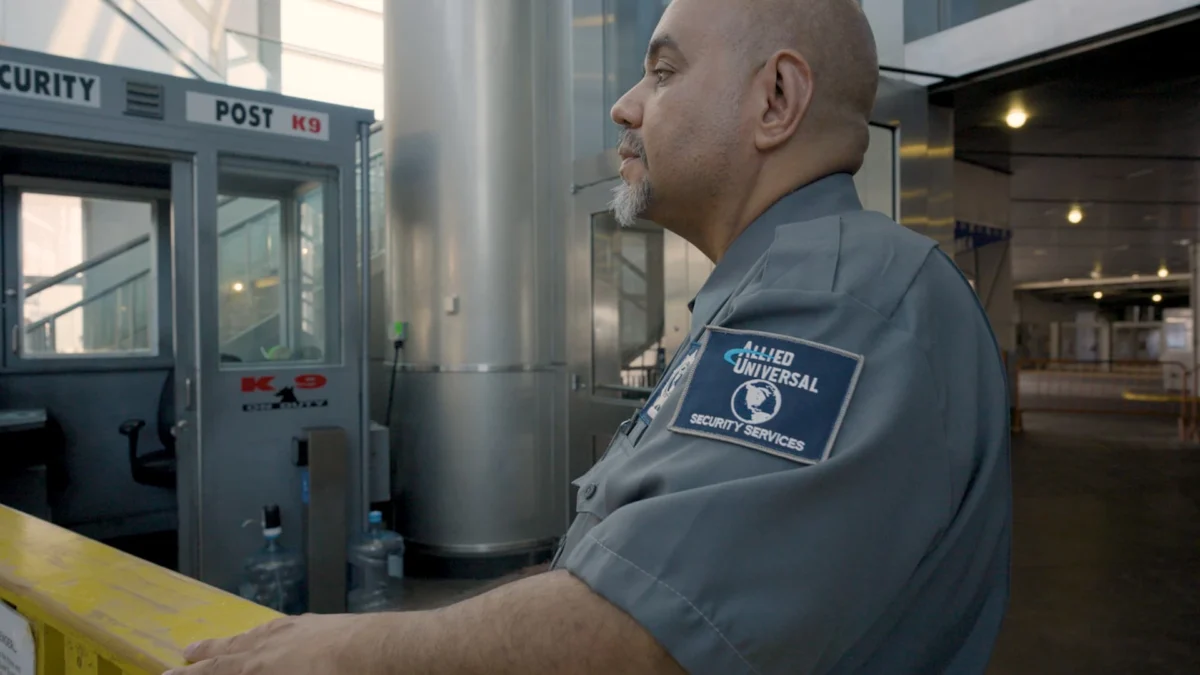
Despite a significant national decline in violent crime rates over recent decades, communities and corporations across the United States are dramatically increasing their investment in private security services. This paradoxical trend highlights a complex interplay between public perception, evolving threats, and the increasing limitations of public law enforcement, fostering a booming private protection industry. The affluent Hillcrest neighborhood in San Diego, California, serves as a poignant example of this societal shift, where local businesses have collectively decided to allocate substantial funds to private security in response to a perceived rise in violent acts and hate crimes.
Local Catalysts for a National Trend: The Hillcrest Initiative
The vibrant and historically progressive Hillcrest neighborhood, known for its diverse businesses and community spirit, found itself grappling with a surge in what its business owners described as violent acts and hate-motivated incidents. These occurrences, while perhaps not always reflected in official city-wide crime statistics, created a palpable sense of insecurity among residents and merchants. In response, the Hillcrest Business Association took decisive action in 2024. Its members pooled resources to contract a third-party security service, committing approximately $400,000 annually for an initial eight hours of unarmed security guard patrol each day. Recognizing the sustained need, the association has already earmarked an additional $150,000 for the following year, aiming to extend coverage with a second shift. Benjamin Nicholls, the association’s executive director, articulated the motivation behind this significant investment, stating, "It’s about setting a tone in the neighborhood." This sentiment reflects a growing demand for a visible, proactive security presence that supplements traditional law enforcement, which often faces resource constraints.
The National Paradox: Crime Data Versus Public Perception
Government data paints a clear picture of a sustained decline in violent crime across the United States. The Bureau of Justice Statistics’ National Crime Victimization Survey (NCVS), a self-reported measure of victimizations, indicated a striking 71% plummet in violent victimizations from 1994 to 2024. Complementing this, the Federal Bureau of Investigation (FBI) reported an estimated 9% drop in violent crime in 2025 alone, marking one of the most significant single-year declines in recent history.
However, public perception often diverges sharply from these statistics. A Gallup poll conducted in October 2025 revealed that nearly half of American adults believed crime had increased compared to the previous year. Furthermore, a March 2025 survey by the same organization found that approximately two out of three adults expressed a "great deal" or "fair amount" of worry about crime and violence. David Kennedy, director of the National Network for Safe Communities and a professor at the John Jay College of Criminal Justice, highlights this persistent disconnect: "The most fundamental fact about public perception of crime and violence in the U.S. is that it is nearly always out of step with reality." This perception gap, influenced by factors such as media reporting on high-profile incidents, the pervasive nature of social media, and localized crime spikes that may not reflect national trends, acts as a powerful driver for increased security spending.
An Industry Ascendant: The Private Security Boom
The discrepancy between statistical reality and public sentiment has fueled an unprecedented surge in the private security sector. Robert H. Perry & Associates, an industry broker, reported that revenue in the private security sector climbed an impressive 17% over the past decade, exceeding $50 billion in 2025. Outsourced services in the U.S. alone accounted for more than $35 billion, encompassing both advanced electronic security systems and manned guarding services. This growth signifies a fundamental shift in how individuals, businesses, and communities address safety and protection.
Experts attribute this boom not only to the perception of rising threats but also to a more profound societal transformation. Steve Amitay, executive director of the National Association of Security Companies (Nasco), observes that political and cultural tensions have reached a boiling point in the U.S., making once-mundane aspects of American life feel vulnerable. "Who would have thought 10 years ago that you would need to hire private security at a school board meeting or at a town meeting," Amitay remarked, underscoring the pervasive nature of this heightened anxiety. This extends to increased concerns about workplace violence, which has been ranked as the top concern for security leaders since 2021, according to the trade publication Security‘s annual benchmark report.
Allied Universal: A Global Leader in Protection
At the forefront of this burgeoning industry is Allied Universal, a privately held behemoth with an estimated annual revenue of $23 billion and operations spanning over 100 countries. The company has become a ubiquitous presence, with its uniformed guards overseeing diverse environments, from operating metal detectors at major sporting events and music festivals to inspecting bags at office buildings and securing critical infrastructure. Allied Universal proudly counts more than 80% of Fortune 500 companies among its clients and has provided security for globally significant events, including recent World Cup tournaments.
With approximately 800,000 employees, Allied Universal positions itself as the seventh-largest private employer in the world, dwarfing the workforces of major corporations like Target and Disney. This massive scale is sustained by an intensive recruitment effort: the company reports receiving around 65,000 applications, interviewing 40,000 candidates, and hiring approximately 3,500 individuals for its North America operations each week. CEO Steve Jones has publicly expressed ambitions to take the company public, a testament to its scale and market dominance.
Allied Universal’s operational strategy extends far beyond visible patrols. Glen Kucera, president of Allied Universal’s enhanced protection services division, emphasizes the company’s pervasive reach, humorously stating, "I can take you down streets where you’re going to have a tough time taking three steps without tripping over one of our dogs." In Lower Manhattan, for instance, Allied’s human-and-canine teams are strategically stationed at landmarks such as the Staten Island Ferry terminal and the World Trade Center complex, conducting searches for explosives and assisting the public. Beyond these overt measures, the company employs plainclothes workers who traverse urban landscapes, and a sophisticated command center monitors cameras, ready to dispatch on-site personnel at the first sign of a threat. Justin Kelley, a vice president at Allied and a former Connecticut State Police officer, highlighted the critical synergy: "It’s very important to have that physical guard there… At the same time, it’s extremely important to have the backstop of the covert security." This multi-layered approach reflects the increasing sophistication required to address modern security challenges.
Diverse Drivers of Demand: Corporate, Public, and Regulatory
The demand for private security services is driven by a confluence of factors extending beyond general public anxiety. Corporations are significantly increasing their spending on executive protection. An analysis by Equilar of corporate disclosures as of early August 2025 revealed that nearly 40% of S&P 500-listed firms provided security services to at least some of their executives, a substantial increase from just under 19% in 2019. The median cost for such services ballooned by 178% over that period. Prominent companies like Walmart have initiated executive security programs for the first time in recent years. This trend underscores a growing recognition among corporate boards of the need to protect their leadership from a range of threats, including physical harm, harassment, and reputational damage. In some cases, this protection even extends post-employment, as evidenced by Cracker Barrel’s July regulatory filing stating it would continue covering protective service expenses for its former CEO, Julie Masino.
Furthermore, evolving insurance requirements are playing a significant role. Nasco’s Steve Amitay notes that firms providing coverage for businesses and events have increasingly incorporated a robust security plan into their "duty of care" assessments. This means that organizations with comprehensive security measures may benefit from lower premiums or be better positioned to avoid liability in the event of an incident, thereby incentivizing private security investment.
Critically, private security is increasingly being utilized to supplement or even supplant public police forces, which are often constrained by staffing shortages and budget limitations. In Louisville, Kentucky, city lawmakers in July passed a measure mandating that certain businesses operating late at night hire private security. Similarly, the Public Works Department in Santa Fe, New Mexico, allocated nearly $1 million in its current fiscal year’s budget for contract security at various municipal facilities. Jonah Nathan, vice president of Ranger Guard, a Texas-based private security provider, articulates this growing reliance on self-sufficiency: "People need to choose their destiny. You are your first responder. You have to mitigate things before you can rely on the local law enforcement groups." This perspective highlights a shift towards a more proactive, localized approach to security, often filling gaps left by an overstretched public sector.
The Essential Yet Undervalued Security Workforce
The expanding reliance on private security has led to a significant growth in its workforce. According to the latest Bureau of Labor Statistics (BLS) estimates from May 2025, nearly 1.3 million Americans were employed as security guards. This figure is almost double the number of individuals working as police and sheriff’s patrol officers nationwide. Over the period between 2016 and 2025, the number of security guards surged by more than 16%, while the national police force grew by only about 2%.
Despite their increasing numbers and critical role, the security guard workforce faces considerable challenges. A July report from the UC Berkeley Labor Center projects that while the total number of security guards is expected to remain relatively flat through 2034, employers will continue to hire due to exceptionally high turnover rates. In 2024, the annual churn in the security industry reached 89%, significantly higher than the 66% average across all private-sector payrolls.
Security companies often market these positions as vital for social order and largely insulated from automation by artificial intelligence. However, the role inherently carries significant safety risks and is characterized by below-average compensation. The May 2025 BLS report indicated a mean wage for security guards of $20.42 per hour, or $42,470 annually. This is considerably less than the $33.54 per hour ($69,770 annually) earned by the average worker across all occupations, and substantially below the $38.08 per hour ($79,200 annually) for police and sheriff’s patrol officers. Furthermore, the UC Berkeley Labor Center report revealed that more than two out of every five security guards lack health insurance through their or a family member’s employer. Alarmingly, the analysis also found that guards are significantly more likely to die while on the job compared to the typical employee across other industries. Enrique Lopezlira, director of the UC Berkeley Center’s Low-Wage Work Program, summarized the plight of this critical workforce: "This is an essential workforce that’s being asked to do more and more, yet the pay, training and other labor standards of the job have not kept up."
The stark realities faced by security guards were tragically underscored by an incident at the Islamic Center of San Diego in May 2026. During a shooting attack, an on-site security guard was among three people killed. Authorities later credited the slain guard with bravely slowing down the attack, an action that likely prevented a larger tragedy. The San Diego Police Department, despite reporting staffing shortages, stated that its officers were on the scene within minutes and committed to reviewing whether workforce levels impacted their response capability. This incident powerfully illustrates the often-heroic, yet under-recognized, sacrifices made by private security personnel.
The Gun Paradox and Community Resilience
The perception of increased danger, even amid falling crime rates, is further complicated by the prevalence of firearms in American society. While homicide rates have declined from their peak, they remain higher than in comparable developed countries, a difference often attributed to relatively loose restrictions on firearms in the U.S. Ironically, this widespread availability also contributes to the public’s desire for self-protection. A study by Harvard and Northeastern researchers found that over 11 million Americans became first-time gun owners between 2021 and 2024. Concurrently, annual non-military gun production in the U.S. approximately tripled in 2023 compared to two decades prior. As David Kennedy notes, "The less secure people feel, the more likely they are to take steps to protect themselves and their loved ones."
Amidst these complex dynamics, the importance of trained, proactive security measures becomes undeniable. The experience of Temple Israel in metro Detroit offers a compelling testament to this. In March, an attacker drove into the synagogue, which was filled with children. The synagogue’s in-house security staff mobilized within seconds, effectively neutralizing the threat and ensuring that no community members were killed. Andy Bocknek, the temple’s past president, hailed the guards as heroes, emphasizing, "It is a miracle that they kept everybody as safe as they did. Had we not had people who were so committed to the institution, to the people that they see every day, I can’t even imagine what this may have looked like."
This incident, much like the tragic events in San Diego, underscores that while overall crime statistics may trend downwards, the potential for high-impact, violent incidents remains a significant concern for communities. The burgeoning private security industry, therefore, represents more than just a reaction to fear; it is an evolving, multi-faceted response to a complex tapestry of perceived threats, public safety gaps, corporate liabilities, and the deep-seated human desire for security in an increasingly uncertain world. As communities and businesses continue to navigate this landscape, the role of private protection services is likely to grow, prompting ongoing discussions about their integration with public law enforcement, their impact on social equity, and the welfare of the essential workforce that underpins them.