Gilang Muhammad
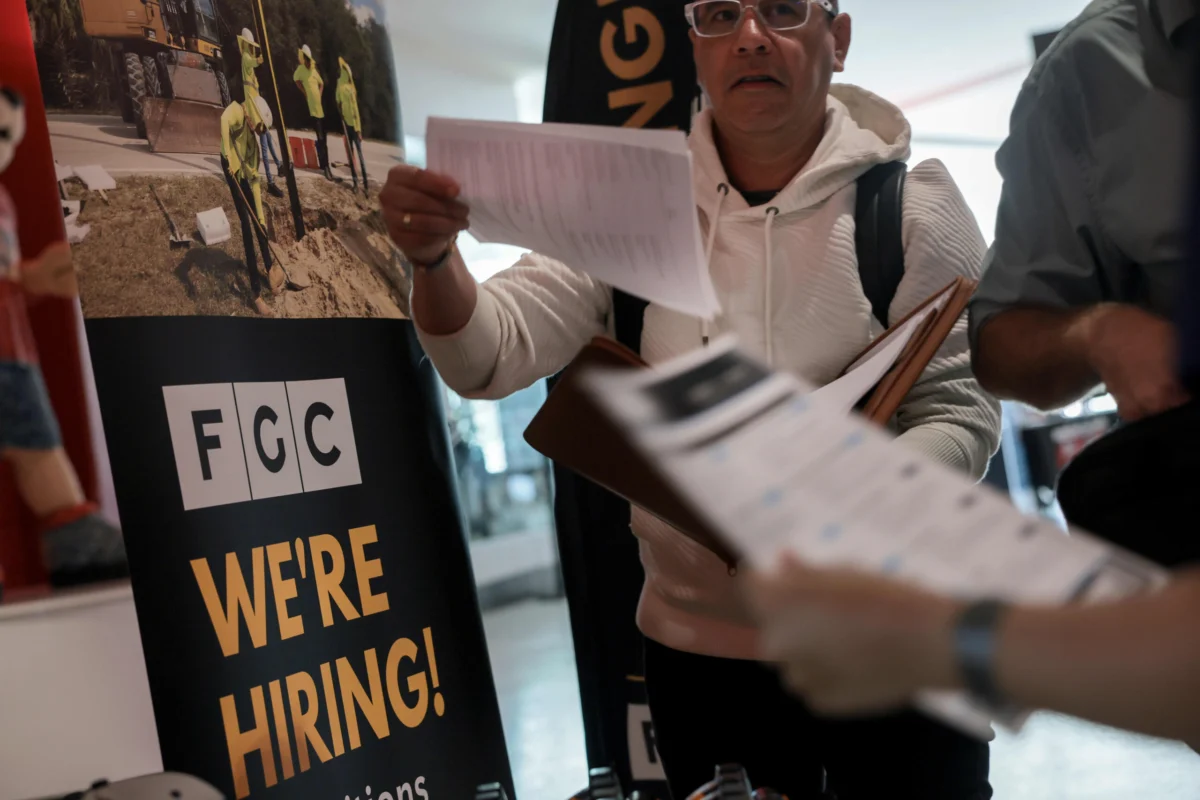
The U.S. labor market delivered a stunning surprise in October 2026, with nonfarm payrolls surging by an unexpected 165,000 jobs. This robust growth significantly outpaced Wall Street’s modest forecast of just 59,000, as reported by the Bureau of Labor Statistics (BLS). Far from signaling a slowdown, the latest jobs report challenges prevailing anxieties about artificial intelligence’s potential to decimate employment, instead suggesting a nascent phase where AI is actively creating new job categories and bolstering existing ones. Beyond the headline figures, a closer examination reveals three pivotal, yet often overlooked, categories that underpinned this remarkable expansion: a burgeoning demand for consulting services linked to AI adoption, a significant uptick in temporary hires signaling potential future growth, and a substantial boost from campaign-related spending in the lead-up to the highly anticipated 2026 midterm elections. This confluence of factors paints a nuanced picture of an adaptable and unexpectedly resilient economy.
A Deeper Look at October’s Economic Resilience
The October jobs report arrived amidst a complex economic backdrop. Inflationary pressures, though moderating from their peaks, remained a concern, prompting the Federal Reserve to maintain a cautious stance on interest rates. Global geopolitical tensions continued to simmer, adding layers of uncertainty to supply chains and international trade. Domestically, consumer confidence had shown signs of wavering in previous months, and businesses, particularly in sectors sensitive to interest rates, were exercising prudence. Against this landscape, the 165,000 new jobs represented a powerful counter-narrative, suggesting underlying strengths and new drivers of economic activity that many analysts had underestimated. The unemployment rate held steady at 3.8%, near historic lows, while wage growth continued at a steady pace, indicating a competitive environment for employers. The labor force participation rate also saw a slight uptick, a positive sign for an economy grappling with demographic shifts. This unexpected buoyancy has led economists and policymakers alike to re-evaluate their projections for the remainder of the year and into 2027, with many now considering a more optimistic trajectory for job creation.
The AI Paradox: Consultants Thrive Amidst Technological Transformation
Perhaps the most compelling revelation from the October report lies in the consulting sector, a segment previously viewed with skepticism regarding its resilience against the rise of artificial intelligence. Hiring for management, scientific, and technical consultants experienced a significant surge, adding 17,300 jobs between September and October. This marks the largest month-over-month increase for the profession in nearly two years and propelled the total headcount for these specialized workers past 1.9 million for the first time on record, according to BLS data. This category alone accounted for a substantial 25% of the entire professional and business services sector’s gains for the month, underscoring its pivotal role in the recent job growth.
The consulting industry had largely seen growth stall since 2023, following an accelerated expansion during the pandemic era. Concerns had mounted on Wall Street that AI, with its promise of automation and enhanced analytical capabilities, would reduce the need for human consultants, leading to a contraction in demand for their services. This trepidation was reflected in the stock performance of major consulting firms; Gartner, for instance, saw its shares lose over half their value in the past three years, while Accenture and FTI Consulting experienced drops of approximately 18% and 9% respectively, starkly underperforming the S&P 500, which climbed roughly 74% over the same period.
However, October’s data suggests a profound shift in this narrative. Economists are now widely speculating that this recent jump is directly driven by businesses aggressively seeking external expertise to navigate the complexities of AI adoption. Gartner itself, in a September forecast, projected that worldwide AI spending would reach an staggering $2.7 trillion in 2026, representing a nearly 50% increase year-over-year. This monumental investment is not merely in AI software or hardware; it also fuels a critical demand for human intelligence to strategize, implement, integrate, and manage AI solutions across diverse organizational structures.
Jeffrey Roach, chief economist at LPL Financial, highlighted the consulting sector as a "bright spot" in October, emphasizing that "The AI buildout and corporate interests to increase utilization will keep the technical consultants employed." Roach drew parallels to the late 1990s, when firms similarly rushed to integrate new internet technologies, leading to double-digit growth in consulting roles. Industry observers now concur, noting that companies are grappling with myriad challenges in their AI journeys, from developing robust AI strategies and ensuring data privacy and security, to managing ethical implications, designing effective AI governance frameworks, and retraining their existing workforces. This complex ecosystem requires specialized knowledge that often resides outside internal capabilities, thus driving the demand for external consultants. These roles span AI strategy consultants, data scientists specializing in AI implementation, machine learning engineers, AI ethics advisors, and change management consultants focused on AI-driven transformations.
This unexpected boom in AI-related consulting jobs profoundly challenges the more dystopian predictions of widespread AI-induced unemployment. Instead, it posits AI as a catalyst for job transformation, creating new categories of high-skill, high-value work. An assessment by Moody’s Analytics further reinforces this perspective, estimating that AI has generated a net 786,000 jobs since the launch of ChatGPT in November 2022. This job creation extends beyond direct consulting, encompassing areas like data center construction, specialized software development, and AI infrastructure management. Mark Zandi, chief economist at Moody’s, eloquently summarized this shift in a recent social media post, stating, "Wasn’t AI supposed to destroy jobs? The most dystopian scenarios even called for mass unemployment. That risk hasn’t gone away, and AI-driven productivity gains could still shift into a higher gear. But for now, AI is adding to job growth, not subtracting from it." This suggests that while AI may automate routine tasks, it simultaneously generates demand for new human expertise in managing, optimizing, and innovating with these advanced technologies.
Temporary Hires: A Glimmer of Future Strength or Seasonal Anomaly?
Another notable contributor to October’s robust job growth came from the temporary staffing sector, which saw its payrolls increase by 18,600. This represents one of the largest month-over-month increases for the subsector since 2022 and accounted for a significant 27% of the total gains within the professional and business services sector. While the overall size of this workforce remains below its record highs set in 2022, the recent growth is undeniable, with headcount expanding by roughly 3% since December 2025, reaching levels last observed in April 2025 – a period marked by corporate caution following President Donald Trump’s plans for steep tariffs.
Economists traditionally view temporary hiring as a critical leading indicator for the broader labor market. The conventional wisdom dictates that businesses often hire workers on a short-term or contractual basis to test market demand, manage project-specific needs, or evaluate potential full-time employees without immediate long-term commitments. If economic conditions remain favorable and demand proves sustained, these temporary roles frequently transition into permanent positions, signaling confidence and sustained growth.
However, interpreting the October surge in temporary hires requires careful consideration, particularly given the proximity to the year-end holiday shopping season. The boost could be a direct result of employers staffing up for the anticipated surge in consumer activity. While the BLS meticulously adjusts its numbers to account for typical seasonal trends, the holiday hiring season has shown a consistent pattern of creeping earlier each year. This evolving trend can sometimes obscure the immediate interpretation of raw data, as the BLS’s seasonal adjustment models may not immediately capture these accelerating shifts.
A crucial barometer for holiday labor demand often lies in the couriers and messengers category. Interestingly, this sector also saw a significant increase in October, with just over one in ten new jobs falling into this area. This parallel growth lends credence to the hypothesis that at least a portion of the temporary hiring surge is indeed holiday-related. Jason Pride, chief of investment strategy and research at Glenmede, a wealth management firm, noted that this category "bears watching for reversal in the months ahead," underscoring the potential for these gains to be ephemeral once the holiday rush subsides.
Despite the seasonal ambiguity, the sheer volume of temporary hiring still suggests a degree of corporate optimism. Companies are clearly willing to invest in additional human capital, even if on a short-term basis, indicating either confidence in future demand or an immediate need to scale operations. Should a substantial portion of these temporary workers transition to permanent roles in early 2027, it would provide strong evidence of a sustained strengthening of the labor market, defying earlier predictions of a more pronounced cooling. Conversely, a sharp decline in this category post-holidays could temper enthusiasm, signaling a more cautious approach from employers.
Election Spending: A Cyclical Boost to Payrolls
The final, distinct factor contributing to October’s surprising payroll numbers is directly linked to the intensive and financially unprecedented 2026 congressional election cycle. Employment in political organizations has historically exhibited predictable spikes leading into midterm or presidential elections, with staffing levels typically peaking in October of those years, according to BLS analyses. This trend was evident in the nonfarm payroll expansions observed in the months preceding the 2018 and 2022 midterm elections.
What makes the 2026 cycle particularly impactful is its sheer scale. Analyses from OpenSecrets, a leading money-in-politics watchdog group, predict that the 2026 congressional election is poised to become the most expensive midterm on record, with total spending projected to exceed $12 billion. This unprecedented influx of campaign funds translates directly into a significant, albeit temporary, surge in employment. Billions of dollars are funneled into various campaign activities, creating a wide array of paid gigs. These roles range from traditional door-knocking and phone banking to more contemporary digital outreach specialists, social media managers, data analysts, event organizers, administrative staff, and communications personnel. Each campaign, across thousands of federal, state, and local races, requires a dedicated workforce to execute its strategy, mobilize voters, and disseminate its message.
While these election-related jobs are inherently cyclical and expected to recede rapidly once the polls close in early November, their concentration in October provided a significant, if transient, boost to the national payroll figures. This category highlights how even short-term, event-driven economic activity can have a measurable impact on national employment statistics during specific periods. The sheer magnitude of political spending in 2026 amplified this effect, contributing a notable, if difficult to precisely quantify, number of temporary jobs across the country. Understanding this unique electoral dynamic is crucial for a complete interpretation of the October jobs report, distinguishing between sustainable economic trends and temporary accelerations.
Broader Implications and the Path Forward
The October 2026 jobs report presents a complex yet overwhelmingly positive narrative. The surprising surge of 165,000 nonfarm payrolls defied widespread expectations of a slowing labor market, instead highlighting a resilience driven by diverse and, in some cases, novel factors. The most profound implication stems from the robust growth in the consulting sector, which offers compelling evidence that artificial intelligence, at least in its current phase, is acting as a significant job creator and transformer rather than solely a destroyer. This shift challenges a prevalent dystopian outlook, suggesting that the economy is adapting by generating new demands for specialized human expertise in navigating technological frontiers. This dynamic implies a future labor market characterized by continuous upskilling and a focus on roles that complement, rather than compete with, AI capabilities.
The strong showing in temporary hires, while potentially influenced by holiday seasonality, nonetheless reflects a willingness among businesses to invest in human capital, indicating a degree of confidence in future economic activity. Monitoring the conversion of these temporary roles into permanent positions in the coming months will be crucial for assessing the underlying strength and sustainability of this trend. Lastly, the significant boost from election spending underscores the cyclical, yet powerful, impact of major political events on short-term employment figures, a factor that will naturally dissipate post-election.
Looking ahead, economists will closely scrutinize upcoming jobs reports for signs of whether these trends persist. Will the demand for AI consultants continue its upward trajectory, signaling a sustained AI-driven economic expansion? Will temporary workers find permanent homes, affirming a robust and growing labor market? And how quickly will the electoral job boost fade, revealing the underlying economic momentum? The October 2026 jobs report, therefore, is not merely a snapshot of the past month; it is a critical pivot point, offering a glimpse into the evolving nature of work and the unexpected drivers shaping the American economy in an era of rapid technological transformation and dynamic political landscapes. The overall picture suggests a more adaptable and robust labor market than many had anticipated, offering a cautious but distinct note of optimism for the future.