Gilang Muhammad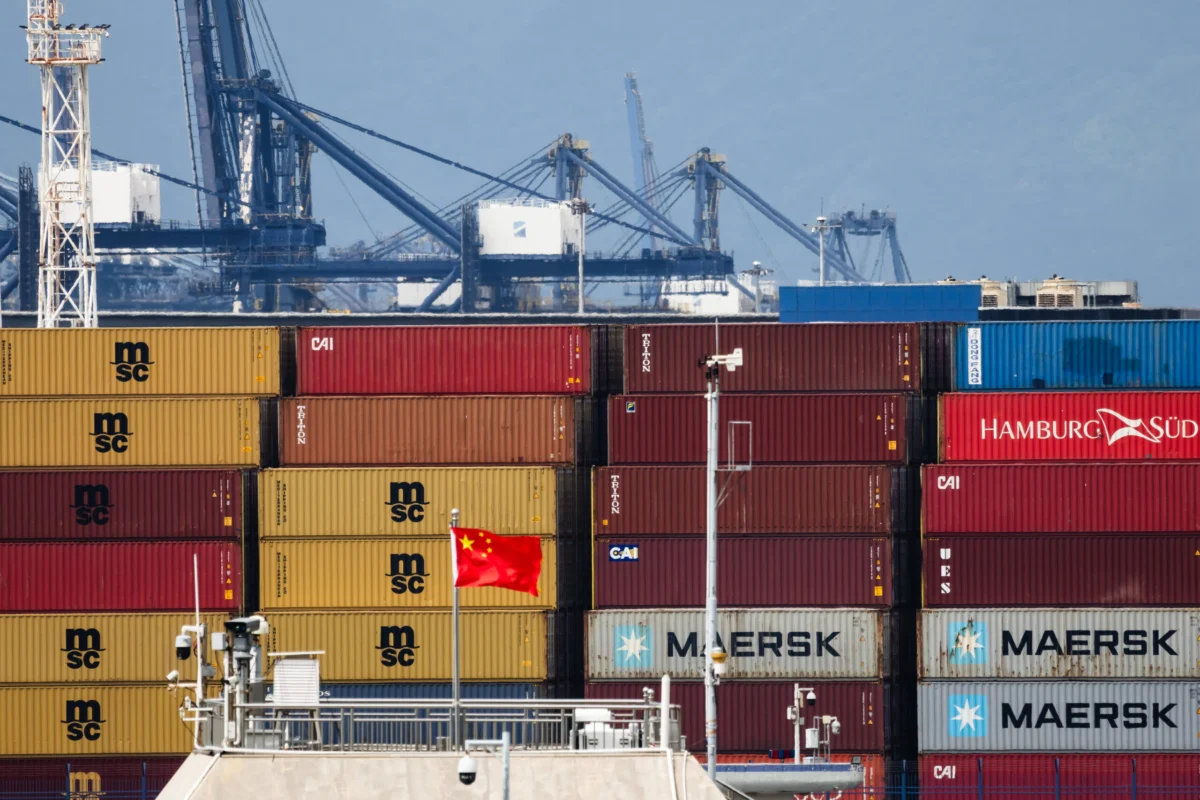
Shenzhen, China – August 2026 saw China’s trade growth accelerate, propelled by a formidable surge in exports that continued to underpin the world’s second-largest economy amidst persistent weaknesses in domestic demand. Official customs data released on Tuesday indicated a complex economic picture, where an impressive export performance mitigated concerns over slower-than-anticipated import growth, ultimately widening China’s substantial trade surplus and intensifying international calls for economic rebalancing.
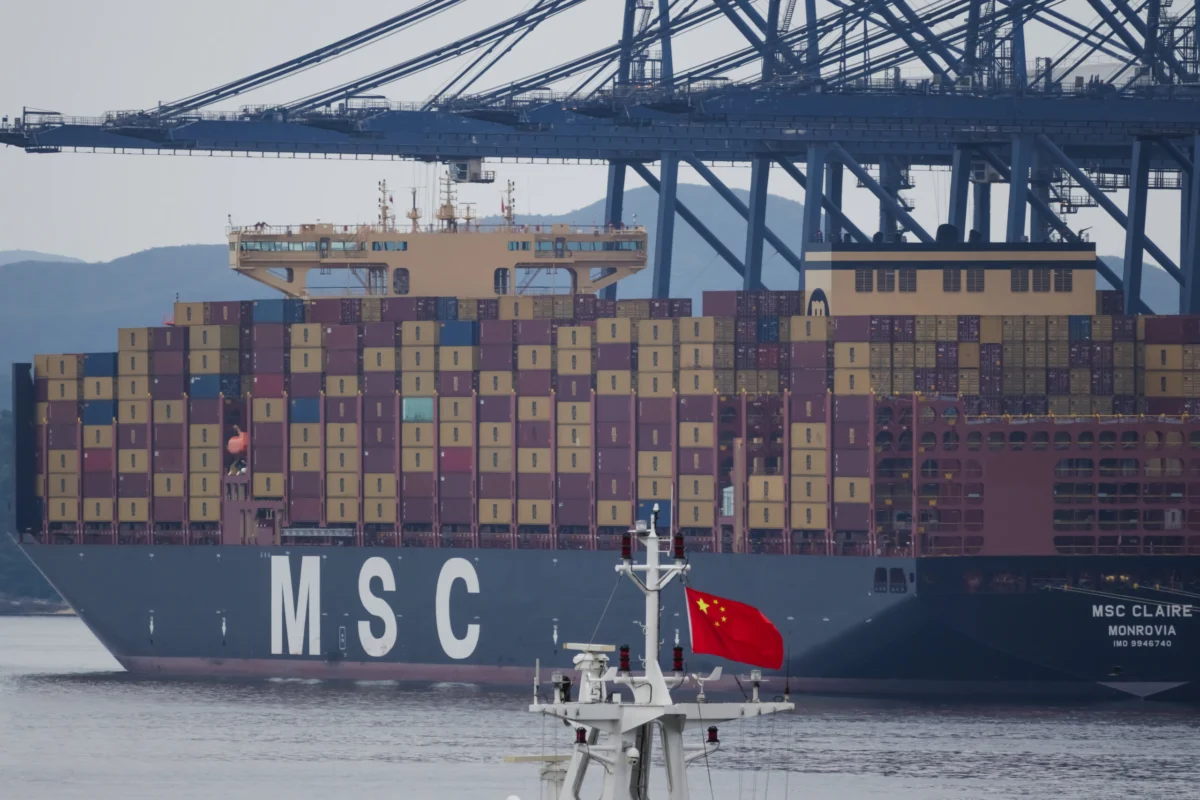
The latest figures revealed that exports expanded by 25% in U.S. dollar terms in August compared to the previous year, slightly surpassing the 23.9% increase recorded in July and aligning with Reuters-polled analysts’ forecasts. This robust export trajectory, particularly visible in key industrial hubs like Yantian Port where containers bearing the insignia of global shipping giants such as MSC, Maersk, and Hamburg Süd are perpetually stacked, underscores China’s enduring role as a global manufacturing powerhouse. The sustained demand for Chinese goods, especially high-tech components crucial for the global build-out of artificial intelligence (AI) infrastructure, has emerged as a primary growth driver, effectively cushioning the economy from geopolitical headwinds, a subdued internal market, and a protracted slump in domestic investment.
Conversely, imports experienced a rise of 28.2% last month, quickening from 27.5% in July but falling short of economists’ projections of a 30% increase in a Reuters poll. This discrepancy between surging exports and more modest import growth pointed to a critical underlying issue: the persistent tepidity of China’s domestic demand. As a direct consequence of this divergence, China’s trade surplus swelled to an eye-watering $119.09 billion in August, up from $112.5 billion in July, marking a significant accumulation of foreign exchange reserves and further highlighting the economy’s reliance on external markets.
Regional Trade Dynamics and Imbalances
A detailed breakdown of trade flows revealed notable shifts and enduring patterns. Shipments from China to the United States surged by 34.4% in August, extending a trend of double-digit gains observed for the majority of the year. Imports from the U.S. also grew, albeit at a slower pace of 17.8%, according to CNBC’s calculations of official data. This continued strong performance in the bilateral trade relationship comes amidst a backdrop of ongoing geopolitical tensions and trade disputes, suggesting that economic interdependence remains a powerful force despite political friction.
Trade with the European Union presented a more muted picture, with Chinese exports expanding by 6.6% and imports ticking higher by a mere 0.7% last month. This disparity, particularly the anemic growth in EU imports, further contributes to the overall trade imbalance. In a significant outlier, China’s imports from South Korea more than doubled last month, while exports to the East Asian nation jumped nearly 50%. This exceptional growth with South Korea is largely attributed to the intricate supply chains for semiconductors and advanced electronics, where both nations play critical roles in the production and assembly of high-tech goods.
Zhiwei Zhang, president and chief economist at Pinpoint Asset Management, articulated the prevailing sentiment, stating, "China continues to rely on exporters to support the economy as domestic demand remains subdued." Zhang also highlighted the "mounting pushback from governments globally over its trade imbalances," indicating that the economic strategy, while delivering headline growth, is generating friction on the international stage.
The Yuan’s Role and International Scrutiny
The performance of China’s currency, the offshore yuan, remained largely stable following the data release on Tuesday, trading at 6.7099 per U.S. dollar. Despite the controversies surrounding its valuation, the Chinese currency has shown resilience this year, outperforming many of its Asian peers by strengthening 3.8% year-to-date against the greenback.

However, China’s substantial trade surplus and the perceived undervaluation of its currency have ignited a chorus of calls from economists and foreign officials for Beijing to allow for greater appreciation of the yuan. Brad Setser, a senior fellow at the Council on Foreign Relations, estimated last month that the Chinese currency is undervalued by as much as 20%, a factor he argues significantly contributes to its export boom by making Chinese goods cheaper on the global market.
This breakout performance in China’s exports has drawn intense scrutiny from Western trading partners, who are increasingly demanding that Beijing rebalance its trade structure and significantly boost domestic demand to reduce its reliance on exports. The Group of 20 (G20) finance ministers, who convened in the U.S. earlier this month, issued a joint statement that explicitly criticized economies heavily reliant on exports, with China notably being the sole dissenting member. Beijing swiftly pushed back on these trade complaints, characterizing them as "an excuse to pressure and restrict China," underscoring the deep divisions on trade policy among major global economies.
Pan Gongsheng, Governor of the People’s Bank of China (PBOC), addressed these concerns during a speech at the G20 summit, asserting that China has "never actively pursued a trade surplus, nor has it depreciated the currency to gain trade competitiveness." He also reiterated China’s commitment to maintaining an open market for foreign businesses, attempting to reassure international partners amidst rising protectionist sentiments.
Despite these trade-related frustrations, analysts suggest that Washington’s concerns are unlikely to derail the broader bilateral relationship ahead of a high-stakes visit by Chinese leader Xi Jinping to Washington D.C., scheduled later this month. This perspective is partly based on the U.S.’s narrowing deficit with China and its increasing trade disputes with other trading partners, which may shift some of the focus away from Beijing. The upcoming summit is anticipated to cover a wide array of topics, from trade and technology to regional security and climate change, highlighting the multifaceted nature of the U.S.-China relationship.
Beijing’s Policy Response and Economic Outlook
Domestically, Beijing is grappling with the challenge of stimulating sustainable growth. After a solid start to the year, China’s economic momentum sputtered, with GDP growth slowing to a more than three-year low of 4.3% in the second quarter, falling short of the government’s annual target range of 4.5%-5%. Data released in July further illustrated the weakening domestic demand and investment, alongside a contraction in manufacturing activity for the second consecutive month.
In response to these internal pressures, Beijing has accelerated fiscal spending in recent weeks. Neo Wang, China strategist at Evercore ISI, expressed optimism that growth would regain some momentum in the second half of the year, citing "a sense of urgency and determination in Beijing’s recent policy communications" and stabilizing manufacturing activity in August. A key policy initiative includes plans to fund a $54 billion capital injection into several state-owned banks and insurers, a strategic move aimed at bolstering growth and ensuring financial stability amidst constrained stimulus options. This injection is intended to recapitalize these crucial institutions, enabling them to lend more and support economic activity, particularly in areas struggling with liquidity and investment.
Economists are also anticipating further monetary easing measures. Shan Guo, a partner at China-focused Hutong Research, projects one or two interest-rate cuts by year-end. The timing and pace of these cuts, Guo suggests, will be intricately linked to the Federal Reserve’s policy decisions, the Ministry of Finance’s bond issuance schedule, and the yuan’s pace of appreciation. Guo further elaborated that a stronger yuan provides the People’s Bank of China with greater latitude to cut interest rates, even if the Federal Reserve continues its tightening cycle, as it would mitigate concerns about capital outflows and inflationary pressures from imported goods.
The reliance on exports, while a temporary boon, presents a structural vulnerability for China’s economy. The long-term objective remains a transition towards a growth model driven more by domestic consumption and high-quality investment, rather than external demand. This rebalancing act is crucial not only for China’s internal stability but also for alleviating trade tensions with its major partners and fostering a more equitable global economic environment. The August trade data, therefore, serves as a stark reminder of the delicate tightrope Beijing walks between maintaining economic momentum and addressing fundamental imbalances that have global ramifications.
The challenges facing China are multifaceted, encompassing not only economic restructuring but also navigating a complex geopolitical landscape where trade is often intertwined with strategic competition. The coming months, particularly with high-level diplomatic engagements on the horizon, will be critical in determining whether China can successfully pivot towards a more sustainable and less contentious growth path, or if the current patterns will continue to fuel international friction and internal economic pressures. The global community watches closely, understanding that China’s economic trajectory has profound implications for global trade, finance, and stability.