Lina Wu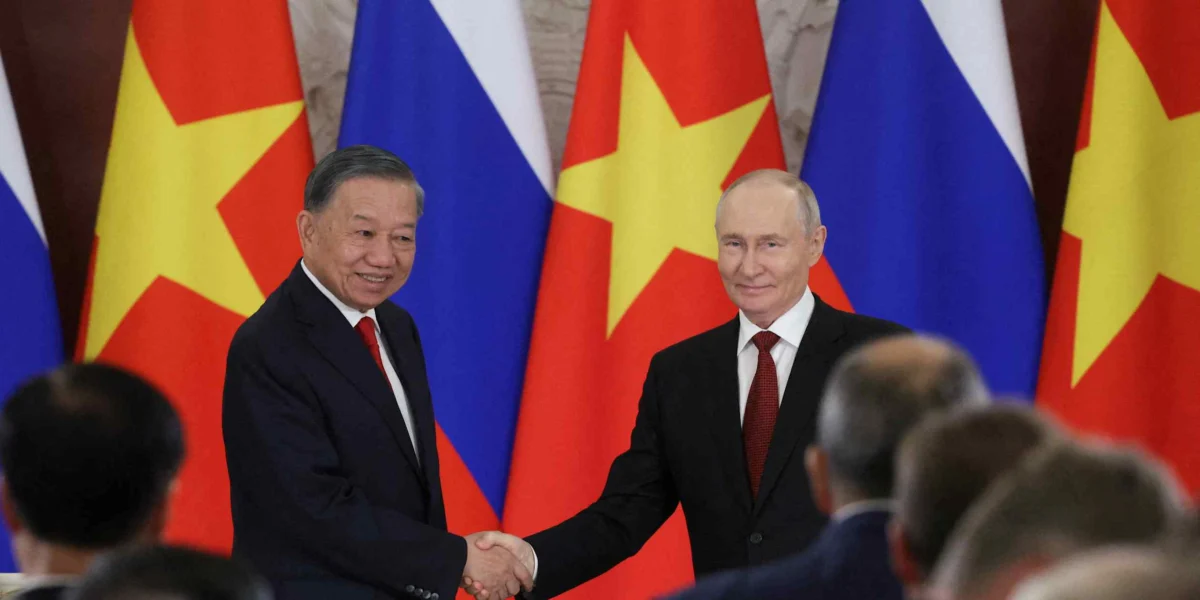
HANOI — Vietnamese President To Lam and Russian President Vladimir Putin concluded a high-level summit in Moscow on September 9, 2026, pledging to significantly deepen energy cooperation between their nations. The agreement signals a strategic reinforcement of bilateral ties, with a particular emphasis on expanding collaborations in nuclear power, oil, and gas sectors, according to official reports from the Vietnam News Agency. The meeting, which took place at the Kremlin, underscores the enduring strategic partnership between Hanoi and Moscow, even as the global geopolitical landscape continues to evolve rapidly.
A Strategic Convergence: The Moscow Summit
The summit between President To Lam and President Putin marked a critical juncture in the long-standing relationship between Vietnam and Russia. The discussions focused on a comprehensive agenda, with energy security and development emerging as paramount themes. Both leaders expressed a mutual commitment to strengthening their economic and strategic partnership, leveraging each nation’s strengths to foster mutual growth and stability. The emphasis on energy cooperation is particularly noteworthy, given Vietnam’s rapidly growing demand for power to fuel its robust economic expansion and Russia’s position as a major global energy producer and technological leader in the nuclear sector.
Sources within the Vietnamese delegation indicated that the discussions revolved around concrete steps to enhance existing energy projects and explore new avenues for collaboration. This includes a renewed focus on nuclear power, a sector where Russia possesses unparalleled expertise and technological capabilities. Vietnam has long harbored ambitions to develop a civilian nuclear power program to diversify its energy mix and meet its escalating electricity needs. The discussions in Moscow are believed to have revisited plans for potential Russian involvement in building and operating nuclear power plants in Vietnam, a prospect that has been on the table for years but now appears to be gaining renewed momentum.
Beyond nuclear energy, the leaders also addressed the expansion of cooperation in the oil and gas industry. Vietnam, while possessing some domestic reserves, is a net importer of energy. Russia, conversely, is a dominant player in global oil and gas markets, with significant upstream and downstream capabilities. The agreements are expected to facilitate increased Russian investment in Vietnam’s exploration and production activities, as well as potential joint ventures in refining and distribution infrastructure. This could translate into greater energy security for Vietnam and a valuable market for Russian energy exports.
Background and Context: A Longstanding Partnership
The strategic partnership between Vietnam and Russia dates back to the Soviet era, characterized by strong political, economic, and military ties. Despite the dissolution of the Soviet Union, Vietnam has consistently maintained a close relationship with its successor state, Russia. This relationship has been built on mutual respect, shared strategic interests, and a history of cooperation that has weathered numerous global shifts.
Vietnam’s pursuit of energy diversification is a critical component of its national development strategy. As one of Southeast Asia’s fastest-growing economies, its energy consumption has surged in recent decades. The country relies heavily on coal and hydropower, but faces challenges related to environmental sustainability and the need for a more stable and reliable power supply. Nuclear power has been identified as a long-term solution, offering a low-carbon, high-capacity energy source. Russia, through its state-owned nuclear energy corporation Rosatom, has emerged as a leading global provider of nuclear technology and services, with a proven track record of constructing and operating nuclear power plants worldwide.
Russia, on its part, has been actively seeking to expand its global energy footprint and strengthen its economic partnerships. Facing international sanctions and a changing global energy landscape, Moscow has placed a strategic premium on deepening ties with countries like Vietnam, which offer stable markets and opportunities for technological and economic exchange. The Kremlin’s engagement with Vietnam in the energy sector can be viewed as part of a broader strategy to diversify its economic relationships and secure long-term markets for its energy resources and technologies.
Chronology of Key Developments in Vietnam-Russia Energy Cooperation
The current agreements build upon a history of engagement in the energy sector. While specific timelines for past nuclear power discussions are complex and have seen periods of both intense focus and relative dormancy, key milestones in Vietnam-Russia energy cooperation can be traced:
- Early 2000s: Initial discussions regarding Vietnam’s interest in civilian nuclear power and Russia’s potential role begin to surface more prominently.
- 2006: Vietnam officially announces its intention to develop a nuclear power program, with Russia identified as a key potential partner. A Memorandum of Understanding on cooperation in the peaceful uses of atomic energy is signed.
- 2010: The Vietnamese National Assembly passes the Atomic Energy Law, providing a legal framework for the development of nuclear energy. Plans for two nuclear power plants, with potential Russian involvement, are outlined.
- 2014-2016: Russia’s Rosatom expresses readiness to begin construction of the first nuclear power plant in Ninh Thuan province. However, due to various factors, including economic considerations and reassessment of energy needs, Vietnam postpones its nuclear power program in 2016.
- Late 2010s – Early 2020s: Despite the postponement, cooperation in oil and gas continues to flourish. Russian companies increase their investments in Vietnam’s upstream and downstream sectors. Joint exploration and production activities are undertaken.
- 2020s: With growing energy demands and a renewed focus on climate change mitigation, Vietnam begins to re-evaluate its long-term energy strategy, including the potential for nuclear power. Discussions with potential international partners, including Russia, resume.
- September 2026: The summit between Presidents To Lam and Putin in Moscow results in a renewed commitment to deepen energy cooperation, specifically mentioning nuclear power and oil and gas, signaling a potential revitalization of these critical sectors.
This chronology highlights the cyclical nature of discussions and the complex factors influencing major infrastructure projects like nuclear power. The latest agreements suggest a more solidified intention to move forward.
Supporting Data and Emerging Trends
Vietnam’s energy landscape is characterized by a rapidly expanding demand. Projections indicate that electricity consumption in Vietnam is expected to grow at an average annual rate of 8-10% over the next decade, driven by industrialization, urbanization, and rising living standards. The country’s current energy mix relies heavily on coal, which accounts for approximately 40% of its total energy supply, followed by hydropower (around 30%) and increasingly, renewable sources like solar and wind. However, the reliance on coal presents significant environmental challenges and raises concerns about energy security in the face of global climate initiatives.
The International Energy Agency (IEA) has consistently highlighted the growing importance of diversification in Vietnam’s energy portfolio. While renewable energy sources are expanding, their intermittent nature necessitates the inclusion of baseload power sources to ensure grid stability. Nuclear power, with its high energy output and low carbon emissions, is seen as a viable option to complement renewables and reduce dependence on fossil fuels.
Russia’s Rosatom, the world’s largest nuclear power company by reactor construction volume, has been actively promoting its Small Modular Reactor (SMR) technology as a potential solution for countries seeking flexible and scalable nuclear power options. The potential for SMRs in Vietnam, which might offer a more manageable and cost-effective entry point into nuclear energy compared to traditional large-scale reactors, could be a significant factor in the renewed discussions.
In the oil and gas sector, Vietnam’s domestic production has been declining, necessitating increased imports. Russian companies, with their extensive experience in exploration, production, and liquefied natural gas (LNG) infrastructure, are well-positioned to support Vietnam’s efforts to secure its energy supplies and potentially develop its own offshore resources more effectively.
Official Statements and Reactions
While detailed transcripts of the Moscow summit were not immediately released, official statements from both the Vietnamese and Russian governments have emphasized the positive and forward-looking nature of the discussions. The Vietnam News Agency reported President To Lam as stating his confidence that enhanced energy cooperation would contribute significantly to Vietnam’s sustainable development and economic growth. He reportedly reiterated Vietnam’s commitment to a diversified energy strategy that prioritizes energy security and environmental protection.
President Putin, according to Russian state media, expressed Russia’s readiness to share its advanced technologies and expertise with Vietnam, particularly in the field of nuclear energy. He highlighted the strategic importance of the bilateral relationship and underscored Russia’s commitment to being a reliable partner for Vietnam’s energy needs.
Reactions from international observers have been mixed, reflecting the complex geopolitical environment. Some analysts view the deepening of ties between Vietnam and Russia as a natural extension of their long-standing strategic partnership, driven by pragmatic economic interests. Others interpret it as a signal of Vietnam’s independent foreign policy, seeking to maintain diverse partnerships amidst evolving global alliances. The potential for increased Russian involvement in Vietnam’s critical infrastructure, particularly in the energy sector, will likely be closely watched by other major global powers.
Broader Impact and Implications
The strengthened energy cooperation between Vietnam and Russia carries significant implications for both nations and the broader Indo-Pacific region. For Vietnam, this partnership offers a pathway to enhanced energy security, reduced reliance on fossil fuels, and accelerated economic development. The successful implementation of nuclear power projects, if they proceed, could position Vietnam as a regional leader in clean energy technology and a more resilient economy.
For Russia, deepening ties with Vietnam in the energy sector provides a crucial avenue for expanding its global influence and securing long-term markets for its energy resources and technological expertise. This aligns with Moscow’s strategy to pivot East and diversify its economic relationships in the face of Western sanctions.
Geopolitically, the renewed emphasis on bilateral energy ties could be interpreted in various ways. It underscores Vietnam’s commitment to its non-aligned foreign policy, maintaining strong relationships with multiple global powers. It also highlights the enduring appeal of Russia’s energy and defense sectors, even amidst international scrutiny. The increased collaboration in strategic sectors like nuclear power could also influence regional security dynamics, prompting close observation from neighboring countries and global stakeholders alike.
The successful execution of these energy agreements will depend on a multitude of factors, including financing, technological transfer, regulatory frameworks, and public acceptance. However, the renewed commitment signaled in Moscow suggests a significant step towards a more deeply intertwined energy future for Vietnam and Russia, one that could shape their economic trajectories and strategic alignments for years to come. The coming years will be crucial in observing how these ambitious plans translate into tangible outcomes on the ground, amidst the dynamic currents of global energy markets and geopolitical shifts.