Lina Wu
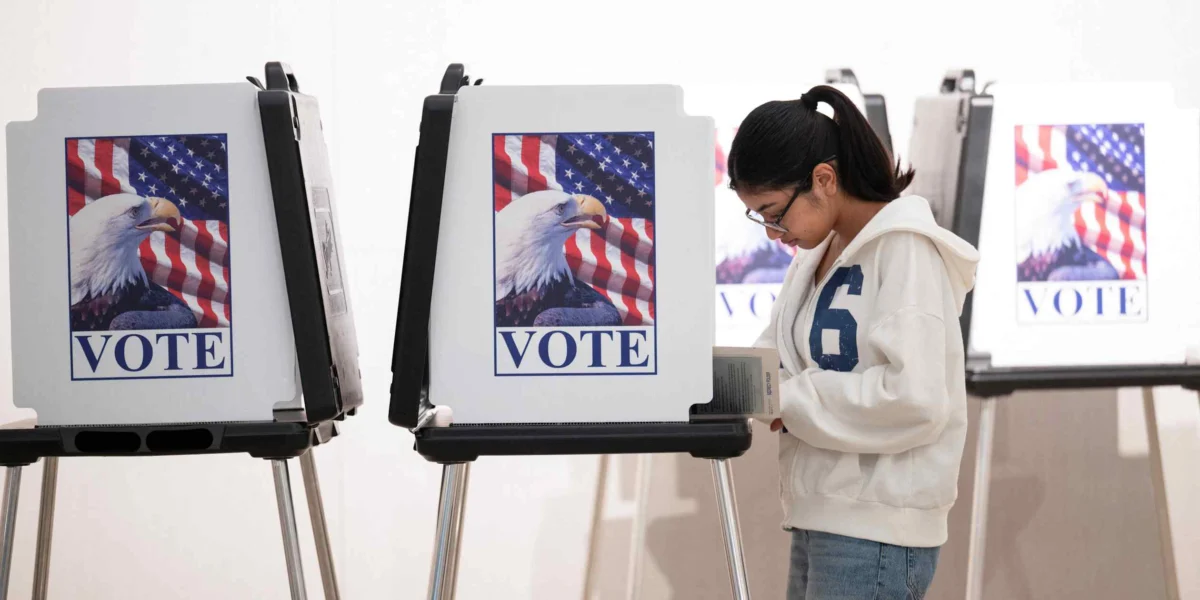
WASHINGTON/NEW YORK — Voting is in full swing across the United States for the 2026 midterm elections, a pivotal contest that will determine control of both chambers of Congress. With all 435 seats in the House of Representatives and 35 of the 100 Senate seats up for election, the outcome is poised to significantly shape the remaining years of President Donald Trump’s administration and the nation’s legislative agenda. Projections leading up to Election Day have consistently favored the opposition Democratic Party to reclaim the House, while the Senate battle is anticipated to be intensely close, with a handful of swing states likely to decide its fate.
The complexity of the U.S. electoral system, coupled with the potential for razor-thin margins in key races, means that the final results, particularly for the Senate, may not be immediately apparent. States such as Alaska, where polls remain open late into the evening, could see their outcomes delayed. Furthermore, the possibility of recounts or legal challenges to contested results could extend the adjudication process significantly, underscoring the high stakes and intense competition characterizing this electoral cycle. Nikkei Asia is providing comprehensive live coverage and in-depth analysis of the midterm elections, accessible at asia.nikkei.com.
Key Developments and Chronology of Election Day
9:00 a.m. EST – Polls Open Amidst High Early Voting Turnout
The 2026 midterm elections officially commenced as polling stations opened across the nation. This election is widely regarded as a crucial referendum on President Donald Trump’s policy agenda and his tenure in office. A notable surge in early voting has been observed nationwide, with millions of Americans casting their ballots either in person or by mail before Election Day. Data from the University of Florida’s Election Lab indicates that 59.1 million in-person and mail-in ballots had already been cast, exceeding half of the total ballots cast in the 2022 midterms. States with particularly competitive Senate races, such as South Carolina, Texas, and Maine, have reported significant increases in early voting figures, up by over 80%, 50%, and 44% respectively compared to the previous midterm cycle.
The primary concerns resonating with voters this year include persistent inflation, rising energy costs exacerbated by the ongoing conflict in Iran, trade tariffs, and growing public backlash against the proliferation of artificial intelligence data center projects. Conversely, issues directly related to China, which were prominent in previous election cycles, have seen a noticeable decline in campaign rhetoric, as voters’ attention has shifted towards more immediate economic and domestic concerns.
10:05 a.m. EST – Artificial Intelligence Emerges as an Unexpected Flashpoint
The rapid expansion of artificial intelligence infrastructure has emerged as an unexpected, yet potent, issue in this election cycle. Widespread local opposition to the construction of data centers, driven by concerns over their substantial energy consumption, potential increases in electricity rates, and the aggressive development strategies employed by hyperscale companies, is shaping campaigns across both the Democratic and Republican parties. In some areas, this opposition has led to moratoriums on new data center projects being placed directly on the ballot.
Ohio, a state experiencing accelerated data center development and slated to host one of the world’s largest AI data centers, has become a focal point for this debate. Senate candidates in the state are actively campaigning on platforms opposing such infrastructure or seeking to tie their opponents to its perceived negative consequences. This growing resistance to data centers, regardless of the election’s outcome, could have significant implications for suppliers of related technologies and services, many of whom are based in Asia. Allegations have also surfaced suggesting that foreign entities, including China, may be attempting to fuel anti-data center sentiment within the U.S.
10:45 a.m. EST – Oil Prices Rebound Amidst Geopolitical Tensions
Early Tuesday trading saw a rebound in oil prices, spurred by reports of a fresh U.S. strike on Iran’s Qeshm Island in the Strait of Hormuz. This development reignited concerns about global energy supply on Election Day. January Brent crude futures saw a 1.8% increase, reaching $106.63 a barrel, while U.S. West Texas Intermediate gained 2.4% to $97.08, reversing some of the sharp losses experienced on Monday. While the strikes tempered immediate hopes for a diplomatic breakthrough in the U.S.-Iran conflict, President Donald Trump indicated that a peace agreement with Tehran "could still happen."
The impact of higher energy costs is being felt unevenly across Asian economies. Nations like China and India have benefited from their reliance on domestic coal reserves, providing a degree of insulation. In contrast, Thailand, the Philippines, and South Korea remain more vulnerable due to their significant dependence on energy imports, according to analysts at ING. Japan, meanwhile, is expected to begin phasing out gasoline subsidies in December, following their reinstatement in the spring. The U.S. Energy Information Administration forecasts that Brent crude will average $105 a barrel in the fourth quarter of 2026, before moderating to $84 in 2027 as regional logistics chains adjust to evolving global dynamics.
11:00 a.m. EST – Weather Disruptions Impact Polling Centers
Severe weather conditions have led to the relocation of several polling centers in Florida, affecting eight counties. Governor Ron DeSantis issued an executive order on Monday to establish temporary voting locations, ensuring that residents in affected areas retain their ability to cast their ballots. Flash flooding has also impacted voting operations in Arizona, Utah, and Colorado. In response, Utah’s lieutenant governor issued a "declaration of emergency election accommodation," permitting affected voters to request electronic ballots.
In the Midwest, heavy rain and gusty winds have raised concerns about accessibility to polling stations. Similarly, "strong to severe storms" in eastern Texas have added to the challenges faced by voters on Tuesday morning. Historically, adverse weather conditions have been known to suppress voter turnout on Election Day, a factor that election officials will be closely monitoring throughout the day.
11:55 a.m. EST – Early Voting Data Reveals Party Trends
Further analysis of early voting data from the University of Florida’s Election Lab highlights partisan trends, though caution is advised in interpreting these figures. Of the 59.1 million early ballots cast nationwide, Democrats accounted for 43% of early ballots, while Republicans represented 31.4%. However, historical data from Pew Research suggests that Republicans have traditionally been more inclined to vote on Election Day and express less confidence in the security and accuracy of mail-in ballots compared to Democrats. This disparity in voting patterns could significantly influence the final reported results as Election Day progresses.
The early voting numbers in several states have been particularly noteworthy. In Colorado, Florida, Georgia, Montana, Nevada, North Carolina, Oregon, and Tennessee, the number of ballots cast via early voting was equivalent to more than 70% of each state’s total turnout in the 2022 midterms, signaling a heightened level of engagement and a potential shift in voting habits.
1:10 p.m. EST – Justice Department Deploys Record Number of Election Monitors
The U.S. Justice Department announced on Tuesday the deployment of approximately 1,000 election monitors and observers across all 50 states. This represents the largest such effort in the department’s history and the first time that every state will be covered. The Civil Rights Division is coordinating the deployment, with monitors tasked with ensuring compliance with federal voting rights laws. They will maintain continuous contact with state and local election authorities throughout Election Day. The Justice Department has been deploying election monitors since the enactment of the Voting Rights Act in 1965.
However, this significant increase in federal oversight has raised concerns among some state election officials and civil rights groups, who have voiced apprehension about the potential for voter intimidation or other forms of interference. President Trump has repeatedly alleged widespread "fraud" in the 2020 presidential election and has advocated for greater federal oversight of electoral processes, which are primarily administered by state and local officials. These efforts have been consistently challenged and blocked by the courts.
2:45 p.m. EST – Asian American and Pacific Islander Voters Show Shifting Allegiances
Asian Americans and Pacific Islanders (AAPI), one of the fastest-growing demographics of U.S. voters, have historically leaned Democratic. However, a notable shift toward the Republican Party was observed during the 2024 presidential election. Recent survey results released in October by AAPI Data indicate a decline in trust towards Republicans since President Trump’s return to the White House. AAPI adults, who were previously divided in their trust of either party regarding economic and immigration policies, now demonstrably favor Democrats on both fronts.
Karthick Ramakrishnan, founder of AAPI Data, noted that President Trump’s 2024 campaign focused heavily on the economy and immigration. "On both of those things, he hasn’t delivered," Ramakrishnan stated. "In early 2025 we saw Democrats and Republicans as essentially tied on the economy and on immigration, and now we’ve seen a huge swing away from the Republican Party." Disapproval of Trump’s handling of the economy and foreign policy has also risen among AAPI adults since January of this year, with the most significant shift occurring among AAPI Republicans, approximately 40% of whom now disapprove of his performance in both areas, up from about 20%. David Chan, a 42-year-old consultant in New York City who voted for Democrats, cited economic policies and the party’s contributions to the Asian American community as decisive factors. He expressed low expectations for substantial policy support for the community.
3:50 p.m. EST – Asia Braces for Renewed Trade Offensive
Asian countries are preparing for a potential renewed trade offensive from the United States following the midterm elections. The Trump administration is expected to leverage executive powers to impose tariffs, irrespective of which party secures control of Congress. Economists at Nomura, including Ruchir Sharma, anticipate "more aggressive trade-related headlines" post-election, potentially including tariffs stemming from Section 301 investigations into issues of excess capacity. Nikkei Asia had previously reported that President Trump had delayed the announcement of certain tariffs, including a 7.5% rate on Chinese imports, due to concerns about inflation ahead of the vote.
These proposed duties would be in addition to existing tariffs ranging from 10% to 12.5% already imposed on approximately 60 economies, citing alleged forced labor practices. Combined, these measures would effectively restore tariff rates for several key trading partners to levels seen prior to the Supreme Court’s ruling in February, which struck down Trump’s broad tariffs under the International Emergency Economic Powers Act. Hui Shan, chief China economist at Goldman Sachs, believes that for China, this would reignite tensions with Washington. She added that a Congress with greater Democratic control might introduce additional hawkish measures targeting China.
4:30 p.m. EST – U.S. Stock Markets Exhibit Mixed Performance
U.S. stock markets displayed a mixed performance on Tuesday as investors closely monitored the unfolding results of the midterm elections, leading to predominantly position-adjusting trades. Shares associated with artificial intelligence demonstrated a rebound, while certain cyclical and defensive stocks experienced downward pressure. The S&P 500 index saw a modest increase of 0.4%, and the tech-heavy Nasdaq Composite gained 0.8%. In contrast, the Dow Jones Industrial Average registered a decline of 0.4%.
Lower oil prices provided some support to investor sentiment, fueled by optimism regarding progress towards resolving the U.S.-Iran conflict. President Donald Trump’s statement to Fox News on Tuesday, indicating that U.S. funding support for Israel, which had aided in attacks on Iran, would be halted "by the end of this year," reinforced expectations of a potential diplomatic shift by Washington towards Tehran.
6:00 p.m. EST – First Polls Close in Indiana and Kentucky
Polling centers in parts of Indiana and Kentucky marked the first to close across the nation. As these states straddle both the Eastern and Central time zones, some of their polling stations will remain open for an additional hour. Crucially, any individual in line by the 6 p.m. closing time will be permitted to cast their vote. The Senate seat in Kentucky, a state that overwhelmingly supported President Trump in the 2024 election, is widely projected to remain under Republican control, according to analysis from the Cook Political Report.
Implications and Broader Context
The 2026 U.S. midterm elections are more than just a mid-term assessment of President Trump’s presidency; they represent a critical juncture for the nation’s legislative direction. The composition of the next Congress will directly influence the administration’s ability to pass legislation, confirm judicial and executive appointments, and respond to both domestic and international challenges.
Control of Congress: A Tightrope Walk
The Democratic Party’s projected gains in the House of Representatives, if realized, would grant them leverage in shaping legislative priorities and initiating investigations. However, the Senate’s fate remains uncertain. A closely divided Senate could lead to legislative gridlock, where even minor shifts in party control could have outsized impacts on the confirmation of federal judges, including potential Supreme Court nominees, and key cabinet positions. The narrow margins in several Senate races underscore the importance of voter turnout and the impact of local issues in national contests.
Economic Policy and Global Trade
The election results will have significant ramifications for U.S. economic policy and its engagement with the global economy. Persistent inflation and rising energy costs have been central themes, and the incoming Congress will face pressure to address these issues. The potential for renewed trade tensions, particularly with China, as highlighted by Nomura economists, suggests that businesses and international partners will be closely watching the U.S. stance on trade agreements and tariffs. The administration’s approach to international trade, whether through legislative action or executive orders, will shape global supply chains and economic growth.
Geopolitical Stability and Foreign Relations
The ongoing conflict in Iran and its impact on global energy markets have injected a significant geopolitical dimension into the midterm elections. The administration’s foreign policy decisions, particularly concerning the Middle East, will be scrutinized by voters and international observers alike. A shift in the balance of power in Congress could influence the administration’s ability to pursue diplomatic solutions or to project strength on the global stage. The complex interplay between domestic political considerations and international relations will be a defining feature of the post-election landscape.
Technological Development and Public Opinion
The emergence of artificial intelligence and data center development as a contentious issue reflects a growing public awareness and concern regarding the rapid pace of technological advancement and its societal impacts. The backlash against data centers, driven by environmental and economic anxieties, suggests a growing demand for more regulated and community-sensitive technological expansion. This trend could lead to new legislative frameworks governing the tech sector and influence investment decisions for companies operating in this space.
The 2026 U.S. midterm elections represent a pivotal moment, with outcomes that will reverberate through American politics, the economy, and international relations for years to come. The coming hours and days will reveal the will of the electorate and set the stage for the nation’s trajectory.