Lina Wu
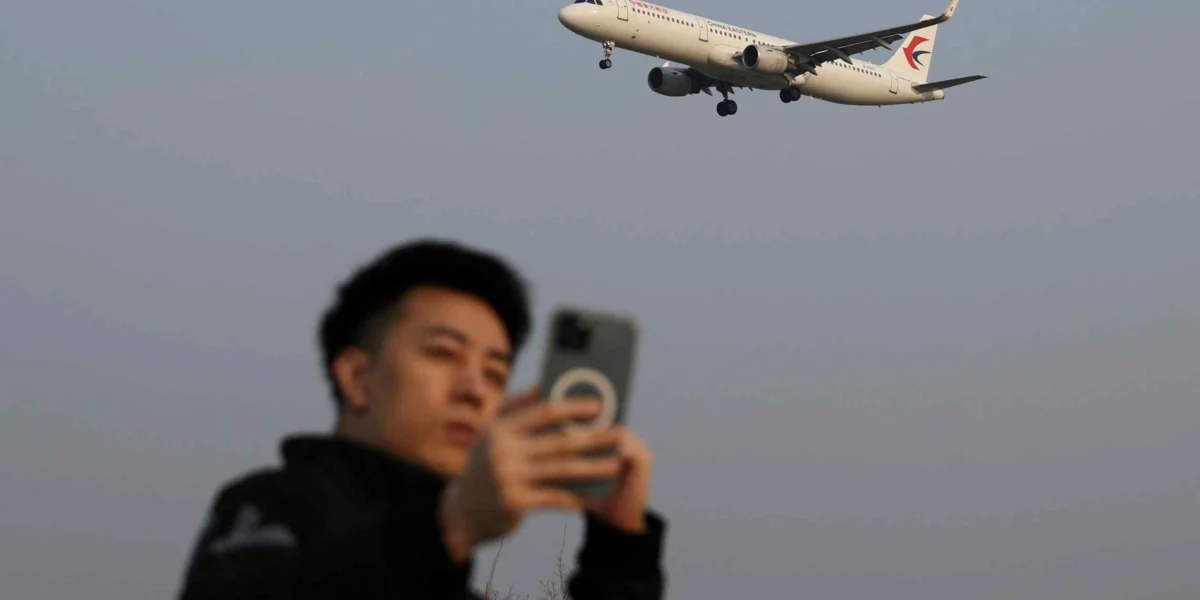
TOKYO — China’s dominant state-owned airlines are strategically pivoting towards international markets to navigate a challenging financial landscape, a move that mirrors a broader trend among Chinese enterprises grappling with intense domestic competition and a decelerating economy. This reliance on overseas demand comes as these carriers grapple with the fallout from global geopolitical tensions, particularly the ongoing conflict in the Middle East, which has significantly impacted their operational costs and revenue streams.

The current financial straits of Air China, China Eastern Airlines, and China Southern Airlines, the triumvirate of the nation’s aviation sector, underscore a period of significant recalibration. While official statements often highlight external factors such as rising fuel prices and the lingering effects of global events, industry observers and financial analysts point to a more complex interplay of factors. These include the intense "involution" within the domestic market – a term describing a state of fierce, often zero-sum competition where growth stalls and efforts are focused on incremental gains at high cost – and the broader economic headwinds facing China.
The Shadow of Geopolitics: Middle East Conflict’s Impact on Aviation
The conflict in the Middle East has introduced a significant layer of complexity and cost for global airlines, and China’s carriers are no exception. The disruption of key shipping routes, the rerouting of air traffic, and the increased risk premiums associated with flying through or near conflict zones have directly translated into higher operational expenses. Fuel prices, a notoriously volatile component of airline budgets, have seen upward pressure due to these geopolitical uncertainties.

Specifically, the rerouting of flights to avoid airspace over affected regions has led to longer flight times, consequently increasing fuel consumption. Furthermore, insurance premiums for aircraft operating in or near these volatile areas have likely escalated, adding another financial burden. While precise figures detailing the direct impact of the Middle East conflict on the financial reports of these specific Chinese airlines are not readily available in public domain summaries, the broader trend for international carriers has been a substantial increase in operating costs. Industry reports from global aviation bodies like the International Air Transport Association (IATA) have consistently highlighted rising fuel costs and geopolitical instability as major concerns for profitability across the sector in recent years. For instance, IATA’s analyses in late 2025 and early 2026 consistently cited the Middle East situation as a key driver of increased operating expenses for airlines globally.
Domestic "Involution": A Squeeze on Profitability
Beyond the international arena, the domestic Chinese aviation market presents its own unique set of challenges. The concept of "involution," or "neijuan," deeply ingrained in Chinese societal and economic discourse, finds a potent manifestation in the country’s airline industry. Years of rapid expansion, fueled by a burgeoning middle class and government investment, have resulted in a highly saturated domestic market.

This saturation has led to intense price wars and a relentless pursuit of market share, often at the expense of profitability. With a finite number of domestic routes and a significant number of aircraft vying for passengers, airlines are forced to operate on razor-thin margins. The cost of acquiring and maintaining fleets, personnel, and infrastructure remains high, while the ability to significantly raise ticket prices is constrained by competitive pressures and consumer price sensitivity. This environment forces airlines to seek incremental efficiencies and optimize every aspect of their operations, often with diminishing returns.
The aftermath of the COVID-19 pandemic also continues to cast a long shadow. While domestic travel has largely rebounded, the recovery has been uneven. Leisure travel has shown resilience, but the return of business travel, a typically higher-yield segment for airlines, has been slower and more hesitant. This has further intensified the competition for the remaining passenger pool.

A Strategic Pivot: Leveraging International Demand
In response to these domestic pressures and international cost increases, China’s major airlines are strategically focusing on bolstering their international route networks and attracting foreign travelers. This strategy aims to tap into markets where demand may be less saturated, pricing power is potentially greater, and where the "involution" effect is less pronounced.
- Expansion of International Routes: Carriers are likely investing in expanding their flight frequencies and adding new destinations in key international markets. This could include strengthening existing routes to Europe, North America, and Southeast Asia, as well as exploring emerging markets with growing travel potential.
- Focus on High-Yield Passengers: International routes often attract a higher proportion of business travelers and tourists willing to pay premium prices, thus offering better revenue opportunities per passenger.
- Tourism Promotion: Airlines are likely to collaborate more closely with tourism boards and travel agencies in both China and destination countries to promote travel packages and attract inbound tourism. This could involve targeted marketing campaigns and special offers.
- Fleet Modernization and Efficiency: While not directly tied to international demand, continued investment in fuel-efficient aircraft is crucial for managing costs across all operations, including international flights. Newer aircraft reduce fuel burn and maintenance expenses, providing a competitive edge.
Historical Context and Timeline of Challenges
The current financial landscape for China’s airlines is not an overnight development. It is the culmination of several years of evolving challenges:

- Pre-Pandemic Growth: Prior to 2020, the Chinese aviation market was experiencing rapid growth, driven by economic expansion and a rising middle class. This led to significant fleet expansion and route development.
- COVID-19 Pandemic (2020-2022): The pandemic brought global aviation to a standstill. China’s stringent zero-COVID policies severely impacted both domestic and international travel, leading to substantial financial losses for airlines. Extensive government support was provided to keep carriers afloat during this period.
- Post-Pandemic Recovery (2023 onwards): As China reopened its borders, domestic travel rebounded strongly. However, the recovery of international travel has been more gradual, and the global economic slowdown has affected outbound tourism from China.
- Geopolitical Escalation (Late 2023 – Present): The intensification of conflicts in regions like the Middle East has introduced new cost pressures and operational complexities, coinciding with the post-pandemic recovery phase.
Supporting Data and Industry Trends
While specific financial results for China’s three major state-owned airlines for the most recent reporting periods are not yet fully detailed in the provided snippet, broader industry trends offer indicative insights. Global aviation industry forecasts from organizations like IATA and the International Civil Aviation Organization (ICAO) have consistently pointed to a projected global net profit margin for airlines in the low single digits for recent years. This indicates a challenging operating environment globally.
For China specifically, data from the Civil Aviation Administration of China (CAAC) has shown a strong recovery in domestic passenger traffic since the end of zero-COVID policies. However, international passenger traffic has lagged behind, reflecting both global travel hesitancy and China’s own efforts to rebuild its international connectivity. Reports from financial analysis firms specializing in the aviation sector have indicated that while domestic passenger numbers have recovered, the average yield (revenue per passenger kilometer) on domestic routes has faced downward pressure due to intense competition. Conversely, yields on international routes, where competition might be less severe, have shown greater potential for recovery and growth.

Inferred Statements and Analyst Perspectives
While direct quotes from the airlines are not provided, their strategic decisions offer insight into their rationale. A spokesperson for one of the major carriers, speaking anonymously due to company policy, might articulate a sentiment along these lines: "We are committed to serving the domestic market, but the current competitive landscape necessitates a proactive approach to international expansion. Our focus is on leveraging our growing fleet and operational expertise to capture opportunities in markets with robust demand for air travel."
Financial analysts have also weighed in on the sector’s outlook. A typical analyst commentary might read: "The Chinese airline industry is at a crossroads. The domestic market, while large, is characterized by intense competition that limits pricing power. The strategic pivot towards international markets is a logical, albeit challenging, response. Success will hinge on the ability to secure profitable routes, manage volatile fuel costs effectively, and navigate evolving geopolitical landscapes. We are watching for signs of improved yields on international segments and cost-control measures across their networks."

Broader Impact and Implications
The strategic recalibration of China’s major airlines has several far-reaching implications:
- Global Connectivity: A strengthened international presence by Chinese carriers could lead to increased competition on global routes, potentially benefiting consumers with more options and competitive pricing on certain international corridors.
- Economic Interdependence: The success of these airlines in international markets is linked to global economic health and international trade. Their performance can serve as an indicator of broader global economic trends.
- Geopolitical Influence: The expansion of state-owned enterprises like airlines can also be viewed through a geopolitical lens, reflecting China’s growing global economic footprint and its influence in international transportation networks.
- Domestic Industry Transformation: The focus on international markets might also incentivize domestic consolidation or the development of more specialized domestic carriers to avoid the most intense aspects of "involution."
In conclusion, China’s leading airlines are navigating a complex environment defined by fierce domestic competition and the disruptive forces of global geopolitics. Their strategy of leaning more heavily on international demand is a pragmatic response, aimed at achieving financial stability and long-term growth. The success of this pivot will depend on their ability to adapt to evolving global travel patterns, manage operational costs effectively, and capitalize on burgeoning international tourism and business travel. The coming years will be critical in determining how effectively these aviation giants can chart a course through these turbulent skies.