Gilang Muhammad
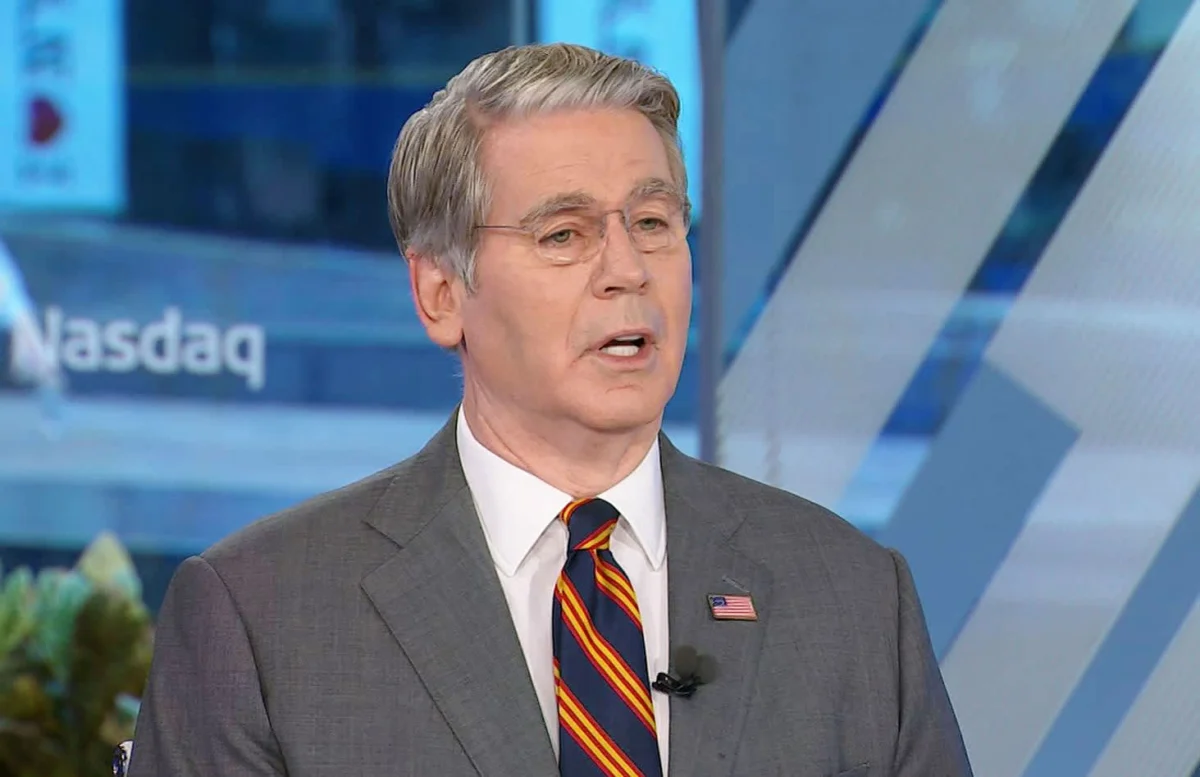
Treasury Secretary Scott Bessent, a key economic advisor to President Donald Trump, offered a comprehensive outlook on the nation’s economic landscape, monetary policy, and burgeoning technological sectors on Wednesday. His remarks, made just hours after the Federal Reserve announced its decision to maintain interest rates, provided a rare glimpse into the administration’s thinking on critical issues ranging from inflation and central bank autonomy to the stability of the artificial intelligence market and the impact of geopolitical strategies. Bessent signaled that further rate hikes by the Federal Reserve would not inherently constitute a policy error, a statement that stands in subtle contrast to President Trump’s long-standing public calls for lower borrowing costs.
Navigating Monetary Policy: A Delicate Balance for the Fed
The core of Secretary Bessent’s comments regarding monetary policy centered on the Federal Reserve’s role in steering the U.S. economy through a period of elevated inflation and geopolitical uncertainty. Speaking to CNBC’s Brian Sullivan, Bessent directly addressed the question of future rate increases, stating definitively, "That’s not necessarily so," when asked if such actions would be a mistake. This nuanced position arrived on the heels of the Fed’s October gathering, where the central bank opted to keep its benchmark interest rates unchanged, a move widely anticipated by market participants and economic analysts. The decision marked a pause after the Fed had, only a month prior in September 2026, implemented its first rate hike in three years, signaling a more aggressive stance against persistent inflationary pressures. Futures traders, reflecting market sentiment, are now largely anticipating a return to rate-hiking at the Fed’s upcoming December meeting.
Bessent’s perspective on the Fed’s trajectory is particularly noteworthy given his close ties to President Trump, who has historically been a vocal critic of higher interest rates, often pressuring previous Fed Chairs, including Jerome Powell during his tenure. However, Bessent expressed strong confidence in the current Fed Chairman, Kevin Warsh, asserting, "I think Chair Warsh is off to a great start. As I often say, I have great confidence in him." This endorsement suggests an administration belief that Warsh is capable of skillfully navigating the central bank’s dual mandate: ensuring maximum employment and maintaining stable prices. The balance between these two objectives is perpetually challenging, especially in an economy grappling with external shocks.
The Treasury Secretary also articulated a specific hope for the Fed’s approach to inflation: an "open mind" regarding the "transitory nature" of the energy supply shock. This comment directly references the significant disruptions caused by the ongoing U.S. war with Iran, which has severely impacted global crude production volumes. The conflict has led to a sharp increase in energy prices, pushing annual inflation readings further above the Fed’s long-term target of 2%. The debate over whether current inflationary pressures are "transitory" (temporary, driven by supply-side issues) or "persistent" (more deeply embedded in the economy, requiring stronger monetary intervention) is a central point of contention among economists and central bankers globally. Bessent’s remarks suggest the administration leans towards the former, advocating for a cautious approach that avoids over-tightening monetary policy in response to what might be a temporary external shock.
The Geopolitical Undercurrent: Iran Sanctions and Global Energy

Beyond domestic economic policy, Secretary Bessent provided an update on the administration’s aggressive geopolitical strategy targeting Iran. He lauded the success of "Operation Economic Outcast," the U.S. initiative designed to isolate the Iranian economy through a series of stringent sanctions. Bessent reported that internal estimates project a potential contraction of Iran’s economy by as much as 25% within a single year, a stark illustration of the severe impact these measures are having.
The U.S. war with Iran, while not detailed in its specific combat elements in Bessent’s comments, has clearly had profound implications for global energy markets. The conflict has directly led to a significant drop in crude production, creating a global supply shock that reverberates through various economies. "Operation Economic Outcast" typically involves a multi-pronged approach, targeting key sectors of Iran’s economy such as oil exports, financial institutions, shipping, and strategic industries like automotive and rail. The objective is to curtail Iran’s revenue streams, thereby limiting its capacity to fund military operations or other activities deemed destabilizing by the U.S. and its allies.
The projected 25% economic contraction, if realized, would represent one of the most severe economic downturns for a major economy in recent history, outside of wartime or extreme natural disasters. Such a contraction would likely lead to widespread internal economic hardship within Iran, potentially fueling social unrest and exacerbating regional tensions. For global markets, the continued isolation of a major oil producer like Iran, combined with ongoing conflict, ensures that energy prices remain a significant inflationary driver, complicating the Fed’s efforts to achieve its price stability mandate without stifling economic growth. The effectiveness and ethical implications of such severe economic warfare are subjects of ongoing international debate, but from the U.S. Treasury’s perspective, the operation is yielding its intended results.
Assessing the AI Investment Landscape: No Imminent Credit Crisis
Shifting focus to the rapidly evolving technological sphere, Secretary Bessent addressed concerns surrounding artificial intelligence-related debt, particularly in the niche but critical "neocloud" sector. Despite recent market volatility and stark warnings from prominent tech figures, Bessent expressed confidence that the situation did not warrant alarm, stating, "I don’t think it’s problematic at all."
The term "neoclouds" refers to companies specializing in providing the highly specific and powerful cloud infrastructure necessary to support advanced AI applications, such as large language models and complex machine learning algorithms. These firms require immense capital investment in specialized hardware, primarily high-performance GPUs, and energy-intensive data centers. The AI boom has triggered a massive influx of investment into these companies, with many experiencing rapid valuation growth. However, recent market turbulence has seen some neocloud firms struggle, raising questions about the sustainability of their business models and the broader AI investment bubble.
Adding to these concerns, Tesla CEO Elon Musk issued a dire warning just days prior, on Sunday, October 26, 2026, predicting a "guppy-level death and consolidation" for more than 200 neocloud firms. Musk’s comments highlighted the intense competition, the capital-intensive nature of the business, and the potential for a market correction that could wipe out smaller, less capitalized players.

However, Secretary Bessent offered a more sanguine assessment, downplaying the systemic risk posed by these struggles. He emphasized that "the neoclouds are a small component of the overall ecosystem," suggesting that even significant failures within this sub-sector would not destabilize the broader financial system or the wider AI industry. Furthermore, he noted, "we’re still seeing the financing getting done. We’re still seeing the deals get done," indicating that capital markets remain open and active for viable AI infrastructure projects, even if some speculative ventures face headwinds.
This perspective from the Treasury suggests a monitoring approach rather than immediate concern, implying that while individual companies might face challenges, the fundamental demand for AI infrastructure remains strong, and the market is capable of self-correction through natural consolidation. The rapid pace of innovation and investment in AI, while exciting, also presents unique challenges for regulators and policymakers attempting to understand and mitigate potential financial risks. Bessent’s remarks aim to reassure investors and the public that the government is aware of these dynamics but does not foresee an imminent credit crisis stemming from this burgeoning sector.
Economic Projections: Anticipating a Strong Q3 GDP
Concluding his economic commentary, Secretary Bessent offered a positive, albeit preliminary, forecast for the upcoming third-quarter GDP data. He expressed an expectation for the data, which is slated for release on Thursday, to be "strong." However, he prudently clarified that he had not yet seen the official figures, underscoring the preliminary nature of his projection.
A strong third-quarter GDP reading would be a welcome sign for the administration, indicating robust economic activity despite the challenges posed by inflation, higher interest rates, and geopolitical instability. Such a performance would suggest underlying resilience in consumer spending, business investment, and other key drivers of economic growth. It would also provide some validation for the Fed’s calibrated approach to monetary policy, implying that the economy can absorb recent rate hikes without immediate severe contraction.
However, economists will be closely scrutinizing the composition of the GDP growth. Factors such as the contribution of government spending, private consumption, business fixed investment, and net exports will offer a clearer picture of the economy’s health and its future trajectory. The interplay between strong growth, persistent inflation driven by energy prices, and the Fed’s ongoing battle for price stability will remain the central narrative for economic policymakers in the months ahead. Bessent’s optimistic forecast, while caveated, sets a positive tone as the nation awaits crucial economic indicators.
In summary, Treasury Secretary Scott Bessent presented a multifaceted view of the U.S. economy, characterized by a pragmatic approach to monetary policy, a firm stance on geopolitical strategies, and a confident outlook on technological innovation. His comments underscore the complex challenges and opportunities facing the nation as it navigates a dynamic global environment.