Gilang Muhammad
Christine Lagarde, the influential President of the European Central Bank (ECB), announced on Thursday that she will step down from her post on February 7, 2027, nearly nine months ahead of the scheduled end of her eight-year term in October 2027. This unexpected revelation immediately triggers a high-stakes succession race for one of the most powerful economic positions in Europe, a process expected to be profoundly influenced by intricate political bargaining and the deepening fiscal crisis facing France.
Lagarde has been at the helm of the Eurozone’s central bank since July 2019, a period marked by unprecedented economic upheaval and policy challenges. Her tenure began shortly before the global economy was plunged into turmoil by the COVID-19 pandemic, which necessitated massive monetary stimulus to avert a deeper collapse. She then navigated the economic fallout from Russia’s invasion of Ukraine, which triggered a severe energy price shock across Europe, pushing inflation in the Eurozone to record highs, peaking above 11% in late 2022. This inflationary surge compelled the ECB to abandon its long-standing ultra-loose monetary policy, marking the decisive end of the post-Financial Crisis era characterized by negative interest rates and quantitative easing. Under her leadership, the ECB embarked on an aggressive series of interest rate hikes, raising the benchmark deposit facility rate from -0.5% in July 2022 to a peak of 4.0% by September 2023, a cumulative increase of 450 basis points aimed at reining in runaway prices.
Lagarde Seeks ‘Freedom of Expression’ Ahead of Critical Elections
During a press conference held on Thursday following the ECB’s October interest rate decision, Lagarde formally confirmed earlier media reports regarding her expedited departure. She articulated her primary motivation as a desire for greater "freedom of speech" and the ability to engage in political discourse beyond the confines of monetary policy. "The reason I’m anticipating the end of my term by leaving in February 2027 instead of October is, as I have said to colleagues, members of staff and governors, is because I want to have the freedom of speech, the freedom of expression and the freedom to engage on matters that are not monetary policy matters," Lagarde stated.
She elaborated on the "constraint" and "obligation of neutrality" inherent in her role as ECB president, emphasizing that this is "the price we pay for being independent." However, Lagarde expressed a growing conviction that her voice and actions could contribute meaningfully to global discussions on fundamental principles, particularly concerning truth and misrepresentation, areas where she finds it increasingly difficult to remain neutral. "One of those principles… I don’t think that I can remain neutral; I don’t think that I can be comfortable in that neutrality, at the present time. I’m interested in the truth, and I see the truth being very often damaged, contradicted by misrepresentation," she asserted, implying a strong personal conviction to speak out on pressing societal issues.
The timing of her departure is particularly significant given the political calendar in her home country, France, where a presidential election is scheduled for spring next year. By leaving in February, Lagarde ensures that her successor will be chosen before a new French president takes office, effectively removing any direct influence the incoming administration might have on the selection process. Market observers have noted this strategic timing. While Lagarde has repeatedly downplayed any intention to run for the French presidency herself, stating as recently as September 2026 that it "would not be a good idea," her early exit would technically free her to engage in political commentary or other roles without the strict neutrality requirements of the ECB. However, a presidential bid would face an extremely tight timeframe, with the first round of voting typically in April. Felix Feather, an economist at Aberdeen Investments, highlighted the critical aspect of this timing: "An early exit means the new French president will have no role in choosing the next ECB president – particularly significant given the political and fiscal uncertainty surrounding France." This move underscores the delicate interplay between central bank independence and national political dynamics, especially in a period of heightened economic sensitivity.
The Intricate ECB Succession Process and Emerging Contenders

The process of appointing a new ECB president is a complex and often protracted affair, reflecting the institution’s independence and its multinational governance structure. The ECB’s Governing Council, comprising the six-member Executive Board and the governors of the 20 euro area national central banks, is institutionally independent. However, appointments to its top jobs, including the presidency, are ultimately made by the European Council – composed of the heads of state or government of the EU member states – following consultations with the European Parliament and the Eurogroup (finance ministers of the Eurozone). These negotiations are typically characterized by intense political bargaining, as member states vie for national representation and influence within the powerful institution.
With Lagarde’s announcement, the informal discussions about her successor are expected to intensify rapidly into formal negotiations. The succession comes at a time when other senior roles within the ECB are also due for review, with Chief Economist Philip Lane and influential Executive Board member Isabel Schnabel, who oversees market operations, also set to conclude their terms next year. This confluence of departures could lead to a significant reshuffling of the ECB’s leadership, potentially altering its strategic direction.
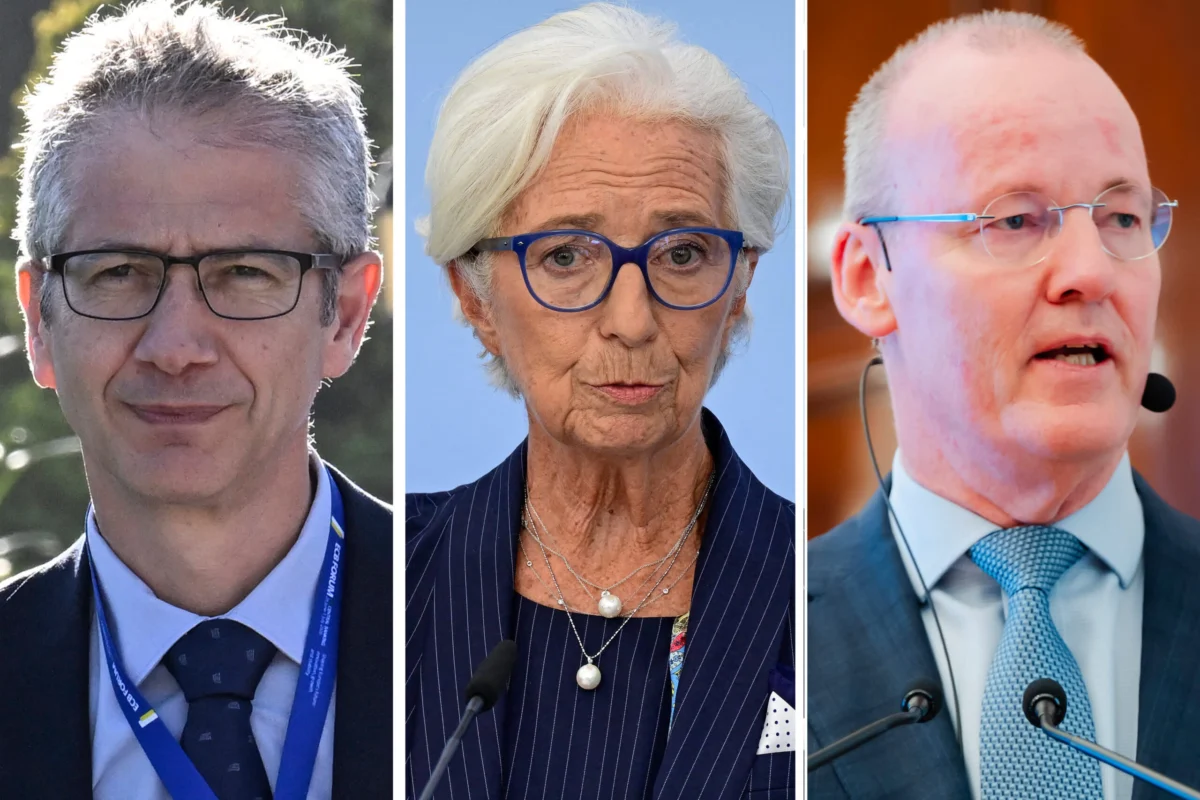
Among the leading candidates widely discussed in financial circles to replace Lagarde are Spain’s Pablo Hernández de Cos and the Netherlands’ Klaas Knot. Both have recently served as governors of their respective national central banks, bringing extensive experience in monetary policy and financial stability.
Pablo Hernández de Cos, who led the Bank of Spain from 2018 to 2024, is now the General Manager of the Bank for International Settlements (BIS), often referred to as the "central bank of central banks." His tenure at the Bank of Spain saw him navigate various domestic and European economic challenges, earning him a reputation as a pragmatic and stability-focused policymaker.
Klaas Knot served as the President of De Nederlandsche Bank (the Dutch central bank) from 2011 until 2025 and is currently a distinguished visiting fellow at the Peterson Institute for International Economics. Knot is known for his more hawkish stance on monetary policy, often advocating for decisive action to combat inflation. His background also includes chairing the G20’s Financial Stability Board (FSB), an international body that monitors and makes recommendations about the global financial system. This experience could give him an edge, as noted by Berenberg Chief Economist Holger Schmieding, who suggested that Knot’s FSB background might make him particularly well-suited to deal with potential financial turbulence.
Implications of a Hawkish or Continuity Appointment Amid French Fiscal Woes
The choice between candidates like Knot and De Cos carries significant implications for the future direction of ECB monetary policy and the stability of the Eurozone, particularly against the backdrop of France’s escalating fiscal challenges. France has been under increasing scrutiny from the European Commission and financial markets due to its persistently high public debt, which surpassed 110% of GDP in 2026, and its budget deficit, projected to remain above the EU’s 3% limit for several years. This situation has led to widening spreads on French government bonds relative to German Bunds, signaling growing investor concern about the country’s fiscal health and its potential to destabilize the broader Eurozone.
Knot is generally perceived as the more hawkish candidate of the two. Throughout the recent inflation surge, he consistently warned that the ECB risked doing too little, too late, and at times suggested the possibility of larger, more aggressive rate increases. His appointment would likely be interpreted by markets as a signal for a tougher stance on inflation, potentially leading to a more restrictive monetary policy bias. Pierre Roke, global capital markets associate at Validus Risk Management, commented that a Knot presidency "would likely be read as hawkish and could support the euro, though a tougher stance could also add pressure to French and peripheral bond spreads." A more hawkish ECB could exert greater pressure on member states, including France, to adhere to fiscal discipline, but it could also exacerbate debt sustainability concerns if borrowing costs rise significantly.

Conversely, Pablo Hernández de Cos is seen as representing more continuity with the current ECB approach, with a strong emphasis on financial stability. His appointment might signal a more balanced approach, potentially prioritizing financial stability alongside price stability. "With French debt under pressure and inflation still above target, rate markets would likely take more comfort in a De Cos appointment," Roke suggested, implying that markets might prefer a less overtly hawkish leader in times of fiscal fragility.
Nationality will also undoubtedly play a significant role in the selection process. Carsten Brzeski, ING’s global head of macro, pointed out, "While Knot might find more support among Northern European governments, the question is whether De Cos will be supported by the current Spanish government." The political horse-trading will involve balancing geographical representation, economic philosophies, and the desire for a leader who can effectively navigate both monetary policy challenges and the delicate political landscape of the Eurozone. Both candidates, however, bring a high level of monetary policy expertise, a quality that Lagarde herself admitted she had to "pick up on when already in office," having come from a legal and political background.
Lagarde’s Legacy and Future Prospects
Christine Lagarde’s tenure as ECB President has been undeniably historic and impactful. She inherited a central bank grappling with the lingering effects of sovereign debt crises and an extended period of unconventional monetary policy. Almost immediately, she was thrust into managing the unprecedented economic shock of the COVID-19 pandemic, spearheading emergency bond-buying programs and liquidity injections that were crucial in stabilizing financial markets and supporting the Eurozone economy. Her leadership during the subsequent energy crisis and the battle against surging inflation involved a dramatic pivot towards aggressive monetary tightening, a challenging reversal from years of accommodative policy.
Despite these significant achievements, Lagarde’s leadership faced scrutiny. A staff survey in 2024 revealed a heavily critical verdict on her tenure, with many employees feeling she spent too much time on topics unrelated to monetary policy. This feedback underscores the inherent tension in leading a technocratic institution while also being a prominent global figure.
Upon her announcement, Lagarde received a standing ovation from the Governing Council of the central bank, a testament to her service. "It has been a source of great pride to serve this institution. I thank all of those who have supported me on this journey over the past seven years," she remarked. European Council President Antonio Costa commended her for providing "steady and determined stewardship, helping to safeguard stability and the resilience of the euro area."
Lagarde’s career has been one of consistent trailblazing. Born in Paris in 1956, she forged a distinguished career as a high-ranking lawyer before transitioning into French government. In 2007, she made history as the first female Finance Minister of a G7 country. Her ascent continued in 2011 when she became the first woman to hold the post of Managing Director of the International Monetary Fund (IMF), a role she held until her appointment to the ECB in 2019.
As she prepares to depart the ECB, speculation is already mounting about her next steps. Financial Times reporting has indicated that Lagarde is viewed as a top candidate to become the next chair of the World Economic Forum, a role that would align with her expressed desire for greater freedom of expression on global issues and her extensive experience in international governance and diplomacy. Her early departure from the ECB positions her uniquely to potentially influence global discourse and policy without the strictures of central bank neutrality, setting the stage for the next chapter in her remarkable career. The Eurozone, meanwhile, prepares for a pivotal transition as it seeks a new leader to guide its monetary policy through an era defined by ongoing economic uncertainties and political complexities.