Gilang Muhammad
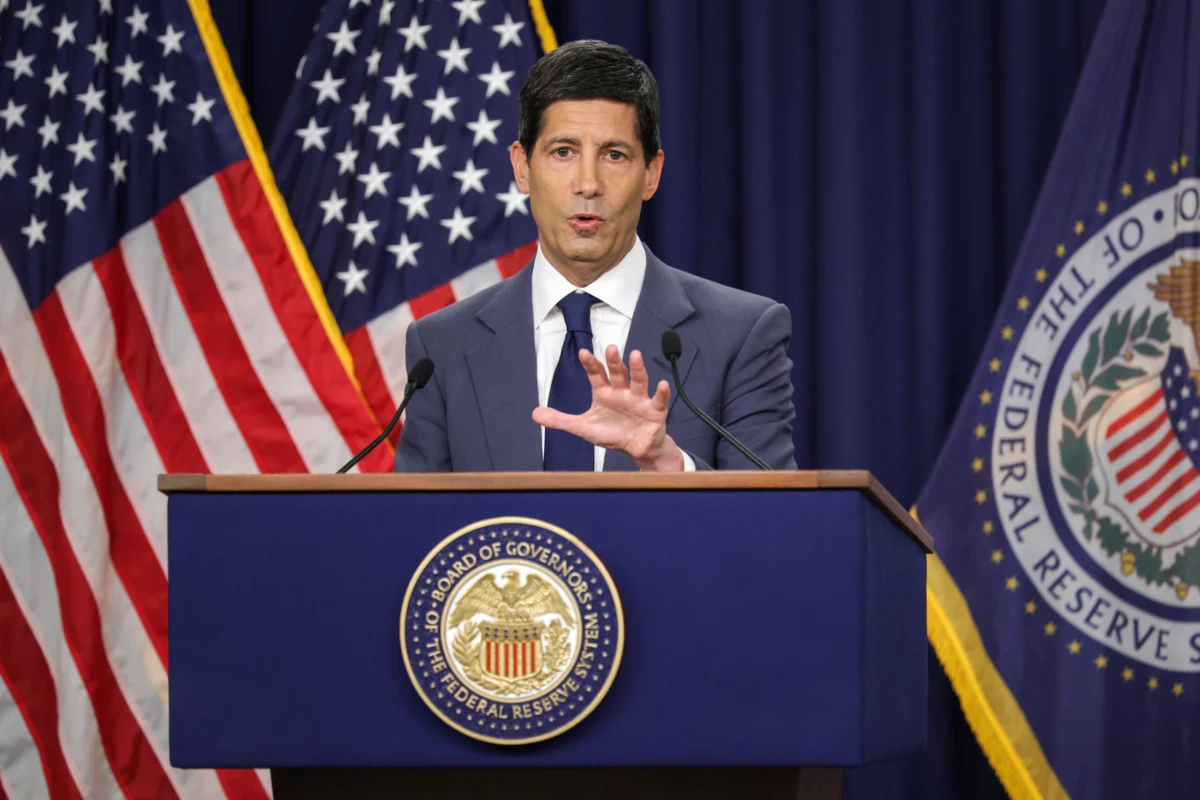
Federal Reserve Chair Kevin Warsh, following the Federal Open Market Committee (FOMC) meetings on October 28, 2026, in Washington, D.C., presented a starkly different public persona than in his initial appearances, signaling a strategic shift in both his leadership style and the central bank’s communication approach. The press conference, held at Federal Reserve Headquarters, underscored a chairman who has moved beyond the need to justify his every move, embracing a more nuanced and at times ambiguous stance designed to maintain optionality while subtly steering market expectations. This evolution marks a pivotal moment for the U.S. central bank, as it grapples with persistent inflation and seeks to reassert its independence amidst a dynamic economic and political landscape.
A Chairman Forged in Political Pressure and Economic Uncertainty
Kevin Warsh’s journey to the helm of the Federal Reserve was paved with distinct challenges, stemming largely from the circumstances of his appointment. Nominated by a president who openly articulated a preference for lower interest rates – often framing rate cuts as a litmus test for his choice of Fed chair – Warsh inherited an institution under significant external pressure. This political backdrop immediately cast a shadow over his initial tenure, raising questions about the Fed’s autonomy and his personal resolve to pursue its dual mandate of maximum employment and price stability.
His early months in the top job, specifically during the June and July 2026 FOMC meetings, were characterized by a perceived defensiveness during press engagements. At the time, with inflation metrics, particularly the Consumer Price Index (CPI) and Personal Consumption Expenditures (PCE) price index, consistently running well above the Fed’s long-standing 2% target (reportedly in the range of 3.8% to 4.2%), the FOMC’s decision to hold rates flat ignited a firestorm of criticism. Numerous commentators and market analysts questioned the new chairman’s credibility, suggesting he might be succumbing to political influence or misjudging the inflationary threat. This period was a crucible for Warsh, forcing him to navigate a delicate balance between demonstrating independence and managing market and political expectations.
The October Decision: Holding Steady While Signaling Future Intent
Fast forward to the October 28, 2026, meeting. The FOMC’s decision to maintain the federal funds rate at its current level, while anticipated by many, was delivered with a level of confidence and strategic communication from Chair Warsh that belied the previous months’ uncertainty. Rather than appearing cornered, Warsh exuded an air of calculated ambiguity, explicitly disavowing any predetermined policy path. "If we had a firm conclusion about the conduct of monetary policy, we’d announce it to much fanfare today," he stated, deftly sidestepping direct commitments.
However, beneath this veneer of flexibility lay a clear signal regarding the Fed’s leanings. Warsh’s subsequent remark, "While overall financial conditions are tighter, I’m unwilling and unable to call them tight," provided critical insight. This subtle distinction suggested that despite some tightening in credit markets and higher long-term bond yields, the Fed did not yet view financial conditions as restrictive enough to curb inflationary pressures definitively. This carefully chosen phrasing served to preserve the option for future rate increases, laying the intellectual groundwork for a potential hike in December, especially if inflation proved to be more stubborn than anticipated. The market absorbed this nuance, interpreting it as a hawkish hold – a pause that still pointed towards further tightening.
A Chronology of Shifting Stances and Market Reactions:
- Early 2026 (Pre-Appointment): Public discourse dominated by presidential candidate’s demands for lower interest rates, setting a challenging tone for the incoming Fed Chair.
- June 2026: Kevin Warsh appointed Chair. Initial FOMC meeting sees rates held flat despite inflation significantly above target. Warsh’s press conference appearances are widely perceived as tentative, inviting market skepticism.
- July 2026: Another FOMC meeting with rates held flat, further fueling doubts about Warsh’s resolve to combat inflation. Market commentators intensify criticism regarding the Fed’s perceived inaction.
- September 2026: A pivotal shift. The FOMC raises rates, accompanied by a notably hawkish statement from Warsh, emphasizing the Fed’s commitment to its 2% inflation target. This move sends shockwaves through markets, with bond yields spiking and equity futures reacting sharply downwards, as investors anticipate an aggressive tightening cycle. The implied probability of a further hike in October rises dramatically.
- Early October 2026: In a seemingly coordinated effort, a pair of senior Fed officials – widely understood to be Vice Chairs or influential governors – make public remarks that deliberately temper market expectations for an immediate October hike. These statements, delivered through various channels, emphasize data dependency and the need for patience, causing market pricing for an October increase to recede significantly.
- October 28, 2026: The FOMC holds rates flat. Warsh’s press conference exhibits a newfound confidence, strategically using ambiguity to maintain policy flexibility while subtly signaling a bias towards higher rates if inflation persists. He explicitly denies directing the earlier market-tempering comments from his lieutenants, yet the market clearly received the message that an October hike was off the table.
The Art of "Plausible Deniability" and Strategic Communication
One of the most striking elements of Warsh’s emerging leadership style is his sophisticated approach to communication, particularly his use of "plausible deniability." When questioned about whether the senior officials who had tempered market expectations ahead of the October meeting had done so at his direction, Warsh offered a carefully worded denial: "To suggest somehow that I am some kind of all-knowing person sending messages out, that’s not the committee of the FOMC that I know."
However, this denial came with a significant caveat. As Fed insiders have often noted, and as common practice dictates, the central bank’s vice chairs and other high-ranking officials typically coordinate their public messaging with the Chair’s office to ensure consistency and avoid unintended market disruptions. The fact that market expectations for an October hike cooled precisely after these coordinated remarks, despite Warsh’s official disavowal of direct instruction, speaks volumes. This strategy allows Warsh to influence market sentiment indirectly, providing forward guidance through his lieutenants without explicitly committing himself or the FOMC, thus preserving his policy optionality. This method harks back to eras of more opaque central bank communication, sometimes dubbed "Greenspan-esque Fedspeak," where subtle hints and indirect signals were paramount. It represents a departure from the more transparent, direct forward guidance favored by some of his immediate predecessors.
Warsh’s Modus Operandi: Intellectual Flexibility and Institutional Reshaping
Beyond communication tactics, Warsh’s tenure is increasingly defined by his intellectual flexibility and an unwavering focus on achieving his strategic goals. One such goal, integral to his broader vision for the Fed, involves reforming how the institution measures inflation. He has assembled several task forces dedicated to kick-starting policy changes, with a particular emphasis on exploring alternative or enhanced inflation metrics. However, advancing such reforms would have been significantly hampered if his commitment to fighting inflation remained in question.
The September rate hike served as a powerful declaration, largely silencing skeptics who doubted his seriousness about slowing price increases. By demonstrating a willingness to act decisively, Warsh cleared the path for his reform agenda. His unequivocal statement during the October press conference, "If you think that we’re tolerating some inflation target somewhere in the twos, let us disabuse you of it," underscored his firm adherence to the 2% flat target. This strong rhetoric, coupled with the September action, signals a recipe for continued hawkishness as long as economic growth remains robust and inflation elevated. The market now understands that the Fed under Warsh is prepared to deliver more rate increases if necessary, prioritizing price stability above all else, even at the risk of potentially slowing economic momentum.
Structural Reforms: Devaluing "Fedspeak" and Consolidating Power
Warsh’s influence extends beyond monetary policy decisions and communication strategies; he is actively reshaping the institutional mechanics of the Federal Reserve. During the October press conference, he announced a significant plan to reduce the number of times the FOMC is scheduled to vote on interest rates over the next two years. Specifically, the Fed will continue to meet eight times annually, but will skip a rate vote at one meeting in 2027 and two meetings in 2028.
This seemingly administrative change has profound implications for the dynamics of monetary policy communication and influence. By reducing the frequency of rate decisions, Warsh effectively devalues a substantial portion of "Fedspeak." The pronouncements and analyses from marginal regional Fed presidents, particularly those who are not voting members in a given year, will likely carry less weight when delivered as much as three months ahead of an actual rate decision. This move can be interpreted as an attempt to reduce market noise and focus attention on the Chair’s pronouncements and the collective voice of the core governors.
Furthermore, this change indirectly impacts the regional presidents, who already rotate their voting privileges on the FOMC. They will now have one fewer scheduled vote in their yearlong rotations as decision-makers, slightly diminishing their direct influence on policy. While the Fed chairman retains the crucial authority to call an impromptu meeting at any time should economic conditions necessitate an immediate rate change, this structural adjustment consolidates power and focus more firmly within the Chairman’s office and the Board of Governors in Washington D.C. It signals a move towards a more centralized and streamlined decision-making process, potentially at the expense of regional voices.
Economic Analysis and Divergent Views: The Risks of Warsh’s Approach
Warsh’s calculated approach, while offering flexibility, is not without its critics and inherent risks. A key concern, articulated by advocates for greater Fed transparency, is that receding behind a curtain of strategic ambiguity might diminish the rigor of officials’ arguments and potentially obscure critical economic insights. When the rationale behind policy decisions is less explicit, it can lead to increased market uncertainty and a lack of accountability.
Robert Sockin, Chief U.S. Economist at asset manager PGIM, represents a segment of the analytical community that views the October decision as a "policy mistake." Sockin contends that current inflation levels were already running too hot to justify holding rates flat, particularly in light of Warsh’s own admission that financial conditions, while tighter, were not yet "tight."
"While more data is always better, Warsh did not sufficiently explain why this backdrop did not justify a rate increase, particularly given his comment that while he thinks financial conditions have tightened, he would not say they are tight," Sockin stated. He further warned that a "gradual Fed likely means one that has to hike higher, mechanically raising recession risk." This perspective highlights the inherent trade-off in monetary policy: delaying tightening to allow for more data or flexibility might ultimately necessitate more aggressive action later, increasing the probability of an economic downturn. The risk, in this view, is that the full consequences of Warsh’s approach – specifically, the potential for entrenched inflation or a harder landing – may not become apparent until it is too late for a smooth course correction.
The Road Ahead: Data Dependency and Unfolding Consequences
As the Federal Reserve looks towards its next meeting in December, Warsh and the FOMC will have a fresh raft of economic data to consider. This includes updated figures on inflation (CPI, PCE), employment (payroll numbers, wage growth), retail sales, and broader GDP indicators. This influx of information could either strengthen the case for further rate hikes, particularly if inflation remains persistent and the labor market stays robust, or it could provide Warsh with an alternative narrative. For instance, strong productivity growth figures could allow him to argue that the economy can sustain more growth without triggering inflationary pressures, potentially justifying a pause or a less aggressive tightening path.
The full consequences of Warsh’s evolving leadership style and institutional reforms are still unfolding. His strategy grants him considerable room to maneuver as he continues to reshape the Federal Reserve, both in its policy stance and its operational structure. However, this flexibility also carries the burden of significant risk. The delicate balance between maintaining optionality and providing clear guidance, between fighting inflation aggressively and avoiding a recession, will define his legacy. The financial markets, businesses, and households will be watching closely, seeking clarity in the Fed’s future actions and statements, as the central bank navigates these complex and consequential economic waters.