Reynand Wu

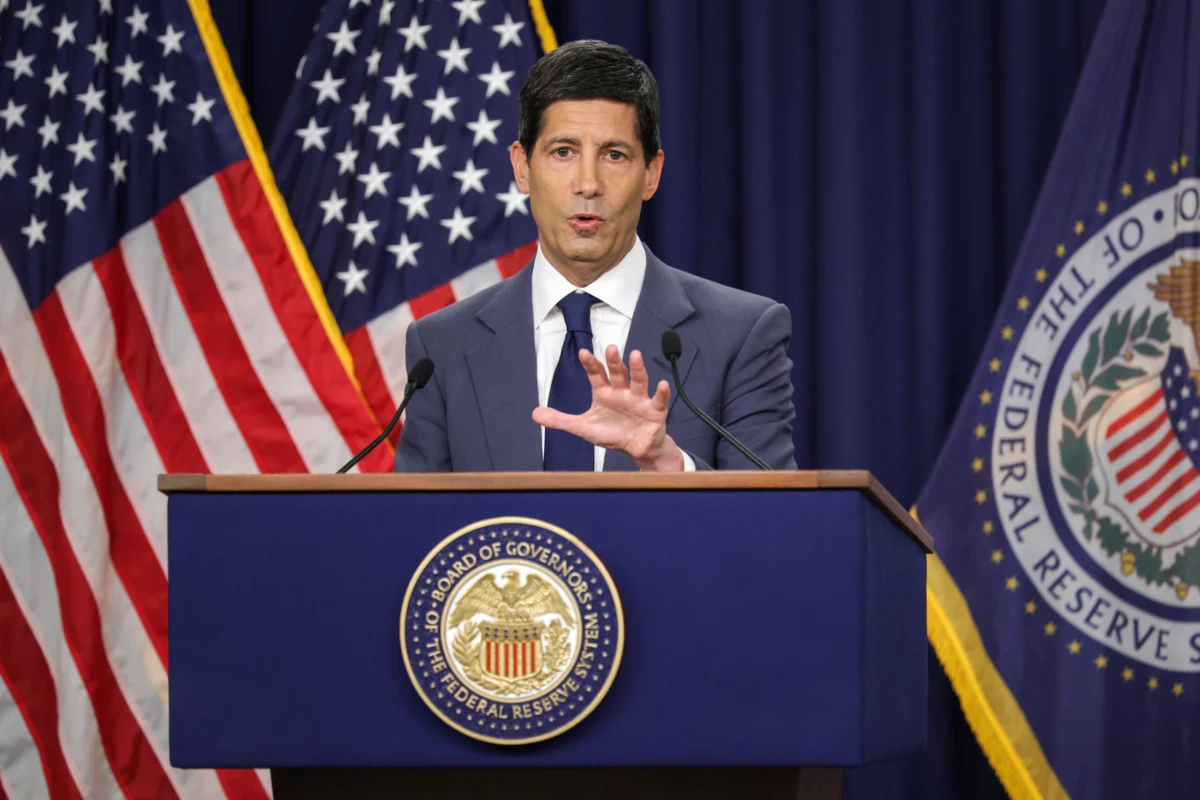
San Francisco Federal Reserve President Mary Daly stated on Friday that the recent jobs report was positive news, underscoring a resilient economy that affords the central bank the necessary flexibility to achieve its inflation targets. Speaking in an interview with CNBC, Daly highlighted the economy’s robust foundation, asserting that despite ongoing uncertainties, the Federal Reserve would likely need to implement further policy tightening measures to fully bring inflation under control. Her remarks offered a nuanced perspective on the current economic landscape, balancing optimism regarding labor market strength with a persistent focus on price stability.
The Economic Tapestry: A Solid Foundation
Daly’s comments arrive amidst a complex economic environment characterized by persistent inflationary pressures juxtaposed with a remarkably strong labor market. For much of the past two years, the Federal Reserve has been engaged in an aggressive campaign to rein in inflation, which surged to multi-decade highs. The central bank’s primary mandate encompasses both maximum employment and price stability, a delicate balancing act particularly challenging in the post-pandemic era. The "good news" from the job report, as Daly described it, likely refers to data indicating continued job creation without a corresponding acceleration in wage growth that could fuel a wage-price spiral. This scenario provides the Fed with a critical "latitude" – room to continue its restrictive monetary policy without immediately jeopardizing employment gains.
The U.S. labor market has consistently defied expectations of a significant slowdown, even as the Fed has raised interest rates eleven times since March 2022. The unemployment rate has remained near historic lows, and job growth, while moderating from its peak, continues at a pace that suggests underlying economic strength. This resilience in employment is a key factor allowing the Fed to maintain its focus on its 2% inflation target, even as some sectors of the economy show signs of cooling.
Navigating the Path: The Fed’s Recent Stance
The Federal Reserve’s monetary policy trajectory has been marked by rapid adjustments in response to evolving economic data. Following a series of aggressive rate hikes, the Federal Open Market Committee (FOMC) opted to hold the federal funds rate steady at its most recent meeting in June 2023, pausing for the first time in over a year. This decision, as Daly reiterated, was deemed appropriate given the prevailing uncertainties at the time. The pause was widely interpreted as a tactical move to assess the cumulative impact of past tightenings on the economy, allowing policymakers to gather more data before making further commitments.
However, this pause did not signal an end to the tightening cycle. The FOMC’s "dot plot" — a graphical representation of individual members’ projections for the federal funds rate — released alongside the June decision, indicated a majority of policymakers still anticipated at least two more rate hikes by year-end. Daly’s current statements align with this hawkish leaning, reinforcing the idea that the fight against inflation is far from over and that further policy adjustments remain on the table. The "ongoing uncertainty" that justified the June pause includes factors such as the lagged effects of monetary policy, global economic headwinds, and the still-unfolding impact of financial market developments.
Dissecting the Data: Daly’s Observations
Daly’s remarks provided specific insights into the data points guiding her assessment and the broader Fed’s deliberations:
-
The Robust Job Market: The San Francisco Fed President explicitly stated that the job report was "good news" and that the "solid job market gives latitude to get inflation job done." This sentiment is underpinned by recent labor market statistics. For example, the U.S. economy added significantly more jobs than expected in the preceding month, and the unemployment rate has hovered around 3.6-3.7%, a level last consistently seen in the late 1960s. Critically, Daly noted that "wage growth isn’t booming," which is a crucial distinction. While average hourly earnings have risen, their pace has generally decelerated, easing concerns that rapid wage increases could become a primary driver of sustained inflation. This moderation suggests that labor market rebalancing is occurring, albeit gradually, without an uncontrolled surge in labor costs.
-
Inflationary Pressures: The Sticky Services Component: Despite the encouraging signs from the labor market, Daly expressed a desire for her "confidence about inflation to be higher." This reflects the Fed’s ongoing challenge in bringing inflation down to its target. She specifically highlighted that "services inflation not coming down in the way we would expect." Services inflation, which includes sectors like housing, healthcare, and leisure, is often more persistent than goods inflation because it is less susceptible to global supply chain disruptions and more influenced by domestic demand and labor costs. The stickiness of services inflation is a significant concern for policymakers, as it suggests underlying demand remains strong and cost pressures are still filtering through the economy. The Personal Consumption Expenditures (PCE) price index, the Fed’s preferred inflation gauge, and the Consumer Price Index (CPI) have both shown a stubborn core services component, excluding energy and housing.
-
Market Signals and Demand Outlook: Daly also touched upon "AI repricing signals slowing of demand growth might come down a little" and that "AI repricing trade has been orderly so far." This unusual phrasing likely refers to the significant market adjustments and capital reallocation driven by the emergence and rapid adoption of Artificial Intelligence technologies. The "repricing" could relate to shifts in asset valuations, particularly in the technology sector, and the broader implications these shifts have for investor sentiment and economic activity. An orderly repricing suggests that while markets are adapting, it hasn’t created systemic instability. However, if this market revaluation signals a potential cooling in investment or consumer spending due to changed economic outlooks or wealth effects, it could contribute to a desired slowdown in aggregate demand, which is necessary to ease inflationary pressures. Businesses, she added, "are cautiously optimistic about outlook," indicating a mixed but not entirely pessimistic view of future economic conditions.
-
Rebalancing Amidst Volatility: Daly offered a philosophical perspective on the current economic adjustments, noting, "When you step back from ‘painful’ volatility, this is the kind of rebalancing that you would hope for." This statement encapsulates the Fed’s objective: to engineer a "soft landing" where inflation returns to target without triggering a severe recession. The "painful volatility" could refer to market fluctuations, heightened uncertainty, or the direct impact of higher interest rates on specific sectors. Yet, Daly views the current dynamic as a necessary and ultimately desirable rebalancing of supply and demand, moving away from the overheating conditions of the past few years towards a more sustainable growth trajectory. She concluded that "rates could be slightly restrictive to neutral," suggesting that current policy is either already dampening economic activity or on the verge of doing so, without being overly aggressive.
The Path Forward: Further Tightening Ahead
Daly’s explicit statement that the Fed "will have to tighten policy further" strongly indicates that the central bank’s rate-hiking cycle is not yet complete. This aligns with the consensus view among many FOMC members and financial market participants who anticipate at least one more 25-basis-point hike in the coming months, possibly as early as the July meeting. The rationale for this continued tightening is rooted in the belief that while inflation has come down from its peak, it remains stubbornly above the Fed’s 2% target, particularly in the services sector.
The Fed’s strategy involves pushing interest rates into a "restrictive" territory – a level high enough to slow economic growth and reduce aggregate demand, thereby cooling inflationary pressures. The specific level at which rates become truly restrictive is subject to debate and depends on various economic factors, including the neutral rate of interest (R*), which is the theoretical rate that neither stimulates nor restricts economic growth. Daly’s mention that "rates could be slightly restrictive to neutral" suggests the Fed believes it is nearing, or has just entered, this critical phase.
Broader Economic Repercussions and Outlook
The implications of Daly’s remarks and the Fed’s likely path are far-reaching:
-
Monetary Policy Outlook: For investors and businesses, the signal of "further tightening" reinforces expectations for higher borrowing costs. This affects everything from mortgage rates and corporate loans to credit card interest. Financial markets will closely scrutinize upcoming economic data, particularly inflation readings and labor market reports, to gauge the likelihood and timing of the next rate hike. The probability of a July rate hike, for instance, could firm up significantly following such statements.
-
Market Reaction: A strong economy combined with signals of continued monetary tightening generally supports the U.S. Dollar (USD). Higher interest rates make dollar-denominated assets more attractive to international investors, increasing demand for the currency. Bond yields, particularly for shorter-term U.S. Treasuries, are also likely to remain elevated or rise further, reflecting expectations of higher benchmark rates. Equity markets, meanwhile, may experience continued volatility as investors weigh the impact of higher interest rates on corporate earnings and economic growth.
-
Economic Forecasts: The Fed’s commitment to further tightening, even in a "solid" economy, suggests that policymakers are willing to tolerate some degree of economic slowdown to achieve their inflation objectives. While a full-blown recession is not the base case for many economists, the risks of a "harder landing" remain. The Fed’s hope is for a "soft landing," where inflation moderates without a significant increase in unemployment or a severe contraction in GDP. Daly’s assessment of a "rebalancing" suggests she views the current trajectory as consistent with this desired outcome, albeit with some "painful volatility."
-
Consumer and Business Behavior: Higher interest rates directly impact consumer spending and business investment. Consumers face higher costs for mortgages, auto loans, and credit, potentially leading to a pullback in discretionary spending. Businesses, particularly those reliant on borrowing for expansion or operations, will face increased financing costs, which could temper investment plans and hiring. The "cautiously optimistic" sentiment among businesses, as noted by Daly, suggests they are navigating this environment with prudence, balancing opportunities with heightened costs and uncertainties.
-
The Services Inflation Challenge: The persistent nature of services inflation highlights a structural challenge. Unlike goods, where supply chain improvements can quickly reduce prices, services are often more labor-intensive. As long as the labor market remains tight, wage pressures in services sectors could continue, making it difficult to bring down this component of inflation. Furthermore, components like housing costs (rent equivalent) tend to have a lagged response to interest rate changes, meaning it takes time for policy to fully impact these categories.
In conclusion, San Francisco Fed President Mary Daly’s recent comments paint a picture of an economy that is fundamentally sound, particularly in its labor market, which provides the Federal Reserve with the necessary leeway to continue its fight against inflation. While acknowledging the progress made, her emphasis on the need for "further tightening" and concerns about sticky services inflation underscore the Fed’s unwavering commitment to achieving price stability. The path ahead involves careful monitoring of economic data, continued vigilance, and a willingness to adjust policy as needed, all aimed at guiding the economy towards a sustainable balance without undue disruption.