Gilang Muhammad
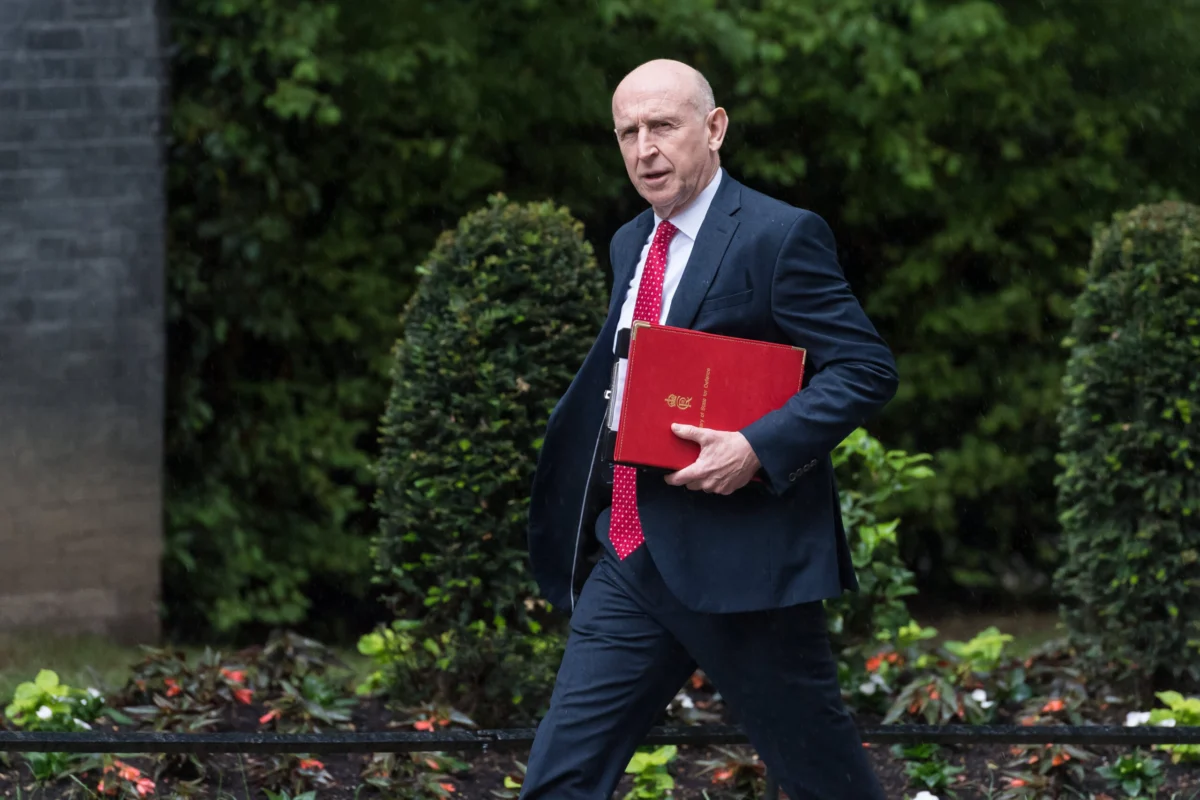
United Kingdom Finance Minister John Healey delivered his inaugural Autumn Budget on Wednesday, June 02, 2026, from Downing Street, outlining a comprehensive fiscal plan designed to alleviate persistent cost-of-living pressures, bolster national defense capabilities, and strategically invest in the nation’s burgeoning artificial intelligence sector. The budget, presented by the Secretary of State for Defence in his capacity as the Treasury chief, was broadly welcomed by financial markets, reflecting a cautious optimism about the government’s approach to navigating a complex global economic landscape.
A Nation Under Economic Pressure: The Pre-Budget Landscape
The backdrop to Healey’s budget speech was one of significant economic turbulence. The United Kingdom, a net energy importer, has been particularly vulnerable to external energy shocks, a susceptibility exacerbated by ongoing geopolitical tensions. Most notably, the U.S.-Iran war, which Healey explicitly described as a conflict "we did not want," has had a palpable inflationary impact, driving up global energy prices and subsequently affecting household and business costs across Britain.
Inflation had surged sharply throughout the preceding year, reaching an annual Consumer Price Index (CPI) rate of 3.5% in September. This figure, while not as high as peaks seen in other periods of crisis, remained a significant concern for households and policymakers alike, eroding purchasing power and contributing to widespread financial anxiety. The Bank of England, in its consistent effort to tame inflation, was widely anticipated by markets to hike interest rates in the coming month, following a series of increases that had already pushed government borrowing costs sharply higher. This created a delicate balancing act for the Treasury: stimulating the economy and providing relief without further fueling inflation or spooking bond markets.
Prime Minister Andy Burnham’s government had entered office with a clear mandate to address these economic pressures, and the Autumn Budget was seen as the first major test of its resolve and economic strategy. Public expectation for concrete measures to ease the squeeze on household finances was exceptionally high, making Healey’s debut budget a politically charged event. The government also faced the lingering shadows of past fiscal instability, including a period in 2025 when former finance minister Rachel Reeves had to backtrack on welfare spending cuts following a significant rebellion within her own party, highlighting the sensitivity of public spending decisions and the need for a stable, credible fiscal framework.
Targeted Relief for Households: The Cost-of-Living Package
Recognizing the immediate strain on families, Healey underscored his commitment to delivering "breathing space" for households. His package of measures, totaling an estimated £2.6 billion, aimed to directly reduce household bills and support vulnerable populations. A headline announcement was the removal of standing charges on household gas heating bills. This measure, a long-standing point of contention for consumers, particularly those with low gas consumption, was projected to offer immediate, albeit modest, savings for millions. Furthermore, an existing tax break on electricity bills for millions of households was extended through July 2027, providing continued relief against elevated energy prices.
To support the most vulnerable, the budget included £100 ($133) direct checks for individuals residing in the four lowest local housing tax bands. This targeted intervention was designed to provide a direct cash injection to those likely to be most affected by rising costs. Beyond energy and direct payments, the government sought to address the broader cost of living through supply-side measures. Healey confirmed the removal of tariffs on over 100 grocery products, a policy that had been pre-announced but formally enshrined in the budget. This move was intended to reduce import costs for essential goods, theoretically translating into lower prices for consumers at the supermarket checkout.
Small businesses, particularly those in the hospitality, retail, and leisure sectors, which had been hard hit by economic downturns and changing consumer habits, received an extension of business rates relief. This tax on commercial premises had long been criticized as a burden on high street businesses, and its expansion aimed to support job retention and stimulate local economies. Broader social initiatives included a £15 million allocation to provide books for children, reflecting a commitment to early education and literacy. Funding was also directed towards reducing homelessness and supporting individuals in purchasing their first homes, addressing critical social welfare challenges.
In a move welcomed by workers, the U.K.’s minimum wage was slated to rise by 3.9%, offering a pay boost to lower-income earners. Additionally, a planned cut to tax-free savings thresholds, which could have disproportionately affected middle-income savers, was canceled, signaling a desire to protect household savings.
However, the budget also signaled a determined effort to bring down the overall welfare bill, which had reached a substantial 10.7% of UK GDP in the 2024/25 financial year. Healey pledged reforms to pensions and sickness benefits, though he was careful to balance fiscal prudence with social responsibility. He emphatically stated, "I will not write off a million young people, nor will I see disabled people suffer the indignities of a system that has been found ‘not fit for purpose.’" This statement highlighted the government’s intention to reform the welfare system to ensure sustainability while still protecting the most vulnerable, a delicate political tightrope walk given past controversies.
Forging the Future: Investment in Artificial Intelligence
A significant portion of Healey’s budget speech was dedicated to the future of the U.K.’s artificial intelligence industry, signaling a strategic intent to position Britain as a global leader in this transformative technology. Healey articulated a clear vision for state intervention, stating, "Nowhere is the necessary role for the state clearer than in artificial intelligence." This marked a departure from purely market-led approaches, acknowledging the need for public investment in foundational research, security, and ethical frameworks.
Hundreds of millions of pounds were earmarked for funding AI security and sovereignty initiatives. This investment aims to ensure that the U.K. develops robust, secure AI systems and retains control over critical AI infrastructure and data, mitigating risks associated with reliance on foreign technologies. The budget also introduced a novel "covenant" for data centers operating within the country. Under this agreement, data centers would be required to meet "strict tests" including investing in local communities, creating local jobs, and protecting local water supplies. In return, critical data centers would be guaranteed the necessary grid connections and, where required, allowed to build onsite generation facilities while awaiting permanent connections, addressing a key infrastructure bottleneck for the rapidly expanding sector.
To foster entrepreneurial spirit and attract investment, Healey announced tax breaks for founders, including a reduced capital gains tax rate on gains of up to £10 million. This measure is designed to incentivize innovation and reward successful entrepreneurs, encouraging the creation and scaling of new AI companies within the U.K. Further cash injections were promised for various regional hubs across the country, with the explicit goal of "unleashing Britain’s innovation power" beyond the traditional tech clusters. These regional investments are intended to create a more distributed and resilient innovation ecosystem, leveraging local strengths and fostering diverse talent pools. The overall thrust of these AI-focused measures is to establish a virtuous cycle of investment, innovation, and ethical governance, ensuring the U.K. is at the forefront of the AI revolution.
Strengthening Defenses: A Commitment to Global Security
In response to a deteriorating global security environment, the budget included substantial commitments to defense spending and international aid. A significant £10 billion of additional economic and military support was allocated for Ukraine, underscoring the U.K.’s unwavering commitment to its ally in the face of ongoing aggression. Healey’s declaration, "Today we send a clear message to Moscow: Britain will stand with Ukraine for as long as it takes," resonated with the government’s strong stance on international law and collective security.
Beyond immediate aid, the budget outlined a clear trajectory for increasing the U.K.’s defense expenditure to meet its NATO commitments. Healey confirmed that the upcoming Spending Review next year would detail how the country would achieve its target of spending 3.5% of GDP on defense by 2035, with an interim target of 3% by 2030. This represents a significant uplift from current spending levels and reflects a recognition that "in this new era of threat, the demands on U.K. defense are rising." The implications of this commitment are far-reaching, promising substantial investment in military hardware, personnel, and research and development, while also reinforcing the U.K.’s role as a leading contributor to NATO and global security.
Maintaining Fiscal Discipline: The Economic Outlook
Crucially, Healey affirmed that his ambitious spending plans adhered to the "fiscal rules" established by his predecessor. These rules mandate that the government’s day-to-day spending must be funded by tax revenues rather than borrowing, and that national debt must be declining as a share of GDP. Adherence to these principles was seen as vital for maintaining market confidence and ensuring long-term fiscal stability.
The Office for Budget Responsibility (OBR), the independent public finance watchdog, provided its accompanying forecasts, which painted a cautiously optimistic picture. The OBR predicted that the government would have £15 billion of fiscal headroom by the 2029/30 financial year, indicating a healthier financial position than previously anticipated. Healey highlighted this in parliament, stating that "despite global challenges, this Budget puts us on track to eliminate the current budget deficit and get Britain’s finances into the black within three years."
Regarding national debt, the OBR forecast a slight rise to 83.8% of GDP next year, before a steady decline to 81.7% of GDP by the 2032 financial year. This trajectory, showing a downward path for debt over the medium term, was a key factor in reassuring markets. The OBR also revised its growth forecasts for the U.K. economy upwards, now expecting expansion of 1.2% this year, followed by 1% in 2027 and 1.6% in 2028. While these figures suggest a modest recovery, they represent an improvement on previous, more pessimistic outlooks.
Financial markets responded broadly positively to the fiscal announcements. Yields on U.K. government bonds, known as gilts, fell as Healey delivered his speech. By 1:50 p.m. in London, the yield on the benchmark 10-year gilt was 2 basis points lower at 5.323%, indicating increased investor confidence and a reduced perception of risk. Sterling, however, saw marginal movements, trading slightly lower against the U.S. dollar and 0.2% lower against the euro, suggesting that while the budget offered stability, it did not provide a strong upward impetus for the currency.
Funding the Measures: Banks and Targeted Taxation
To fund the new initiatives without resorting to broad-based tax hikes on wages or dividends, Healey announced revenue-raising measures from "those who can afford to pay." This approach aimed to shield the majority of households and businesses from additional tax burdens. Specific sectors targeted for increased taxation included banks, gambling businesses, and vape shops.
For the banking sector, which Healey had earlier this month lauded as the "jewel" in the country’s economic crown and a "huge contribution" to the U.K., a temporary increase to the bank surcharge was announced. The surcharge was raised by 3%, bringing it to 6%. This measure is set to be implemented in January and will remain in effect for 15 months. Healey justified this by stating he was asking the U.K.’s "world-leading banks" to help fund the "breathing space" for British households.
The scale of the tax hikes on banks was less severe than some in the sector had feared, leading to a positive reaction among London-listed lenders. Shares in major U.K. banks rose following the announcement: Barclays saw a 3.3% increase, Lloyds Banking Group rose by more than 2.6%, and NatWest Group was up 2.5%. This market reaction suggests that, despite the increase, the temporary nature and relative moderation of the surcharge were viewed favorably compared to potential worst-case scenarios.
However, the announcement was not universally welcomed. JPMorgan Chase, whose CEO Jamie Dimon had actively lobbied against additional U.K. taxes on banks just last month, issued a critical statement. A company spokesperson said, "to single out this industry for additional taxes again, one of the UK’s biggest generators of growth and jobs, lacks principle." The statement further emphasized that the banking industry operates in a "highly competitive global marketplace," implying that such taxes could deter investment. Dimon had previously suggested that JPMorgan might rethink the multibillion-dollar buildout of its new headquarters in London’s Canary Wharf financial district if the government adopted a "hostile" stance towards banks. Despite the criticism, JPMorgan Chase reaffirmed its commitment to the U.K., indicating a desire to continue its operations while expressing concerns about the competitive landscape.
Looking Ahead: A Balanced Approach to Future Challenges
John Healey’s first Autumn Budget represents a multifaceted approach to the U.K.’s contemporary challenges. It endeavors to provide immediate relief for households grappling with the cost-of-living crisis, while simultaneously laying groundwork for future economic growth through strategic investments in AI and strengthening national security. The emphasis on maintaining fiscal rules and securing positive OBR forecasts was crucial for reassuring markets and establishing the government’s economic credibility.
The budget’s reliance on targeted taxation, particularly on the financial sector, underscores a political strategy to fund social and strategic priorities without imposing broader tax burdens on the general populace. As the U.K. continues to navigate global economic volatility, geopolitical uncertainties, and the rapid pace of technological change, the long-term effectiveness of these measures will be closely scrutinized. Future Spending Reviews and economic updates will reveal whether the foundations laid in this budget can indeed deliver sustainable growth, widespread prosperity, and enhanced national resilience for the United Kingdom.