Clara Shinta

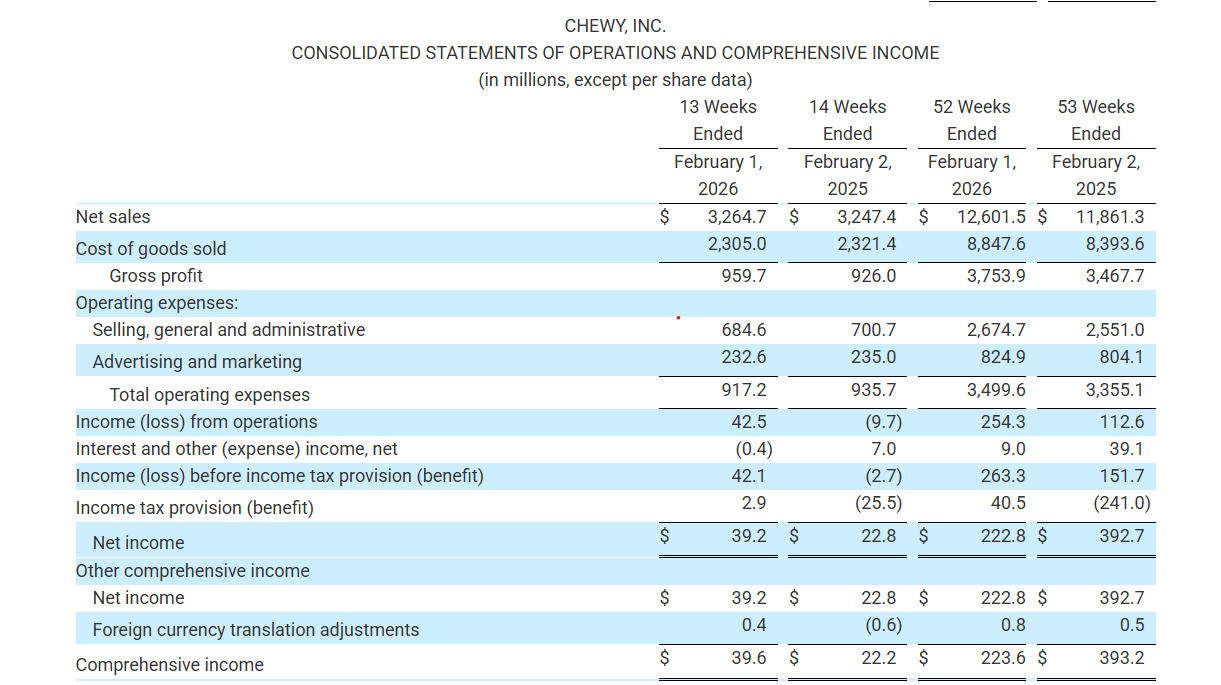
The narrative of Pets.com, a quintessential symbol of the dot-com bubble’s excess, serves as a cautionary tale often invoked to illustrate the perils of premature market entry and flawed unit economics. Launched in 1998 and backed by significant venture capital, including $110 million from Amazon, the online pet supply retailer aimed to revolutionize how consumers purchased pet food and accessories. Its highly publicized crash and bankruptcy in 2000, just 268 days after its initial public offering (IPO), seemed to confirm a fundamental business lesson: the prohibitive cost of shipping bulky, heavy items like 50-pound bags of dog food directly to customers’ doors rendered such a model unprofitable. As online retail entrepreneur Ed Baum famously quipped in a 2001 postmortem, one might wonder if Pets.com’s business plan "assumed the invention of transporters to magically move bags of pet food without shipping costs." Yet, the spectacular success of modern counterparts like Chewy, which reported $12.6 billion in sales and $223 million in net income in its latest fiscal year, dramatically challenges this simplistic interpretation. Chewy thrives on delivering precisely what Pets.com failed to: pet food and supplies, directly to consumers’ homes. This paradox suggests that the true lesson of Pets.com wasn’t the inherent flaw in its idea, but rather its arrival before the requisite logistical infrastructure, mature customer habits, and viable unit economics had coalesced to support it. This historical parallel offers a crucial lens through which to examine the trajectory of enterprise blockchain solutions, which, like Pets.com, experienced a period of intense hype, significant investment, and subsequent disillusionment between 2017 and 2023.
The First Wave of Enterprise Blockchain: Hype and Hurdles
The period spanning roughly 2017 to 2023 witnessed an explosion of interest and investment in enterprise blockchain initiatives. Following the initial surge of public blockchain popularity and the cryptocurrency boom, a distinct "blockchain, not Bitcoin" narrative emerged, suggesting that the underlying distributed ledger technology (DLT) held immense promise for businesses, independent of speculative digital assets. Companies and consortia poured billions into exploring how blockchain could streamline supply chains, enhance financial transactions, improve data sharing, and create more transparent and efficient ecosystems. The appeal was clear: enterprise systems frequently falter at the junctures where different companies need to collaborate, leading to two prevalent failure modes.
The first, and more traditional, failure mode involves disparate enterprise IT systems operating as isolated islands. Information is exchanged asynchronously through digital text messages, emailed spreadsheets, and manual data entry, leading to constant synchronization issues and perpetually "slightly wrong information." While cheap and easy to set up, this model is rife with inefficiencies, reconciliation errors, and a lack of real-time visibility, costing businesses billions in wasted effort and lost opportunities.
The second failure mode manifests as costly, real-time proprietary integrations. Here, powerful industry leaders compel their key suppliers and partners to join their closed, always-on networks. These systems, while efficient within their confines, create vendor lock-in and a form of "digital choke-hold," where smaller players bear significant integration costs and are beholden to the dominant partner’s technology. This model, often characterized by electronic data interchange (EDI) systems, can be effective but lacks the open, peer-to-peer collaboration benefits that blockchain promised.
Blockchain offered a compelling alternative: a shared, immutable ledger and business logic across an open, yet controlled, ecosystem. This vision promised the real-time visibility and efficiency of proprietary systems without the associated lock-in, fostering true collaboration among participants. Investment flowed into various initiatives, leading to the formation of numerous consortia and the launch of ambitious projects. Notable examples include TradeLens (a shipping logistics platform by Maersk and IBM), We.Trade and Contour (trade finance platforms backed by multiple banks), B3i (an insurance industry consortium), ASX Chess (the Australian Stock Exchange’s attempt to rebuild its clearing and settlement system on blockchain), and Everledger (a platform for tracking high-value assets like diamonds).
However, despite significant backing from major banks like Deutsche Bank and HSBC, and technology giants like IBM, most of these ventures ultimately "crashed and burned." Many struggled to gain traction, suffered from governance issues, and failed to achieve their ambitious goals. TradeLens, for instance, ceased operations in late 2022, citing a lack of full industry adoption. We.Trade and Contour faced challenges in scaling and achieving critical mass in a competitive trade finance landscape. B3i encountered difficulties in bringing diverse insurance companies onto a unified platform, and ASX Chess repeatedly delayed its rollout before finally abandoning its blockchain-based replacement plan in late 2022 due to significant cost overruns and technical complexities.
Fundamental Challenges: Privacy and Scalability
A common thread running through the failures of this first wave was the inability to effectively address two critical requirements for enterprise adoption: privacy and scalability. Early blockchain architectures, particularly public ones, emphasized transparency and openness. While beneficial for certain applications, this inherent transparency was a significant impediment for businesses, which operate in competitive environments where sharing detailed operational data with rivals is simply unacceptable.

To circumvent this, most enterprise blockchain projects resorted to building "private" or "permissioned" blockchains. These networks restricted participation to known entities and often incorporated complex off-chain or semi-private solutions to manage sensitive data. However, these bespoke systems often compromised the core tenets of blockchain – decentralization and immutability – becoming little more than glorified distributed databases. They were typically slow, expensive to develop and maintain, and failed to deliver the promised benefits of true blockchain. The need to perform "unnatural things" to force privacy into inherently transparent systems resulted in solutions that were neither performant nor cost-effective, leading to a widespread sentiment that "we tried blockchain, it didn’t work." Many surviving companies from this era ultimately "de-chained" themselves, reverting to classic software-as-a-service (SaaS) models, effectively abandoning the blockchain aspect. This collective experience led to a period of disillusionment, leaving many enterprises wary of blockchain’s practical utility.
A New Era: Scalability, Privacy, and Liquidity
The landscape of blockchain technology has, however, undergone a profound transformation since the initial enterprise experiments. The very limitations that hobbled the first wave – scalability, privacy, and liquidity – have seen significant advancements, making the prospect of enterprise blockchain not just viable, but potentially revolutionary.
Scalability: The "blockchain trilemma" – the notion that a blockchain can only achieve two out of three desirable properties (decentralization, security, scalability) simultaneously – was a central concern for early enterprise adopters. Public blockchains like Ethereum, while secure and decentralized, suffered from low transaction throughput (around 15-30 transactions per second for Ethereum 1.0) and high gas fees, especially during periods of high demand, with transaction costs periodically spiking to $30-$50. Such limitations made them unsuitable for the high-volume, low-cost operations typical of enterprise use cases.
Today, this narrative has fundamentally changed. Ethereum, following its transition to Proof-of-Stake (known as "The Merge" in September 2022) and subsequent upgrades, has laid the groundwork for massive scalability improvements. Layer 2 scaling solutions, such as optimistic rollups (e.g., Arbitrum, Optimism) and zero-knowledge (ZK) rollups (e.g., zkSync, StarkNet), have dramatically increased transaction capacity and reduced costs. These Layer 2 networks process transactions off the main Ethereum chain, bundle them, and then submit a single, compressed proof back to the mainnet, effectively multiplying throughput by orders of magnitude. Many transactions now settle for pennies, and the ecosystem is ramping towards theoretical capacities of hundreds of thousands, if not millions, of transactions per second, rendering the "trilemma" a largely outdated concern for many practical applications.
Privacy: The lack of native privacy was arguably the single biggest impediment to enterprise blockchain adoption. However, a robust suite of privacy-enhancing technologies (PETs) has emerged. Zero-Knowledge Proofs (ZKPs) are at the forefront, allowing one party to prove the truth of a statement to another without revealing any information beyond the validity of the statement itself. This means businesses can verify compliance, attest to transaction details, or confirm asset ownership without disclosing sensitive commercial data to competitors or the wider public network. ZK-rollups, which leverage ZKPs, not only enhance scalability but also provide a strong layer of privacy by processing transactions privately off-chain.
Beyond ZKPs, other tools like privacy pools (which anonymize transactions by mixing funds from multiple users), trusted execution environments (TEEs), and dedicated privacy-focused blockchain protocols are maturing. Furthermore, ongoing developments within the Ethereum ecosystem itself are exploring ways to bake in basic elements of privacy at multiple levels, offering enterprises an unprecedented ability to conduct business operations at scale with a high degree of confidentiality.
Liquidity and On-Chain Money: The integration of real-world financial value onto blockchain networks, particularly through stablecoins, represents another monumental shift. Stablecoins, cryptocurrencies pegged to stable assets like the U.S. dollar, have gained widespread regulatory acceptance globally. Jurisdictions such as the European Union (with its Markets in Crypto-Assets, MiCA, regulation) and ongoing legislative efforts in the United States are providing clearer frameworks for their issuance and use. This regulatory clarity has fueled an explosion in stablecoin adoption and transaction volume, reaching nearly $1.8 trillion in adjusted transaction volume in June of a recent year, according to Visa.
This tsunami of on-chain liquidity transforms blockchain from merely a data-sharing or logistical tool into a comprehensive financial ecosystem. Enterprises can now not only track assets and manage contracts but also conduct payments and settlements directly on-chain, often instantaneously and at significantly reduced costs compared to traditional banking rails. This convergence of operational and financial capabilities creates a unified environment where businesses can manage the entire lifecycle of an asset or transaction, from creation and movement to final payment and settlement.
Transformative Potential for Enterprises
The confluence of these advancements—scalability, robust privacy solutions, and on-chain liquidity—presents a compelling case for a renewed look at enterprise blockchain. The return on investment (ROI) from each component is substantial, but their combined effect can yield colossal competitive advantages across various industries.
One of the most immediate and impactful areas is supply chain management. The current state, often reliant on fragmented systems, spreadsheets, and EDI messages, leads to significant inefficiencies. McKinsey partners have estimated that advanced digital supply chain tools, including blockchain, could facilitate inventory reductions of 35-75% through superior planning and real-time visibility. More conservatively, industry experts like Paul Brody suggest that simply migrating from existing cascades of manual processes and EDI messages can enable firms to run most supply chains with approximately 20% less inventory while maintaining the same service levels. For large enterprises, this translates to billions in freed-up working capital. End-to-end visibility, automated provenance tracking, and enhanced traceability can also drastically reduce fraud, improve quality control, and streamline compliance.
Real-World Applications and ROI
Beyond inventory optimization, smart contracts are poised to revolutionize how businesses execute agreements. These self-executing contracts, with the terms directly written into code on the blockchain, can dramatically reduce the time and cost associated with traditional contract administration. Manual processes that once took days can be reduced to minutes, cutting administrative overhead by half or more. A prime example is Microsoft’s integration of smart contracts into its Xbox video game network for royalty handling. This shift reduced the time required for creators to access monthly royalty statements from 45 days to just four minutes, all while processing over 2 million transactions daily. Such efficiency gains are not merely incremental; they are transformational.
Furthermore, by bringing inventories, contracts, purchase orders, and invoices onto a blockchain, enterprises can unlock new avenues for working capital optimization. The verifiable and immutable nature of on-chain data allows for enhanced trust and transparency, which can directly translate into financial benefits. For instance, a verifiable purchase order originating from a top-tier buyer can be tokenized and used to access credit more cheaply and efficiently. Similarly, with full, real-time visibility into inventory levels and delivery status, businesses can factor receivables immediately and efficiently, improving cash flow and reducing financial friction. This capability to tokenize and instantly finance real-world assets on-chain opens up new paradigms for trade finance and dynamic discounting.
Looking Ahead: The Resurgence of Enterprise Blockchain
The initial vision for enterprise blockchain was prescient, but the technology was nascent. Like Pets.com, the idea arrived before its time, lacking the fundamental infrastructure and capabilities to make it viable. Today, the technological prerequisites for a truly transformative enterprise blockchain adoption are firmly in place. The advancements in scalability, privacy, and on-chain liquidity have addressed the core pain points that plagued earlier initiatives.
The possibilities and potential returns are immense, and the use cases are becoming increasingly evident across diverse sectors, from finance and supply chain to healthcare and intellectual property management. While challenges remain, including navigating regulatory complexities, ensuring interoperability between different blockchain networks, addressing the talent gap in blockchain development, and integrating with vast legacy IT systems, the foundational technology is now robust enough to support widespread enterprise adoption. The era of enterprise blockchain’s second chance is not merely speculative; it is a tangible reality, poised to redefine inter-company collaboration, operational efficiency, and financial fluidity in the digital economy. It is time for businesses to reconsider, learn from the past, and embrace the transformative power of blockchain, which has finally matured to meet their demands.