Ena Muazin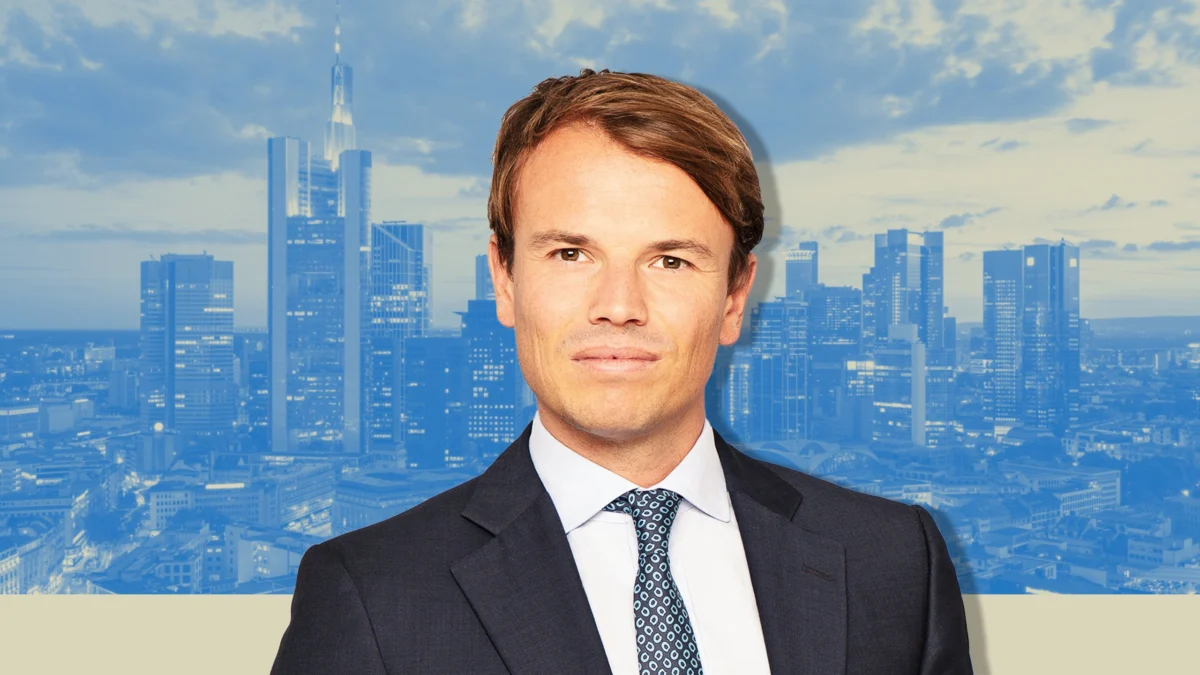
Despite prevailing geopolitical uncertainties, Franz von Metzler, a board member and shareholder of a venerable Frankfurt-based bank, expresses a confident outlook on the stock market. He anticipates a shift in market sentiment and believes Germany’s economic prospects remain robust. In an interview, von Metzler addressed the current market dynamics, highlighting the resilience of corporate earnings and the underlying strength supporting the ongoing equity rally, even amidst global tensions.
Navigating Geopolitical Headwinds
The financial markets have recently been characterized by a seemingly paradoxical scenario: a surge in record-breaking stock performances juxtaposed with a backdrop of escalating geopolitical crises. This has led many observers to question the sustainability of the current market euphoria. Franz von Metzler, however, offers a measured yet optimistic perspective, attributing the market’s buoyancy to fundamental economic factors that appear to be outweighing immediate geopolitical anxieties.

"Certainly, geopolitics is a significant driver for capital markets," von Metzler acknowledged. "However, when one examines the fundamental data, the earnings of companies have developed well. The euphoria surrounding artificial intelligence also plays a role in the rally in equity markets, but it is also fundamentally supported." This dual perspective suggests that while global events are noted, their impact is being weighed against tangible corporate performance and technological advancements.
The interview delved into the specific concerns investors have regarding international stability. The Iran conflict, for instance, was cited as a recent example of an event that could potentially disrupt market stability. Von Metzler, however, indicated that markets, in the medium term, tend to discount such escalations, operating under the assumption that diplomatic resolutions will ultimately be reached. This reflects a common market behavior of pricing in short-term volatility while focusing on longer-term economic trends.
Corporate Earnings as a Pillar of Strength
A key pillar of von Metzler’s optimistic forecast lies in the sustained development of corporate earnings. The profitability of businesses is a crucial indicator of economic health and a primary driver of stock market performance. In recent quarters, a significant number of companies across various sectors have reported strong financial results, demonstrating their ability to adapt to changing economic conditions and maintain operational efficiency. This resilience is particularly notable given the inflationary pressures and supply chain disruptions that have affected global economies over the past few years.

The "AI euphoria" mentioned by von Metzler refers to the substantial investment and market attention directed towards artificial intelligence technologies. Companies at the forefront of AI development and implementation have seen significant stock price appreciation, driven by the anticipation of future growth and innovation. Von Metzler’s statement suggests that this rally is not merely speculative but is grounded in the tangible potential of AI to enhance productivity, create new markets, and drive economic growth. This technological wave is seen as a fundamental support for the broader equity market.
Outlook for the Second Half of the Year
Looking ahead, von Metzler expressed particular confidence in the latter half of the current year. "We are optimistic for the second half of the year," he stated. "If corporate earnings continue to develop solidly, we do not expect any major setbacks." This forward-looking assessment is based on the continued strength of corporate fundamentals and the expectation that the positive earnings momentum will persist.
The absence of "major setbacks" implies a belief that the current market trajectory can be maintained, provided that no unforeseen, significant negative events occur. This suggests a stable economic environment where businesses can continue to operate and grow, thereby supporting stock valuations. The confidence in the second half of the year also hints at an expectation that inflationary pressures might stabilize or recede, potentially leading to more favorable monetary policy conditions.
Identifying the Most Significant Market Risk
When questioned about the greatest risk that markets might currently be overlooking, von Metzler pointed to a potential escalation of geopolitical tensions. "The biggest risk would be a massive escalation of the geopolitical situation, for example, between the USA and Iran. The capital market is positioned differently and does not see this risk. Such a development would hit the markets hard."
This statement highlights a critical vulnerability in the current market landscape. While investors may be focused on economic fundamentals and technological trends, a sudden and severe geopolitical crisis could rapidly override these factors. The interconnectedness of global markets means that a significant conflict could trigger widespread panic, leading to sharp declines in asset prices, disruptions in energy and commodity markets, and a general flight to safety. The capital market’s current positioning, which appears to discount such extreme scenarios, could leave it exposed if these risks materialize.
The current geopolitical climate remains a complex web of interconnected issues. Tensions in Eastern Europe, ongoing conflicts in various regions, and shifting global power dynamics all contribute to an uncertain international landscape. A significant flare-up, particularly involving major global powers, could have far-reaching economic consequences, including impacting global trade routes, energy supplies, and investor confidence. The implicit assumption that such events will be resolved peacefully is a calculated risk that the market appears to be taking.

Background Context: The Post-Pandemic Economic Landscape
The current economic environment is shaped by the aftermath of the COVID-19 pandemic. Governments and central banks implemented unprecedented fiscal and monetary stimulus measures to cushion the economic blow. This led to a period of rapid recovery, but also fueled inflation and asset price bubbles in certain sectors. As economies have normalized, policymakers have grappled with controlling inflation without triggering a recession.
The rise of artificial intelligence has emerged as a transformative force, offering the potential for significant productivity gains and economic growth. Companies that can effectively leverage AI are seen as future leaders, attracting substantial investment. This has created a distinct segment of the market driven by innovation and technological advancement, which is contributing to the overall positive market sentiment.
However, global supply chains, while recovering, remain vulnerable to geopolitical disruptions and climate-related events. The energy market, in particular, is sensitive to geopolitical developments, with any significant disruption having a ripple effect on inflation and economic activity worldwide. The interplay between these factors—economic recovery, technological innovation, inflationary pressures, and geopolitical risks—creates a dynamic and often unpredictable market environment.

Germany’s Economic Position
Germany, as the largest economy in Europe, plays a pivotal role in the global financial system. Its export-oriented economy is particularly sensitive to international trade relations and global demand. While German companies have demonstrated resilience, the country’s reliance on energy imports and its manufacturing base make it susceptible to external shocks.
Recent economic data for Germany has shown mixed signals. While industrial production has shown some signs of recovery, challenges remain in certain sectors. The government has been actively pursuing strategies to diversify energy sources and promote innovation to enhance competitiveness. Von Metzler’s optimistic outlook for Germany, therefore, suggests a belief in the underlying strength of its industrial base and its capacity to adapt to evolving economic conditions.
Implications for Investors
For investors, von Metzler’s perspective offers a rationale for maintaining a cautiously optimistic stance. The emphasis on corporate earnings as a fundamental driver suggests that discerning investors should focus on companies with strong financial health and clear growth strategies. The acknowledgment of AI as a significant factor also points towards opportunities in technology and innovation-driven sectors.

However, the warning about geopolitical risks serves as a crucial reminder of the need for diversification and risk management. Investors should be mindful of the potential for sudden market corrections and ensure their portfolios are adequately hedged against unforeseen events. The anticipated "mood shift" that von Metzler mentioned could be triggered by a number of factors, including a resolution of geopolitical conflicts, a moderation of inflation, or a significant technological breakthrough. Understanding these potential catalysts is key to navigating the market effectively.
The advice to look beyond immediate geopolitical anxieties and focus on fundamental data is a common tenet of sound investment strategy. It implies that while short-term volatility is to be expected, long-term investment success is often achieved by identifying undervalued assets with strong underlying fundamentals. The German market, with its established industrial base and a growing technology sector, offers such opportunities.
Conclusion
Franz von Metzler’s outlook provides a valuable insight into the current market sentiment, balancing the acknowledgment of geopolitical risks with a strong belief in the underlying economic fundamentals. His confidence in corporate earnings and the transformative potential of AI suggests a positive trajectory for equity markets, particularly in the latter half of the year. However, the cautionary note regarding geopolitical escalation underscores the importance of prudent risk management for investors navigating this complex global economic landscape. The resilience of German industry and its adaptation to new technological paradigms appear to be key factors underpinning this optimistic forecast.