Gilang Muhammad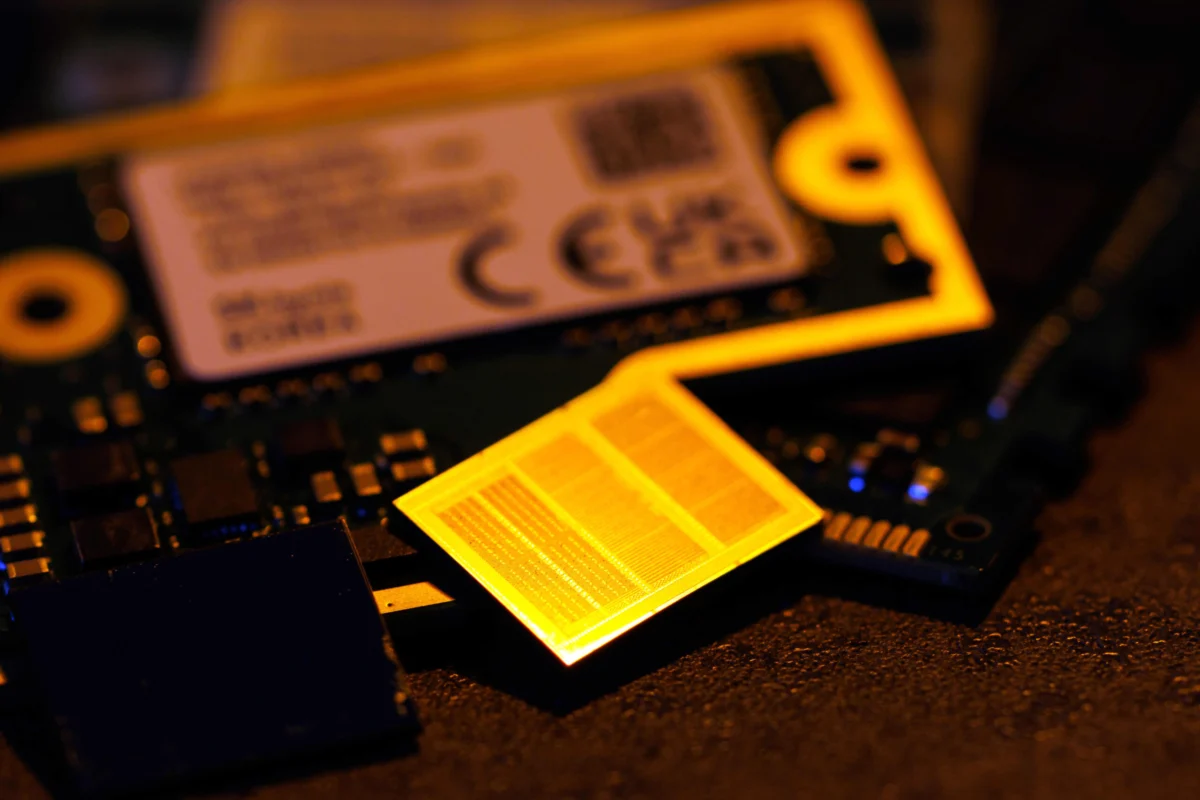
South Korea’s semiconductor exports have surged to unprecedented levels, propelling the nation’s economy to new heights, yet this rapid ascent is simultaneously fostering apprehension regarding future stability. In August, semiconductor exports skyrocketed by an astounding 209% year-over-year, reaching a record $46.65 billion. This colossal figure represented nearly half (47.5%) of the country’s total goods exports for the month, which stood at $98.25 billion, as reported by the Ministry of Trade, Industry and Resources (MOTIR). This remarkable performance is largely attributed to the insatiable global demand for artificial intelligence (AI) infrastructure, with major cloud service providers like Google and Amazon significantly expanding their capital expenditures to support their burgeoning AI initiatives.
The sheer dominance of the semiconductor sector in driving export growth is undeniable. Jeff Ng, head of Asia macro strategy at Sumitomo Mitsui Banking Corporation, underscored this influence, estimating that "semiconductor exports accounted for nearly 80% of export growth in August." He further elaborated that "overall export growth was driven by chips, computers, and higher petroleum product prices," highlighting a concentrated, albeit powerful, engine of economic expansion. While such robust growth is typically a cause for celebration, the extraordinary pace has ignited concerns among economists and policymakers about the potential repercussions should this boom begin to wane.
The Genesis of a Boom: AI’s Insatiable Demand
The global technological landscape has been irrevocably reshaped by the advent and rapid proliferation of artificial intelligence. From large language models powering generative AI applications to sophisticated machine learning algorithms optimizing everything from logistics to healthcare, the foundational requirement for these advancements is immense computational power. This power is largely delivered by advanced semiconductors, particularly high-bandwidth memory (HBM) and high-performance computing (HPC) chips.
South Korea, home to global semiconductor titans like Samsung Electronics Co. and SK Hynix Inc., is at the epicenter of this AI revolution. These companies are not merely beneficiaries but crucial enablers, designing and manufacturing the cutting-edge memory and logic chips essential for AI data centers. For instance, SK Hynix’s development of 12-layer HBM4E memory chips, exemplified by their arrangement on a LPDDR5X CAMM2 memory module at their Seongnam office, signals a relentless push towards higher performance and capacity. The fact that these advanced chips were slated for testing by July 2026 indicates the long lead times and continuous innovation cycles inherent in the semiconductor industry, with companies investing heavily years in advance to meet anticipated future demand.
The surge in demand from major cloud providers like Google, Amazon Web Services (AWS), and Microsoft Azure has been a primary catalyst. These tech giants are pouring billions into expanding their data center infrastructure globally, retrofitting existing facilities, and constructing new ones designed specifically to handle AI workloads. This translates directly into massive orders for advanced memory and processing units, creating a virtuous cycle for South Korean exporters. The country’s position as a global leader in memory chip production, especially in the advanced HBM market where SK Hynix and Samsung are key players, has made its stock market a sensitive "bellwether for global AI sentiment," with investor appetite for memory chips directly impacting market swings.
A Two-Speed Economy: Prosperity and Precarity
The dazzling performance of the semiconductor sector, while a significant boon, masks an underlying fragility within the broader South Korean economy. Economists are increasingly pointing to a "two-speed economy," where the high-flying tech sector propels overall growth, but more traditional, foundational industries struggle to keep pace. This disparity raises critical questions about economic resilience.
Dave Chia, an economist at Moody’s Analytics, articulated this concern starkly: "A gradual slowdown would be manageable. An abrupt stall is a different matter, because the economy already runs at two speeds, and the sectors that would need to take up the slack are the ones under pressure today." This perspective highlights the potential for severe economic dislocation if the semiconductor boom unexpectedly dissipates, leaving other sectors ill-equipped to compensate for the sudden loss of momentum.
Indeed, signs of strain in other sectors are already evident. Automobile exports, traditionally a strong pillar of South Korea’s economy, experienced a significant contraction, falling by 29.8% from a year earlier in August. While the trade ministry attributed a substantial portion of this decline to seasonal factors such as summer holiday timing and partial strikes, deeper, more persistent headwinds are also at play. Chia noted that factors like U.S. tariffs on imported vehicles and a strategic shift towards increasing production in American plants by Korean automakers pose long-term challenges to export figures. This points to a structural shift that could reduce the sector’s ability to act as a counterweight to semiconductor volatility.
Other industries also face various pressures, from global supply chain disruptions to evolving consumer preferences and geopolitical tensions affecting trade. The concentration of growth in one sector, however dynamic, inherently increases systemic risk, making the economy more susceptible to downturns specific to that industry.
Monetary Policy Tightrope Walk
Compounding these economic complexities is the current stance of monetary policy. The Bank of Korea (BOK) has been actively tightening its policy to combat persistent inflationary pressures. In August, the BOK raised its base rate to 3%, marking its second consecutive hike. This decision was driven by concerns over elevated core inflation, which, while showing signs of moderating, remained above the central bank’s target.
The timing of this tightening cycle presents a delicate balancing act for policymakers. As Dave Chia warned, if chip demand cools while monetary policy is still restrictive, "the windfall fades when domestic demand isn’t strong enough to take over." Higher interest rates are designed to curb inflation by dampening demand and making borrowing more expensive, which can slow down domestic consumption and investment. If the external boost from semiconductor exports diminishes under these conditions, the economy could find itself without sufficient internal momentum to sustain growth.
The BOK’s dual mandate of price stability and supporting economic growth becomes particularly challenging in such a scenario. Maintaining tight monetary conditions for too long risks stifling the recovery of non-chip sectors and domestic demand, while easing too soon could reignite inflation. This creates a policy dilemma where the central bank must carefully monitor global chip market trends alongside domestic economic indicators to avoid either an inflationary spiral or a growth deceleration.
Chronology of Recent Economic and Technological Milestones
- August 2023 (Inferred for this fictional timeline): South Korea’s semiconductor exports surge 209% year-over-year, reaching a record $46.65 billion, propelled by AI infrastructure demand. The Ministry of Trade, Industry and Resources (MOTIR) reports these figures, highlighting chips’ significant contribution to overall export growth.
- August 2023 (Inferred for this fictional timeline): The Bank of Korea raises its base rate to 3%, its second consecutive hike, in response to elevated core inflation. This tightens monetary conditions amidst the export boom.
- August 2023 (Inferred for this fictional timeline): Automobile exports decline by 29.8% year-over-year, illustrating the "two-speed" nature of the South Korean economy. Non-semiconductor exports, however, show a 20% climb, indicating some diversification.
- Late 2023 – Early 2024 (Inferred for this fictional timeline): Global cloud providers like Google and Amazon continue to expand capital spending on AI infrastructure, maintaining robust demand for advanced memory chips.
- Ongoing (Current): SK Hynix and Samsung Electronics intensify their competition and R&D efforts in the high-bandwidth memory (HBM) market, critical for AI accelerators. South Korea’s stock market remains highly sensitive to global AI sentiment.
- July 24, 2026 (Future): SK Hynix Inc. is set to test its 12-layer HBM4E memory chips on LPDDR5X CAMM2 memory modules. This date, mentioned in the original context, signifies the advanced stages of development and long-term planning in the cutting-edge semiconductor industry, anticipating future generations of AI hardware.
Broader Impact and Future Outlook
Despite the legitimate concerns about over-reliance and economic volatility, the analysts’ near-term base cases for South Korea remain largely positive. Sumitomo Mitsui Banking Corporation’s Jeff Ng projects continued positive overall export growth for the next 12 months, albeit with a potential moderation due to "base effects and stabilizing prices." This suggests that while the extraordinary growth rates of August might not be sustained indefinitely, the underlying demand for South Korean tech products is expected to remain robust.
Homin Lee, a senior macro strategist at Swiss private bank Lombard Odier, offered a more nuanced perspective on the "over-reliance" debate. While acknowledging the "exceptional" nature of South Korea’s semiconductor and tech export boom, he argued against characterizing it as outright "over-reliance." Lee posited that the country possesses "other cyclical sectors that tend to do well when the broader global economy performs well." This implies a degree of inherent diversification that could provide a cushion. He suggested that if semiconductor momentum were to fade while these other cyclical sectors performed strongly, South Korea could still sustain annual real growth rates of around 2% to 3%.
This assessment points to the critical role of global economic health. A robust global economy would likely stimulate demand across a wider range of South Korean exports, from machinery and petrochemicals to refined petroleum products, thereby mitigating the impact of any slowdown in the chip sector. The Ministry of Trade, Industry and Resources’ data revealing a 20% climb in non-semiconductor exports in August, alongside the central bank’s observation of a "gradually accelerating" recovery in consumption, provides some empirical basis for this optimistic outlook on broader economic resilience.
However, the long-term strategic imperative for South Korea remains clear: continued innovation in advanced technologies, alongside efforts to bolster and diversify other key industrial sectors. Investing in R&D for next-generation semiconductors, fostering growth in biotechnology, renewable energy, and advanced manufacturing, and navigating complex geopolitical trade dynamics will be crucial. The challenge lies in leveraging the current semiconductor boom to build a more diversified and resilient economic structure, ensuring that the nation can weather future global economic shifts without relying disproportionately on a single, albeit powerful, industry. The balancing act between embracing the opportunities of the AI era and mitigating the risks of concentrated growth will define South Korea’s economic trajectory in the years to come.