Lina Wu
The intricate web of global commerce, particularly in manufacturing and technology, has long relied on the efficiency and resilience of international supply chains. However, recent years have starkly illuminated the vulnerabilities inherent in these complex networks. Geopolitical tensions, natural disasters, pandemics, and trade disputes have repeatedly disrupted the flow of goods, leading to shortages, price volatility, and significant economic uncertainty. In this evolving landscape, the concept of regional supply chain partnerships is emerging not merely as an alternative, but as a critical strategy for bolstering resilience, fostering economic growth, and enhancing national security. As Finance Secretary of the Philippines, I have witnessed firsthand the potential and the imperative for our nation to actively engage in and champion such collaborations, particularly within the dynamic Asia-Pacific region.

The traditional model of global supply chains, characterized by the pursuit of lowest production costs, often involved sourcing components from diverse corners of the world and assembling them in geographically distant locations. While this approach delivered significant economic benefits for decades, its inherent fragility has become increasingly apparent. The COVID-19 pandemic, for instance, exposed the precariousness of relying on single-source suppliers or lengthy, complex logistics routes. Factory shutdowns, port congestion, and transportation bottlenecks cascaded through industries, impacting everything from semiconductors to essential medicines. The war in Ukraine further exacerbated these issues, highlighting the risks associated with reliance on politically unstable regions for critical raw materials and energy.
The Case for Regionalization: Resilience and Efficiency
Regional supply chain partnerships offer a compelling solution to these challenges. By fostering closer economic ties and production networks within a defined geographic area, countries can significantly reduce transit times, minimize logistical complexities, and create more agile responses to disruptions. This geographical proximity allows for faster identification and resolution of issues, as well as greater flexibility in rerouting or diversifying production when necessary.

For the Philippines, a strategically located archipelago in Southeast Asia, embracing regional partnerships presents a unique opportunity. Our nation has long been a crucial node in global electronics manufacturing, with a skilled workforce and a growing industrial base. By strengthening ties with neighboring economies like Vietnam, Malaysia, Thailand, and even further afield with Taiwan and South Korea, we can create a more robust and integrated manufacturing ecosystem. This would involve not just the assembly of finished goods, but also the development of regional hubs for component manufacturing, research and development, and logistics.
Data-Driven Advantages of Regionalization
The benefits of such regionalization are quantifiable. Studies by organizations like the World Economic Forum and various economic think tanks consistently point to the advantages of shorter supply chains. For example, a report by McKinsey & Company in 2022 estimated that companies with more regionalized supply chains experienced, on average, 10-20 percent less disruption during the pandemic compared to those with highly globalized networks. Furthermore, reduced transportation distances translate directly into lower carbon emissions, aligning with global sustainability goals and potentially opening up new markets for environmentally conscious products.

Consider the semiconductor industry, a sector critical to virtually every modern economy. The concentration of advanced chip manufacturing in a few key locations, particularly Taiwan, presents a significant strategic vulnerability. Regional partnerships could foster the development of distributed manufacturing capabilities, with countries in Southeast Asia playing a more prominent role in wafer fabrication, assembly, testing, and packaging. This diversification would not only enhance the global supply of semiconductors but also insulate regional economies from the severe economic shocks that a disruption in a single manufacturing hub would inevitably cause. The Philippines, with its established electronics sector, could be a key player in this regional diversification effort, potentially attracting investment in advanced manufacturing facilities and specialized skill development.
A Chronology of Shifting Supply Chain Paradigms
The shift towards greater regionalization is not an overnight phenomenon but a gradual evolution driven by a series of global events and strategic decisions.

- Early 2000s: Globalization reaches its peak, with companies aggressively seeking the lowest production costs, often leading to highly dispersed supply chains.
- 2008 Global Financial Crisis: This event highlights the interconnectedness of global economies and the vulnerability of complex financial and supply networks, prompting some initial considerations for diversification, though cost remained the primary driver.
- Mid-2010s: Rising geopolitical tensions, particularly between major economic powers, begin to raise concerns about the security and reliability of certain supply routes and sources. Trade protectionism emerges as a growing factor.
- 2020-Present (COVID-19 Pandemic): This event acts as a powerful catalyst, exposing the extreme fragility of hyper-globalized supply chains. Lockdowns, border closures, and transportation disruptions lead to widespread shortages and price hikes, forcing businesses and governments to prioritize resilience.
- 2022 onwards (Geopolitical Conflicts and Climate Events): Ongoing conflicts and increasingly frequent and severe climate-related disasters further underscore the need for diversified and localized supply networks. Governments begin actively promoting reshoring and nearshoring initiatives.
- Present (November 2026): The discourse has firmly shifted towards building more resilient, regionalized supply chains. International forums and bilateral discussions increasingly focus on collaborative strategies for economic security and stability.
Building the Framework: Key Pillars of Regional Partnership
For regional supply chain partnerships to be successful, several key elements must be in place:
- Trade Facilitation and Harmonization: Streamlining customs procedures, reducing tariffs, and harmonizing regulatory standards among participating nations are crucial for efficient cross-border movement of goods and components. Regional trade agreements, such as the ASEAN Free Trade Area (AFTA) and the Comprehensive and Progressive Agreement for Trans-Pacific Partnership (CPTPP), provide a foundation for this, but further deepening of these agreements specifically for supply chain integration is necessary.
- Infrastructure Development: Investment in robust transportation networks – including ports, airports, roads, and rail – is essential to support increased intra-regional trade. Digital infrastructure, such as high-speed internet and secure data sharing platforms, is equally important for managing complex supply chains.
- Skills Development and Talent Mobility: A skilled workforce is the backbone of any manufacturing sector. Regional collaborations should focus on joint training programs, knowledge sharing, and facilitating the movement of skilled labor to address specific industry needs. The Philippines, with its large pool of English-speaking talent, can be a significant contributor to this regional human capital development.
- Investment Promotion and Incentives: Coordinated efforts to attract foreign direct investment (FDI) into key industries and manufacturing hubs within the region can accelerate the development of integrated supply chains. This could involve joint investment promotion agencies and the offering of targeted incentives.
- Risk Management and Crisis Response: Establishing mechanisms for early warning systems, information sharing during crises, and coordinated response strategies can significantly mitigate the impact of disruptions. This might include establishing regional stockpiles of critical goods or developing joint contingency plans.
Implications for the Philippines and the Asia-Pacific
The proactive engagement of the Philippines in fostering regional supply chain partnerships holds profound implications. Economically, it offers the potential for increased FDI, job creation, and higher value-added manufacturing. By becoming a more integral part of a resilient regional ecosystem, we can attract investment not just for assembly but for more sophisticated manufacturing processes, research, and development. This would move the Philippines up the global value chain, fostering sustainable economic growth and reducing our vulnerability to external shocks.

From a geopolitical perspective, strengthening regional ties enhances collective economic security. A more integrated and resilient Asia-Pacific supply chain reduces reliance on distant powers and strengthens the region’s ability to navigate global economic uncertainties independently. This fosters greater regional stability and reduces the leverage of external actors seeking to exploit supply chain dependencies.
Official Responses and Expert Analysis
Governments across the Asia-Pacific have begun to recognize the strategic importance of regional supply chain resilience. In recent years, many ASEAN nations have articulated policies aimed at attracting manufacturing and diversifying their export bases. For instance, Vietnam has aggressively courted electronics manufacturers looking to diversify away from China, and Malaysia has focused on attracting high-tech industries. South Korea and Japan, with their advanced technological capabilities, have also expressed interest in collaborating with Southeast Asian nations to build more resilient supply chains, particularly in critical sectors like semiconductors and electric vehicle components.

Economists widely agree that the era of hyper-globalization driven solely by cost is evolving. "The focus has shifted from pure cost optimization to risk mitigation and resilience," notes Dr. Anya Sharma, a senior economist specializing in global trade. "Regionalization allows businesses to maintain competitiveness while significantly reducing their exposure to unforeseen disruptions. This is not about abandoning global trade, but about creating a more balanced and robust approach."
Broader Impact and Future Outlook
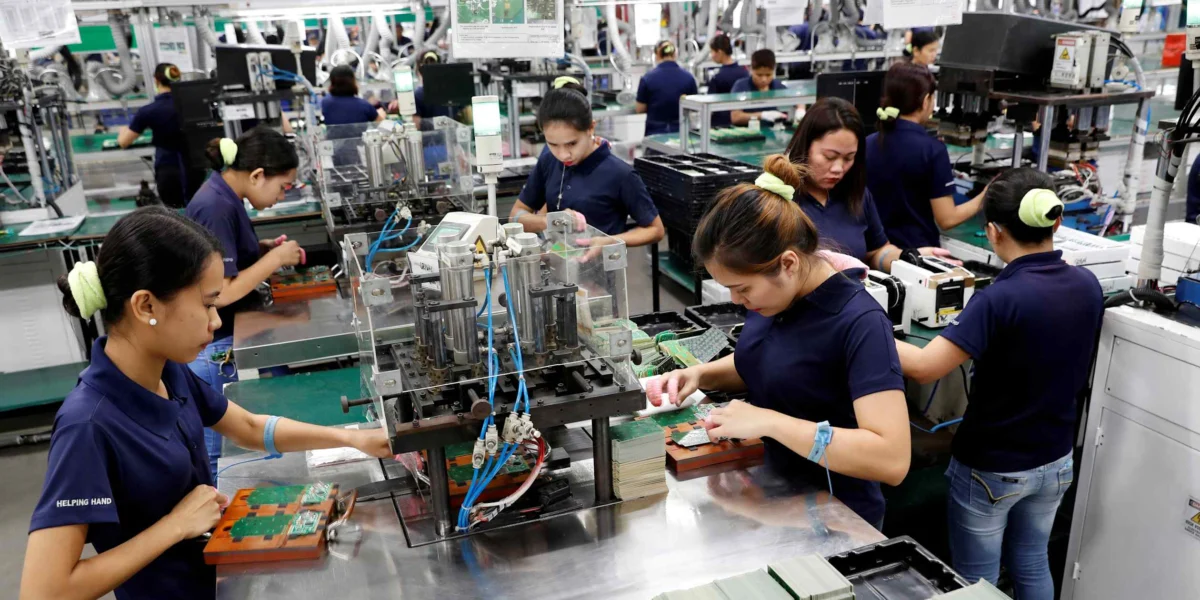
The success of regional supply chain partnerships will hinge on sustained political will, effective implementation of trade and infrastructure initiatives, and a commitment to shared prosperity. As Frederick Go, Finance Secretary of the Philippines, has articulated, the vision is to create an interconnected and resilient economic bloc that can withstand global headwinds and foster shared growth. The image of Filipinos working diligently at an assembly line in Malvar, Batangas, is a testament to the nation’s manufacturing capabilities. By weaving these capabilities into a stronger regional fabric, the Philippines can not only secure its own economic future but also contribute significantly to the stability and prosperity of the entire Asia-Pacific region.

The path forward requires a collaborative spirit, a willingness to adapt, and a long-term vision. By investing in regional partnerships, the Philippines and its neighbors can build supply chains that are not only efficient but also robust, adaptable, and secure, ensuring a more stable economic future for all. This strategic shift is no longer a matter of choice but a necessity for navigating the complexities of the 21st-century global economy. The time to build these stronger, more resilient regional ties is now.