Gilang Muhammad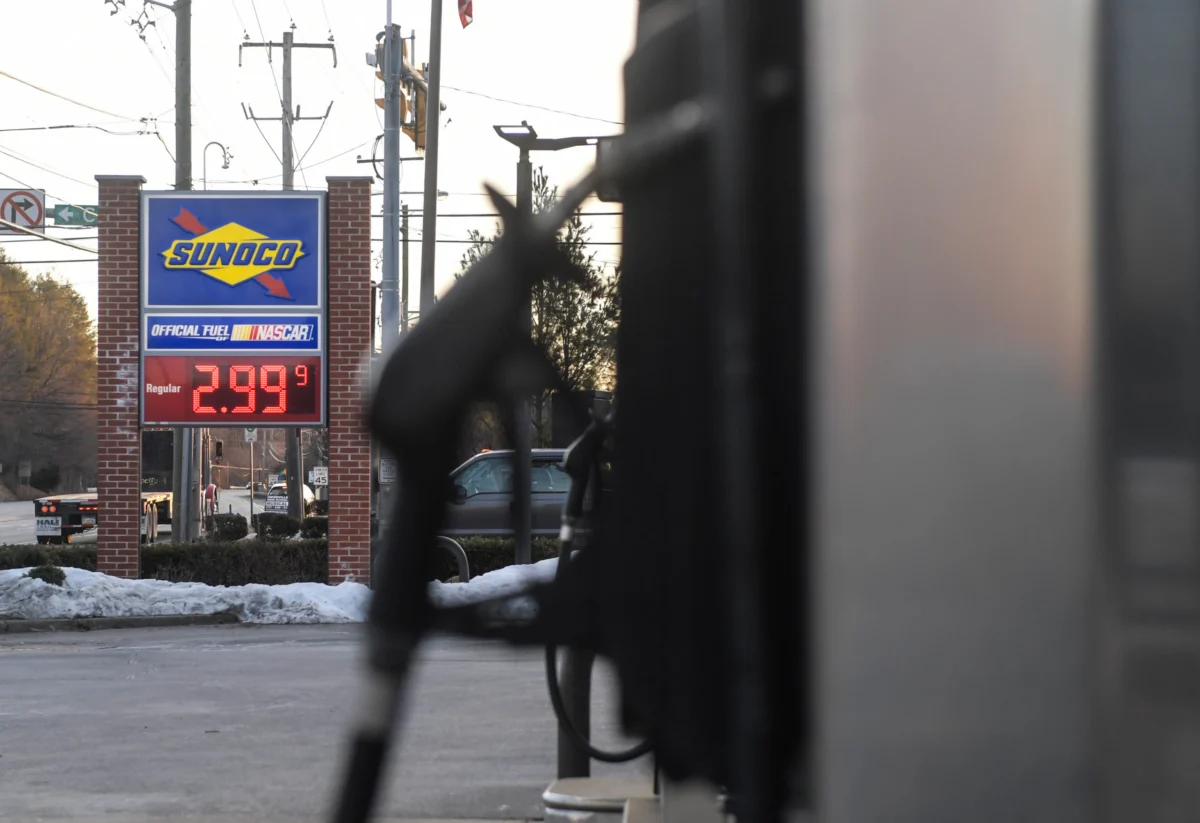
Global energy markets were thrust into turmoil this week as a rapidly escalating conflict involving Iran, triggered by a joint U.S.-Israel strike, sent crude oil prices soaring to their highest levels in four years. This dramatic surge, marked by a near halt to critical maritime traffic through the Strait of Hormuz and significant disruption at a major refinery in Saudi Arabia, immediately underscored the fragility of global supply chains in one of the world’s most vital producing regions. The developments arrive at a particularly sensitive moment for the global economy, directly challenging President Donald Trump’s repeated assurances that inflation was "on the run" and raising the specter of renewed price spikes that could undermine the central bank’s path toward lower interest rates.
The Geopolitical Catalyst and Market Shockwaves
On Monday, March 2, 2026, the ripple effects of the intensified Middle East conflict were palpable across financial markets and at the consumer level, as evidenced by rising gas prices observed at a Sunoco station in Media, Pennsylvania. The immediate catalyst was the aforementioned joint U.S.-Israel strike, which dramatically escalated tensions in a region already simmering with geopolitical complexities. This action was reportedly a response to earlier provocations, though specific details of the initial triggers remain subject to ongoing intelligence assessments and official statements.
The strategic importance of the Strait of Hormuz, a narrow waterway connecting the Persian Gulf to the open ocean, cannot be overstated. Approximately 20% of the world’s total petroleum liquids consumption, and roughly one-third of all seaborne traded oil, passes through this choke point daily. Any significant disruption here reverberates globally, affecting not only crude oil shipments but also liquefied natural gas (LNG) and other vital commodities. Reports of a "near halt" to traffic through the Strait signaled an unprecedented level of operational risk, prompting a scramble among shippers and insurers. Concurrently, news of disruption at a significant refinery in Saudi Arabia, a key global oil producer and a crucial ally, further compounded fears of immediate supply shortages.
In response, oil prices experienced an overnight jump that startled traders. West Texas Intermediate (WTI) futures, the U.S. benchmark, surged by more than 5%, while Brent crude futures, the international standard, gained approximately 6%. While both benchmarks pulled back slightly from their overnight highs by morning trading, they remained sharply elevated, reflecting deep market anxiety over the stability of future supply. This dramatic movement effectively wiped out months of relative price stability, injecting a fresh wave of uncertainty into economic forecasts worldwide.
Inflationary Headwinds: Beyond the Pump
The sudden escalation in energy costs adds a critical new layer to an already complex inflation picture. For months, President Trump’s administration had championed the narrative of inflation being successfully "defeated," pointing to a gradual moderation in headline consumer price indices from their multi-decade highs seen a few years prior. This narrative formed a central pillar of the administration’s economic policy, arguing for an environment conducive to interest rate cuts by the Federal Reserve to stimulate further growth. However, the current oil price surge directly challenges this assertion, threatening to ignite a fresh round of cost-push inflation.
Historically, sharp increases in energy costs have often served as harbingers of broader inflationary pressures. Higher crude oil prices translate rapidly into increased gasoline prices for consumers, but their impact extends far beyond the gas pump. Transportation costs for goods across all sectors—from manufacturing and agriculture to retail—rise, feeding directly into the supply chain. This "pipeline inflation" can then percolate through the economy, eventually leading to higher prices for a wide array of consumer goods and services.
Thierry Wizman, global FX and rates strategist at Macquarie Group, articulated this concern succinctly: "Generally speaking, ‘war has proven to be ‘inflationary,’ as it is associated with negative supply shocks." Wizman further elaborated that even prior to the formal declaration of the new U.S.-Iran conflict, oil prices were trending higher due to "hoarding." Since hostilities commenced, he noted, prices have been further propelled by "higher insurance premiums and forced re-routing of maritime shipping," adding layers of indirect costs to the direct price increases.
Moreover, the oil shock is not occurring in a vacuum. There have been several recent indicators suggesting that, while headline inflation figures may have cooled from their peaks, underlying price pressures remain stubbornly firm. January’s producer price index (PPI), a crucial measure of wholesale costs and a forward-looking indicator for pipeline inflation, rose a stronger-than-expected 0.8% excluding volatile food and energy components. This pushed the 12-month rate for core PPI to 3.6%, a figure still considerably above the Federal Reserve’s long-term 2% inflation target. This suggests that businesses were already facing rising input costs before the latest geopolitical events.
Adding to this concern, the Institute for Supply Management (ISM) reported on Monday that its manufacturing prices index showed a significant acceleration in cost pressures in February. More than 70% of manufacturing managers surveyed reported higher prices, an alarming 11.5 percentage point jump from the previous month. This indicates a broad-based increase in raw material and component costs across the industrial sector, signaling that inflationary forces were firming up even prior to the dramatic escalation in the Middle East. Together, these data points paint a picture of an economy already grappling with persistent cost pressures, making it particularly vulnerable to an external energy shock.

The Critical Factor: Duration and Scope of the Conflict
Despite the immediate alarm, many economists caution that the ultimate impact of higher oil prices remains difficult to gauge and could, as has often been the case with past Middle East conflicts, prove temporary. The consensus view among analysts is that the "duration of the war" will be the single most critical factor in determining the long-term economic consequences.
Prolonged disruptions to key shipping routes, such as the Strait of Hormuz, coupled with persistently higher insurance costs for maritime transport and the necessity of re-routing supply chains around conflict zones, could amplify inflationary pressures far beyond the direct effect of rising gasoline prices. Such sustained logistical challenges could lead to structural changes in global trade patterns and significant increases in the cost of goods across various sectors.
Ravikanth Rai, associate managing director for energy and natural resources at Morningstar, articulated this uncertainty: "It is unclear at this time whether the price increase is sustainable over the medium term because the conflict is still in its early stages. It is difficult to determine if there will be a structural impact on oil and gas supply coming out of the region." This highlights the speculative nature of current market movements, heavily influenced by fear and uncertainty rather than confirmed long-term supply deficits.
However, a mitigating factor for the U.S. economy, unlike in previous decades, is its significantly increased domestic energy production. The rise of hydraulic fracturing and horizontal drilling has transformed the U.S. into one of the world’s largest oil and natural gas producers, reducing its reliance on imports from volatile regions. This enhanced energy independence provides a crucial buffer against external supply shocks.
Joseph Brusuelas, chief economist at RSM, emphasized this shift: "In today’s American economy, spikes in oil prices do not present the same significant downside risk to top-line economic growth or inflation as they did a half century ago. The American economy is far less exposed to economic and inflation disruptions while its overall size has tripled." This structural change means that while U.S. consumers will certainly feel the pinch at the pump, the broader economic fallout may be less severe than in the oil crises of the 1970s or 2000s.
Quantitative estimates support this view, suggesting a moderated impact. By one widely cited estimate, a $10 increase in oil prices would typically translate to roughly a 0.2 percentage point rise in overall inflation and a modest 0.1 percentage point drag on economic growth. Given that the current move in crude prices, while significant, has not yet reached or sustained this $10 threshold, the near-term economic impact is widely expected to be modest, provided the conflict remains contained and relatively short-lived.
Resurfacing Stagflation Concerns
Despite the potential for a contained impact, crosscurrents within the global economy remain a significant concern. The U.S. labor market, while still robust, has shown nascent signs of softening in recent months, with incentives for workers to change jobs dimming. Simultaneously, the outlook for tariffs and broader fiscal policy remains uncertain, adding layers of complexity to an economic picture that, while resilient through much of 2025, exhibited signs of cooling towards the year’s end.
These combined factors have led some economists to warn of the re-emergence of stagflation risks—a particularly challenging economic scenario characterized by high inflation coexisting with stagnant or slow economic growth. This combination presents a difficult dilemma for policymakers, as traditional tools to combat inflation (higher interest rates) can exacerbate slow growth, and measures to stimulate growth (lower rates or fiscal spending) can fuel inflation.
Ipek Ozkardeskaya, senior analyst at Swissquote, articulated this concern: "Given that growth in most regions is still recovering from pandemic, trade and geopolitical tensions, stagflation risks may reemerge depending on how long Middle East tensions last." The global context of an uneven post-pandemic recovery, coupled with ongoing trade disputes and other geopolitical flashpoints, makes the current Middle East conflict a potent accelerant for such risks. Should the conflict drag on, leading to sustained higher energy prices and broader supply chain disruptions, the global economy could face a prolonged period of both elevated costs and sluggish expansion.
Central Bank’s Dilemma: The Federal Reserve’s Stance

The developments in the Middle East undoubtedly complicate the Federal Reserve’s delicate balancing act as it navigates its dual mandate of achieving maximum employment and price stability. The confluence of geopolitical shocks and underlying cost trends creates renewed pressure on inflation, challenging what had been a gradual and relatively predictable return toward the Fed’s 2% target.
Markets on Monday quickly reacted to this new uncertainty, with investors increasing their bets that the central bank will remain on hold at its upcoming March meeting and potentially well into the summer. This shift reflects a recognition that Fed officials will need to carefully weigh the competing forces of potentially higher energy prices against an uneven backdrop of economic growth.
Citigroup economist Andrew Hollenhorst commented on the Fed’s likely approach: "While this conflict heightens stagflationary risks for the global economy, it is unfolding against a backdrop of favorable growth-policy mix and resilient earnings. All of that means the ‘rise in oil prices will of course receive attention from’ the Fed… But movements in commodity prices, especially if short lived, are typically ‘looked through’ by Fed officials, and may be modest in any case." This suggests that the Fed’s initial reaction might be one of cautious observation, preferring to distinguish between transient commodity price shocks and more embedded inflationary pressures.
However, the "growth-policy mix and resilient earnings" mentioned by Emmanuel Cau, head of European equity strategy at Barclays, also offers a glimmer of hope. He suggests that if the conflict ultimately leads to greater regional stability, it could even prove "oil negative/growth positive in the medium term," implying that a swift resolution might stabilize markets and remove a significant source of uncertainty. Nevertheless, this remains a highly optimistic scenario in the face of ongoing hostilities.
Richard Bernstein, CEO of Richard Bernstein Advisors, reiterated the complexity for central bankers, emphasizing the need for policy decisions to be grounded in the structural realities of the economy rather than short-term market volatility. The Fed’s next moves will be scrutinized for how it interprets these competing signals and whether it adjusts its forward guidance on interest rates.
Broader Economic and Political Implications
Beyond the immediate market reactions and central bank considerations, the escalating conflict and its energy price ramifications carry broader economic and political implications. For consumers, sustained higher energy costs will erode purchasing power, potentially dampening retail sales and overall consumer confidence. Businesses, particularly those with high energy inputs or extensive transportation needs, will face pressure on their profit margins, potentially leading to increased prices for goods and services or reduced investment.
Globally, the disruption to shipping through the Strait of Hormuz could trigger broader supply chain issues, affecting not just oil but a wide range of internationally traded goods. This could exacerbate existing bottlenecks and lead to higher costs for consumers worldwide. Energy-importing nations, especially those in Europe and Asia, could face significant economic headwinds if crude prices remain elevated, potentially leading to slower growth and increased social unrest.
Politically, the situation poses a significant challenge for the Trump administration. With a presidential election looming, the resurgence of inflation and economic uncertainty could undermine a key tenet of its re-election campaign—economic prosperity. The administration will be under immense pressure to demonstrate effective crisis management and to mitigate the economic fallout, possibly through strategic petroleum reserve releases or diplomatic efforts to de-escalate the conflict.
The coming weeks and months will be critical. The trajectory of the Middle East conflict, the responses from global powers, and the resilience of supply chains will all determine whether the current energy price shock proves to be a temporary disruption or a more enduring challenge that fundamentally alters the global economic outlook. Analysts, policymakers, and markets will be closely watching for any signs of de-escalation or, conversely, further intensification, as the world braces for the potential reverberations of a war in one of its most critical regions.