Gilang Muhammad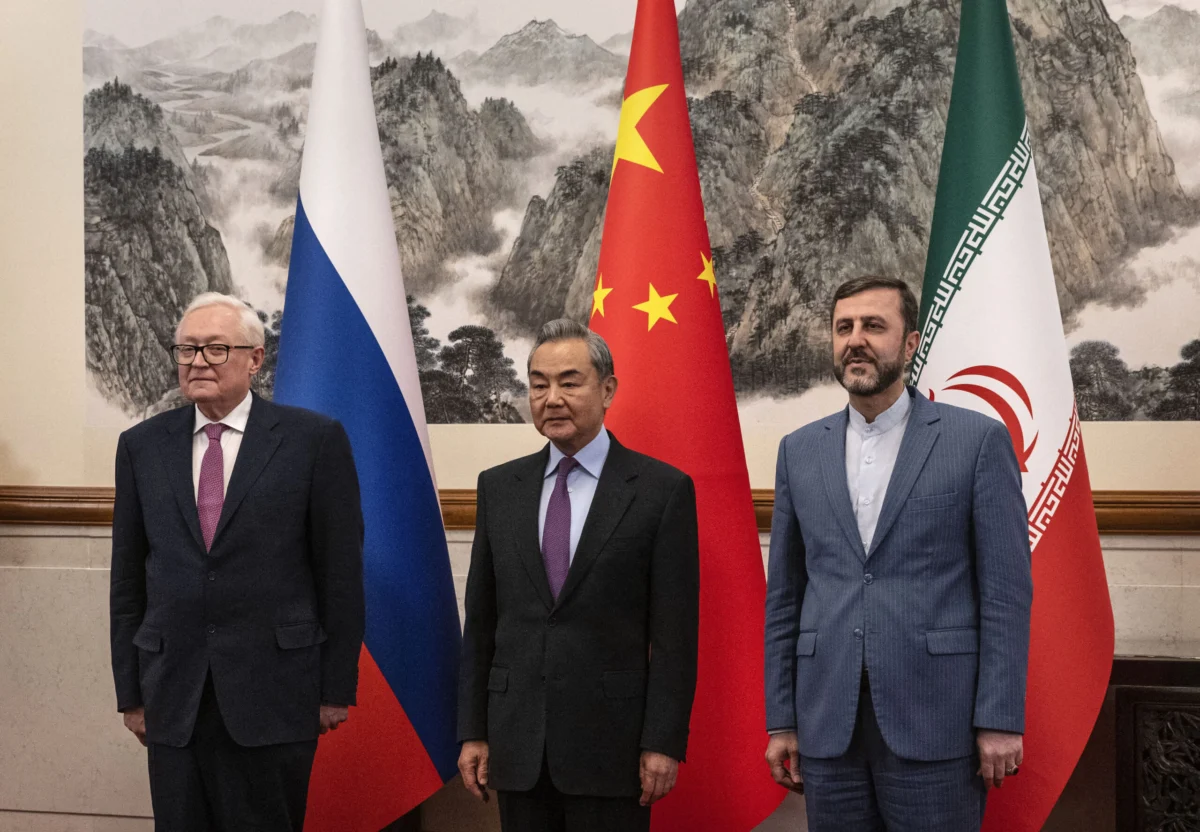
As U.S. and Israeli military operations against Iran entered their third consecutive day, marked by the unprecedented assassination of Iran’s Supreme Leader Ali Khamenei, Tehran’s closest strategic partners, Russia and China, have responded with notably restrained criticism, exposing the inherent limits of their much-touted "strategic partnerships" with the Islamic Republic. Despite strong rhetoric condemning the U.S.-led strikes, officials from both Moscow and Beijing have conspicuously refrained from pledging any concrete military or substantial civilian support to Tehran, signaling a prioritization of their own complex national interests over a direct confrontation with the United States and its allies.
The coordinated strikes, which commenced earlier in the week, escalated dramatically on Sunday, March 16, 2025, with reports confirming the death of Supreme Leader Ali Khamenei. This development marks a profound shift in the geopolitical landscape of the Middle East and an unparalleled act in modern international relations, targeting the spiritual and political leader of a sovereign nation. The U.S. and Israel cited a range of justifications for the offensive, including alleged Iranian sponsorship of terrorism, its advanced nuclear program, and regional destabilization efforts. President Donald Trump, speaking on Sunday, reaffirmed that the U.S. combat operation in Iran would persist until all objectives were definitively achieved, indicating a potential four-week continuation of hostilities.
China’s Deliberate Restraint: Balancing Act Amidst Global Ambitions
China’s initial response, delivered by Foreign Minister Wang Yi in a phone call with his Russian counterpart on Sunday, was unequivocal in its condemnation. Wang Yi denounced the attacks as "unacceptable for the U.S. and Israel to launch attacks against Iran," further stating that it was "still less to blatantly assassinate a leader of a sovereign country and instigate regime change." This strong language echoes Beijing’s long-standing position against foreign intervention and violations of national sovereignty, principles it frequently invokes in its own diplomatic engagements, particularly concerning issues like Taiwan.

However, the verbal condemnation has not translated into any tangible commitments of aid or military backing for Iran. This strategic reticence is not an anomaly but rather a consistent pattern in Beijing’s foreign policy, as highlighted by experts. Gabriel Wildau, managing director specializing in China at advisory firm Teneo, observed, "While China’s official statement was strongly condemnatory, beyond this rhetoric I don’t see China’s government taking concrete action to support Tehran." Wildau underscored that "preserving détente with the U.S. remains a strategic priority for China’s leadership." This priority is evidenced by the anticipation of a top-level meeting between U.S. President Donald Trump and Chinese leader Xi Jinping later this month, a follow-up to their February 4 discussion that reportedly included Iran among a swath of critical issues. Such high-stakes diplomatic engagements suggest Beijing’s reluctance to jeopardize broader bilateral relations with Washington over Tehran.
Furthermore, analysts suggest that China might leverage its relatively muted stance on Iran to secure concessions on issues more directly impacting its core national interests. Ahmed Aboudouh, a fellow at Chatham House, a London-based policy think tank, posited that "Beijing may seek concessions on issues more directly related to its interests, such as Taiwan and trade, in exchange for its significantly watered-down messaging on Iran." This transactional approach underscores China’s pragmatic foreign policy, where solidarity is often contingent on strategic gains rather than unconditional alliance.
The sentiment that Iran stands largely alone in a crisis was even echoed within China’s own information ecosystem. Niutanqin, a social media account widely considered a mouthpiece for Beijing with links to Chinese state media, published an article on Monday asserting that "Iran has no real ally," emphasizing that even its closest partners would prioritize their own national interests above rescuing Tehran from an existential threat. This public messaging serves to manage expectations, both domestically and internationally, regarding the extent of China’s commitment to Iran.
China’s restrained approach to Iran is well-documented. Last year, Beijing criticized U.S. and Israeli strikes on Iran but did not offer material support. Historically, China supported UN-led economic sanctions against Tehran prior to the 2015 nuclear deal, known as the Joint Comprehensive Plan of Action (JCPOA), and has since moved slowly on channeling substantial investment into the Iranian economy, according to Chatham House. This cautious engagement contrasts sharply with the narrative of a robust "strategic partnership." A similar pattern emerged on January 3, 2026, following the U.S. seizure of Venezuela’s President Nicolas Maduro. Beijing condemned the "blatant use of force" and urged Washington to "stop violating other countries’ sovereignty," yet offered little beyond verbal condemnation. These instances collectively illustrate that a "strategic partnership with Beijing falls far short of a military alliance — or even a guarantee of military support" in the face of "an existential threat from U.S. aggression," as Wildau concludes.
Russia’s Calculated Silence: Constraints of War and Shifting Priorities

For Russia, Iran has emerged as a crucial strategic, military, economic, and trade partner in the Middle East in recent years, particularly since Russia’s full-scale invasion of Ukraine began in February 2022. Tehran has become a vital supplier of military drones and missiles to Moscow, bolstering Russia’s capabilities in a protracted conflict. However, despite this close operational partnership, Russia’s response to the strikes and Khamenei’s assassination has been markedly subdued, indicative of its own geopolitical constraints and shifting priorities.
The Russian Foreign Ministry issued a statement condemning the "acts of aggression," asserting they violated international law and fundamental principles of the UN Charter, while also warning of "destabilising the situation across the entire region." Yet, conspicuously, neither the Kremlin nor President Vladimir Putin has made any public statements regarding the escalating crisis in Iran. CNBC’s requests for comment from the Kremlin remained unanswered, highlighting a deliberate strategy of non-engagement at the highest levels.
This silence is largely attributed to Russia’s severely diminished capacity for power projection beyond its immediate borders. Years of grinding warfare in Ukraine have "hollowed out Russia’s capacity to project power beyond its borders," according to Matt Gerken, chief geopolitical strategist at BCA Research. With its military resources overstretched and its economy enduring sustained pressure from Western sanctions, Moscow’s ability to exert significant influence or offer direct military assistance in distant theaters like the Middle East has been severely curtailed. The loss of another regional ally, following the fall of Bashar al-Assad’s regime in Syria in December 2024, would undoubtedly be a blow to Russia’s Middle East aspirations, but direct intervention appears beyond its current capabilities.
Economically, however, Russia stands to gain from the current instability. Global oil prices surged by more than 8% on Sunday evening as market participants braced for potential major global supply disruptions stemming from the conflict in Iran, a key OPEC+ producer. While several OPEC+ countries, including Russia, announced on Sunday an increase in production by 206,000 barrels a day from April to counter a potential shortfall, a higher baseline oil price is unequivocally beneficial for Moscow. Ellen Wald, president of Transversal Consulting, noted, "Putin’s got to be thrilled, because anything that raises the price of oil is good for him." She added, "He’s definitely able to say: if you can’t get oil from the Gulf, hey, we’ve got a great supply." This economic windfall helps fund Russia’s costly war machine in Ukraine, where talks aimed at ending the four-year conflict have shown little progress. Wald further speculated on the broader geopolitical implications, suggesting that while Putin might be content with the immediate situation, "once it’s resolved, Trump is definitely going to turn his eyes toward Putin next."
Historically, Russia has often adopted a "wait-and-see" approach to global affairs that do not directly threaten its immediate interests. This was evident in late December, when Russia did not intervene during widespread protests in Iran. This pattern suggests that Moscow will likely observe how the Iranian regime withstands the U.S. and Israeli military onslaught, rather than committing to direct support that could further strain its resources or draw it into a wider conflict.

International Law and Diplomatic Fallout
The assassination of a sovereign nation’s leader, regardless of the justifications presented by the perpetrators, represents a profound challenge to established international norms and the principles enshrined in the UN Charter. Russia’s Foreign Ministry explicitly referenced these violations in its condemnation, highlighting the destabilizing precedent such actions set. The global community now faces a complex diplomatic landscape, where calls for an immediate ceasefire and a return to dialogue are juxtaposed against President Trump’s firm declaration of continued military operations. The international legal ramifications of targeting a head of state, particularly without explicit UN Security Council authorization, will undoubtedly be a subject of intense debate and could further erode the fragile framework of international law.
Economic Repercussions and Global Markets
The immediate surge in crude oil futures underscores the profound impact of Middle East instability on global energy markets. Iran’s strategic location, controlling a significant portion of the Strait of Hormuz, a critical chokepoint for global oil shipments, means that any major disruption in its stability or production capacity sends ripples across the world economy. The OPEC+ group’s swift decision to increase production indicates a recognition of the severe risk to global supply. While higher oil prices benefit major exporters like Russia, they pose significant challenges for import-dependent nations, potentially fueling inflation and hindering economic growth worldwide. The long-term economic fallout will depend on the duration and scope of the conflict, as well as the stability of the post-Khamenei leadership in Iran.
The Elusive Goal of Regime Change: Will Iran Fall?

President Trump’s stated objective of achieving regime change in Iran through military operations faces significant historical hurdles. Michael McFaul, a Stanford professor and former U.S. ambassador to Russia, expressed skepticism regarding the efficacy of such campaigns. "Historically, air campaigns do not lead to the overthrow of regimes. I can’t think of a single case of success, even military interventions with boots on the ground [tend to fail]," McFaul told CNBC. He further elaborated on the distinction between military targets and those aimed at repressing the Iranian populace: "We are bombing right now military targets that are weapon systems that are aimed at us and our partners and allies, we’re not taking out the military instruments and the weapons that are used to repress the Iranian people." This raises critical questions about whether the current military campaign, despite its severity and the high-profile assassination, can genuinely achieve the desired political transformation in Iran. The transition of power following Khamenei’s death presents a moment of profound uncertainty for Iran’s internal dynamics, but whether it leads to the collapse of the Islamic Republic remains highly speculative. The resilience of the state apparatus, coupled with the potential for nationalistic rallying in the face of external aggression, could complicate any externally imposed regime change efforts.
Broader Geopolitical Implications and Future Scenarios
The unfolding crisis in Iran, and the responses from China and Russia, highlight a fundamental truth about contemporary geopolitics: "strategic partnerships" often serve as relationships of convenience, contingent on convergent interests rather than immutable ideological alignments or security guarantees. For China, its primary focus remains on economic stability, technological advancement, and challenging U.S. influence in the Indo-Pacific, making a direct confrontation over Iran an undesirable distraction. For Russia, the imperative of its ongoing war in Ukraine dictates its foreign policy calculus, limiting its capacity for intervention elsewhere.
This event could profoundly reshape the geopolitical landscape of the Middle East, potentially leading to further instability or, conversely, a re-evaluation of regional security architectures. It also casts a long shadow over the future of U.S. foreign policy, raising questions about the limits of unilateral action and the international community’s capacity to respond to such escalations. The muted responses from Iran’s nominal allies serve as a stark reminder that in the complex tapestry of global power, national self-interest remains the ultimate arbiter of alliance and action.