Gilang Muhammad
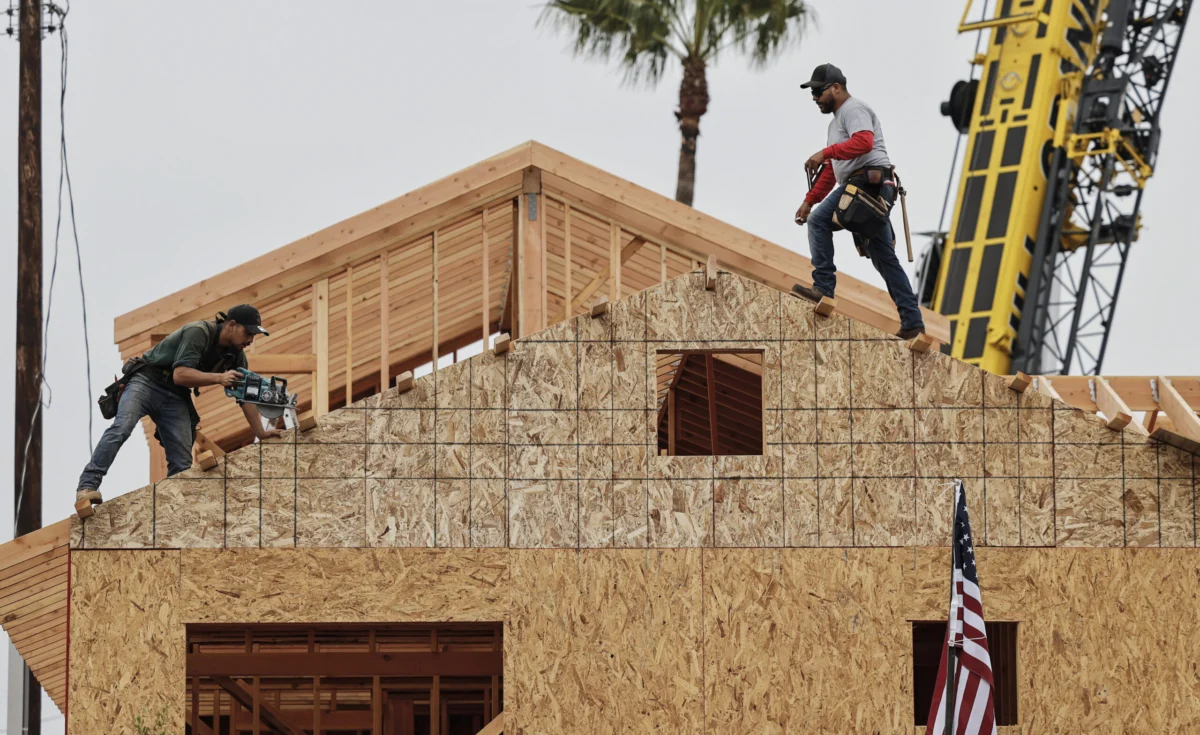
The Federal Reserve’s determined campaign to tame persistent inflation is confronting a significant and escalating challenge: a rapidly deteriorating housing market. Despite aggressive interest rate hikes aimed at cooling the economy, broader inflationary pressures, particularly in the services sector and influenced by burgeoning technological investments, remain stubbornly high. This divergence—a slumping housing sector juxtaposed against persistent overall price increases—presents a complex dilemma for the central bank as it navigates its next steps in monetary policy.
September Data Reveals Deep Freeze in Housing Activity
Recent economic indicators underscore the severity of the housing market’s contraction. Data released in October 2026 painted a grim picture of September’s activity, revealing declines that far exceeded already subdued analyst expectations. The National Association of Realtors (NAR) reported that its Pending Home Sales Index, a crucial forward-looking metric tracking homes under contract but not yet closed, plunged to an all-time low. This index, whose records extend back to 2001, registered a sharp 7.3% decline for September and was down 11.3% compared to the previous year. This performance starkly contrasted with Wall Street’s consensus estimate, which had anticipated a modest decline of just 0.4%.
Concurrently, figures from the Commerce Department detailed a significant slowdown in new construction. Privately owned housing starts fell by 5.2% month-over-month, defying expectations of a mere 0.4% dip. Building permits, another key gauge of future construction activity, also edged down by 0.2%, missing the Dow Jones consensus forecast for a 2% gain. More specifically, single-family permits totaled only 845,000 units, marking a 4% decrease from August and hitting their lowest level since 2023. This dual setback in both existing home sales and new construction points to a pervasive weakness across the entire housing ecosystem.
The Federal Reserve’s Policy Conundrum
The current state of the housing market presents a direct conflict with the Federal Reserve’s dual mandate of achieving maximum employment and stable prices. Typically, a weakening sector like housing might prompt policymakers to consider easing monetary conditions to stimulate demand. However, the overarching battle against inflation, which has seen consumer and producer prices remain elevated, takes precedence. Readings from last week, for instance, indicated few signs of an imminent slowdown in price pressures, with wholesale final demand goods prices rising by 2.6%, marking the fastest pace since December 2009. This persistent inflation complicates any move towards dovish policy, trapping the Fed between a struggling housing market and an economy still grappling with rising costs.
Fed officials have openly acknowledged tracking the inflationary ripple effects of robust investment in artificial intelligence, which is driving up the cost of critical components like chips and other advanced electronics. While they express optimism that the long-term benefits of AI investment could eventually offset weaknesses in other sectors, such as housing, the immediate challenge remains. The central bank is expected to maintain its hawkish stance, with market futures pricing in a strong likelihood of a quarter-point rate hike in December, followed by another in March 2027, according to the CME Group’s FedWatch tool. Should these hikes materialize, they would further push mortgage rates, already at historically high levels, exacerbating the affordability crisis and deepening the housing market’s woes.

Mortgage Rates and the Affordability Squeeze
The primary driver behind the housing market’s current predicament is the dramatic surge in mortgage rates. The rate for a 30-year fixed mortgage remained above 7% for most of September, closing the month around 7.6%, according to Mortgage News Daily. This stands in stark contrast to just five years prior, when rates hovered closer to 3%, fueling the unprecedented demand and price escalation during the Covid-era housing boom. The rapid increase in borrowing costs has created an acute affordability crisis, making homeownership increasingly out of reach for a significant portion of potential buyers.
Lawrence Yun, chief economist for the NAR, succinctly captured the essence of the problem: "Market conditions weakened in September due to fast-rising mortgage rates. Although job growth and income gains can support home purchases, housing affordability is more affected by changes in mortgage rates." Indeed, while the labor market has shown resilience with continued job creation, the pace of wage growth has largely failed to keep up with the combined pressures of elevated home prices and soaring interest rates. This imbalance means that even those with stable employment find themselves priced out of the market, leading to a significant drop in buyer activity.
The "Lock-In" Effect and Stagnant Inventory
Adding another layer of complexity to the struggling market is the "lock-in" effect. A substantial majority of current mortgage borrowers—over 95%—enjoy rates significantly below the prevailing market level, with 65% locked into rates at least 2 percentage points lower than current offerings. This phenomenon creates a powerful disincentive for existing homeowners to sell, as doing so would necessitate taking on a new mortgage at a much higher rate, effectively increasing their monthly housing costs significantly.
Goldman Sachs economist Ronnie Walker highlighted this dynamic, noting that the "lock-in" effect is a primary reason for the stagnation in existing home sales. "Sustained higher mortgage rates will continue to have their most pronounced impact on housing turnover," Walker stated, adding that the recent run-up in rates is likely to push existing home sales even lower in the coming months. This reluctance to sell contributes to a persistent shortage of available homes on the market, which, paradoxically, can keep prices from falling as sharply as they might otherwise, further exacerbating the affordability issue for aspiring buyers. This creates a vicious cycle: high rates deter buyers, but also deter sellers, leading to low transaction volumes and a stagnant market.
Impact on Homebuilders and Future Supply
The sentiment among homebuilders provides another critical barometer of the market’s health. The National Association of Home Builders/Wells Fargo Housing Market Index, which measures builder confidence, has plummeted to lows not seen in 14 years. This widespread pessimism directly translates into reduced construction activity, as evidenced by the decline in housing starts and permits. Builders are facing a double whammy: soaring borrowing costs for their own construction loans and a shrinking pool of eligible buyers due to high mortgage rates.

Chris Rupkey, chief economist at Fwdbonds, painted a stark picture: "The housing market is about to go into a deep sleep unless Washington can do a 180 on its policies and make the cost of a new home more affordable. It is not winter yet but housing is going into a deep freeze." This chilling forecast reflects the growing concern that the persistent housing shortage, a foundational issue for many years, is now being compounded by a significant slowdown in new supply coming online. If builders continue to pull back, the long-term implications for housing availability and affordability could be severe, delaying any potential recovery even after interest rates eventually stabilize or decline.
Broader Economic Implications and Outlook
The housing sector plays a substantial role in the overall economy, contributing significantly to Gross Domestic Product (GDP) through construction activity, related services, and consumer spending on home furnishings and improvements. A prolonged downturn in housing could therefore act as a considerable drag on economic growth. Goldman Sachs forecasts residential investment to decline by 2.5%, 4%, and 1% respectively over the coming three quarters, with a caveat that a steeper decline is possible if mortgage rates do not ease.
Looking ahead to 2027, Goldman Sachs projects single-family starts at just 875,000, largely unchanged from 2026, and existing home sales at 3.9 million. While similar to current levels, this latter figure remains a significant 26% below pre-Covid 2019 levels, highlighting the depth of the market’s contraction. Walker attributes these middling levels to the interplay of affordability headwinds and the ongoing housing shortage, creating a market that is "capped on the upside by affordability headwinds and buffered on the downside by the longstanding housing shortage." In 2027, the firm expects affordability to increasingly dominate as a negative factor, further weighing on activity.
Despite the prevailing gloom, there are glimmers of potential optimism, albeit cautiously expressed. Lawrence Yun suggests that the trend of mortgage rates rising significantly ahead of the Federal Reserve’s short-term rate hikes could indicate that mortgage rates are approaching their peak. "Given that mortgage rates have already risen much more than the Federal Reserve’s short-term interest rate hikes, mortgage rates could be topping out," Yun remarked. He posits that buyers and sellers might simply be in a holding pattern, awaiting a more favorable turn in mortgage rates before re-engaging with the market.
However, any substantial relief for the housing market hinges directly on the Federal Reserve’s ability to successfully bring inflation under control without triggering a severe recession. The current policy landscape is a delicate balancing act. Continued rate hikes risk further deepening the housing slump, potentially leading to broader economic weakness and job losses in construction and related industries. Conversely, prematurely easing monetary policy could reignite inflationary pressures, undoing the progress made in stabilizing prices. The coming months will be critical in determining whether the housing market can find a floor or if it is indeed heading into a prolonged "deep sleep," as the Fed continues its high-stakes battle against inflation. The intertwined fates of inflation, interest rates, and the housing market will remain a central focus for economists, policymakers, and ordinary citizens alike throughout 2027 and beyond.