Gilang Muhammad
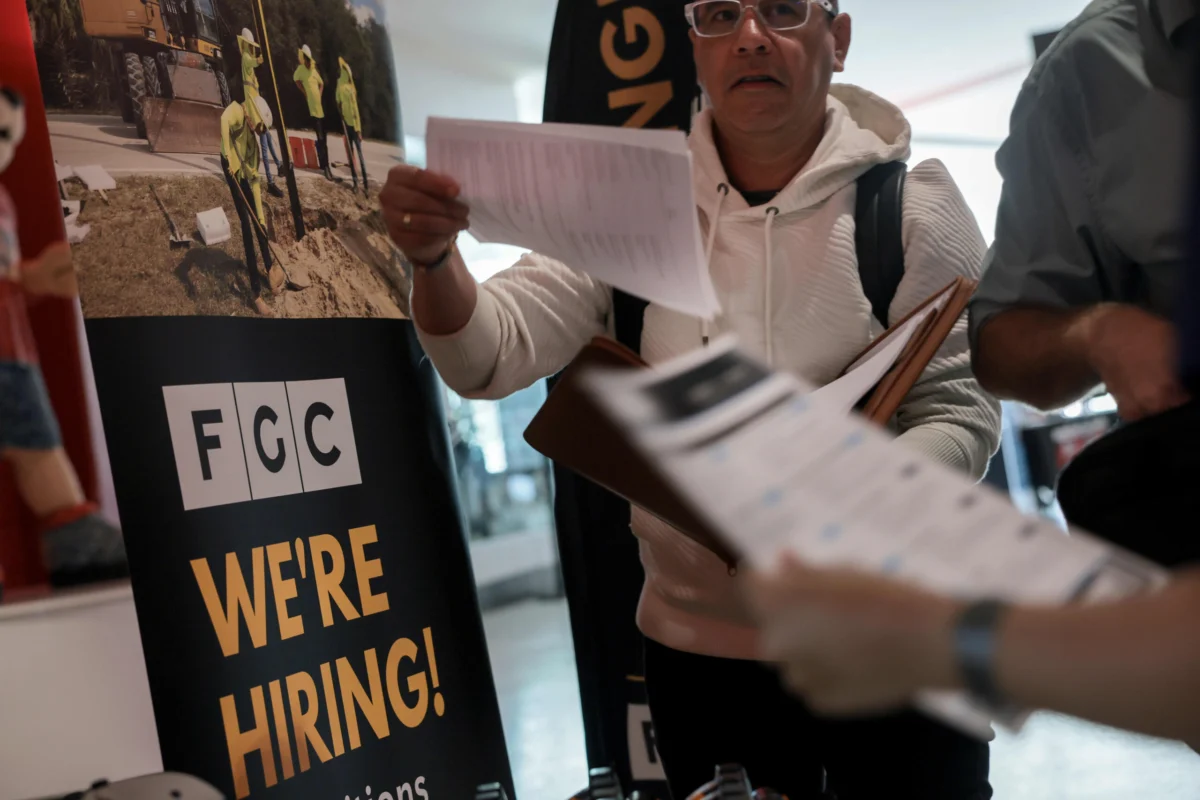
The United States labor market delivered a powerful surprise in October 2026, with nonfarm payrolls surging by 165,000 jobs, dramatically surpassing Wall Street’s modest expectations of 59,000. This blockbuster jobs report, released by the Bureau of Labor Statistics (BLS) on Friday, November 6, 2026, not only signals robust economic activity but also presents a compelling challenge to the prevailing consensus view regarding job displacement due to artificial intelligence. Far from leading to mass unemployment, preliminary data from the report suggests that the burgeoning AI boom is, at least for now, acting as a net job creator. Furthermore, insights gleaned from specific employment categories within the report hint at a deeper resilience and potential for sustained job growth heading into the end of the year.
The overall economic landscape preceding this report was one of cautious optimism, tempered by persistent inflation concerns and the Federal Reserve’s vigilant stance on monetary policy. Analysts had anticipated a slowdown in hiring, reflecting a tightening labor market and the cumulative effect of interest rate hikes. However, October’s figures painted a different picture, indicating a U.S. economy that continues to defy predictions of a significant downturn, with businesses still actively seeking talent across various sectors. The unemployment rate held steady at 3.8%, near historic lows, and average hourly earnings continued their upward trend, albeit at a pace that suggests a gradual moderation of wage pressures. Labor force participation rates also showed marginal improvements, indicating more individuals entering or re-entering the workforce.
While the headline numbers garnered immediate attention, a closer examination of the BLS data reveals three particularly noteworthy trends that offer deeper insights into the current dynamics of employment: a significant expansion in the consulting sector, a notable uptick in temporary hiring, and the palpable economic impact of the 2026 midterm election cycle. These categories, often overlooked in initial analyses, provide a nuanced perspective on how technological advancement, corporate strategy, and political activity are collectively shaping the nation’s employment landscape.
AI’s Unexpected Ally: The Consulting Boom
Perhaps the most intriguing revelation from the October report was the dramatic surge in hiring within the consulting sector, particularly for management, scientific, and technical consultants. This profession saw its total headcount reach an unprecedented record, expanding by 17,300 jobs between September and October. This represents the largest month-over-month increase in nearly two years for this specialized field, which is a critical subset of the broader professional and business services sector. Notably, this category alone accounted for a substantial 25% of the entire sector’s gains for the month.
Over the past year, the workforce for these types of consultants has grown by more than 45,000 jobs, pushing the total employee base past 1.9 million for the first time in recorded BLS history. This expansion marks a significant turnaround for an industry that had largely seen hiring stall since 2023. Following years of rapid growth during the pandemic-driven digital transformation, the consulting sector faced a period of consolidation and uncertainty. Wall Street, in particular, had expressed considerable apprehension regarding the rise of artificial intelligence, fearing that its capabilities could diminish the demand for human advisory services.
These fears were reflected in the stock performance of major consulting firms. For instance, shares of Gartner, a prominent research and advisory company, had lost more than half of their value over the preceding three years. Similarly, industry giants like Accenture and FTI Consulting saw their stock prices drop by approximately 18% and 9%, respectively, over the same period, starkly contrasting with the S&P 500’s robust climb of roughly 74%. The market’s skepticism was rooted in the assumption that AI could automate complex analytical tasks, reduce the need for human strategic input, and streamline business processes to such an extent that external consulting services would become less essential.
However, the October jobs report challenges this narrative directly. Economists are now speculating that this recent jump in consulting hires is largely driven by businesses actively seeking external expertise to navigate the complexities of AI adoption. The integration of AI technologies, from strategy formulation and implementation to ethical considerations and workforce retraining, is a monumental task for many organizations. Gartner itself, in a September forecast, predicted that worldwide AI spending would reach an staggering $2.7 trillion in 2026, representing a nearly 50% increase year-over-year. This immense investment necessitates specialized guidance, and it appears companies are turning to consultants to bridge the knowledge gap and accelerate their AI initiatives.
Jeffrey Roach, chief economist at LPL Financial, highlighted the consulting sector as a "bright spot" in October, remarking that "The AI buildout and corporate interests to increase utilization will keep the technical consultants employed." Roach drew a parallel to the late 1990s, when consulting jobs experienced double-digit growth as firms scrambled to integrate nascent internet technology into their operations. This historical context suggests that periods of significant technological disruption often initially create a surge in demand for expert guidance, rather than immediately displacing jobs.
This trend is further supported by broader analyses suggesting that AI is currently a net contributor to job growth. Moody’s Analytics, for example, estimated that since the launch of ChatGPT in November 2022, AI has been responsible for creating a net 786,000 jobs. This includes roles directly related to AI development and implementation, as well as indirect jobs such as those in data center construction, which are critical for powering AI infrastructure. Mark Zandi, chief economist at Moody’s, succinctly articulated this shifting perspective in a recent social media post, questioning the "dystopian scenarios" of mass unemployment. He stated, "That risk hasn’t gone away, and AI-driven productivity gains could still shift into a higher gear. But for now, AI is adding to job growth, not subtracting from it." This suggests a crucial, initial phase of AI integration where specialized human capital is paramount for successful deployment.
A Glimmer of Permanence: The Rise in Temporary Hires
Another significant contributor to October’s robust job growth was the notable increase in temporary workers. Payrolls within the temporary help services subsector expanded by 18,600 jobs, marking one of its largest month-over-month increases since 2022. This category, also a component of the professional and business services sector, accounted for a substantial 27% of the sector’s total gains for the month, underscoring its importance in the overall hiring picture.
While the total size of the temporary workforce remains below the record highs observed in 2022, the recent growth is significant. Headcount has increased by approximately 3% since December of the previous year and has now returned to levels last seen in April 2025. The reference to April 2025 is particularly poignant, as it was the month when President Donald Trump’s administration initiated plans for steep tariffs, which had placed corporate America on high alert regarding potential economic disruptions and trade uncertainties. The current resurgence in temporary hiring suggests a renewed confidence or, at the very least, an increased operational demand within businesses.
Economists traditionally view temporary hiring as a crucial leading indicator in the labor market. The conventional wisdom posits that companies often hire workers on a short-term or contract basis to assess their fit and capabilities before committing to full-time employment. A sustained increase in temporary workers can therefore signal an impending wave of permanent hires, as businesses become more confident in their growth trajectory and convert successful temporary placements into full-time roles. This phenomenon reflects a cautious yet optimistic approach by employers, allowing them to scale operations quickly without the immediate long-term commitments associated with permanent staff.
However, interpreting this particular boost in temporary hiring requires a nuanced perspective, given its timing as the year-end approaches. The proximity to the holiday shopping season introduces a complicating factor. A significant portion of this increase could be attributed to seasonal hiring, as retailers, logistics companies, and other businesses staff up to meet heightened consumer demand during the busiest shopping period of the year. If this is primarily holiday-related hiring, employers are historically less likely to retain these workers once January rolls around.
While the BLS employs sophisticated seasonal adjustment models to account for predictable trends, these models may not immediately capture shifts in seasonal patterns. One such shift observed in recent years is the "seasonal creep," where holiday hiring begins earlier and earlier each year. This makes it challenging to immediately distinguish between genuine leading indicator growth and early seasonal ramp-ups.
One hint that holiday hiring may be influencing these numbers comes from a separate but related category: couriers and messengers. This sector is a well-known barometer for holiday labor demand, and the October report showed that just over one out of every ten new jobs created during the month fell into this category. This strong performance in logistics and delivery services further suggests that businesses are preparing for a robust end-of-year sales period. Jason Pride, chief of investment strategy and research at Glenmede, a wealth management firm, noted that this category "bears watching for reversal in the months ahead," underscoring the temporary nature often associated with such roles. Despite the potential for seasonal influence, the sheer volume of temporary hires still points to a substantial demand for labor, reflecting either growing business activity, a backlog of projects, or a strategic approach to managing workforce needs in an evolving economic climate.
The Unseen Engine: Election Spending’s Role
The 2026 October jobs report also contained a unique, cyclical driver of employment growth: spending related to political campaigns. As the nation headed into the final weeks of what was slated to be one of the most expensive midterm election cycles in history, employment in political organizations experienced a historical spike, contributing to the overall payroll numbers.
The BLS has previously analyzed this phenomenon, noting that employment in political organizations consistently spikes heading into midterm or presidential elections. Staffing levels tend to peak in October of those election years, as campaigns ramp up their activities to reach voters. Historical data confirms this pattern, with nonfarm payrolls showing expansions in the months leading up to the 2018 and 2022 midterm elections, demonstrating a predictable surge in political employment during election cycles.
What made the 2026 cycle particularly impactful, however, was the unprecedented scale of campaign financing. According to an analysis by OpenSecrets, a prominent money-in-politics watchdog group, the 2026 congressional election was predicted to go down in history as the most expensive midterm on record, with total spending projected to exceed $12 billion. This staggering sum, channeled through thousands of campaigns at the federal, state, and local levels, translated directly into a significant number of paid positions.
The jobs created by election spending are diverse, ranging from highly specialized roles to entry-level community engagement. Campaigns hire strategists, communications directors, data analysts, digital marketers, and fundraisers. On the ground, thousands of individuals are employed as field organizers, door-to-door canvassers, phone bankers, event coordinators, and administrative staff. These roles, while often temporary, provide crucial employment opportunities and infuse considerable economic activity into local communities. The sheer volume of money sloshing through the political system in 2026 meant that more positions were created, for longer durations, and often at higher rates of pay, than in previous cycles. This "election economy" acts as a short-term stimulus, boosting employment in the professional and business services sector, as well as in administrative support and even in areas like printing and media production.
While these jobs are inherently transient, dissolving shortly after Election Day, their presence in the October report undoubtedly contributed to the surprising strength of the nonfarm payroll figures. Their eventual disappearance in subsequent months will need to be carefully considered by economists analyzing future jobs reports, as their temporary nature could lead to a perceived dip in employment if not properly contextualized.
Broader Implications and Future Outlook
The October 2026 jobs report offers a complex yet largely optimistic snapshot of the U.S. labor market. It not only shattered expectations for overall job growth but also provided crucial evidence challenging the widespread apprehension surrounding AI-driven job displacement. The surge in consulting roles, specifically linked to AI adoption, suggests that technological innovation is, in its current phase, generating new demands for specialized human expertise, rather than simply rendering existing roles obsolete. This finding is a powerful counter-narrative to the "AI apocalypse" predictions that have gained traction in public discourse.
Furthermore, the significant increase in temporary hires, even with the caveat of potential holiday influence, indicates a resilient business sector with a continued appetite for labor. Whether these roles eventually transition to permanent positions will be a key indicator for the coming months, but for now, they signify active hiring and operational expansion. The impact of election spending, while transient, highlights how large-scale, focused financial injections can temporarily stimulate specific segments of the labor market, adding a unique cyclical element to employment trends.
Looking ahead, economists will be closely watching several factors. The sustainability of the consulting boom will depend on the continued pace of AI integration and the evolving needs of businesses as they mature in their AI capabilities. The trajectory of temporary hires post-holiday season will reveal whether the underlying demand for labor is truly strengthening or merely reflecting seasonal fluctuations. Moreover, the broader economic context—including inflation rates, consumer spending patterns, and any further adjustments to monetary policy by the Federal Reserve—will continue to shape the labor market’s path.
The October 2026 jobs report underscores the dynamic and adaptive nature of the U.S. economy. It demonstrates that even amidst technological revolutions and significant political activity, the fundamental demand for human labor remains robust. While the long-term impact of AI on employment remains a subject of ongoing debate and observation, for now, the data suggests a period of expansion and adaptation, with new opportunities emerging faster than anticipated job losses. The labor market, it seems, is writing its own surprising chapter in the age of artificial intelligence.