Gilang Muhammad
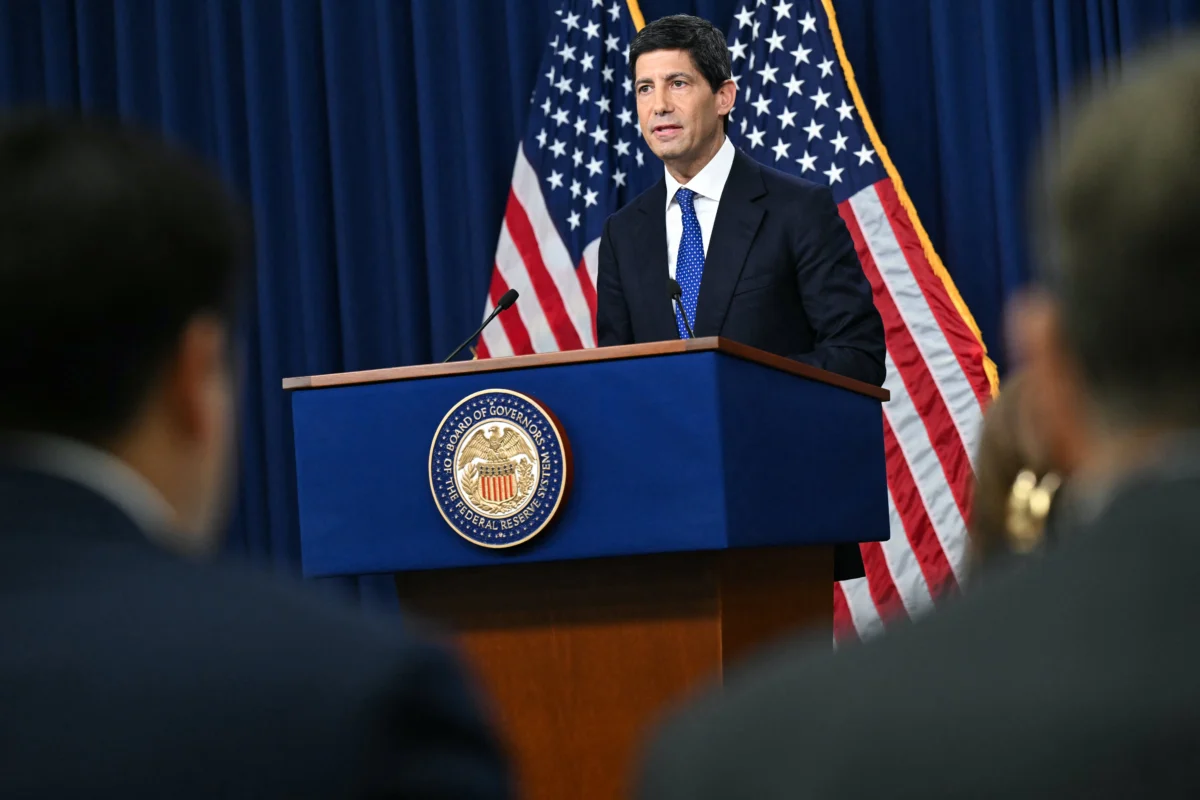
The U.S. Federal Reserve, under the chairmanship of Kevin Warsh, faces a complex economic landscape demanding careful calibration of monetary policy. While the immediate focus remains on reigning in persistent inflation, a new CNBC Fed Survey of 30 leading fund managers, strategists, and economists indicates a strong consensus for a strategic pause in interest rate hikes at the upcoming October Federal Open Market Committee (FOMC) meeting. However, this anticipated lull is expected to be short-lived, with a significant majority forecasting a resumption of tightening in December and further increases well into 2027. This nuanced outlook underscores the formidable challenges confronting the central bank as it navigates a period marked by robust nominal growth, inflationary concerns, geopolitical instability, and evolving market dynamics.
The October Interlude: A Deliberate Pause in Monetary Tightening
The CNBC Fed Survey, a crucial barometer conducted before every FOMC meeting, found an overwhelming 93% of respondents anticipate the Federal Reserve will hold its benchmark interest rate steady this week. This near-unanimous expectation reflects a period of heightened caution, allowing policymakers to assess the cumulative impact of previous rate hikes and digest the latest economic data before making further adjustments. The decision to pause, while widely expected, is not without its critics, particularly given what some perceive as an extended period of accommodative policy in the face of strong economic indicators.
Richard Bernstein, global head of macro investing at Janus Henderson Investors, voiced a strong opinion, stating, "Their hesitancy to raise rates is unfathomable after an extended period of monetary and fiscal generosity, with nominal GDP running 6-8%, and when the leading indicators of inflation are uniformly warm to hot." Bernstein’s sentiment highlights a segment of the market that believes the Fed is lagging behind the curve, risking further entrenchment of inflationary expectations. This perspective suggests that the current economic environment, characterized by robust growth and rising prices, warrants more aggressive action, even at the risk of dampening economic momentum.
Despite the broad consensus for a pause, a notable 30% of survey respondents advocated for an immediate rate hike at the current meeting, signaling a clear division among experts regarding the optimal pace of tightening. This minority view is expected to be reflected within the FOMC itself, with at least two Fed voters anticipated to dissent from the decision to keep rates unchanged. These dissenting voices likely align with the argument put forth by John Ryding, chief economic advisor for Brean Capital, LLC, who emphasized, "The aggregate demand data (probably north of 7%…) and the inflation data point to the strong need to hike rates." Such calls underscore the intense pressure on the Fed to address what many see as an overheating economy.
Conversely, others counsel patience, citing emerging economic vulnerabilities. Mark Zandi, chief economist at Moody’s Analytics, cautioned against further hikes, pointing to a confluence of factors: "The Iran War is intensifying, real wages are falling, interest rates are rising, and the AI-fueled stock market looks shaky." Zandi conceded that "Inflation is high, but there’s little sign it is becoming entrenched. This isn’t the time for more Fed rate hikes." This perspective highlights the delicate balancing act faced by the Fed, which must weigh the risks of inflation against the potential for an economic slowdown triggered by geopolitical events, declining real incomes, and financial market volatility. The pause, therefore, could be interpreted as a strategic reprieve, allowing the Fed to gather more information and avoid precipitating an unnecessary downturn.
The Path Forward: Anticipating December and Beyond
While October may offer a brief respite, the survey emphatically points towards a continuation of monetary tightening. A substantial 76% of respondents anticipate a rate hike at the Fed’s next meeting in December, signaling a market conviction that inflationary pressures will necessitate further action before the year concludes. Looking further ahead, more than half of the economists and strategists surveyed expect the Fed to implement additional rate increases in 2027, projecting an average of approximately two hikes over the course of the year. This forward-looking view suggests a prolonged battle against inflation, with the Fed expected to maintain a restrictive stance for the foreseeable future.
The rationale for continued tightening stems from the persistent strength of the economy and the pervasive nature of inflation. A plurality of 40% of respondents believe the Fed must actively slow economic growth below its potential rate to effectively resolve the inflation problem. This contrasts with 27% who argue that a significant economic slowdown is not necessary, and 23% who suggest only a moderate deceleration is required. This divergence underscores the ongoing debate about the severity of the inflation challenge and the degree of economic sacrifice needed to achieve price stability. The Fed’s dual mandate—to achieve maximum employment and stable prices—makes this decision particularly arduous. Historically, achieving a "soft landing" (reducing inflation without triggering a recession) has proven challenging, requiring precise timing and communication.
The Persistent Inflation Conundrum: Broader Than Just Energy
A critical finding from the survey is the widespread belief that the inflation problem extends far beyond the volatile energy sector. A robust 70% of respondents view inflation as a broader, more systemic issue, implying that price pressures are originating from multiple sources across the economy. While energy prices remain a significant factor, their influence is seen as part of a larger inflationary tapestry. The U.S. crude oil benchmark, for instance, is forecast to reach $88 a barrel six months from now, an increase from $82 in the September survey, though still below its current level of $101. While this forecast suggests some moderation from peak prices, it still indicates elevated energy costs compared to historical averages, contributing to overall inflationary pressures through transportation, manufacturing, and consumer spending.
The Consumer Price Index (CPI), a key measure of inflation, is projected to tick down slightly from its current September pace of 3.7% to 3.6% by year-end. However, a more significant decline is anticipated for 2027, with forecasts placing the CPI at 2.6%. This projected trajectory suggests that while headline inflation may ease, it will likely remain above the Fed’s long-term target of 2% for an extended period, necessitating continued vigilance and policy action. The persistence of core inflation (excluding volatile food and energy components) is a particular concern, as it often signals underlying demand-driven pressures or sticky price increases in services, which are less responsive to supply-side shocks. Factors such as strong wage growth, supply chain bottlenecks in specific sectors, and robust consumer demand continue to fuel these broader inflationary trends.
Economic Resilience Amidst Global Shocks
Despite numerous shocks and challenges—including high inflation, anticipated Fed rate hikes, and persistent high oil prices—the economic outlook remains surprisingly resilient according to the survey. Respondents collectively anticipate economic growth to remain above its potential, defined as the rate of growth that does not lead to inflation or deflation. Forecasts for Gross Domestic Product (GDP) this year rose to 2.4%. While ticking down slightly since the last survey, the 2027 forecast still hovers above potential at 2.2%. This compares favorably to 2025 growth, which registered 2.05%. The sustained growth suggests an underlying strength in the U.S. economy, capable of absorbing some of the shocks, though it also contributes to the inflationary dilemma.
The labor market is also expected to maintain its strength, albeit with a slight softening. Unemployment is forecast to remain steady at 4.2% through the remainder of the year before ticking up to 4.4% in 2027. While an increase, this level still represents a historically low unemployment rate, indicating a tight labor market that could contribute to wage pressures and, consequently, inflation. The risk of the U.S. entering a recession in the next year has also seen a marginal decrease, with respondents in aggregate putting the probability at 26%, down from 29% in the previous survey. This suggests a growing confidence, however cautious, in the economy’s ability to avoid a significant downturn despite the ongoing challenges.
Financial Markets Under Pressure: S&P 500 and Bond Yields
The financial markets reflect the ongoing uncertainties and policy expectations. The outlook for the S&P 500 remained stable for the current year, hovering around 7,600, but saw a slight downward revision for next year, moving to 8,033 from 8,274 in the prior survey. The index closed at 7,676 on the Monday preceding the survey’s release, indicating that the market is already pricing in some of the anticipated challenges. The "AI-fueled stock market looks shaky," as noted by Mark Zandi, points to concerns about valuations in the technology sector, which has been a primary driver of market gains. Any significant correction in this segment could have broader market implications, potentially dampening consumer and business confidence.
High bond yields have also emerged as a prominent concern, influencing everything from mortgage rates to corporate borrowing costs. The survey identified several culprits contributing to elevated yields, with respondents attributing them in almost equal percentages to high inflation, robust economic growth, large amounts of government debt issuance, and expectations for higher Fed funds rates. When asked specifically about the supply-side drivers, 50% pointed to government debt, while 13% cited debt used to fund the massive buildout of artificial intelligence infrastructure. A significant third of respondents, however, believed both factors contributed equally to the rise in yields.
On average, respondents foresee the 10-year Treasury yield remaining above 5% this year before dropping slightly to 4.8% in 2027. This signifies a "new band, not an anomaly," according to Subodh Kumar, president of Subodh Kumar & Associates. The sustained elevation of benchmark yields has profound implications, increasing the cost of capital for businesses, raising borrowing costs for the government, and potentially cooling investment. The substantial government debt issuance, driven by persistent fiscal deficits, adds to the supply of bonds, putting upward pressure on yields, while the demand for funding the burgeoning AI sector also competes for capital, further contributing to market dynamics.
Geopolitical and Political Risks: Adding Layers of Uncertainty
Beyond traditional economic indicators, the survey highlighted significant geopolitical and domestic political risks that could derail economic forecasts and complicate the Fed’s decision-making. The intensification of the Iran War was identified as a primary concern. The conflict’s potential to disrupt global energy supplies, shipping lanes like the Strait of Hormuz, and broader trade flows poses a substantial threat to global economic stability. Rob Morgan, senior vice president and market strategist at MOSAIC, directly linked this geopolitical factor to domestic policy, stating, "Fed Chair Warsh, in all of his future conversations with President Trump, need to repeat this mantra: the quickest way to bring down inflation in the U.S. is to end tariffs and end the war in Iran." This underscores the interconnectedness of foreign policy, trade, and monetary policy in the current environment.
The potential bursting of the artificial intelligence bubble was another significant risk cited. While AI holds immense promise for productivity gains, concerns about overvaluation, speculative investment, and the sustainability of current growth rates in the sector could lead to a sharp market correction, similar to previous tech bubbles. Such an event would reverberate through equity markets, impact investor confidence, and potentially curtail innovation if capital becomes scarce.
Domestically, the upcoming congressional election is also perceived as a notable market risk. A significant 63% of respondents indicated that legal challenges potentially extending uncertainty over which party controls Congress pose some market risk. John Donaldson, director of fixed income at Haverford Trust Co., succinctly captured this sentiment: "The potential for prolonged election uncertainty is one of the largest near-term risks to the markets, and we all know how much markets hate uncertainty." The survey showed a notable shift in expectations for the election outcome, with more than half of respondents now believing the most likely scenario is Democratic control of both houses, a substantial increase from 29% in the last survey. Forty percent still anticipate Democrats will control the House but not the Senate.
Despite these political shifts, most respondents foresee little change to individual or corporate taxes as a direct result of the election. However, 41% expect higher deficits, a worry not specifically linked to which party is expected to control Congress, suggesting a bipartisan concern about fiscal sustainability. Individual growth forecasts also showed minimal divergence based on respondents’ predictions for congressional control, indicating that the broader economic trajectory is seen as somewhat insulated from immediate political shifts, although long-term fiscal policy could certainly influence it.
In conclusion, the U.S. Federal Reserve stands at a critical juncture, balancing the imperative to control inflation with the need to sustain economic growth amidst a myriad of domestic and international pressures. The anticipated October pause is a moment for reflection, but the subsequent path of monetary tightening appears clear, driven by persistent inflationary pressures and robust economic activity. The expert consensus underscores the complexity of the current environment, where geopolitical conflicts, technological booms, fiscal realities, and political uncertainties all converge to shape the future of monetary policy and the broader economy. The coming months will test the Fed’s resolve and its ability to navigate these turbulent waters toward a stable economic future.