Gilang Muhammad
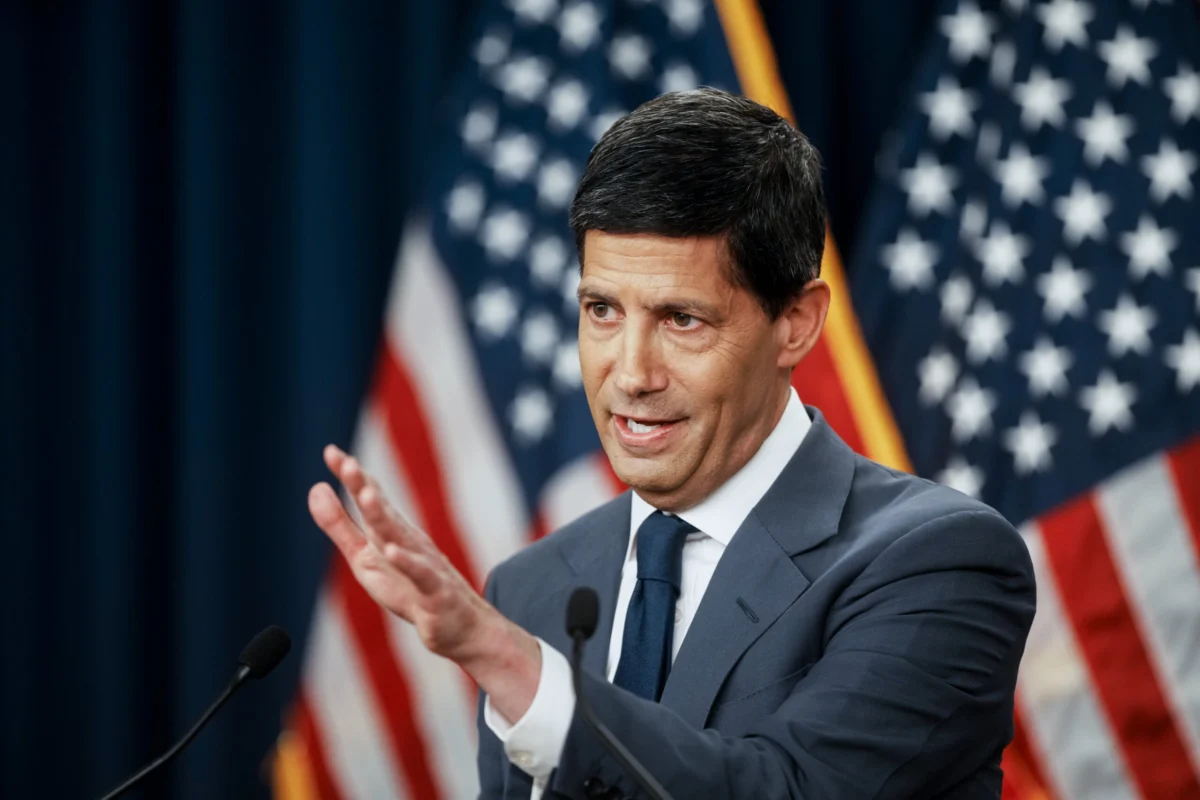
The United States Federal Reserve, following a keenly anticipated meeting of the Federal Open Market Committee (FOMC) in Washington, D.C., on Wednesday, October 28, 2026, voted to hold its benchmark interest rate steady within the 5.25%-5.50% target range. The decision, which marks the second consecutive meeting without a rate adjustment, comes amidst a backdrop of persistent global geopolitical tensions and a domestic economy demonstrating mixed signals. During the subsequent press conference, Fed Chairman Kevin Warsh offered an expansive view of the central bank’s current economic assessment and its implications for future monetary policy. However, for the cohort of financial market analysts and dedicated "Fed wonks," the most significant revelation was Warsh’s announcement of upcoming procedural changes designed to enhance the transparency and communication of the nation’s monetary policymaking body.
The October 2026 FOMC Decision: A Stance of Prudent Patience
The FOMC’s unanimous vote to maintain the federal funds rate was largely anticipated by market participants, reflecting a cautious approach in an environment characterized by both inflationary pressures and nascent signs of economic deceleration in certain sectors. This decision follows a period of aggressive rate hikes initiated in late 2025, which saw the benchmark rate ascend from near-zero levels to its current restrictive stance in an effort to combat stubbornly high inflation that had surged following a series of global supply chain disruptions and robust consumer demand. The Committee’s statement accompanying the decision reiterated its commitment to achieving its dual mandate of maximum employment and price stability, emphasizing that "incoming data and the evolving outlook for economic activity and inflation" would continue to guide its future actions.
The decision to hold rates underscores the Fed’s current strategy of "leaning into patience," a term echoed by financial strategists. This approach allows the central bank to assess the cumulative impact of past tightening measures on the economy while closely monitoring new data. Specifically, the FOMC highlighted concerns over geopolitical developments, such as ongoing trade disputes in Southeast Asia and volatility in global energy markets stemming from renewed tensions in the Middle East, as significant sources of uncertainty influencing the inflation trajectory and overall economic stability. These external factors introduce an additional layer of complexity to domestic monetary policy calculations, necessitating a flexible and data-dependent stance.
Chairman Warsh’s Economic Assessment: Navigating a Complex Landscape
During his press conference, Chairman Warsh provided a nuanced assessment of the U.S. economy, painting a picture of resilience tempered by persistent challenges. He noted that the labor market, while showing some signs of cooling from its peak tightness earlier in the year, remains robust, with the unemployment rate holding steady at 3.8% in September 2026. Wage growth, a key indicator for inflationary pressures, has moderated slightly but continues to run above levels consistent with the Fed’s 2% long-term inflation target. Warsh emphasized that while the labor market’s strength is a positive sign, it also contributes to service sector inflation, which has proven more resistant to disinflationary forces compared to goods prices.
Regarding inflation, Warsh acknowledged encouraging progress, citing the latest Consumer Price Index (CPI) report showing an annualized rate of 3.2% for September, down from a peak of 4.5% in early 2026. The core Personal Consumption Expenditures (PCE) price index, the Fed’s preferred inflation gauge, also showed a deceleration to 3.0%. However, he cautioned that "inflation remains unacceptably above our target, and the path to 2% is likely to be bumpy." He pointed to the aforementioned geopolitical risks and their potential to reignite commodity price surges or disrupt supply chains as significant upside risks to the inflation outlook. On economic growth, Warsh described it as "moderate," with the Commerce Department’s preliminary estimate for third-quarter 2026 GDP growth coming in at an annualized 2.0%. While this suggests a resilient economy avoiding recession, it also indicates a slowdown from the stronger growth observed in the first half of the year.
Anticipated Procedural Reforms: Enhancing Transparency and Communication
Perhaps the most surprising and forward-looking element of Chairman Warsh’s remarks was his disclosure of impending procedural changes within the Federal Reserve system. While specific details were reserved for future announcements, Warsh indicated that these reforms are aimed at improving the clarity and effectiveness of the Fed’s communication with the public and financial markets. For "Fed wonks" – the economists, strategists, and analysts who meticulously dissect every word from the central bank – this news carries significant weight, as even minor adjustments to established practices can have profound implications for market interpretation and policy effectiveness.
One potential area of reform, inferred from Warsh’s emphasis on data dependency and market understanding, could involve enhancements to the Summary of Economic Projections (SEP). This quarterly publication, which includes the infamous "dot plot" illustrating individual FOMC members’ interest rate forecasts, could see modifications designed to provide greater context or nuance to the projections. For instance, the Fed might consider publishing a wider range of economic scenarios, offering more detailed explanations behind each member’s rate path, or even introducing new metrics to gauge the uncertainty surrounding their forecasts. Such changes would aim to reduce misinterpretations of the "dot plot" and provide a more comprehensive view of the Committee’s collective thinking.
Another plausible reform could center on the frequency or format of press conferences and public statements. While the current schedule of eight press conferences per year (following every FOMC meeting) is a relatively recent innovation, Warsh might be exploring ways to provide more timely or targeted communication during periods of heightened market volatility or economic uncertainty. This could involve more frequent, albeit shorter, public remarks from the Chair or other Governors, or the introduction of new digital communication channels to disseminate information more efficiently. The overarching goal, as implied by Warsh’s statements, is to foster a deeper understanding of the Fed’s reaction function and reduce the gap between the central bank’s intentions and market expectations, a challenge highlighted by Thomas Simons of Jefferies.
Five Key Takeaways from the Post-Meeting Briefing
Chairman Warsh’s post-meeting press conference offered several critical insights into the Federal Reserve’s current posture and future trajectory. Here are five key takeaways:
-
Continued Data Dependency and Patience: The Fed explicitly reiterated its commitment to a data-driven approach, signaling that future policy adjustments will hinge on the evolution of inflation, employment, and economic growth data. The decision to hold rates underscores a strategy of "patience," allowing the cumulative effects of past tightening to filter through the economy before any further action is contemplated. This stance implies a readiness to react to incoming information rather than adhering to a predetermined course.
-
Lingering Inflationary Concerns and Global Headwinds: Despite some progress, inflation remains the primary concern, firmly above the Fed’s 2% target. Warsh highlighted the stickiness of service sector inflation and the potential for geopolitical developments – such as renewed energy price shocks or supply chain disruptions – to re-accelerate price pressures. This suggests that while disinflation is underway, the journey to target inflation is fraught with risks and uncertainties.
-
The Underlying Tightening Bias Amidst Dissents: While the decision was to hold rates, the presence of two dissents within the FOMC, as noted by Seema Shah, chief global strategist at Principal Asset Management, signals an underlying tightening bias among some members. These dissents likely reflect a view that inflation risks remain elevated and that further rate hikes are necessary sooner rather than later to firmly anchor inflation expectations. This internal divergence suggests that the debate over future rate hikes is very much alive within the Committee.
-
Proactive Steps Towards Greater Fed Transparency: Warsh’s unexpected announcement of forthcoming procedural changes marks a significant move towards enhancing the clarity and effectiveness of the Fed’s communication. While specifics are pending, these reforms are expected to improve how the central bank conveys its economic outlook, policy intentions, and decision-making processes, aiming to reduce market volatility stemming from misinterpretations.
-
The Evolving Art of Fed Communication: The commentary from analysts like Thomas Simons, noting that "the market has adjusted to Warsh’s communication style, but there might be a ways to go before they are fully on the same page," underscores the ongoing challenge of central bank communication. The impending procedural changes are likely an attempt to bridge this gap, ensuring that the Fed’s nuanced policy reactions are understood by a diverse audience, from institutional investors to the average consumer.
Expert Reactions: Diverse Interpretations and Forward Guidance
The Fed’s decision and Warsh’s commentary elicited a range of reactions from leading financial strategists, reflecting the complexity of the current economic environment. Phil Camporeale, chief investment strategist at JPMorgan Wealth Management, characterized the Fed’s stance as "leaning into patience," emphasizing the Committee’s preference to "wait for more information on the appropriate level of rates, as uncertainty reigns supreme in light of recent geopolitical developments." This perspective suggests that the Fed is prioritizing flexibility and data review over immediate action, acknowledging the fluid nature of global economic risks.
Conversely, Seema Shah, chief global strategist at Principal Asset Management, interpreted the situation with a more hawkish lean. While conceding that "the Fed has time on its side," she asserted that "the direction of travel remains clear. The Fed is still taking back some of last year’s rate cuts, and the two dissents underline that tightening bias." Shah’s projection of a rate hike in December 2026 and another in early 2027 indicates a belief that the Fed’s pause is temporary and that further tightening will be necessary to achieve its inflation target. The mention of "last year’s rate cuts" refers to a period in late 2025 when the Fed briefly lowered rates in response to a short-lived growth scare, only to reverse course as inflation re-accelerated.
Thomas Simons, chief U.S. economist at Jefferies, offered a more balanced view, cautioning against categorizing Warsh’s communication as "particularly dovish or hawkish." He emphasized that "The bottom line is that the Fed policy reaction is not a black-and-white, binary thing," highlighting the nuanced and often conditional nature of central bank decisions. Simons’ observation that the market is still adjusting to Warsh’s communication style speaks to the importance of consistent and clear messaging from the Fed, especially as new procedural changes are introduced. Market participants, including institutional investors and individual traders, continuously strive to decipher the central bank’s signals to position their portfolios effectively.
Economic Context: The Road to October 2026
The current monetary policy landscape is a culmination of several dynamic economic shifts over the past two years. Following a period of aggressive inflation control in 2024, which saw the federal funds rate reach its peak, the Fed cautiously began to ease policy in late 2025 with minor rate cuts. This easing was a response to growing concerns about a potential economic slowdown, exacerbated by initial impacts of geopolitical tensions and a cooling global trade environment. However, this period of easing was short-lived. By early 2026, a resurgence in commodity prices, particularly energy and food, coupled with a resilient domestic labor market and robust consumer spending, pushed inflation back upwards, forcing the Fed to reverse course and resume a tightening cycle.
Key economic indicators leading up to the October 2026 meeting painted a mixed picture. While inflation, as measured by the CPI, had declined from its early 2026 highs of 4.5%, it remained stubbornly above the Fed’s 2% target at 3.2%. The labor market continued to be a source of strength, with the unemployment rate at 3.8% and average hourly earnings growing at an annualized rate of 4.0%, still exerting upward pressure on services inflation. GDP growth, while positive, showed signs of moderating, with the Q3 2026 preliminary estimate at 2.0%, down from 2.8% in Q2. Global factors, including renewed trade protectionism measures among major economies and heightened instability in key resource-producing regions, contributed significantly to the "uncertainty" emphasized by Chairman Warsh, making the Fed’s task of forecasting and policymaking particularly challenging.
Broader Market and Economic Implications
The Federal Reserve’s decision to hold rates steady, combined with Chairman Warsh’s forward-looking commentary, carries significant implications for various sectors of the economy and financial markets. For bond markets, the immediate reaction was relatively muted, with the 10-year Treasury yield hovering around 4.6%, reflecting the market’s expectation of a prolonged period of rate stability before any further moves. However, the hints of a tightening bias and anticipated rate hikes in December and early 2027, as projected by some strategists, could lead to upward pressure on longer-term yields in the coming months, impacting borrowing costs for mortgages, corporate bonds, and government debt.
Equity markets, initially buoyed by the stability in interest rates, showed a mixed reaction. Sectors sensitive to interest rates, such as real estate and utilities, might find some temporary relief from stable borrowing costs. However, the underlying uncertainty about the economy’s direction and the potential for future rate hikes could temper overall market enthusiasm. Growth stocks, which are often more sensitive to discount rates, could face headwinds if long-term yields begin to creep higher.
For businesses, the stable interest rate environment offers a brief period of predictability regarding borrowing costs, potentially encouraging investment in expansion projects or capital expenditures that might have been deferred during periods of aggressive tightening. However, the persistent inflationary pressures and geopolitical risks continue to weigh on business confidence, influencing decisions on hiring and inventory management. Small businesses, often more susceptible to changes in credit conditions, will closely monitor the Fed’s signals for any shifts that could impact their access to financing.
Consumers will also feel the effects, albeit indirectly. Mortgage rates, tied to longer-term Treasury yields, may see continued volatility based on inflation expectations and the Fed’s perceived trajectory. Credit card rates, typically indexed to the federal funds rate, will remain at elevated levels, impacting household budgets. The Fed’s commitment to fighting inflation is ultimately aimed at preserving purchasing power, but the immediate costs of higher borrowing remain a significant factor for many households. The anticipated procedural changes, by improving communication, could potentially reduce market overreactions, leading to less volatile interest rate environments in the long run, which would benefit both businesses and consumers by fostering greater economic stability.
Looking Ahead: The Path to December and Beyond
As the calendar turns towards the final FOMC meeting of 2026 in December, all eyes will remain fixed on incoming economic data. The Federal Reserve will be particularly attentive to the trajectory of inflation, especially core services inflation, and any significant shifts in the labor market. Critical reports on consumer spending, manufacturing activity, and global economic developments will also heavily influence the Committee’s deliberations.
The path ahead for monetary policy is unlikely to be straightforward. The challenge for Chairman Warsh and the FOMC will be to navigate a delicate balance: bringing inflation back to target without triggering an economic downturn. The "soft landing" scenario, where inflation recedes without a recession, remains the central bank’s primary objective, but achieving it in an environment rife with geopolitical uncertainties is an arduous task. The procedural changes foreshadowed by Warsh could play a crucial role in managing expectations and guiding the economy through this complex period. If implemented effectively, these reforms could bolster the Fed’s credibility and enhance its ability to communicate its policy intentions with greater precision, thereby fostering a more stable and predictable financial environment as the central bank continues its mission to secure maximum employment and price stability for the U.S. economy well into 2027 and beyond.