Lina Wu
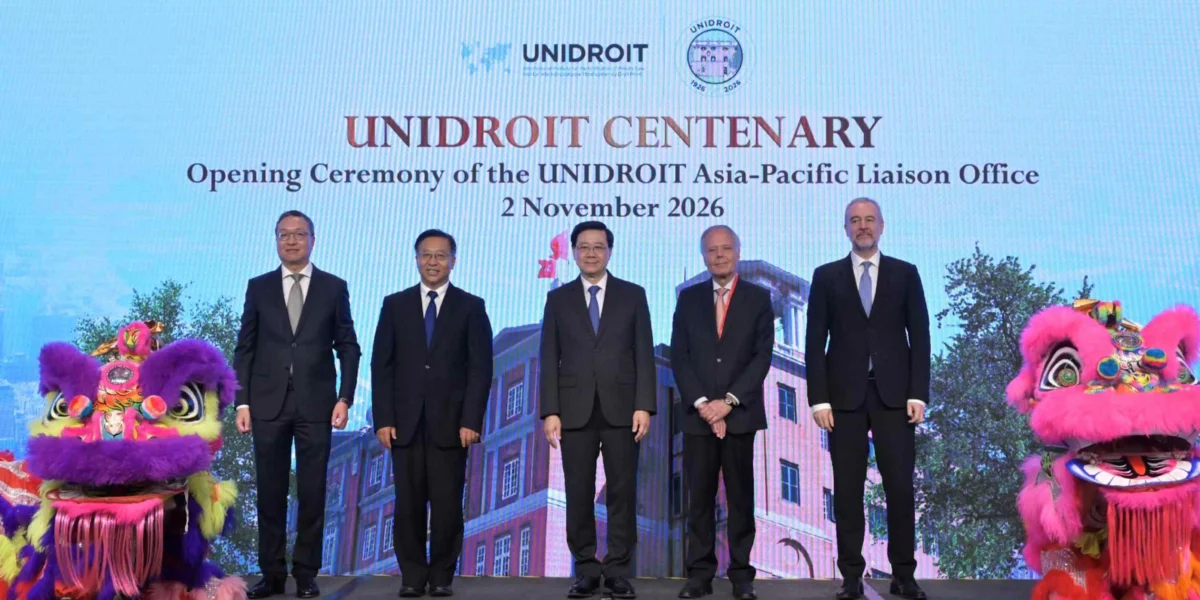
Hong Kong, November 2, 2026 – The International Institute for the Unification of Private Law (UNIDROIT), a distinguished intergovernmental organization headquartered in Rome, officially inaugurated its inaugural overseas liaison office in Hong Kong today. This significant development, marked by a formal opening ceremony attended by Chief Executive John Lee and other government officials, underscores Hong Kong’s strategic push to solidify its position as a preeminent international legal and dispute resolution hub. The establishment of the UNIDROIT Hong Kong office represents a pivotal moment, signaling increased integration of the city into global legal frameworks and a commitment to fostering cross-border commerce and legal certainty.
The decision to locate the first UNIDROIT liaison office outside of its Italian headquarters in Hong Kong is a testament to the city’s robust legal infrastructure, its status as a gateway to mainland China, and its long-standing tradition of international trade and finance. UNIDROIT, founded in 1926, is dedicated to harmonizing and modernizing private international law. Its work involves drafting international legal instruments, such as conventions and model laws, which aim to facilitate international trade and investment by providing uniform legal rules that are recognized and applied across different jurisdictions. The opening of this office is expected to amplify UNIDROIT’s outreach and influence, particularly within the rapidly developing Asian market, and to foster greater engagement with legal professionals, policymakers, and businesses in the region.
A Milestone in Legal Diplomacy and Regional Integration
The establishment of the UNIDROIT Hong Kong office is not merely a symbolic gesture but a concrete step towards enhancing the practical application and dissemination of harmonized private law principles. For decades, Hong Kong has cultivated an environment conducive to international business, characterized by a common law system, an independent judiciary, and a sophisticated professional services sector. These attributes have historically made it an attractive venue for international arbitration and a preferred choice for resolving cross-border commercial disputes.
The presence of UNIDROIT in Hong Kong is anticipated to catalyze several key developments:
- Enhanced Access to UNIDROIT’s Expertise: The office will serve as a crucial conduit for disseminating information about UNIDROIT’s work, including its various legal instruments and ongoing projects. This will enable legal practitioners and businesses in Hong Kong and the wider Asia-Pacific region to gain more direct access to UNIDROIT’s extensive resources and expertise in private international law.
- Promotion of Legal Harmonization: A primary objective of the liaison office will be to promote the adoption and implementation of UNIDROIT’s harmonized legal instruments. This can lead to greater legal certainty and predictability in cross-border transactions, reducing legal friction and facilitating smoother international trade and investment flows.
- Platform for Regional Dialogue: The office is expected to become a focal point for regional discussions and collaborations on private international law. It can host seminars, workshops, and conferences, bringing together legal experts, academics, and stakeholders from across Asia to address contemporary challenges in international commercial law and explore potential solutions.
- Strengthening Hong Kong’s Legal Hub Status: By hosting UNIDROIT’s first overseas office, Hong Kong further solidifies its claim as an international legal hub. This designation is crucial for attracting foreign investment, supporting its professional services sector, and maintaining its competitive edge in the global financial landscape.
Chronology of a Strategic Initiative
The journey to establishing the UNIDROIT Hong Kong liaison office has been a carefully orchestrated process, reflecting a shared vision between the international legal body and the Hong Kong Special Administrative Region (HKSAR) government.
Early 2020s: Discussions and exploratory meetings commence between UNIDROIT representatives and officials from the HKSAR government, including the Department of Justice and the Financial Services and the Treasury Bureau. These initial dialogues focus on the potential benefits of establishing a physical presence for UNIDROIT in Asia, with Hong Kong identified as a prime candidate due to its established legal framework and strategic location.
Mid-2022: A formal proposal for the establishment of the liaison office is put forth, outlining the operational scope, governance structure, and mutual benefits. The proposal emphasizes the role of such an office in promoting UNIDROIT’s work and supporting Hong Kong’s ambition to be an international legal hub.
Late 2022 – Early 2023: The HKSAR government actively engages with UNIDROIT to facilitate the necessary administrative and logistical arrangements. This includes securing office space, addressing legal and regulatory requirements, and ensuring governmental support for the initiative.
Mid-2023: Preparations intensify, with the appointment of key personnel and the development of initial work plans for the liaison office. The focus is on laying the groundwork for a seamless launch and immediate operational effectiveness.
November 2, 2026: The official opening ceremony takes place, with Hong Kong Chief Executive John Lee presiding over the inauguration. The event signifies the culmination of extensive planning and collaboration, marking a new chapter in the internationalization of private law and the development of Hong Kong as a global legal center.
Supporting Data and Context
UNIDROIT’s commitment to legal harmonization is evidenced by its prolific output of international legal instruments. Since its inception, UNIDROIT has been instrumental in drafting numerous conventions and model laws that have been widely adopted by countries worldwide. For example, the UNIDROIT Principles of International Commercial Contracts, first published in 1994 and revised in 2004 and 2016, represent a significant effort to create a set of universally applicable contract law rules, serving as a valuable reference for international commercial transactions and a model for national law reforms.
The Asia-Pacific region, with its dynamic economies and increasing volume of cross-border trade, presents a critical area for the application of harmonized private law. According to the United Nations Conference on Trade and Development (UNCTAD), intra-regional trade in Asia has grown significantly over the past two decades, highlighting the need for robust and predictable legal frameworks to support this growth. The establishment of the UNIDROIT office in Hong Kong is strategically aligned with this trend, offering a localized point of access to legal tools that can reduce transaction costs, mitigate risks, and foster greater confidence in cross-border dealings.
Furthermore, Hong Kong’s position as a leading center for international arbitration, as consistently ranked by institutions such as the International Chamber of Commerce (ICC) and the Singapore International Arbitration Centre (SIAC), provides a fertile ground for UNIDROIT’s initiatives. Arbitral tribunals often refer to international principles and conventions to resolve disputes, and the presence of UNIDROIT in Hong Kong can facilitate greater awareness and application of these harmonized rules, thereby enhancing the efficiency and predictability of dispute resolution processes.
Official Responses and Inferences
The inauguration ceremony was attended by Hong Kong Chief Executive John Lee, underscoring the HKSAR government’s strong endorsement of this initiative. In his remarks, Mr. Lee likely reiterated the government’s commitment to strengthening Hong Kong’s position as an international legal hub, a key pillar of the city’s development strategy as outlined in various policy addresses and economic blueprints. He would have emphasized how the presence of UNIDROIT aligns with this vision, fostering legal excellence and attracting international legal talent and business.
Other officials present, such as the Secretary for Justice, would have elaborated on the specific benefits for the legal profession in Hong Kong. This could include enhanced opportunities for legal professionals to engage with international legal developments, participate in the drafting and promotion of legal instruments, and contribute to the global discourse on private international law. The Department of Justice’s role in supporting legal reforms and promoting Hong Kong as a dispute resolution center would have been highlighted.
From UNIDROIT’s perspective, the opening of the Hong Kong office signifies a strategic expansion of its global footprint. The Secretary-General of UNIDROIT, in their remarks, would have expressed enthusiasm for the collaboration and the potential to significantly advance the institute’s mission in a vital economic region. They would have likely spoken about the institute’s dedication to promoting legal certainty and predictability in international trade and investment through the development and application of uniform private law instruments. The choice of Hong Kong, they would have stressed, is a recognition of the city’s unique advantages and its role as a bridge between East and West.
Broader Impact and Implications
The establishment of the UNIDROIT Hong Kong liaison office carries significant implications for both Hong Kong and the wider Asia-Pacific region.
For Hong Kong:
- Reinforced Legal Hub Status: This development will further cement Hong Kong’s reputation as a leading international legal and dispute resolution center. It positions the city as a go-to destination for businesses seeking legal expertise and reliable dispute resolution mechanisms in Asia.
- Economic Diversification: By attracting more international legal activity, the initiative contributes to the diversification of Hong Kong’s economy, supporting its professional services sector and creating high-value job opportunities.
- Enhanced Connectivity with Mainland China: Hong Kong’s unique position as a bridge to mainland China means that the UNIDROIT office can play a crucial role in facilitating the harmonization of private law between the mainland and international markets, potentially leading to more seamless cross-border transactions and investment.
- Attraction of Talent and Investment: The presence of a major international legal organization can attract global legal talent and further incentivize foreign direct investment by offering a stable and predictable legal environment.
For the Asia-Pacific Region:
- Improved Cross-Border Trade and Investment: The increased accessibility to UNIDROIT’s work and expertise will likely lead to greater adoption of harmonized legal principles across the region, thereby reducing transaction costs, mitigating legal risks, and fostering more efficient cross-border trade and investment.
- Development of Legal Infrastructure: The office can act as a catalyst for legal development and reform within individual countries in the region, encouraging the adoption of modern and internationally recognized private law standards.
- Enhanced Dispute Resolution Mechanisms: Greater awareness and application of UNIDROIT’s instruments can contribute to more effective and predictable dispute resolution processes, which are essential for fostering investor confidence and economic growth.
- Regional Legal Cooperation: The office provides a natural platform for enhanced dialogue and cooperation among legal professionals and policymakers in the Asia-Pacific region, fostering a shared understanding and approach to private international law.
In conclusion, the inauguration of the UNIDROIT Hong Kong liaison office marks a significant milestone in the city’s trajectory as an international legal hub. It represents a strategic alignment of international legal efforts with Hong Kong’s economic ambitions, promising to foster greater legal certainty, facilitate cross-border commerce, and strengthen the region’s engagement with globally harmonized private law principles. The move is poised to yield substantial benefits for businesses, legal professionals, and economies throughout Asia and beyond.