Gilang Muhammad
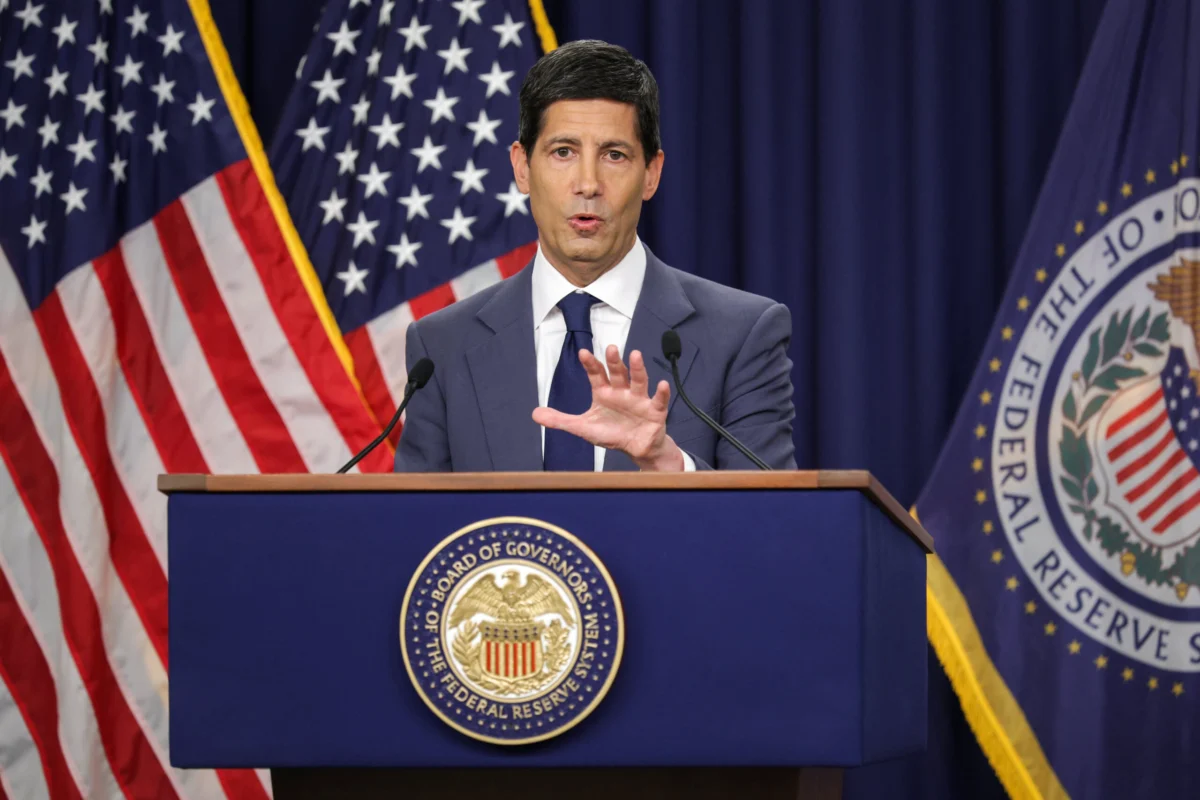
Federal Reserve Chair Kevin Warsh concluded his October 28, 2026, news conference following the Federal Open Market Committee (FOMC) meetings at Federal Reserve Headquarters in Washington, D.C., marking a significant evolution in his public leadership. Gone was the defensive posture that characterized his early appearances; in its place stood a chairman exuding a calculated confidence, willing to navigate market expectations with strategic ambiguity while laying clear groundwork for future policy. This shift signals Warsh’s successful consolidation of authority and his determined intent to reshape both the institution’s operational framework and its communication strategy in a period of persistent inflationary pressures.
The Road to October: A Chairman’s Challenging Start
Kevin Warsh’s appointment as Federal Reserve Chair earlier in 2026 was met with both anticipation and scrutiny. His selection by a president who had openly advocated for lower interest rates as a "litmus test" for his choice placed immediate political pressure on the incoming chairman. Warsh, a former Federal Reserve Governor from 2006 to 2011 and a respected economic advisor, inherited a complex economic landscape characterized by robust post-pandemic recovery, a remarkably tight labor market, and, crucially, inflation running stubbornly above the Fed’s long-standing 2% target.
Upon assuming the helm, Warsh faced an immediate test of his independence and credibility. The June 2026 FOMC meeting, his first as chair, saw the committee opt to hold the federal funds rate steady despite consumer price index (CPI) figures hovering consistently above 4.5% year-over-year. Unemployment, meanwhile, remained near historical lows, indicating a strong, albeit potentially overheating, economy. This decision, followed by another hold in July, triggered a torrent of commentary questioning the new chairman’s resolve to combat inflation. Analysts and market participants alike voiced concerns that Warsh might be unduly influenced by political pressures, potentially compromising the Fed’s dual mandate of price stability and maximum employment. The perception that the Fed was "behind the curve" in tackling inflation began to take root, causing a slight dip in investor confidence and putting upward pressure on longer-term bond yields as inflation expectations began to drift.
September’s Hawkish Turn and Market Whiplash
The narrative surrounding Warsh’s credibility dramatically shifted in September. The FOMC, under his leadership, decided to raise interest rates, a move that surprised some given the prior holds. What truly caught the markets off guard, however, was Warsh’s decidedly hawkish assessment of the economy during the subsequent press conference. He painted a picture of an economy still brimming with excess demand, underscoring the necessity of tighter monetary conditions to bring inflation back to target. This strong rhetoric, combined with the rate hike, sent a clear signal of the Fed’s renewed commitment to price stability.
The market reaction was swift and pronounced. Investors, who had perhaps grown accustomed to a more gradualist approach, interpreted Warsh’s hawkishness as a sign that the Fed might be embarking on an aggressive tightening cycle. Bond yields surged, with the 10-year Treasury note briefly touching its highest level in over a decade, and equity markets experienced a sharp downturn as fears of rapidly rising borrowing costs and an impending recession intensified. The S&P 500, for instance, saw a momentary decline of over 3% in the days immediately following the September announcement.
However, this market overreaction was soon tempered. In the weeks leading up to the October meeting, a pair of top Federal Reserve officials—reportedly two of the central bank’s vice chairs—made carefully worded public statements that appeared to deliberately cool market expectations for another immediate rate hike in October. These interventions, while not explicitly disavowing Warsh’s hawkish stance, emphasized the committee’s data-dependent approach and the need for patience. This strategic deployment of "Fedspeak" introduced a new layer of complexity to the Fed’s communication, leaving market observers to ponder the degree of coordination and the chairman’s role in orchestrating such messages.
October’s Nuanced Message: Preparing the Groundwork
The October 28 FOMC meeting concluded with the committee opting to hold interest rates steady, as widely anticipated after the prior market calming. During his post-meeting news conference, Warsh addressed the recent volatility and the perceived mixed signals head-on, albeit with characteristic intellectual flexibility. He explicitly disavowed any notion that the Fed was on a predetermined trajectory: "If we had a firm conclusion about the conduct of monetary policy, we’d announce it to much fanfare today," he stated, reinforcing the committee’s data-dependent stance.
Yet, Warsh also delivered a strong, unambiguous signal regarding his underlying lean toward higher rates. He noted, "While overall financial conditions are tighter, I’m unwilling and unable to call them tight." This nuanced phrasing suggested that while the Fed’s prior actions had begun to bite, the economy could still absorb further tightening without undue strain. This statement was widely interpreted by economists and market strategists as Warsh laying the intellectual groundwork for a potential rate hike in December, should inflationary pressures remain stubborn or economic data continue to show resilience. It allowed the Fed to preserve its options while preparing the public for future action, avoiding a definitive commitment that could limit flexibility.
Crucially, Warsh also used the platform to emphatically reassert the Fed’s unwavering commitment to its primary price stability mandate. "If you think that we’re tolerating some inflation target somewhere in the twos, let us disabuse you of it," he declared, leaving no room for doubt that the official target remains a precise 2% flat, not a range. This clear articulation was aimed at quashing any lingering skepticism about his anti-inflationary bona fides, especially given the historical context of high inflation and the political pressures surrounding his appointment. His remarks served as a powerful recipe for higher rates as long as the economy demonstrates robust strength and inflation persists above the target.
Regarding the prior tempering of market expectations by other officials, Warsh declined to confirm that these actions were taken at his direction. He emphasized the collegiate nature of the FOMC: "To suggest somehow that I am some kind of all-knowing person sending messages out, that’s not the committee of the FOMC that I know," he stated. However, Fed insiders have long noted that the central bank’s vice chairs typically coordinate their messaging with the chair. This careful disavowal, combined with the market having received the intended message of no October hike, established a precedent for Warsh to potentially use his lieutenants for strategic "forward guidance" while retaining plausible deniability—a hallmark of his intellectually flexible and goal-focused approach to monetary policy.
Reshaping the Institution: Operational and Communicational Shifts
Beyond immediate monetary policy, Warsh is actively engaged in reshaping the Federal Reserve’s institutional mechanics and communication protocols. His tenure has seen the establishment of various task forces aimed at kick-starting policy changes, including a significant initiative to re-evaluate and potentially change the way the Fed measures inflation. This ambition, however, was predicated on first establishing his credibility in fighting inflation, which the September rate hike largely achieved.
A notable operational change announced during the October press conference concerns the frequency of FOMC rate votes. Warsh unveiled a plan to reduce the number of times the FOMC is scheduled to vote on interest rates over the next two years. While the Fed will continue to meet eight times annually, the committee will skip a vote on whether to change rates at one meeting in 2027 and two meetings in 2028. This strategic move has several implications. Primarily, it serves to devalue a significant portion of "Fedspeak," as market participants will pay less mind to speculative comments from marginal regional Fed presidents when a rate decision might be as much as three months away. It also subtly centralizes decision-making power, as regional presidents will experience one fewer scheduled vote in their yearlong rotations as decision-makers on the FOMC. Crucially, the Fed chairman retains the unilateral authority to call an impromptu meeting at any time should he deem it necessary to change rates, ensuring agility in crisis or rapidly evolving economic conditions. The Marriner S. Eccles Federal Reserve Board Building, currently undergoing some construction, will house these evolving operational dynamics.
Expert Reactions and Critical Perspectives
Warsh’s evolving communication style and institutional reforms have not been without scrutiny from economists and market analysts. The tension between strategic ambiguity and the long-held ideal of Fed transparency remains a key point of debate. Advocates for greater transparency argue that "sunlight adds more rigor to officials’ arguments" and helps the public and markets better understand the Fed’s decision-making process, thereby increasing accountability and reducing volatility.
Robert Sockin, chief U.S. economist at asset manager PGIM, offered a particularly sharp critique following the October decision to hold rates. Sockin belongs to the camp that believes inflation was running too hot to justify the Fed’s inaction this week. "While more data is always better, Warsh did not sufficiently explain why this backdrop did not justify a rate increase, particularly given his comment that while he thinks financial conditions have tightened, he would not say they are tight," Sockin stated. He went further, characterizing the hold as a "policy mistake" and warning that "a gradual Fed likely means one that has to hike higher, mechanically raising recession risk." This perspective underscores the deep divisions within the economic community regarding the optimal pace and timing of monetary tightening. Other analysts, while acknowledging Warsh’s assertiveness, express concerns that a less predictable communication strategy could inject unnecessary volatility into markets, making it harder for businesses and consumers to plan.
Broader Economic and Market Implications
The full consequences of Warsh’s approach—his strategic use of ambiguity, his institutional reforms, and his firm stance against inflation—may not become fully clear for months. This period of strategic maneuverability allows him room to adapt policy as economic data evolves, but it also carries the inherent risk that the consequences of waiting to tighten monetary policy sufficiently may not become apparent until it is too late to avert a more significant economic downturn.
For financial markets, Warsh’s style presents a new paradigm. Investors must now contend with a Fed chair who is less inclined to provide explicit forward guidance, instead preferring to keep markets guessing "at least to a point." This requires greater sophistication in interpreting subtle signals and economic data, rather than relying on direct pronouncements. Bond markets, in particular, will remain highly sensitive to inflation indicators and any hints of further tightening. Equity markets, meanwhile, will grapple with the dual pressures of higher borrowing costs and the potential for a growth slowdown if the Fed’s actions prove too aggressive or too delayed.
Economically, the stakes are profound. An overly gradualist approach risks embedding higher inflation expectations, which could become self-fulfilling and require even more aggressive tightening down the line, increasing the probability of a hard landing or recession. Conversely, tightening too quickly could stifle economic growth prematurely. Warsh’s commitment to a 2% inflation target, even if it means higher rates, signals a prioritization of price stability, which may come at the expense of some near-term economic growth.
Globally, the U.S. Federal Reserve’s actions continue to exert significant influence. Higher U.S. interest rates typically strengthen the dollar, which can create headwinds for emerging markets and other economies by making dollar-denominated debt more expensive and capital flows less favorable. Other central banks around the world will be closely watching Warsh’s moves, potentially adjusting their own monetary policies in response to the world’s largest economy.
Conclusion: A New Era at the Federal Reserve
Kevin Warsh’s first months as Federal Reserve Chair have been defined by a rapid evolution of his leadership style and a clear determination to reassert the Fed’s independence and commitment to price stability. From navigating early skepticism to orchestrating a nuanced communication strategy and initiating significant institutional reforms, Warsh is undeniably leaving his mark. His October press conference solidified his position as a confident and intellectually flexible leader, willing to challenge conventional wisdom and reshape the Federal Reserve for the challenges of a complex economic era.
As the FOMC prepares for its next meeting in December, with a fresh raft of economic data to consider—which could, alternatively, help him make the case that productivity is rising, allowing for more growth without inflation—all eyes will remain on Warsh. The unfolding consequences of his distinct approach, balancing strategic ambiguity with a firm hand on inflation, will define not only his legacy but also the trajectory of the U.S. economy and global financial markets for years to come.