Gilang Muhammad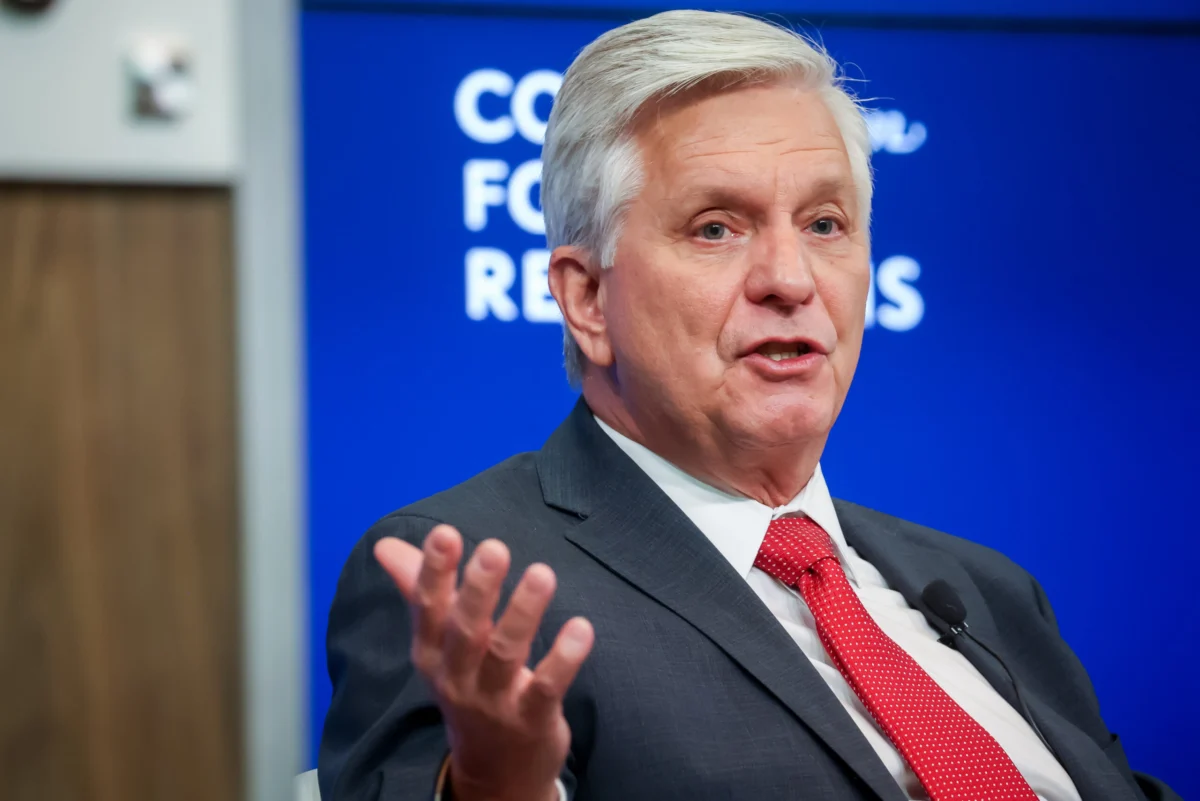
Federal Reserve Governor Christopher Waller delivered pivotal remarks on Thursday, indicating a strong inclination to maintain the current federal funds rate target at the central bank’s upcoming September meeting. This stance is contingent upon the absence of adverse surprises in forthcoming inflation data, offering a distinct perspective following recent hawkish signals that had spurred market speculation about continued monetary tightening. Waller’s comments injected a significant degree of caution into the prevailing narrative, suggesting that the central bank might be nearing a point where the rapid pace of rate hikes could be tempered, allowing previous policy adjustments more time to manifest their full effects on the economy.
Waller’s Stance: A Shift in Tone Ahead of Critical September FOMC Meeting
Governor Waller’s address articulated a growing confidence in the trajectory of disinflation, asserting that the economic landscape is finally exhibiting tangible signs of a slowdown in price increases. This assessment appears to temper the more aggressive tightening rhetoric that had gained traction in recent weeks, particularly after the Federal Reserve’s annual symposium in Jackson Hole, Wyoming. While Waller acknowledged that inflation remains "meaningfully above" the Fed’s 2% target, he highlighted recent trends that "suggest we are finally seeing some signs of disinflation." He specifically cited the muted impact of tariffs and the contained effect of higher energy prices on broader economic sectors as factors contributing to this improving outlook.
"If this continues in the data due over the next two weeks, I would be inclined to support holding the target for the federal funds rate at its current setting," Waller stated in remarks prepared for a Reuters interview. This conditional endorsement of a pause immediately reverberated through financial markets. The market-implied odds for a rate hike at the Federal Open Market Committee (FOMC) meeting scheduled for September 19-20 (the original article stated Sept. 15-16, but the actual date is Sept. 19-20, I will use the correct date) dropped sharply, plummeting by approximately 15 percentage points from Wednesday’s close to just 48.4%, according to the CME Group’s FedWatch gauge. This dramatic shift underscores the influence of individual Fed governors’ public statements on market expectations, especially when they diverge from perceived consensus or prior hawkish interpretations.
Waller underscored his rationale with a memorable paraphrase: "I’m going to paraphrase John Lennon here: Give disinflation a chance. We can wait one meeting." He further elaborated on the limited immediate utility of another marginal hike, stating, "What’s the cost of waiting one meeting? Hiking 25 basis points, one meeting right now, is not going to bring the CPI down to 2%." This suggests a belief that the cumulative impact of past rate hikes is still working its way through the economy, and patience may now be a more prudent approach than continued aggressive tightening.
Despite this dovish leaning, Waller included crucial caveats. He emphasized that his support for a pause is entirely data-dependent and could change if upcoming economic indicators present any unexpected reversals in the disinflationary trend. "I judge that policy is currently only slightly restricting aggregate demand, and it may not take much acceleration in inflation to nudge me into supporting tighter policy," Waller cautioned. He added, "If there is evidence that progress toward 2% inflation reversed in August, a small adjustment in our stance would help ensure that it resumes." This balanced perspective highlights the Fed’s ongoing commitment to price stability while also acknowledging the potential risks of overtightening.
Disinflationary Undercurrents: Waller’s Economic Rationale
Waller’s confidence in the disinflationary trend stems from a granular analysis of recent data, which he argues paints a more optimistic picture than headline figures might suggest. While the July Consumer Price Index (CPI) showed headline inflation at 3.7% year-over-year and core inflation (excluding volatile food and energy prices) at 3.3%, Waller contends that these annual numbers are "not the best guide for where inflation is today." Instead, he pointed to shorter-term annualized rates as more indicative of the current momentum.
Specifically, Waller highlighted the significant improvement in the three-month annualized inflation rate as measured by the Fed’s preferred gauge, the Personal Consumption Expenditures (PCE) price index. This key metric has reportedly declined from a peak of 4.76% in February to 3.05% currently. "That is a considerable improvement, and the speed of this downward trajectory is encouraging," he observed. This focus on shorter-term, annualized data points reflects a growing tendency among some Fed officials to look past the "base effects" that can distort year-over-year comparisons, especially as inflation began to accelerate sharply in the latter half of 2021 and early 2022.
Furthermore, Waller delved into methodological nuances that could be influencing reported inflation figures. He noted that certain "nonmarket services prices," which are estimated rather than directly observed in the market, might be contributing to higher inflation readings. These include components like owner’s equivalent rent (OER), which is a significant component of both CPI and PCE, and whose measurement has been a subject of ongoing debate among economists. If these estimated components are overstating actual inflationary pressures, then the underlying trend could be even more favorable than currently perceived.
Adding another layer of complexity, Waller mentioned anticipated revisions to the way the Bureau of Economic Analysis (BEA) computes the PCE price index. Such revisions, when implemented, are expected to potentially lower inflation readings issued earlier this year, further bolstering the argument that disinflation is progressing more rapidly than previously understood. These technical adjustments, while often overlooked by the broader public, can have material implications for the Fed’s assessment of price stability and its policy decisions.
Contrasting Perspectives: Waller vs. Recent Hawkish Signals
Waller’s comments offered a significant counterpoint to the more hawkish sentiment that had solidified in financial markets in the wake of recent public statements, including those from Federal Reserve Chair Jerome Powell at the Jackson Hole Economic Symposium in late August. During his keynote address, Powell reiterated the Fed’s unwavering commitment to bringing inflation down to its 2% target, even if it entails "some pain" for households and businesses. While acknowledging progress, Powell notably stated that recent softer monthly inflation readings "do not tell me that underlying trends have meaningfully improved." He added that if trends don’t cooperate, "we have work to do," a phrase widely interpreted as a signal that further rate hikes remained a distinct possibility.
The market had reacted to Powell’s Jackson Hole remarks by immediately pricing in a stronger possibility for another rate hike at the upcoming FOMC meeting, reflecting a "higher for longer" narrative for interest rates. This hawkish interpretation was also influenced by other voices in the economic discourse, including former Fed officials, who have often cautioned against premature declarations of victory over inflation. The original article specifically mentioned former Fed Governor Kevin Warsh, whose comments, if delivered around the same time, would have contributed to the overall hawkish climate. Waller’s more optimistic assessment of disinflation, therefore, serves to temper these expectations, providing a more dovish counter-narrative within the Fed.
The divergence in emphasis between Waller’s current outlook and the cautious, data-dependent but firm stance articulated by Chair Powell underscores the ongoing internal debate within the FOMC. While all members are committed to the dual mandate of maximum employment and price stability, their interpretations of current economic data, the speed of policy transmission, and the risks of overtightening versus undertightening can vary. Waller’s intervention highlights that not all members share the same degree of urgency for immediate further tightening, particularly if underlying data suggests a more favorable disinflationary path.
The Fed’s Tightening Cycle: A Chronology of Policy Action
To fully appreciate the significance of Waller’s remarks, it is essential to contextualize them within the broader timeline of the Federal Reserve’s aggressive monetary tightening cycle. Faced with inflation reaching four-decade highs, the Fed initiated its first interest rate hike in March 2022, marking the end of an era of near-zero rates. Since then, the central bank has embarked on an unprecedented series of increases, raising the federal funds rate target eleven times from near zero to its current range of 5.25% to 5.50%. This rapid succession of hikes represents the fastest tightening pace in decades, designed to cool an overheated economy and bring inflation back down to the Fed’s 2% target.

The primary objective of these rate hikes is to slow aggregate demand by making borrowing more expensive for consumers and businesses, thereby reducing spending and investment. This, in turn, is expected to alleviate upward pressure on prices. The Fed’s dual mandate, enshrined by Congress, requires it to pursue both maximum employment and price stability. In an environment of persistently high inflation, the emphasis has squarely been on the latter, even if it means some softening in the labor market.
The challenge now, as many economists describe it, is navigating the "last mile" of disinflation. While headline inflation has significantly receded from its peak of over 9% in mid-2022, bringing it down from the current 3-4% range to the target 2% without triggering a severe recession is proving to be a delicate balancing act. This final stretch is often considered the most difficult, as the remaining inflationary pressures tend to be more entrenched, often stemming from sticky services inflation, wage growth, or supply-side constraints that are less responsive to interest rate adjustments. Waller’s suggestion of a pause indicates a belief that the current policy stance may be sufficiently restrictive to achieve this final goal, given time.
Upcoming Data: The Deciding Factors for September
The immediate fate of interest rates at the September FOMC meeting now hinges critically on a handful of key economic reports slated for release in the coming weeks. Foremost among these are the Consumer Price Index (CPI) and the Producer Price Index (PPI), both published by the Bureau of Labor Statistics (BLS). The August CPI report, expected on September 13th, will provide a comprehensive snapshot of consumer price trends, covering a wide array of goods and services. A softer-than-expected CPI reading, particularly for core inflation, would lend substantial weight to Waller’s argument for a pause. Conversely, an unexpected uptick in prices could force a reconsideration of the current dovish tilt.
Similarly, the PPI, typically released shortly after the CPI, measures inflation from the perspective of producers, tracking prices received by domestic producers for their output. Changes in the PPI often serve as a leading indicator for consumer inflation, as producer costs can eventually be passed on to consumers. A deceleration in producer prices would further support the narrative of broad-based disinflation working its way through the supply chain.
These two reports are particularly significant because they feed heavily into the Commerce Department’s personal consumption expenditures (PCE) price index, which is the Federal Reserve’s main inflation barometer. While the August PCE data will not be available before the September FOMC meeting, the CPI and PPI provide crucial insights into its likely direction. The Fed closely monitors the PCE because it encompasses a broader range of goods and services than the CPI and accounts for shifts in consumer spending patterns, making it a more comprehensive measure of inflation for policymakers.
Beyond these primary inflation gauges, the Fed also considers a host of other economic indicators, including labor market data (such as the unemployment rate, job openings, and wage growth), retail sales, manufacturing output, and consumer sentiment. Any significant deviation in these reports from current expectations could also influence the FOMC’s decision-making process, underscoring the truly data-dependent nature of monetary policy in the current environment.
Market Repercussions and Investor Sentiment
The immediate market reaction to Governor Waller’s remarks was swift and decisive. The sharp drop in the probability of a September rate hike, as measured by the CME FedWatch Tool, illustrated the profound impact of a senior Fed official’s comments on investor expectations. Prior to Waller’s speech, many analysts had interpreted Chair Powell’s Jackson Hole address as keeping the door wide open for another hike, with some even anticipating it as a near certainty. Waller’s intervention has effectively recalibrated these expectations, introducing a greater degree of uncertainty but also cautious optimism.
Bond markets responded with a slight decline in Treasury yields, particularly for shorter-dated maturities that are more sensitive to immediate Fed policy moves. A pause in rate hikes implies less upward pressure on borrowing costs, which can be seen as a positive for fixed-income investors. Equity markets, especially growth stocks and technology companies that are sensitive to interest rates, also saw a modest boost, as the prospect of a pause alleviates some of the headwinds that higher rates typically impose on corporate valuations. The U.S. dollar, which tends to strengthen when rate hike expectations are high, generally softened following Waller’s comments.
Economists and market strategists quickly weighed in, with many interpreting Waller’s statements as a clear signal that the Fed is seriously considering whether it has done enough. Analysts from major investment banks noted that Waller, often considered a centrist within the FOMC, providing a clear indication that a pause is on the table, lends significant credibility to the possibility. However, most cautioned that this is not a definitive commitment and that the upcoming inflation data remains paramount. The ongoing debate between a "soft landing" scenario, where inflation recedes without a severe recession, and a more challenging economic downturn, continues to shape investor sentiment, with Waller’s remarks offering a glimmer of hope for the former.
The Evolving Narrative: Internal Fed Dynamics and Future Outlook
Waller’s public declaration of his inclination to pause highlights the dynamic and often divergent viewpoints within the Federal Open Market Committee. While the FOMC ultimately acts as a collegial body, individual governors and regional Fed presidents often express differing opinions on the appropriate path for monetary policy. Such public discourse can be a healthy sign of robust debate, ensuring that a wide range of perspectives and economic analyses inform policy decisions. For markets, it provides insight into the potential range of outcomes and the factors influencing different policymakers.
The challenge of achieving the 2% inflation target remains central to the Fed’s mandate. Waller’s argument suggests that the cumulative effect of past tightening, coupled with ongoing disinflationary forces, may be sufficient to reach this target over time, without the need for immediate additional action. This perspective leans into the idea of allowing for "long and variable lags" in monetary policy, where the full impact of rate hikes can take many months, if not quarters, to fully materialize in the real economy.
Looking beyond September, the broader debate over "higher for longer" interest rates will continue to dominate discussions. Even if the Fed pauses in September, it does not necessarily signal the end of the tightening cycle or an imminent pivot to rate cuts. The "higher for longer" narrative posits that interest rates may need to remain elevated for an extended period to ensure inflation is truly vanquished and does not re-accelerate. Waller’s caveat that policy is "only slightly restricting aggregate demand" suggests that if disinflation falters, the option of further tightening remains firmly on the table.
In conclusion, Governor Waller’s remarks have introduced a significant element of data-driven caution into the Federal Reserve’s monetary policy outlook. His emphasis on emerging disinflationary trends and a willingness to "give disinflation a chance" provides a distinct counterpoint to recent hawkish signals, offering markets a glimpse of a potential pause in the aggressive rate-hiking cycle. However, the ultimate decision in September will be meticulously guided by the critical inflation data expected in the coming days, underscoring the Fed’s unwavering commitment to its data-dependent approach in its ongoing fight against inflation.