Gilang Muhammad
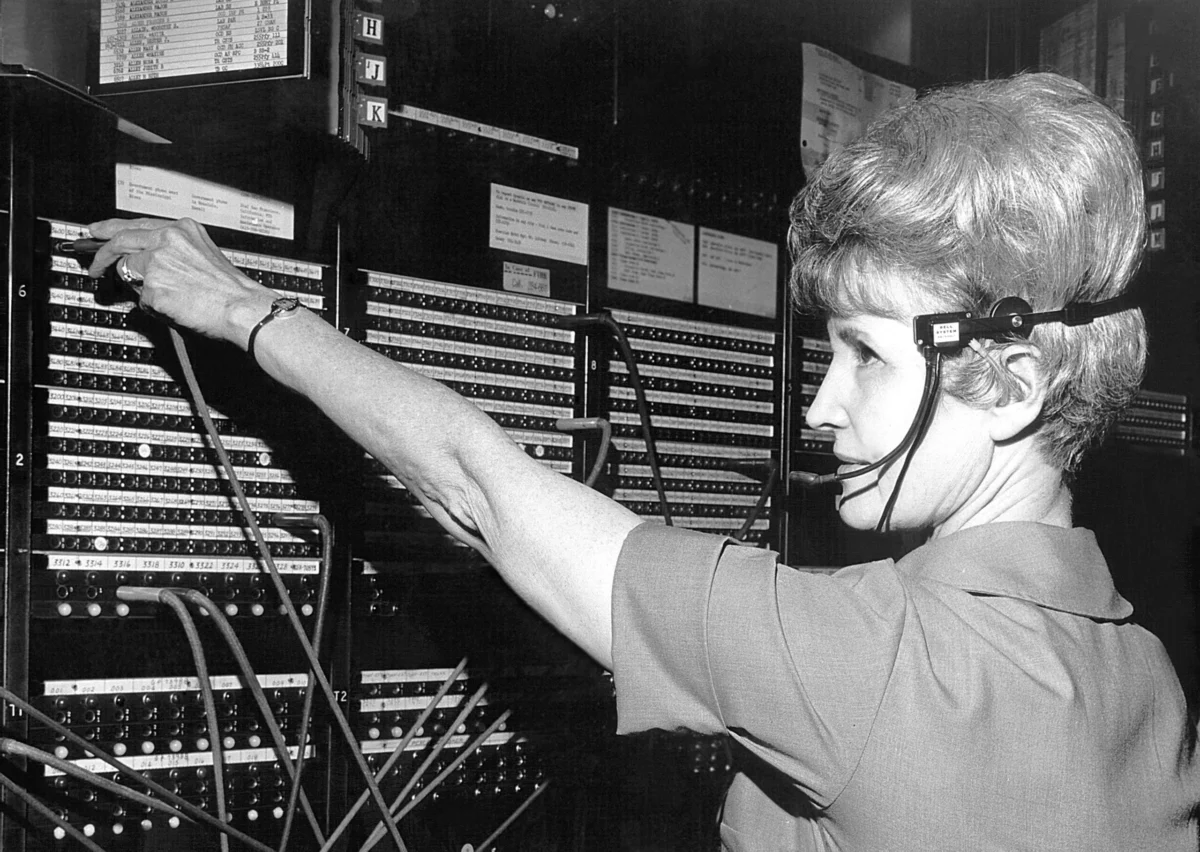
Decades before the ubiquitous presence of conversational AI assistants like Siri, Alexa, or advanced language models such as ChatGPT, the heart of the information world beat through a distinctly human connection, almost always facilitated by a woman. She was the telephone switch operator, an indispensable professional whose role was so central that much of long-distance communication simply could not occur without her skilled intervention. This critical occupation, at its peak, represented the single largest employment sector for white, U.S.-born women under the age of 20, symbolizing both opportunity and a societal norm. Today, that profession, as it once existed, has been entirely eradicated by technological progress.
As the world grapples with the profound implications of artificial intelligence for society, culture, and the global economy, a pervasive concern among ordinary Americans centers on the future of their jobs. History offers a potent guide, suggesting that women are once again poised to be among the most significantly affected by this latest wave of technological disruption. From the advent of automated telephone switches to the widespread adoption of domestic appliances like the washing machine and the revolutionary personal computer, past technological advancements provide a lens through which to anticipate the potential shifts and challenges posed by AI.
"AI is focused on routine tasks and numbers and finding patterns, and those types of jobs are the clerical, administrative jobs that a lot of women hold," states Ariane Hegewisch, a senior research fellow at the Institute for Women’s Policy Research (IWPR). She underscores a critical point: "It’s still 90% of secretaries and clerical workers who are women." This demographic concentration in roles susceptible to automation forms the crux of the current concern. Recent research corroborates this apprehension. The International Labour Organization (ILO), in a March 2024 report, concluded that nearly one in ten women in high-income countries are employed in occupations identified as being at the highest risk from AI-driven automation. This figure highlights a systemic vulnerability that echoes patterns observed in previous technological revolutions.
The Invention that Made Operators Obsolete: A Historical Parallel
The story of the telephone operator serves as a stark and instructive precursor to the potential impacts of AI. In the 1940s, an astounding 95% of America’s telephone operators were female. This was a relatively well-paying and respected job for women at the time, demanding considerable skill and dedication. Operators underwent months of rigorous training to master the complex switchboard systems, capable of handling several hundred calls per hour during peak periods. They were expected to be swift, precise, and unfailingly polite, acting as the human interface for a burgeoning communication network.
However, this vital profession faced an existential threat with the introduction of the automated telephone switch by AT&T. This initiative represented one of the largest automation investments in history, a monumental undertaking whose scale and transformative potential bear a striking resemblance to the massive investments currently being poured into artificial intelligence research and development. The deployment of the automatic switch heralded one of the most significant technological shocks the nation had ever witnessed, fundamentally altering the landscape of telecommunications and employment.
In the decades following the popularization of the automatic switch, an estimated 75,000 operator jobs vanished, marking a substantial displacement of a predominantly female workforce. Economists James Feigenbaum from Boston University and Daniel P. Gross from Duke University’s Fuqua School of Business meticulously studied census and paycheck data from this period, tracing local employment trends along the path of AT&T’s rolling investment in switches across the nation. Their 2020 research, "The Economic Effects of Automation: Evidence from the Adoption of Automatic Telephone Switching," provided compelling insights into the human cost of this automation.
"The effect of this shock on incumbent operators was to dispossess many of their jobs and careers," Feigenbaum and Gross wrote. Their findings revealed that many switchboard operators, particularly those with less formal education or limited transferable skills, subsequently found themselves in lower-paying jobs, or, in many cases, exited the workforce entirely. Economist David Autor of MIT highlights that this outcome reflects a common reality: many workers are already in their highest and best-paying occupation. When such a job disappears, the subsequent career move is often a step down, leading to reduced earning potential and economic instability. "Most people are not changing careers very often. They make their career decisions early, and they stick with those careers," Autor explains. "If those careers, if the value of that work… suddenly goes out of fashion, becomes technologically obsolete, they’re going to, in general, do something not as good."
Yet, Feigenbaum and Gross’s study also offered a glimmer of optimism for future generations. They discovered that while incumbent workers struggled, the next generation of women fared better. "Future workers found work in other fields, often taking up similar-quality jobs," they noted, attributing this adaptability to younger workers being "more adaptive to an evolving labor market." This suggests that while anxiety over immediate job displacement is valid, opportunities for new forms of employment can emerge over time, often requiring different skills and education.
"Engines of Liberation": The Appliance Revolution and Women’s Entry into the Workforce
By the 1950s, another wave of technological innovation began to profoundly reshape women’s lives and their role in the economy: the widespread adoption of household appliances, particularly the washing machine. University of Pennsylvania economist Jeremy Greenwood and his colleagues famously dubbed these machines "engines of liberation" in their seminal paper on the topic. These and other labor-saving devices dramatically reduced the immense time burden women traditionally spent on unpaid housework, a burden that had historically limited their participation in the paid workforce.
The time saved by these domestic technologies allowed women to reallocate their efforts towards employment outside the home, even as societal expectations often still placed the primary responsibility for household management on their shoulders. The impact was significant: from 1950 to 1980, coinciding with shifting gender norms and greater access to education, the number of employed women in the U.S. soared by more than 25 million. Women’s labor force participation rate, representing their share of the female population actively engaged in the workforce, surged from 34% to 52%. While 16 million more men also found work during this period, the male participation rate saw a decrease of 5 percentage points, illustrating a profound restructuring of the labor market.
This historical episode raises a crucial question pertinent to the current AI boom: How did the economy manage to absorb such a vast influx of new female workers? If AI creates a new pool of available labor through automation, can the economy similarly generate sufficient new opportunities? Several factors contributed to this successful integration. Firstly, the very entry of women into the workforce generated demand for services that had previously been performed within the home but now transitioned into the paid economy, such as professional childcare, food preparation services, and household cleaning. Secondly, as the nation grew wealthier and consumer spending increased, new employment opportunities for women emerged across the burgeoning service economy. This included roles in retail, restaurants, leisure and hospitality, and even expanding professional services like healthcare and education. Thirdly, the growth of American businesses created an immense need for administrative and clerical staff to handle the burgeoning volume of paperwork – from payroll management to customer accounts and record-keeping.

While the entry of women into the workforce certainly fueled some of these economic shifts, it was also partly coincidental with a period of sustained economic boom in the U.S. and a fundamental evolution in business structures that increasingly required office workers. "Between 1940 and 1980, there was a ton of new work created in the U.S. economy, and it was in office and clerical work that was accessible to people with a high school education," Autor elaborates. This expansion of clerical and administrative roles provided a critical bridge for women entering the formal labor market, offering jobs that aligned with existing educational attainment and societal expectations.
The Rise of the Personal Computer: Automation in the Office
The next major technological revolution to significantly impact women in the workplace arrived with the personal computer. Before the advent of the PC, women formed the indispensable backbone of office infrastructure. The 1980 U.S. census vividly illustrates this: nearly 4.7 million Americans were employed as secretaries, stenographers, and typists, and a staggering 98% of them were women. These roles were highly skilled, involving not just typing but also shorthand, filing, transcription, and managing complex office logistics.
When IBM introduced its personal computer in 1981, followed shortly by the release of Microsoft Word just two years later, a significant shift began. The PC and its software began to automate or simplify many of the tasks traditionally performed by these "middlewomen." It didn’t eliminate the need for writing, filing, or editing, but it fundamentally reallocated these responsibilities. Executives, managers, and other professionals could now type their own reports, manage their own calendars, book their own travel, and print their own documents directly from their desks, bypassing the need for a dedicated clerical worker for every single task. This led to a substantial reduction in the demand for traditional secretarial and typing roles, impacting countless women.
However, the PC revolution was not entirely detrimental for women in the workforce. Studies indicate that women were already more likely than men to be utilizing computers at work even at the dawn of the PC era, perhaps due to their concentration in administrative roles that first saw computer integration. The personal computer, while eliminating some roles, simultaneously put powerful new tools directly at their fingertips: spreadsheets for financial analysis, databases for information management, and general computing power that could enhance productivity. Many women demonstrated remarkable adaptability, leveraging these emerging technologies to acquire new skills and redefine their roles, making themselves indispensable in new capacities within their organizations. They moved from simply typing documents to managing digital information systems, designing presentations, and even performing rudimentary data analysis.
A 2022 paper by Marcus Dillender and Eliza Forsythe examined the impact of companies adopting software for office and administrative work. Their findings showed a nuanced outcome: a 1% decline in employment within the sector, but concurrently, a 3% increase in wages for college graduates. This suggests a bifurcation of the workforce, where those with higher education and the ability to adapt to new software-driven tasks could command higher salaries, while those in more routine, easily automated roles faced displacement or wage stagnation.
Crucially, in the decades since the PC revolution, many more women have pursued and earned college and advanced degrees. This higher educational attainment, combined with their increasing presence in managerial and professional jobs, offers a potential buffer against the immediate waves of automation compared to previous eras. However, this protection may not be absolute or long-lasting. One of the defining characteristics and promises of artificial intelligence is its ability to "move up the value chain" – to automate increasingly complex, non-routine cognitive tasks that were once thought to be exclusively human domains.
Current Outlook and Future Implications for Women in the AI Era
The lessons from the telephone operators, the washing machine, and the personal computer are invaluable for understanding the trajectory of AI’s impact. The common thread is that technology tends to automate routine, predictable tasks first. Historically, these roles have often been disproportionately held by women. While educational attainment offers some defense, the nature of AI’s learning capabilities presents a unique challenge. As Ariane Hegewisch ominously notes, "AI can learn." This means that the capabilities of AI are not static; they evolve, potentially encroaching upon more sophisticated roles currently considered safe.
The current landscape sees AI poised to transform industries ranging from customer service and data entry to accounting, legal research, and even creative fields. Many of these sectors have a high concentration of female workers. For instance, the growing sophistication of AI in natural language processing and data analysis could automate large portions of administrative support, legal assistance, and even some aspects of marketing and human resources.
However, history also provides a template for adaptation and the emergence of new opportunities. Just as the telephone operators’ children found new paths, and women leveraged washing machines to enter the paid workforce, and secretaries adapted to the PC by becoming information managers, the AI era will undoubtedly create new jobs and new demands for skills. These might include roles in AI development, ethical AI oversight, data curation, human-AI collaboration specialists, and professions that emphasize uniquely human attributes such as emotional intelligence, complex problem-solving, creativity, and interpersonal communication.
The critical challenge lies in managing the transition. This requires proactive policy interventions, significant investment in workforce reskilling and upskilling programs, and a concerted effort to ensure equitable access to STEM education and training for women and girls. Policymakers must consider robust social safety nets to support those displaced in the short term, while simultaneously fostering innovation in sectors that can generate new, AI-augmented jobs. The private sector, too, has a responsibility to invest in its workforce, providing training pathways and designing AI systems that augment human capabilities rather than simply replacing them.
In conclusion, the history of technological progress reveals a recurring pattern: disruption, displacement, and ultimately, adaptation and the emergence of new forms of work. Women have historically been at the forefront of both the challenges and the opportunities presented by these shifts. The dawn of artificial intelligence is no different. While the immediate outlook suggests a disproportionate risk to women’s jobs, particularly in routine administrative and clerical roles, the long-term future will depend on how effectively societies and individuals adapt. Investing in education, fostering adaptability, and designing thoughtful policies that support a just transition will be paramount to harnessing AI’s transformative power for inclusive economic growth, rather than allowing it to exacerbate existing inequalities. The "anxiety over the opportunities available to future generations" need not be misplaced, provided the lessons of history are heeded and proactive strategies are vigorously pursued.