Lina Wu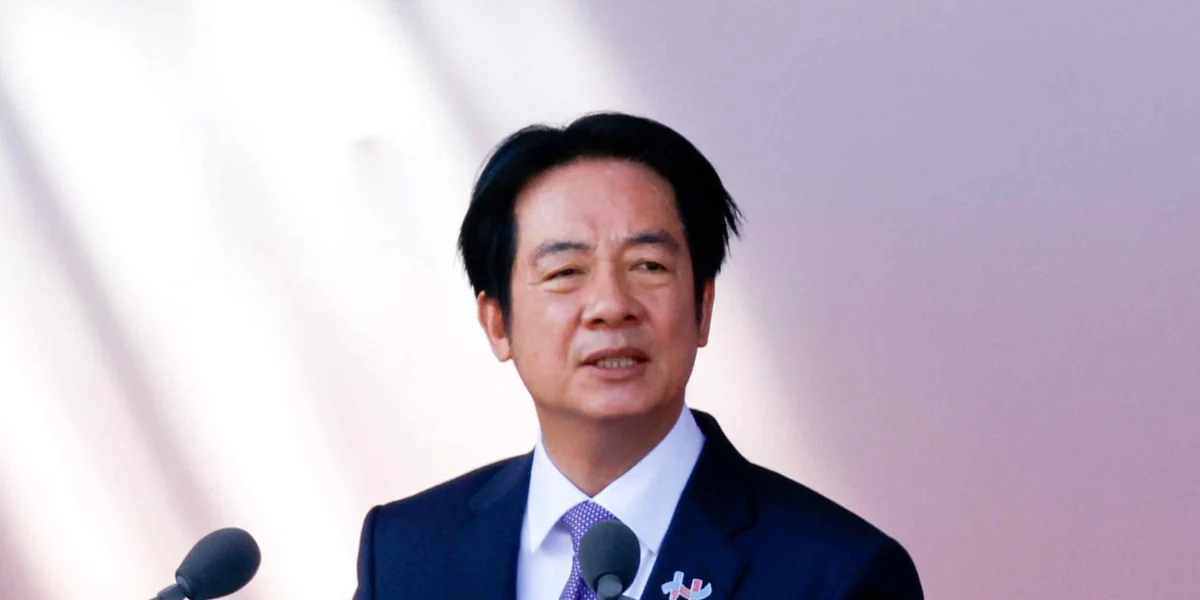
TAIPEI – As Taiwan approaches the 30th anniversary of its inaugural direct presidential election on March 23, President Lai Ching-te has underscored the profound significance of that historic vote, asserting that it irrevocably cemented the island’s sovereignty and affirmed its citizens as the ultimate arbiters of their national destiny. Speaking ahead of the commemoration, Lai emphasized that the 1996 election established a fundamental principle: the voters are not merely participants in a democratic process, but "the masters of the nation" and unequivocally "the boss of the president." This statement resonates deeply within Taiwan’s political landscape, highlighting a commitment to democratic self-governance that has been a cornerstone of the island’s identity for three decades.
The Genesis of Taiwan’s Direct Democracy
The journey to Taiwan’s first direct presidential election in 1996 was a culmination of decades of evolving political discourse and incremental democratic reforms. Following the end of martial law in 1987, the then-ruling Kuomintang (KMT) government, under President Lee Teng-hui, initiated a series of political liberalization measures. These included the lifting of the ban on new political parties, the democratization of local governance, and the eventual decision to hold direct elections for the presidency. This pivotal shift was driven by a growing desire among the Taiwanese populace for greater self-determination and a more representative government, moving away from the legacy of the Republic of China (ROC) government’s retreat to Taiwan in 1949.
Prior to 1996, the ROC president was elected indirectly by the National Assembly, a body whose composition reflected the pre-1949 mainland Chinese electorate. The move to direct presidential elections was a radical departure, symbolizing a definitive break from the past and a bold embrace of a future shaped by the will of the Taiwanese people. It was a moment that not only redefined Taiwan’s internal political structure but also sent a clear signal to the international community about the island’s democratic aspirations and its commitment to peaceful transitions of power.
A Timeline of Transformation
The path to the 1996 election involved several key milestones:
- 1987: Lifting of martial law, ushering in an era of political liberalization.
- 1990: President Lee Teng-hui, in a move to address calls for constitutional reform, convenes the National Affairs Conference, which lays the groundwork for further democratic changes.
- 1991: Constitutional amendments are passed, paving the way for direct elections of legislators and the eventual direct election of the president. The National Assembly is reformed.
- 1994: The Constitutional Amendment Law is passed, formally stipulating the direct election of the president and vice president.
- March 23, 1996: Taiwan holds its first direct presidential election. Incumbent President Lee Teng-hui of the KMT secures victory.
The 1996 election was not merely a procedural exercise; it was a powerful statement of national identity. The campaign and the election day itself were marked by a sense of national pride and a collective affirmation of Taiwan’s democratic journey. The high voter turnout, exceeding 76%, demonstrated the deep engagement of the citizenry in shaping their political future.
Supporting Data: The Evolving Landscape of Taiwanese Politics
Since 1996, Taiwan has consistently held direct presidential elections, with power transitioning peacefully between different political parties. This track record of democratic continuity is a significant achievement in a region often characterized by authoritarianism.
- Voter Turnout: The average voter turnout in the six direct presidential elections held between 1996 and 2020 has been approximately 74%, underscoring consistent public engagement.
- Party Transitions: Power has shifted from the KMT to the Democratic Progressive Party (DPP) in 2000 and 2008, and back to the KMT in 2008, before returning to the DPP in 2016. This demonstrates a robust electoral system capable of facilitating change.
- Presidential Approval Ratings: Public approval ratings for presidents have varied, reflecting the dynamic nature of democratic governance. President Lai Ching-te, as noted in the accompanying image caption, has seen a rebound in his public approval figures in recent months. While specific figures fluctuate, this trend indicates a responsiveness to public sentiment and policy effectiveness. For instance, following his inauguration in May 2024, President Lai’s initial approval ratings were reported to be in the mid-50% range by various polling organizations, with subsequent fluctuations influenced by domestic policy debates and cross-strait relations.
Official Responses and International Implications
President Lai’s remarks on the anniversary are not just historical reflections; they carry significant contemporary weight, particularly in the context of cross-strait relations. Beijing, which views Taiwan as a renegade province, has consistently opposed any moves that suggest Taiwan’s separate sovereignty. The 1996 election itself was met with military intimidation from mainland China, including missile tests in the Taiwan Strait, a move that heightened regional tensions and prompted the deployment of U.S. naval assets.
The U.S. response at the time, often referred to as the Third Taiwan Strait Crisis, underscored the strategic importance of Taiwan’s democratic path. The U.S. intervention served as a clear signal of its commitment to regional stability and its opposition to any coercive actions that would undermine Taiwan’s autonomy.
In recent years, the People’s Republic of China (PRC) has continued to exert pressure on Taiwan, employing a range of tactics including increased military incursions into Taiwan’s Air Defense Identification Zone (ADIZ), diplomatic isolation, and economic coercion. In this environment, President Lai’s reiteration of the 1996 election’s significance serves as a powerful reaffirmation of Taiwan’s democratic principles and its right to self-determination.
- U.S. Stance: The United States, while acknowledging the PRC’s "one China" principle, maintains that the Taiwan Strait issue must be resolved peacefully and with the consent of the people of Taiwan. The U.S. policy of "strategic ambiguity" allows it to reserve the right to defend Taiwan, further complicating Beijing’s calculus.
- PRC Reaction: Beijing’s official response to such commemorations often involves reiterating its claims over Taiwan and warning against "separatist activities." Statements from mainland Chinese officials typically emphasize "reunification" and condemn any actions perceived as challenging the "one China principle."
- International Support: Many democratic nations have expressed support for Taiwan’s democratic system and its right to participate in international organizations. The increasing diplomatic engagement between Taiwan and countries like Japan, South Korea, and European nations, while often unofficial, reflects a growing recognition of Taiwan’s democratic model and its strategic importance.
Broader Impact and Enduring Legacy
The legacy of the 1996 presidential election extends far beyond Taiwan’s shores. It stands as a testament to the power of popular will in shaping a nation’s future and a beacon of democracy in Asia.
- Democratic Consolidation: The election was a critical step in consolidating Taiwan’s democracy, transforming it from a nascent system into a robust and resilient one. The subsequent peaceful transfers of power have reinforced this democratic foundation.
- National Identity: The direct election process played a crucial role in fostering a distinct Taiwanese identity, separate from the historical narrative of mainland China. For many Taiwanese, the ability to elect their own leader is intrinsically linked to their sense of self.
- Regional Stability: While the cross-strait tensions persist, Taiwan’s democratic stability has contributed to a degree of predictability in regional security. The island’s commitment to democratic values has also garnered it significant goodwill and support internationally.
- Economic and Technological Powerhouse: Taiwan’s democratic governance has coincided with its rise as a global economic and technological powerhouse, particularly in the semiconductor industry. This economic success further strengthens its appeal as a model for self-governance.
As Taiwan reflects on the 30th anniversary of its first direct presidential election, President Lai Ching-te’s words serve as a powerful reminder of the journey undertaken and the enduring principles that guide the island’s democratic future. The assertion that voters are "the masters of the nation" and "the boss of the president" encapsulates the fundamental spirit of Taiwanese democracy – a spirit that has been tested, but remains steadfast, thirty years on. The continued commitment to these principles will be crucial as Taiwan navigates the complex geopolitical landscape of the 21st century.