Putri Inara

In the contemporary digital landscape, where the attention economy dictates the success or failure of online publishing, the construction of a blog post title has emerged as the single most critical factor in determining content reach and engagement. Industry data consistently supports the "80/20 rule" of headlines, a concept popularized by advertising legend David Ogilvy, which posits that eight out of ten people will read a headline, but only two out of ten will proceed to read the rest of the piece. Consequently, the headline is often the only opportunity a creator has to convert a casual scroller into an active reader. As digital platforms become increasingly saturated, the strategic "crafting" of these few words has transitioned from a creative endeavor to a precise, data-driven discipline.
The Strategic Function of the Digital Headline
A blog post title serves as the primary interface between the content and the potential audience across multiple touchpoints. It is the first element indexed by search engines, the primary text displayed in RSS feeds, and the descriptive anchor for social media shares. When a title is poorly constructed—whether through ambiguity, excessive complexity, or a lack of compelling value—the underlying content, regardless of its quality, remains largely inaccessible to the broader public.
The primary objective of a title, as defined in the seminal work Ogilvy on Advertising, is to compel the reader to engage with the first line of the actual content. This "gatekeeper" function means that the headline must balance psychological intrigue with functional clarity. In the modern context, this requires a dual focus: satisfying the human psychological need for information or entertainment while simultaneously adhering to the algorithmic requirements of search engines like Google and social platforms like X (formerly Twitter) and LinkedIn.
Historical Context and the Evolution of Copywriting
The transition from print journalism to digital blogging has fundamentally altered the structural requirements of titles. In traditional print media, headlines were often designed to be clever or pun-heavy, relying on the fact that the reader had already purchased the publication. In the digital age, however, content must "earn" its click in a competitive environment.
The timeline of headline evolution shows a distinct shift toward "utility-based" titling. In the early 2000s, blogging titles were often personal or diary-like. By 2008, as professional blogging platforms like ProBlogger began codifying best practices, the industry moved toward the "listicle" and "how-to" formats that dominate today. This evolution reflects a growing understanding of user intent; readers today utilize the internet primarily to solve specific problems or to find targeted information quickly.

Eight Core Strategies for Headline Optimization
To maximize the efficacy of a blog post, digital strategists utilize several specific techniques designed to trigger engagement. These strategies are not mutually exclusive and are often combined to create a "multiplier effect" on click-through rates (CTR).
1. The Communication of Tangible Benefits
Titles that explicitly promise to solve a problem or meet a specific need perform significantly better in search results. For example, a title such as "10 Ways to Take Stunning Portraits" identifies a clear goal for the reader. By screaming the value proposition, these titles filter for a highly motivated audience. Data from content marketing platforms indicates that "Utility" headlines have a higher long-term "evergreen" value than those based on fleeting trends.
2. Strategic Use of Controversy and Debate
Setting a scene for debate or expressing a strong, perhaps unpopular, opinion can pique curiosity. However, journalistic integrity requires that the content must substantively support the provocative title. While controversy drives high initial engagement, it also attracts a higher volume of critical feedback, requiring creators to manage the resulting discourse actively.
3. The Interrogative Approach
Asking a question creates what psychologists call an "information gap." When a reader encounters a question, their brain is naturally inclined to seek the answer. This is particularly effective when the question is directed at the reader’s own experience, creating an immediate personal connection.
4. Personalization and the "You" Factor
Using second-person pronouns like "you" or "your" transforms a general statement into a direct address. This technique creates a sense of "laser-targeting," making the reader feel as though the content was written specifically for their circumstances. A title like "Ways to Make Your Website Sticky" is statistically more likely to engage a site owner than a generic title about "Website Retention Tactics."
5. Keyword Integration for Search Engine Optimization (SEO)
Keywords are the bridge between a user’s search query and the content. Effective titles incorporate high-volume search terms at the beginning of the string. This is crucial because search engine results pages (SERPs) typically truncate titles after approximately 65 characters. Placing the primary keyword early ensures it remains visible even on mobile devices.

6. Implementation of Power Words
Certain words are neurologically wired to trigger emotional responses. Words such as "Secrets," "Free," "Proven," and "Instant" can increase the perceived value of the information. However, experts warn of "clickbait fatigue," where overused power words can lead to skepticism if the content fails to deliver on the heightened expectations.
7. Large-Scale Claims and Promises
This technique involves making a guarantee that is difficult to ignore. By positioning the content as a definitive solution or a revolutionary insight, the creator maximizes intrigue. The risk associated with this strategy is the potential for "bounce-back" if the reader feels the content does not live up to the "big claim" made in the headline.
8. The Calculated Use of Humor
Humor can humanize a brand and make a post stand out in a dry, professional feed. However, humor is subjective and culturally specific. If a humorous title fails to resonate, it risks being ignored by both human readers and search algorithms that may not understand the joke’s context.
Supporting Data and Technical Constraints
Modern digital publishing requires adherence to specific technical benchmarks. Research from Moz and HubSpot suggests that headlines with 8–12 words and under 70 characters receive the most consistent click-through rates. Furthermore, titles ending in a period (full stop) are discouraged by many copywriters, as the punctuation acts as a psychological "stop sign," potentially halting the reader’s momentum before they click the link.
From an SEO perspective, the title tag (<title>) is the most important on-page SEO element. According to industry analysis, there is a direct correlation between the presence of a keyword in the title tag and the page’s ranking for that keyword. However, "keyword stuffing"—the practice of loading a title with too many terms—is penalized by modern algorithms which prioritize natural, readable language.
Industry Reactions and Expert Analysis
The consensus among digital marketing professionals is that the headline is an investment that pays dividends over the lifetime of the post. "If you rush your titles, you are essentially wasting the time invested in the actual writing," states a report on content craftsmanship. This sentiment is echoed by social media managers who find that the "shareability" of a post is almost entirely dependent on the title’s ability to summarize the value in a concise, punchy manner.
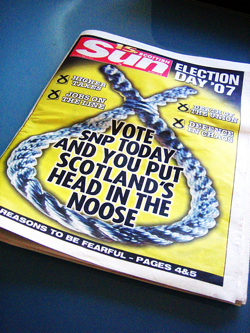
Analysts also note the rise of A/B testing in headline creation. Major media outlets often test two or three different titles for the same article, using real-time data to determine which one generates more clicks before finalizing the headline for the entire audience. This scientific approach to "setting the internet ablaze" emphasizes that while creativity is important, data is the ultimate arbiter of success.
Broader Impact and Future Implications
The way titles are crafted has a profound impact on how information is consumed globally. As artificial intelligence (AI) begins to play a larger role in content generation, the ability of AI to analyze vast datasets to predict "viral" headlines is increasing. However, the human element—the ability to create genuine emotional resonance or to navigate complex cultural nuances—remains a distinct advantage for human creators.
In conclusion, the destiny of a blog post is decided before the first paragraph is even reached. By pausing to apply strategic principles—benefit communication, personalization, and SEO optimization—creators can ensure their work does not languish in digital archives but instead achieves the visibility and engagement required to thrive in a competitive online environment. The mastery of the headline is not merely a writing skill; it is a fundamental requirement for anyone seeking to influence or inform in the 21st century.