Ena Muazin
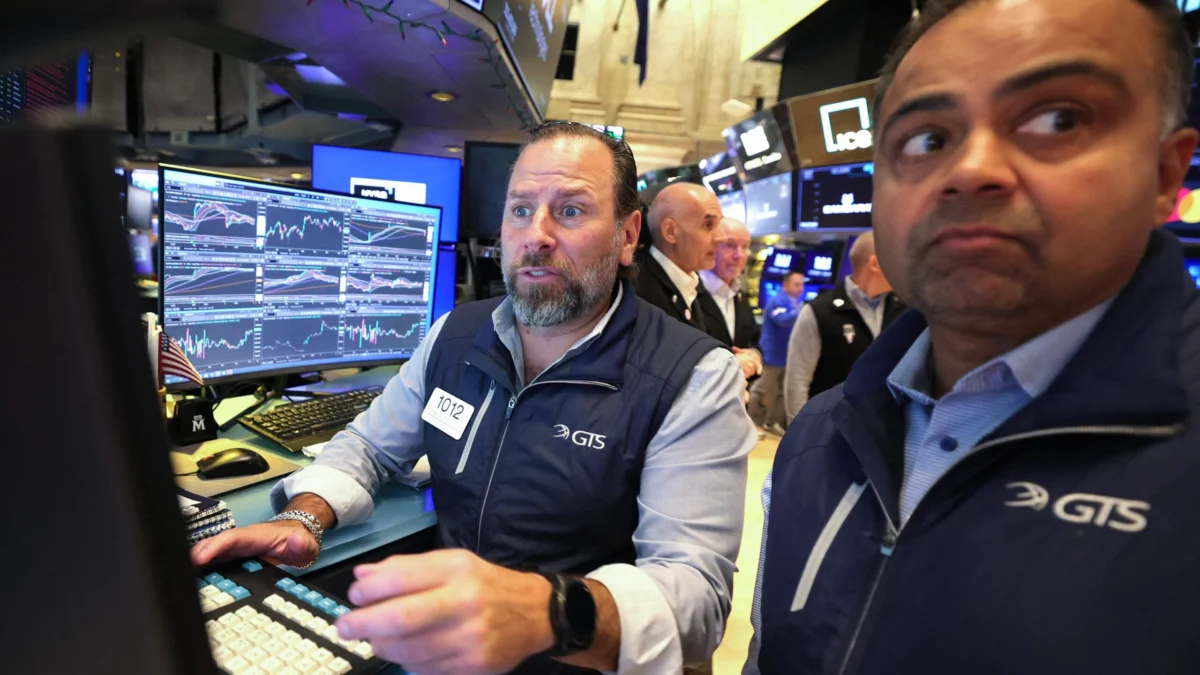
New York, Düsseldorf – The financial markets in the United States experienced a seismic shockwave just two days after the midterm elections, with broad-based declines across major indices. Financial publications like Barron’s described the event as an "AI bloodbath," while the Kobeissi Letter platform characterized it as "absolute madness." The sell-off resulted in unprecedented losses in market capitalization, signaling significant investor unease in the wake of the election results and their perceived implications for key sectors.
Unprecedented Market Carnage Unfolds
On Thursday, the collective market value of companies within the S&P 500 index plummeted by approximately three trillion dollars, marking the largest single-day loss ever recorded for the benchmark. Similarly, the Nasdaq index saw its constituent companies shed around 2.5 trillion dollars in market value, also an all-time record for a trading day.
By the close of trading, the Nasdaq Composite index had fallen by a staggering 5.5 percent. This decline placed it more than ten percent below its all-time high, officially pushing it into correction territory. The broader market was not spared, with other major U.S. indices also experiencing significant downturns. The Dow Jones Industrial Average erased its prior day’s gain of 1500 points, ultimately closing down 3.4 percent. The S&P 500, a bellwether for the broader U.S. equity market, lost 4.3 percent of its value. The Nasdaq 100, a technology-heavy selection index, experienced its steepest daily loss since the onset of the COVID-19 pandemic, sliding by 6.4 percent. These losses continued into after-hours trading, indicating persistent investor sentiment.
Historical Context of the Sell-Off
The magnitude of Thursday’s losses for the major U.S. indices placed the day in stark historical context. It represented the most severe single-day decline for these benchmarks since April 2025, when former President Donald Trump announced sweeping import tariffs. That period was characterized by significant market volatility driven by trade policy uncertainties. This latest downturn, however, appears to be rooted in different, albeit equally impactful, concerns stemming from the recent electoral outcomes.
Volatility Index Surges Amidst Uncertainty
The U.S. Volatility Index (VIX), widely known as the "fear gauge of Wall Street," surged by approximately 70 percent. This sharp increase underscores the heightened sense of anxiety and uncertainty that permeated the market. Investors, seeking to hedge against potential further downturns, drove up demand for options that profit from rising volatility, thereby pushing the VIX higher. A sustained elevated VIX level typically signals investor nervousness and a potential for continued market choppiness.
Election Results Emerge as Primary Catalyst
The prevailing sentiment among market analysts points to the surprisingly strong performance of the Democratic Party in the U.S. midterm elections as the primary trigger for the market collapse. A significant concern that emerged in the aftermath of the election is the potential for Democrats to significantly impede the expansion of infrastructure crucial for Artificial Intelligence (AI) development. The resistance to the construction of data centers, a vital component of AI infrastructure, had become a central theme in the election campaigns. This has led to speculation that a more robust Democratic presence in Congress could translate into stricter regulations or outright opposition to projects deemed environmentally or socially disruptive, directly impacting the burgeoning AI sector.
Broader Implications for the AI Sector
The AI sector has been a significant driver of market growth in recent years, with companies investing heavily in computing power, data storage, and advanced algorithms. The election results have introduced a new layer of uncertainty for these companies and their investors. If regulatory hurdles are indeed elevated, it could lead to a slowdown in AI development, potentially impacting the profitability and growth prospects of numerous tech giants and specialized AI firms.
The concern is that increased opposition to data center construction could lead to project delays, higher operational costs, and a more challenging regulatory environment for companies reliant on these facilities. This could, in turn, affect the pace of innovation and deployment of AI technologies across various industries, from autonomous vehicles to personalized medicine and advanced analytics. The market’s swift and severe reaction suggests that investors had heavily bet on continued unfettered growth in the AI space, and the election outcome has forced a rapid reassessment of those assumptions.
Beyond AI: A Multifaceted Market Reaction
While the AI sector has been identified as a key concern, it is crucial to acknowledge that the market’s reaction was not solely attributable to this single factor. The broad-based nature of the sell-off across the S&P 500 and other major indices indicates that a wider range of investor anxieties may have been at play.
- Inflationary Pressures and Interest Rate Hikes: Despite the election results, underlying concerns about persistent inflation and the Federal Reserve’s aggressive interest rate hiking campaign likely continued to weigh on market sentiment. Higher interest rates increase the cost of borrowing for companies and can reduce the present value of future earnings, making equities less attractive.
- Geopolitical Tensions: Ongoing geopolitical uncertainties, including global supply chain disruptions and international conflicts, can also contribute to market volatility. Investors often react to perceived increases in risk by moving towards safer assets.
- Profit-Taking and Technical Factors: Following a period of strong market performance, some analysts suggest that the sell-off could also be partly attributed to profit-taking by investors seeking to lock in gains. Additionally, technical factors, such as breaking through key support levels, can trigger further selling as algorithms and momentum traders react to market signals.
- Investor Sentiment and Behavioral Economics: Market movements are not always purely rational. Fear and greed are powerful drivers of investor behavior. The shock of unexpected election results, coupled with the rapid decline in stock prices, can create a feedback loop of selling as investors become increasingly fearful of further losses.
Expert Analysis and Future Outlook
Financial analysts have been dissecting the market’s sharp reaction, offering a range of perspectives on its implications. Some believe that the sell-off is an overreaction, arguing that the long-term growth trajectory of the AI sector remains robust despite potential regulatory headwinds. They point to the ongoing demand for AI solutions across industries and the continuous innovation occurring within the field.
Others, however, caution that the market’s assessment of regulatory risks may be accurate and that the AI sector could face a more challenging period ahead. They emphasize the need for companies to adapt their strategies to a potentially more regulated environment and to focus on building sustainable business models that can withstand scrutiny.
The increased volatility, as evidenced by the VIX surge, suggests that markets will likely remain sensitive to political developments and economic data in the near term. Investors will be closely watching for further pronouncements from policymakers regarding AI regulation and infrastructure development. The ability of the U.S. to navigate these complex issues while fostering innovation will be critical for the future growth of its technology sector and the broader economy.
The unprecedented market downturn following the U.S. midterm elections serves as a stark reminder of the intricate relationship between political outcomes and financial market stability. The "AI bloodbath" narrative highlights the sector’s sensitivity to policy shifts, while the broader market collapse underscores the interconnectedness of various economic and geopolitical factors that influence investor confidence. As the dust settles, the focus will shift to how policymakers and industry leaders respond to these evolving dynamics, shaping the future landscape of technological advancement and financial markets.