Ena Muazin
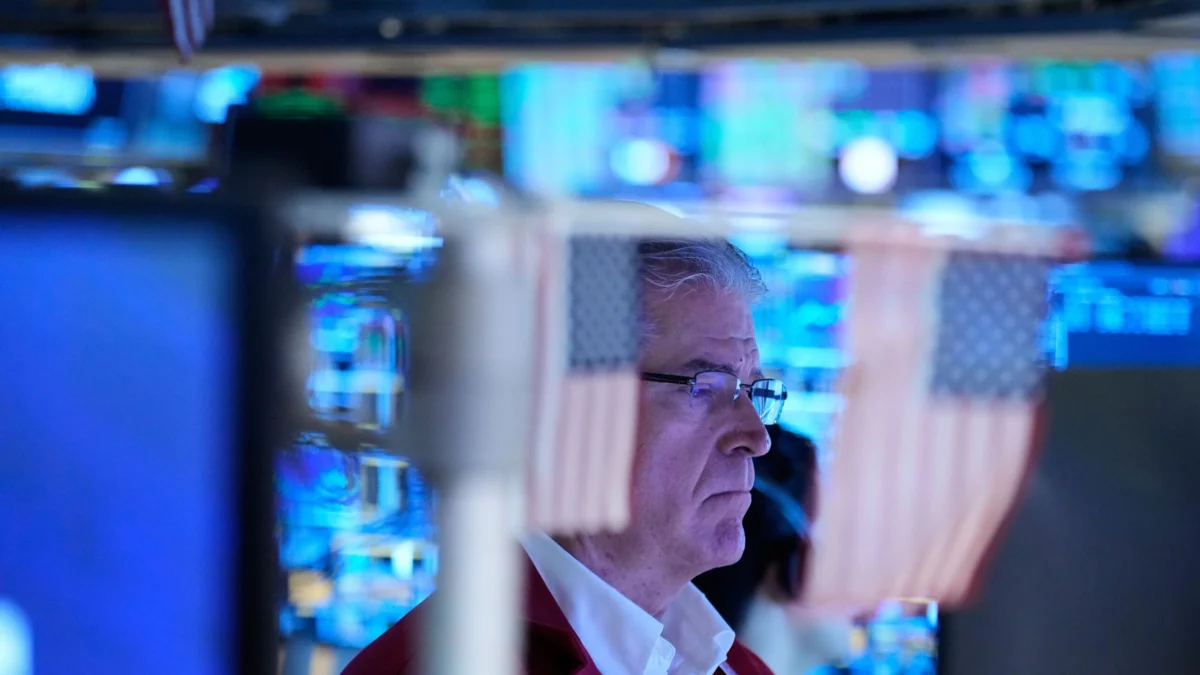
New York – The United States stock market faced continued pressure on Thursday, extending a three-day losing streak as investors grappled with fresh data on producer prices and escalating geopolitical concerns in the Persian Gulf. The mood on Wall Street was decidedly cautious, reflecting a complex interplay of economic indicators and international developments that cast a shadow over market sentiment.
The latest Consumer Price Index (CPI) data, released earlier in the week, had already raised concerns about persistent inflation, and Thursday’s Producer Price Index (PPI) report for August offered little respite. The PPI, which measures the average change over time in the selling prices received by domestic producers for their output, showed a significant uptick, indicating that inflationary pressures may be continuing to build within the supply chain. While the exact figures are crucial for understanding the Federal Reserve’s future monetary policy decisions, preliminary reports suggested that wholesale prices were climbing at a pace that could translate into higher consumer costs in the coming months. This renewed focus on inflation is a significant factor for market participants, as it heightens the possibility of further interest rate hikes by the Federal Reserve, which typically dampens corporate earnings and reduces investor appetite for riskier assets like stocks.
Adding to the market’s unease was a notable surge in oil prices, driven by heightened tensions in the Persian Gulf. Brent crude, a key global benchmark, breached the $107 per barrel mark for November delivery on Thursday evening. This upward price movement was largely attributed to a defiant statement from a commander in Iran’s Revolutionary Guard, who declared Tehran’s readiness for "lightning offensives" in defense of the nation. While the price of Brent crude remains below its April peak of $126 per barrel, the renewed volatility in the oil market has significant implications for the global economy. Higher energy costs can fuel inflation, squeeze consumer budgets, and impact the profitability of businesses across various sectors, from transportation and manufacturing to agriculture.
The market’s breadth remained weak throughout the trading day, a trend that has been observed recently. While technology stocks, particularly those involved in semiconductors and artificial intelligence, had provided some buoyancy to the Nasdaq on Wednesday, preventing steeper declines, this support appeared to be waning on Thursday. The broader market indices, including the Dow Jones Industrial Average and the S&P 500, reflected this underlying weakness, with a limited number of sectors demonstrating robust upward momentum.
Oil Market Dynamics and Geopolitical Undercurrents
The upward trajectory of oil prices on Thursday was a prominent feature of the global commodities market. The rising cost of Brent crude for November delivery, surpassing $107 per barrel, signaled a growing concern among traders about potential supply disruptions stemming from the volatile situation in the Persian Gulf. The declaration by an Iranian Revolutionary Guard commander regarding the country’s preparedness for swift defensive actions underscored the geopolitical risks at play.
This statement, while framed as defensive, has been interpreted by market analysts as a potential escalation in rhetoric that could embolden regional actors or lead to miscalculations. The historical sensitivity of the Persian Gulf to geopolitical events cannot be overstated. The region is responsible for a significant portion of global oil production, and any disruption, whether actual or perceived, can have an immediate and profound impact on global energy markets.
The current price of Brent crude, while elevated, still falls short of the year’s high of $126 per barrel reached in April. This suggests that while the market is reacting to the increased geopolitical risk, it may not yet be pricing in a full-blown supply crisis. However, the speed at which prices have risen in recent days indicates a heightened level of investor anxiety.
US Oil Benchmark WTI Follows Suit
The price of West Texas Intermediate (WTI) crude, the US oil benchmark, also experienced a significant surge on Thursday. WTI for October delivery saw gains of over four percent at one point during midday trading, pushing its price back above $100 per barrel for the first time since May. This marked a critical psychological threshold, indicating renewed strength in the US oil market.
While WTI experienced some retracement later in the afternoon, dipping briefly below the $100 mark, it rebounded by early evening, closing with a 4.5 percent increase. This pattern of volatility suggests that traders are closely monitoring developments and reacting quickly to news flow. The sustained upward pressure on both Brent and WTI prices highlights the interconnectedness of global energy markets and the significant influence that geopolitical events can exert on commodity prices.
Economic Indicators and Market Sentiment
The release of the August Producer Price Index (PPI) data on Thursday provided a crucial snapshot of inflationary pressures at the wholesale level. While specific details of the report were not immediately available in the provided text, the implication that these figures were "burdening sentiment on Wall Street" suggests that the data pointed towards continued or accelerating price increases for producers.
Historical Context of Producer Prices: The PPI is a leading indicator for consumer inflation. A sustained rise in producer prices can indicate that businesses are facing higher input costs (raw materials, energy, labor) and may eventually pass these costs on to consumers in the form of higher prices for goods and services. This has been a central concern for central banks globally, as uncontrolled inflation can erode purchasing power and destabilize economic growth.
Federal Reserve’s Stance: The Federal Reserve has been actively combating inflation through a series of interest rate hikes. Higher interest rates make borrowing more expensive for businesses and consumers, which can cool demand and thus inflation. However, if inflation proves to be more persistent than anticipated, the Fed may be forced to continue its aggressive rate-hiking cycle, which carries the risk of tipping the economy into a recession. The PPI data, therefore, is closely scrutinized for any signals that might influence the Fed’s future policy decisions.
Market Breadth and Sector Performance
The observation that "no trend reversal is in sight" for the US stock market on Thursday, following three consecutive days of losses, points to a broader market weakness. The concept of "market breadth" refers to the number of stocks advancing versus declining. A narrow market, where only a few large-cap stocks are driving gains while the majority of stocks are stagnant or declining, is often seen as an unhealthy sign for the overall market.
Wednesday’s Nasdaq Performance: The mention of "rising chip and AI stocks" having "saved the Nasdaq from significantly larger losses the previous day" suggests that a select group of technology companies, particularly those involved in the burgeoning artificial intelligence sector and semiconductor manufacturing, had shown resilience. These sectors have been a strong source of growth in recent years, fueled by innovation and increasing demand for advanced computing power.
Thursday’s Shift: The fact that this supportive trend did not continue on Thursday indicates that the broader market concerns are overriding the positive sentiment in these specific technology segments. This could be due to a number of factors, including profit-taking after recent gains, concerns about valuations in the tech sector, or a general risk-off sentiment that affects all asset classes.
Analysis of Implications
The confluence of rising producer prices and escalating geopolitical tensions in the Middle East presents a multifaceted challenge for the US economy and financial markets.
- Inflationary Pressures: Persistent inflation, as indicated by rising producer prices, could force the Federal Reserve to maintain its hawkish monetary policy stance. This would likely translate into higher borrowing costs for businesses and consumers, potentially slowing down economic growth and increasing the risk of a recession. For investors, higher interest rates can make fixed-income investments more attractive relative to equities, leading to a rotation of capital away from the stock market.
- Energy Market Volatility: Higher oil prices have a direct impact on consumer spending, as households face increased costs for gasoline and heating. Businesses also face higher operating expenses, which can squeeze profit margins and lead to price increases for their products and services. The current situation in the Persian Gulf, with Iran’s assertive rhetoric, introduces an element of uncertainty that could lead to further price spikes if tensions escalate. This volatility can make it difficult for businesses to plan and invest, hindering economic activity.
- Investor Sentiment: The prevailing cautious sentiment on Wall Street suggests that investors are prioritizing capital preservation over aggressive growth strategies. The three-day losing streak and the weak market breadth are indicative of a market that is struggling to find a clear direction. This uncertainty can lead to increased volatility as investors react to new information and reassess their risk exposures.
- Geopolitical Risk Premium: The rise in oil prices due to geopolitical concerns highlights the concept of a "geopolitical risk premium." This is the additional price that markets are willing to pay for commodities like oil when there is an elevated risk of supply disruption. The current situation in the Persian Gulf is a clear example of how geopolitical instability can directly impact global markets.
Official Responses and Market Expectations
While specific official statements directly addressing the market’s reaction to Thursday’s data were not included, the broader economic context implies certain expectations. The Federal Reserve will be closely monitoring inflation data, including both CPI and PPI, as it calibrates its monetary policy. Any indication that inflation is proving more stubborn than expected could lead to further interest rate hikes.
Market participants will also be watching for any diplomatic efforts or de-escalation of rhetoric from the involved parties in the Persian Gulf. A clear path towards de-escalation could alleviate some of the upward pressure on oil prices. Conversely, any further provocations or military actions could lead to a more significant and sustained increase in energy costs.
The underlying economic narrative remains one of balancing the need to curb inflation with the desire to avoid a severe economic downturn. The current market conditions suggest that investors are finding this balance to be an increasingly precarious one, leading to the observed caution and volatility. The coming days and weeks will be crucial in determining whether the US markets can find a stable footing amidst these complex economic and geopolitical challenges.