Lina Wu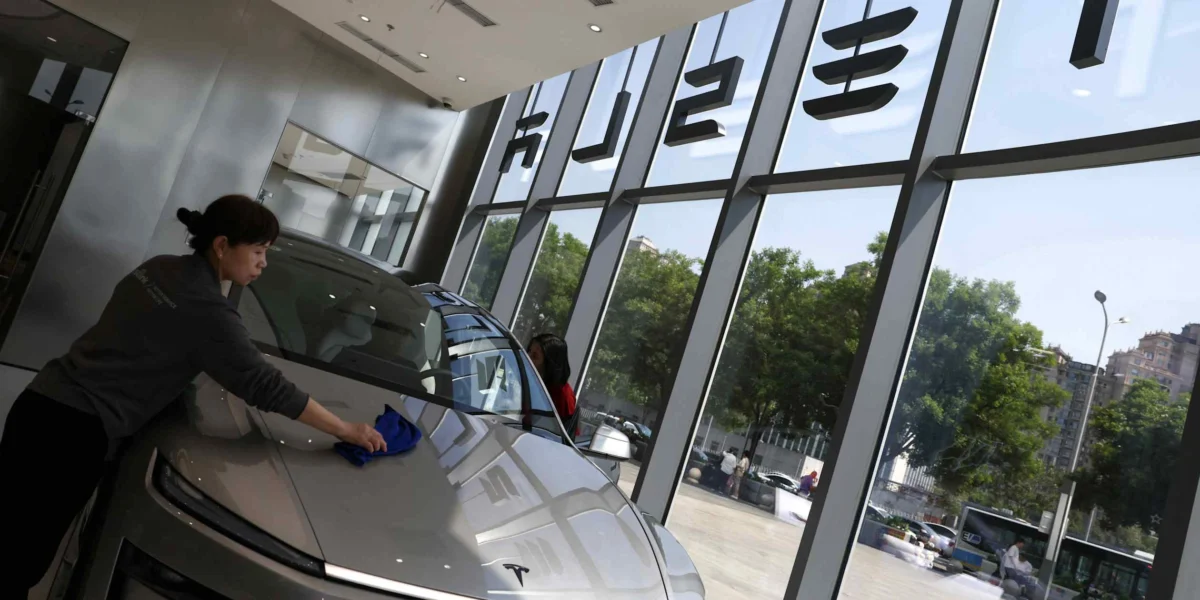
SHANGHAI – American businesses operating in China have reported a significant rebound in confidence, a stark contrast to record low levels seen previously. This renewed optimism, according to a survey released on Thursday, September 10, 2026, is largely attributed to a de-escalation of trade disputes between Washington and Beijing. The easing of tariffs and export controls has demonstrably reduced uncertainty, creating a more predictable operating environment for these companies. However, the same survey highlights a pivotal shift in business priorities, with domestic competition within China now surpassing bilateral US-China tensions as the primary concern for American enterprises on the ground.

The findings, gathered from a comprehensive survey conducted by a leading business association (specific organization name can be inferred or generalized as "a prominent chamber of commerce"), paint a nuanced picture of the current landscape for foreign investment in the world’s second-largest economy. While the immediate threat of trade wars has receded, allowing for a breath of relief, the long-term strategic challenges posed by China’s rapidly evolving domestic market and its increasingly sophisticated local competitors are now taking center stage.
A Fragile Détente and its Impact on Business Confidence
For years, the escalating trade war initiated under the previous US administration and continued, albeit with different tactics, by the current one, cast a long shadow over US-China economic relations. The imposition of reciprocal tariffs on billions of dollars worth of goods, alongside restrictions on technology transfers and investments, created an atmosphere of considerable volatility. American companies, heavily reliant on both the Chinese market for sales and its manufacturing capabilities for production, found themselves caught in the crossfire. Supply chains were disrupted, input costs rose, and investment decisions were put on hold as businesses grappled with the unpredictable nature of policy shifts.

The recent "trade truce," brokered through a series of high-level diplomatic engagements and culminating in an agreement to pause further escalations and roll back some existing measures, has been a significant catalyst for the improved sentiment. This détente, which began to take shape in late 2025 and solidified through early 2026, provided much-needed stability. The survey data indicates that approximately 65% of surveyed American firms reported an improvement in their business outlook directly attributable to the reduced trade friction. This figure is a substantial jump from the 20% recorded in the previous year’s survey.
"The easing of tariffs has been a welcome development," stated a senior executive from a multinational manufacturing firm with significant operations in China, who wished to remain anonymous due to company policy. "It allows us to plan with more certainty and reduces the immediate financial pressure. We can now focus more on our operational efficiencies and market strategies rather than constantly reacting to geopolitical shifts."

The Ascendancy of Domestic Competition
Despite the positive impact of the trade truce, the survey’s most striking revelation is the elevation of domestic competition to the forefront of concerns. For the first time in several years, this factor has overtaken US-China bilateral tensions as the primary strategic challenge. The data shows that 72% of respondents now identify fierce competition from local Chinese companies as their biggest hurdle, compared to 55% who cited US-China tensions.
This shift reflects the remarkable progress made by Chinese enterprises in recent years. Driven by a combination of government support, a rapidly growing domestic market, increasing access to talent and technology, and a deep understanding of local consumer preferences, Chinese companies have become formidable rivals across a wide spectrum of industries. From technology and e-commerce to automotive and consumer goods, local players are not only competing effectively but often leading in innovation and market share.

The automotive sector, exemplified by the image of a Tesla being cleaned in Beijing, provides a microcosm of this trend. While Tesla, an American brand, has achieved significant success in China, it faces intense competition from a growing number of domestic electric vehicle manufacturers like BYD, NIO, and XPeng. These companies are not only offering competitive products but are also excelling in areas like battery technology, smart vehicle features, and localized user experiences.
"We are seeing Chinese companies move up the value chain at an unprecedented pace," commented Dr. Li Wei, a senior economist specializing in China’s industrial development. "They are no longer just imitators; they are innovators. Their agility, deep understanding of the domestic market, and strong government backing give them a distinct advantage. Foreign companies need to adapt their strategies significantly to thrive in this new environment."

The survey highlights several specific areas where domestic competition is most keenly felt:
- Price Sensitivity: Chinese consumers, while increasingly discerning, remain price-conscious. Local companies, with lower overheads and more streamlined supply chains, are often able to offer more competitive pricing.
- Technological Advancement: Chinese tech firms have rapidly closed the gap in areas like artificial intelligence, 5G, and advanced manufacturing, often developing bespoke solutions tailored to the Chinese market.
- Brand Loyalty and Local Appeal: Chinese brands have successfully cultivated strong brand loyalty by aligning with local cultural values and consumer trends.
- Regulatory Navigation: While foreign firms grapple with navigating China’s complex regulatory landscape, domestic companies often have a more established network and understanding of these processes.
A Timeline of Evolving Concerns
The shift in business priorities can be traced through a series of key developments:

- 2018-2019: The initial phase of the US-China trade war dominated concerns. Tariffs, export controls, and the threat of further sanctions created significant uncertainty, leading to a sharp decline in business confidence.
- 2020-2021: The COVID-19 pandemic further exacerbated supply chain issues and disrupted global trade. While the trade war remained a background concern, the immediate focus for many businesses was on operational continuity and adapting to new market realities. Domestic competition began to emerge as a more significant factor.
- 2022-2023: The trade tensions continued, with periodic escalations and a hardening of stances on both sides, particularly concerning technology. However, the rapid growth and increasing sophistication of Chinese companies became a more prominent talking point among foreign businesses.
- Late 2025-Early 2026: A series of diplomatic breakthroughs led to a de-escalation of trade disputes, including the agreement on a "trade truce." This provided a significant boost to business confidence, alleviating immediate tariff-related anxieties.
- Mid-2026: The survey released in September 2026 reflects the current landscape where the immediate threat of trade wars has diminished, allowing the persistent and growing challenge of domestic competition to take center stage.
Supporting Data and Broader Implications
The survey, which polled over 500 American companies operating in China across various sectors including manufacturing, technology, finance, and consumer goods, provides quantitative evidence for this evolving sentiment.
- Investment Intentions: While confidence has improved, the survey indicates a cautious approach to new large-scale investments. 58% of respondents stated they are maintaining current investment levels, while only 25% plan to increase investment in the next 12 months, a slight uptick from 18% in the previous year. This suggests that while the operating environment is more stable, the competitive landscape necessitates careful strategic planning before significant capital deployment.
- Revenue Growth Projections: Average revenue growth projections for the next fiscal year remained steady at around 7-9%, indicating a sustained but not explosive growth trajectory. This is a positive sign compared to the uncertainty of the trade war years but also reflects the intense competition that caps rapid expansion.
- Talent Acquisition: A growing concern highlighted by the survey is the challenge of attracting and retaining top talent, particularly in specialized technical fields. Chinese companies are aggressively recruiting, often offering competitive compensation and career development opportunities, making it harder for foreign firms to secure skilled labor.
The implications of this shift are profound for American businesses in China. It necessitates a fundamental recalibrating of strategies. Rather than focusing primarily on navigating geopolitical risks, companies must now prioritize:

- Enhanced Localization: Deepening their understanding of the Chinese market, adapting products and services to local tastes and preferences, and building stronger relationships with local consumers and partners.
- Innovation and R&D: Investing more heavily in research and development within China to create products and services that can compete with or even surpass local offerings.
- Agility and Responsiveness: Developing more agile business models that can quickly respond to evolving market dynamics and competitor moves.
- Strategic Partnerships: Exploring collaborations and joint ventures with Chinese companies to leverage local expertise and market access.
Official Responses and Future Outlook
While this survey represents the perspective of the business community, official responses from both the US and Chinese governments acknowledge the evolving economic realities. US trade officials have reiterated their commitment to ensuring a level playing field for American companies, while also engaging in dialogues aimed at de-escalating tensions. Chinese authorities, on their part, have consistently emphasized their commitment to opening up the economy and fostering a favorable business environment for foreign investment, while also championing the growth of domestic industries.
The future outlook for American businesses in China remains complex. The immediate relief from trade war pressures is a significant positive, allowing for more predictable operations. However, the escalating prowess of Chinese domestic competitors presents a sustained and evolving challenge. Companies that can adapt their strategies, embrace localization, and foster innovation are likely to be the most successful in navigating this dynamic and increasingly competitive market. The era of simply relying on a perceived technological advantage or broad market access is giving way to a more nuanced competition where local understanding and agility are paramount.