Gilang Muhammad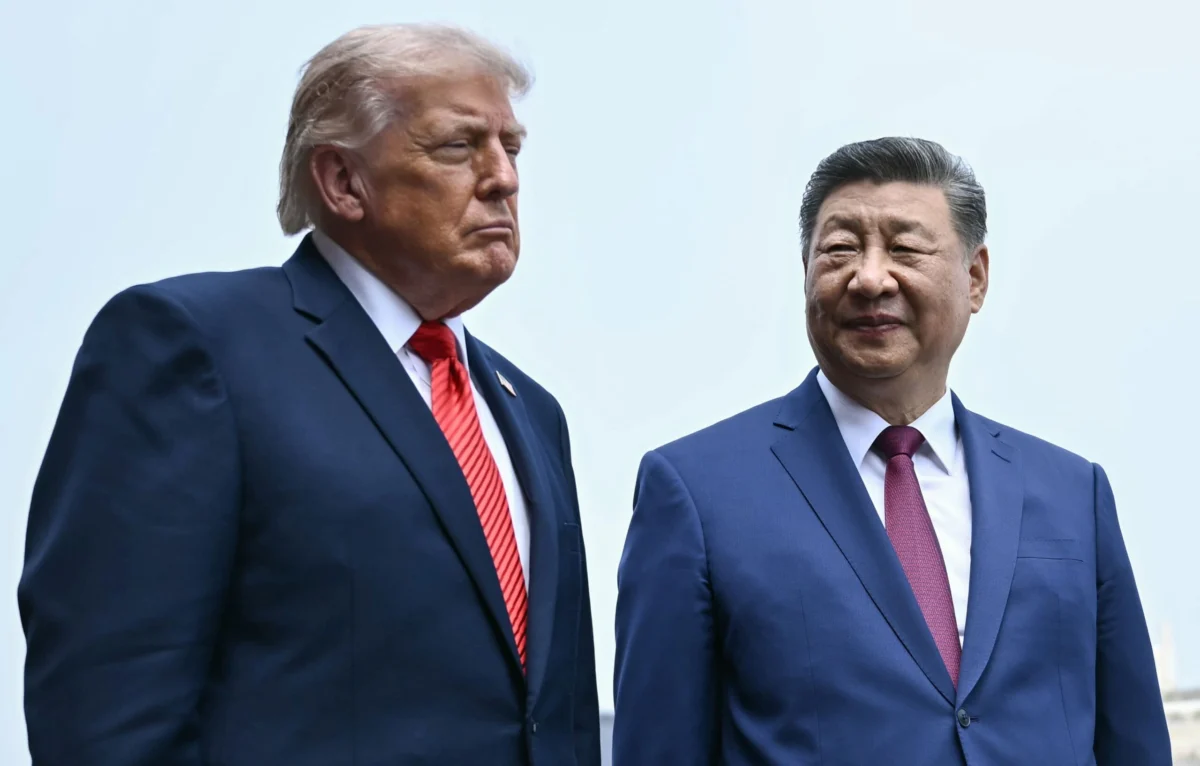
The United States has dramatically escalated its economic campaign against Iran, threatening to sever any financial institution assisting Tehran in evading sanctions from the American financial system. This aggressive move, dubbed "Operation Economic Outcast" and described as an "economic D-Day" by President Donald Trump, places China’s state-backed banks in an acutely uncomfortable position, compelling Beijing to choose between its significant trade ties with Iran and its indispensable access to the global dollar-denominated financial architecture. The escalating pressure comes just weeks before a critical summit between President Trump and Chinese President Xi Jinping, adding another layer of complexity to an already fraught bilateral relationship.
Escalation and Beijing’s Defiance
On Monday, August 24, U.S. Treasury Secretary Scott Bessent issued a stark warning from Washington, declaring that "any entity facilitating money laundering or sanctions evasion on behalf of Iran risks being cut off from the U.S. financial system." When pressed specifically on the implications for Chinese financial institutions, Bessent did not mince words: "If they facilitate transactions and are part of the ecosystem that turns Iranian oil into money, into repression, they will be targeted." This declaration marks a significant hardening of the U.S. stance, extending its extraterritorial reach to directly challenge China’s extensive commercial dealings with Iran.
Beijing’s response was swift and defiant. On Tuesday, a spokesperson for the Chinese Foreign Ministry stated unequivocally that China would "take all necessary measures" to protect its interests. The spokesperson reiterated China’s long-standing "firm opposition to illicit unilateral sanctions that have no basis in international law or the authorization of the UN Security Council." This principled objection underscores China’s broader challenge to the U.S.’s use of its financial hegemony as a tool of foreign policy, particularly when such measures contravene multilateral consensus.
The intensified U.S. pressure is a direct consequence of a rapidly evolving geopolitical landscape. The "Iran war," which commenced on February 28, has spurred Washington to redouble its efforts to isolate Tehran economically. While the specifics of this "war" remain a point of international contention—referring variously to heightened proxy conflicts, cyber warfare, and targeted strikes rather than a conventional large-scale military invasion—the economic dimension has become paramount for the Trump administration. Before this period of conflict, China was Iran’s primary trading partner, absorbing approximately 90% of Iran’s exported oil, which constituted about 12% of China’s total crude imports, according to analyses from the U.S.-China Economic and Security Review Commission in March. This deep economic entanglement forms the crux of Beijing’s current dilemma.
"Operation Economic Outcast": The Mechanics of Pressure
"Operation Economic Outcast" has already seen the U.S. Treasury’s Office of Foreign Assets Control (OFAC) identify several China-based companies and individuals alleged to have assisted the Iranian military or facilitated illicit financial transactions. These entities are now subject to immediate sanctions, with the U.S. promising to provide a private timeline for countries to cease identified activities. However, the lack of a publicly disclosed timeline leaves Beijing and other nations in a state of uncertainty, further complicating their calculations. When questioned by CNBC about communication regarding this timeline, China’s Foreign Ministry merely reiterated its close monitoring of the situation and its commitment to protecting its national interests.
This move is not without precedent. The U.S. has historically employed sanctions to target entities perceived as undermining its foreign policy objectives, often leveraging the dollar’s global dominance. The current strategy aims to choke off Iran’s revenue streams, particularly from oil sales, to curb its nuclear program, support for regional proxies, and missile development. By explicitly targeting Chinese banks, the Trump administration signals a willingness to impose significant economic costs on allies and rivals alike who continue to engage with Iran. The designation of Chinese entities is a direct challenge to Beijing’s sovereignty and its economic relationship with Tehran, pushing the boundaries of economic statecraft.

China’s Strategic Hedging: The Rise of CIPS and Currency Swaps
Amidst the escalating U.S. financial pressure, China has quietly been building a strategic hedge against dollar dominance, without fully abandoning its benefits. The Cross-Border Interbank Payment System (CIPS), China’s indigenous alternative to the SWIFT system, is at the forefront of this effort. The People’s Bank of China (PBOC) initiated the development of CIPS in 2012, a year that saw the U.S. Treasury sanction China’s relatively small Bank of Kunlun over its illicit dealings with Iran. This historical context underscores CIPS’s origins as a strategic response to perceived U.S. financial weaponization.
Since its inception, CIPS has steadily grown, with transaction volumes picking up notably since the Russia-Ukraine war in 2022, and generally accelerating throughout the current year, according to official figures released by the system. CIPS currently lists 210 direct participating institutions globally, predominantly affiliates of state-owned Chinese banks, but also including a growing number of foreign financial institutions seeking to facilitate yuan-denominated trade and investment. While still nascent compared to SWIFT’s vast network, CIPS represents China’s long-term vision for a more multi-polar financial system, reducing its vulnerability to U.S. sanctions.
Beyond CIPS, China has also actively promoted bilateral currency swap agreements with various nations. Just this month, Argentina and Australia renewed such agreements with China, enabling the exchange of tens of billions of dollars’ worth of yuan between their respective central banks. These swaps facilitate direct trade and investment in local currencies, bypassing the U.S. dollar and reducing foreign exchange risks. Peter Alexander, Shanghai-based managing director of advisory firm Z-Ben, succinctly articulated China’s strategy to CNBC, stating that "The emerging financial system isn’t necessarily one in which countries abandon the USD. It is a geopolitical hedging instrument." This perspective suggests that China is not seeking to dismantle the dollar system entirely, but rather to carve out an autonomous sphere of influence and create alternative pathways for international transactions, thereby mitigating the impact of U.S. financial coercion.
The Enduring Power of the Dollar and Beijing’s Balancing Act
Despite China’s concerted efforts to diversify, the U.S. dollar’s dominance in the global financial system remains formidable. According to data from SWIFT, the secure bank messaging system that underpins international banking, the U.S. dollar still accounted for more than half of all global payments in July. In contrast, China’s yuan ranked a distant fifth, comprising only 3.1% of global payments, a slight decrease from over 4% in early 2025. The disparity is even more pronounced in trade finance, where the U.S. dollar commanded nearly 80% of transactions during the same period, with the yuan holding a distant second place at 8.4%.
This overwhelming reliance on the dollar presents a profound dilemma for Beijing. As Tianchen Xu, a senior economist at The Economist Intelligence Unit, observed to CNBC, "China definitely wants to stay in the dollar system which benefits its trade engine, but that doesn’t mean it will do everything to comply with expanding U.S. sanctions." China’s export-oriented economy thrives on frictionless access to global markets, largely denominated in dollars. Disrupting this access, for instance by sanctioning major Chinese banks, could have severe repercussions for its economic stability and growth.
However, China is unlikely to yield entirely to U.S. pressure. Analysts, including Xu, anticipate that Beijing might retaliate with its own measures, potentially leveraging its control over critical resources such as rare earth minerals. China is the world’s dominant producer and refiner of rare earths, essential components in a vast array of high-tech industries, including defense, electronics, and renewable energy. Should China restrict exports of these minerals, it could inflict significant pain on U.S. industries, creating a complex web of interdependence. This mutual vulnerability, where the U.S. relies on Chinese critical minerals and China relies on dollar access, incentivizes both sides to maintain a degree of stability, even amidst escalating tensions.
Geopolitical Crossroads: The Looming Trump-Xi Summit

The timing of these intensified sanctions is particularly sensitive, occurring just weeks before a highly anticipated summit between President Trump and Chinese President Xi Jinping in the U.S. late next month. This meeting follows President Trump’s visit to Beijing in May, where both leaders engaged in what was described as a constructive, albeit complex, dialogue. The U.S. administration is acutely aware of the delicate diplomatic balance, with analysts like Dan Wang, Eurasia Group’s China director, noting that the U.S. does not want to derail the upcoming summit.
Wang further emphasized that while the Iran issue is significant, "The core of China-U.S. relation is more about [the] Taiwan situation." The self-governing island of Taiwan, which Beijing considers a renegade province, remains the most potent flashpoint in U.S.-China relations, with both sides deeply entrenched in their positions. In comparison, Wang suggested, "the China-Iran tie is not nearly as close as outsiders have imagined," noting that Beijing has essentially halted state-backed infrastructure investment in Iran since 2018. This assessment implies that while Iran is a trading partner, it may not be a strategic red line for Beijing in the same way that core sovereignty issues are.
Nevertheless, the prospect of U.S. sanctions targeting major Chinese banks carries immense economic weight. Wang warned that "Removing a major Chinese bank from the SWIFT system would significantly increase devaluation pressure on the Chinese yuan, which is not acceptable to Beijing." Such a move would not only destabilize China’s financial system but also undermine its ambitions for greater internationalization of the yuan, potentially triggering broader financial market volatility. The U.S.’s decision to apply this level of pressure, therefore, is a high-stakes gamble with significant implications for global economic stability and the future trajectory of U.S.-China relations.
Economic Ripple Effects and Broader Implications
The immediate market reactions to the escalating tensions have been palpable. Since the "Iran war" began on February 28, the U.S. dollar index has strengthened by approximately 1.5%, reflecting a flight to safety amidst global uncertainty. Surprisingly, the Chinese yuan has also shown resilience, gaining nearly 2% against the U.S. dollar and over 3% against the euro during the same period. This suggests that while concerns about financial decoupling persist, the broader market views China’s economic fundamentals as relatively stable, or perhaps sees the yuan as a beneficiary of diversification away from other currencies.
China has historically sought to play a constructive, albeit cautious, role in Middle Eastern diplomacy. Earlier this year, Beijing facilitated initial peace talks between Iran and the U.S. in Pakistan, signaling its desire for regional stability. However, analysts at the time cautioned that Beijing had "neither the capability nor inclination to pressure either side into negotiating" a lasting peace, highlighting China’s preference for economic engagement over deep political intervention in complex regional conflicts. This pragmatic approach underscores China’s primary motivation: securing energy supplies and expanding its economic influence, rather than becoming a primary security guarantor.
The current standoff signals a new chapter in the U.S.-China economic rivalry, with implications extending far beyond Washington and Beijing. It forces global financial institutions and multinational corporations to re-evaluate their compliance strategies and supply chains, potentially leading to a more fragmented global financial system. The U.S.’s aggressive use of its financial leverage, while effective in the short term, could inadvertently accelerate the de-dollarization efforts of countries seeking to insulate themselves from such pressures.
As Peter Alexander noted, "Beijing hasn’t even begun to play hard ball with America." The true test of this "economic D-Day" lies not just in the U.S.’s ability to impose sanctions, but in the long-term willingness of the global community, and particularly China, to comply. "The question isn’t what could be done," Alexander told CNBC in an email, "the question is whether anything WILL be done." The coming weeks, leading up to the Trump-Xi summit, will be crucial in determining whether this latest escalation marks a turning point towards deeper economic confrontation or a carefully managed, albeit tense, negotiation.