Gilang Muhammad
The United Kingdom’s economy expanded by a robust 0.7% in the third quarter of 2026, aligning precisely with market expectations and demonstrating a notable resilience amidst a challenging global economic landscape marked by the ongoing US-Iran war. This impressive performance, largely underpinned by a dynamic services sector, marks a significant acceleration from previous quarters and provides a much-needed boost to national confidence. Economists polled by Reuters had accurately forecasted this 0.7% quarter-on-quarter growth, while the year-on-year figure for the three months ending September registered an even more substantial 1.9% increase.
This latest data signifies a tangible improvement in the UK’s economic trajectory. The second quarter of 2026 saw gross domestic product (GDP) grow by a more modest 0.5%, following a 0.6% expansion in the first three months of the year. The consistent, albeit accelerating, growth through 2026 illustrates an economy finding its footing and adapting to persistent domestic and international pressures. This period of expansion is particularly noteworthy given the broader geopolitical instabilities and inflationary pressures that have characterized the global economy, suggesting a deep-seated adaptability within the UK’s core industries.
Services Sector Powers Ahead, Tech and AI at the Forefront
At the heart of the third quarter’s strong performance was the UK’s dominant services sector, which expanded by an impressive 0.9%. This surge effectively offset more tepid growth in other areas, such as the production sector, which saw a modest 0.1% increase, and a notable 0.7% contraction in construction. The data, released by the UK’s Office for National Statistics (ONS) on Thursday morning, unequivocally highlighted the services industry as the primary engine of national prosperity.
Within the vast services landscape, the information and communication sector emerged as a particularly potent driver of growth, expanding by a striking 2.1% over the quarter. This sub-sector’s dynamism reflects a broader trend of digital transformation and technological investment across the UK economy. The ONS specifically pointed to activities related to artificial intelligence (AI) and cloud computing as major contributors to this growth. "This industry has been the largest driver of GDP growth across 2026, with evidence that many of the businesses reporting the largest increases in turnover are involved in activities related to artificial intelligence and cloud computing," the ONS report stated.
However, the ONS also acknowledged the inherent difficulties in precisely quantifying the impact of these cutting-edge technologies. "Because of the nature of our data collection, it is difficult for us to quantify the exact impact of these types of activities on turnover," the statistical agency noted. This highlights a growing challenge for national economic statistics: accurately measuring the rapidly evolving digital economy and the transformative effects of technologies like AI, which often diffuse across multiple sectors in complex ways. Despite this measurement challenge, the qualitative assessment from the ONS underscores the significant, albeit perhaps understated, role of technological innovation in propelling the UK’s economic expansion.
Looking at the monthly data, September proved to be a stronger month than anticipated, with the economy growing by 0.2% month-on-month. This surpassed economists’ expectations, who had largely predicted that GDP would flatline for the month. This positive September figure also marked an improvement from the preceding month, with revised figures indicating that the British economy experienced zero growth in August. The stronger close to the quarter suggests positive momentum carrying into the final months of the year.
Official Reactions and Political Commentary
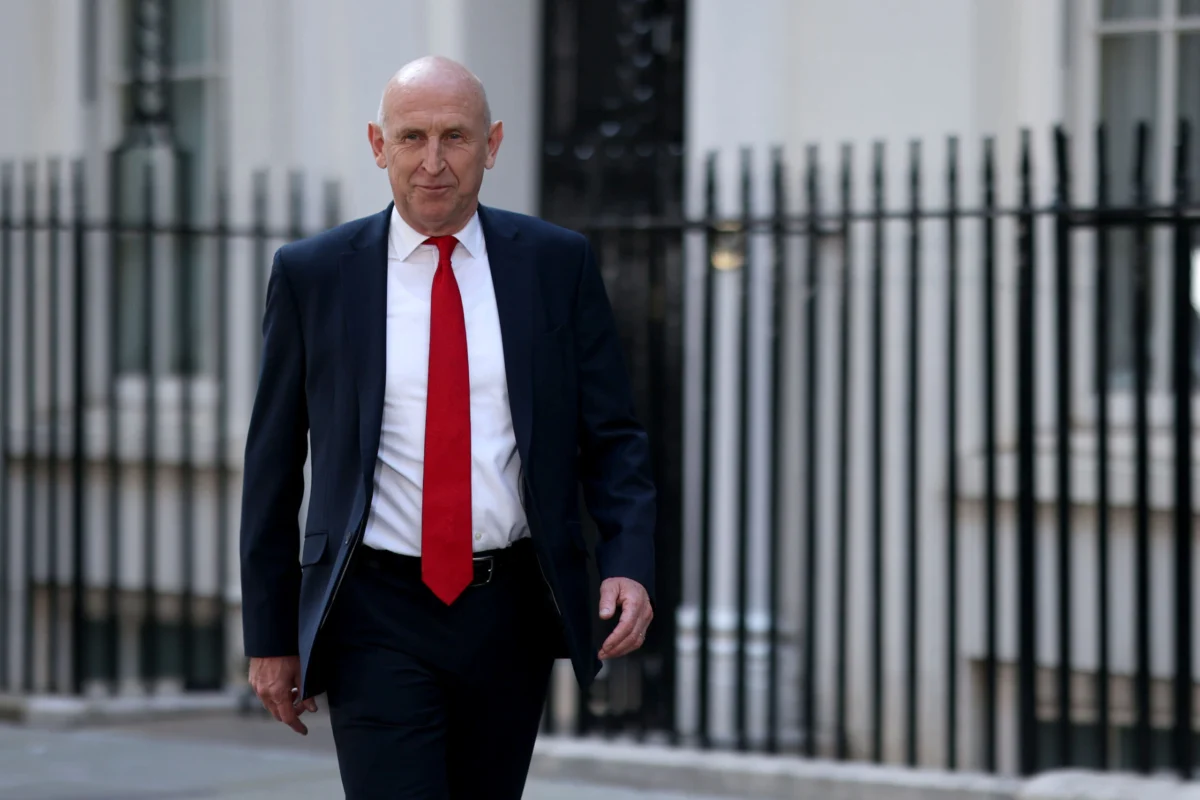
The positive economic figures were met with optimism from the UK government. Newly appointed Chancellor of the Exchequer John Healey, speaking from Downing Street, emphasized the country’s "stand-out resilience" in the face of significant global challenges, specifically referencing the ongoing US-Iran war which has impacted growth worldwide. "Our U.K. economy is growing at the fastest rate in almost ten years, outside the pandemic," Healey declared, drawing attention to the sustained recovery and the economy’s ability to navigate external shocks. This statement implicitly contrasted the current growth trajectory with the more subdued, and at times volatile, economic performance observed in the years leading up to the pandemic, which included periods of uncertainty related to Brexit and slower global growth.
Prime Minister Andy Burnham echoed the Chancellor’s positive sentiment, remarking that the third-quarter growth was "bringing hope for the future." Such statements from the highest levels of government underscore the political significance of these economic indicators, offering reassurance to businesses and citizens alike during a period of considerable uncertainty. The government’s narrative positions this growth as a testament to its economic policies and the fundamental strength of the British economy.
Market Response and Expert Perspectives
Financial markets reacted with a degree of caution following the announcement, reflecting the mixed sentiment that often accompanies economic data releases in a volatile environment. The British pound was observed to be down by 0.2% against the U.S. dollar on Thursday morning, while remaining largely flat against the euro. Yields on U.K. government bonds, often a barometer of investor confidence and future interest rate expectations, showed little change, suggesting that the positive growth figures were largely priced in or offset by other prevailing concerns.
Scott Gardner, an investment strategist at J.P. Morgan Personal Investing, characterized the update as a "decent set of results with the UK economy still proving to be relatively resilient since the US-Iran war started." Gardner’s assessment highlights the surprise element of the UK’s performance given the geopolitical backdrop. However, he quickly tempered this optimism with a forward-looking caution, adding that the economy’s strength would face more rigorous tests in the coming months.
Gardner elaborated on potential headwinds, stating, "Nervousness in the lead up to the Autumn Budget and continued uncertainty from the Middle East war is expected to weigh on confidence and activity over the coming GDP readings." He further warned, "With some already trimming their growth forecasts for next year, the U.K. economy still faces several headwinds." This nuanced view reflects the consensus among many analysts that while the Q3 performance was strong, the path ahead remains fraught with significant challenges, both domestic and international.
The Enduring Impact of AI and Future Growth Drivers
Suren Thiru, chief economist at the Institute of Chartered Accountants in England and Wales (ICAEW), provided a more enthusiastic assessment, calling it "a strikingly strong third quarter" for the UK. Thiru specifically highlighted the role of artificial intelligence in propelling this growth. "AI fired up as an extra engine of growth in the quarter, with businesses ramping up investment, including in infrastructure, tech hardware and computer programming, to strengthen their resilience against growing headwinds, while also boosting economic activity," he noted.
This perspective underscores a crucial shift in economic drivers. In an era where traditional factors of production may face constraints, technological advancements like AI are increasingly seen as providing new avenues for productivity gains and economic expansion. Businesses are not just adopting AI for efficiency; they are investing in the underlying infrastructure and skills, creating a virtuous cycle of innovation and capital expenditure that contributes directly to GDP. This strategic investment in future-proof technologies is not merely about gaining a competitive edge but also about building resilience against a backdrop of increasing global economic volatility.
Inflationary Pressures and the Bank of England’s Stance
The robust growth figures, particularly the underlying strength and investment trends, have significant implications for monetary policy. Thiru explicitly stated that "These robust figures help keep a December interest rate rise firmly on the table by reinforcing policymakers’ view that the economy remains resilient enough to cope with another rise in borrowing costs." This analysis brings into sharp focus the ongoing battle against inflation and the Bank of England’s (BoE) delicate balancing act.
Just last week, the Bank of England had raised interest rates for the first time in three years, a decisive move aimed at taming persistent inflationary pressures. The central bank issued a stark warning that without a swift resolution to the US-Iran war, further rate hikes could be on the horizon. The UK’s annual inflation rate had already jumped to 3.5% in September, a figure well above the BoE’s 2% target. More concerningly, the Bank of England warned in its November Monetary Policy Report that inflation could escalate further, potentially reaching around 5% by mid-2027 if current trends and geopolitical tensions persist.
In its November report, the central bank acknowledged that UK GDP growth had, so far, been "more resilient than expected." However, it tempered this observation with a projection that growth was likely to slow in the final quarter of the year and into 2027. This suggests a recognition that while the economy has shown surprising strength, the cumulative impact of higher interest rates, ongoing geopolitical instability, and a potential slowdown in global demand are expected to exert a drag on future expansion.
Markets are keenly watching the Bank of England’s next move. According to LSEG data, traders are currently pricing in a substantial 73% chance of another rate hike from the central bank at its final Monetary Policy Committee meeting of the year in December. Such a move would further increase borrowing costs for consumers and businesses, potentially cooling demand and investment, but also signaling the BoE’s firm commitment to bringing inflation back to target. The decision will hinge on the latest inflation data, labor market figures, and the central bank’s updated assessment of both domestic and international economic risks.
Broader Economic Context and Outlook
The UK’s economic performance in Q3 2026 can be viewed within a wider historical and global context. The "fastest rate in almost ten years, outside the pandemic" is a significant claim. The decade preceding the pandemic was characterized by a recovery from the 2008 financial crisis, followed by periods of uncertainty stemming from the Brexit referendum and subsequent departure from the European Union, which often kept UK growth rates moderate compared to some global peers. Post-pandemic, economies have grappled with unprecedented supply chain disruptions, energy price spikes, and labor market shifts. Against this backdrop, the current 0.7% quarterly growth represents a strong rebound and a testament to the underlying adaptability of the UK economy.
However, the warnings from analysts like Scott Gardner about trimming growth forecasts for next year are not to be dismissed. The confluence of factors – a hawkish central bank battling persistent inflation, the looming uncertainty of the Autumn Budget, and the pervasive impact of the US-Iran war on global trade and energy markets – creates a complex and potentially challenging environment for 2027. The Autumn Budget, in particular, will be scrutinized for its fiscal consolidation measures, potential tax changes, and spending priorities, all of which could either support or constrain future economic activity.
In conclusion, the UK economy’s third-quarter performance in 2026 offers a compelling narrative of resilience and dynamism, particularly within its dominant services sector, with technological advancements like AI playing an increasingly critical role. This growth has provided a temporary reprieve and a boost to national morale, drawing commendation from government officials. Yet, the celebratory mood is tempered by the looming shadows of persistent inflation, the specter of further interest rate hikes, and the profound uncertainties emanating from global geopolitical conflicts. The coming quarters will be a true test of the UK’s ability to sustain this momentum while navigating a perilous economic landscape.