Gilang Muhammad
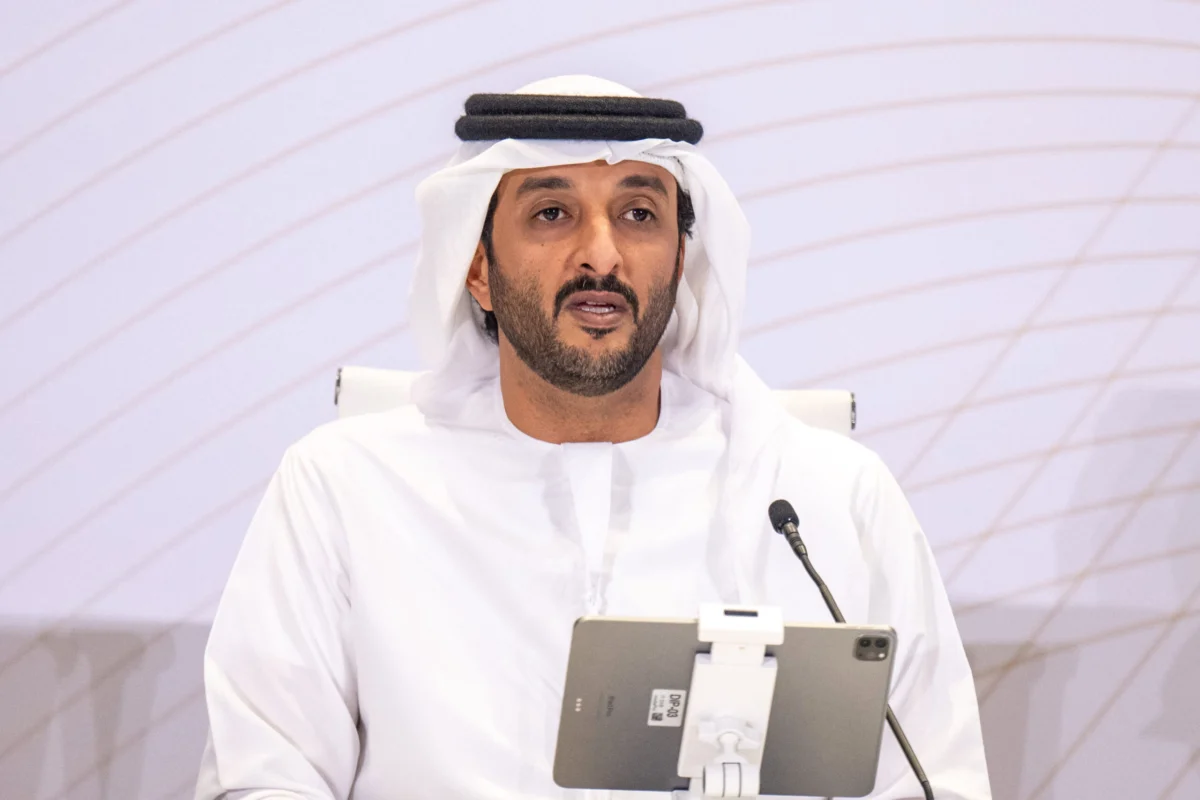
The United Arab Emirates is demonstrating remarkable economic resilience and optimism, with its Minister of Economy and Tourism, Abdulla Bin Touq Al Marri, projecting a robust 7-8% growth for the nation in 2027. This ambitious forecast comes despite a backdrop of escalating regional conflict, including Iranian strikes on economic targets and US missions across the Middle East, and ongoing tensions with Israel. The minister’s confidence, articulated during an interview with CNBC, follows a significant upward revision by the International Monetary Fund (IMF), which now predicts the UAE will avoid a recession in 2026, adjusting its real GDP forecast from a 3.9% contraction to a positive 0.2% growth within a mere month.
Navigating Geopolitical Storms: The UAE’s Economic Outlook
Minister Al Marri’s declaration of "very optimistic" growth prospects for the upcoming year underscores the UAE’s strategic positioning and agile economic management in a volatile global landscape. Speaking from Abu Dhabi on March 3, 2026, amidst a government press briefing following Iranian strikes, he emphasized the nation’s preparedness. "We cannot promise the world for any storms that will land on our shore, but we can always promise that the UAE’s economy is ready for any storm," Al Marri stated, conveying a clear message of fortitude and proactive planning. This sentiment reflects a broader national strategy to insulate its economy from external shocks, a necessity amplified by the current regional instability.
The IMF’s revised forecast, issued last week and completing its 2026 Article IV mission on November 18, 2026, signals a remarkable turnaround in economic sentiment. Just a month prior, on October 23, 2026, the IMF had predicted a contraction, placing the UAE alongside Saudi Arabia on a path towards recession due to the escalating Iran war. The swift adjustment to a 0.2% growth rate for 2026 highlights the underlying strength and adaptability of the UAE economy. "The UAE is coming back, and that adjustment within one month shows that there is a huge potential aspect when it comes towards the end of the year," Al Marri told CNBC’s Dan Murphy, pointing to immediate signs of recovery and robust forward momentum. The minister even suggested that the final growth figure for 2026 could surpass the IMF’s updated 0.2% prediction.
The Intensifying Regional Conflict: A Chronology of Escalation
The optimistic economic outlook emerges against a troubling timeline of geopolitical escalation. On March 3, 2026, Iran significantly intensified its attacks, targeting critical economic infrastructure and US diplomatic missions across the Middle East. Drones and missiles struck oil facilities, vital for global energy supplies, and US embassies in the Gulf region, signaling a dangerous expansion of the conflict. This aggressive posture from Tehran prompted a stern warning from the US President, who declared it was "too late" for the Islamic Republic to seek negotiations to extricate itself from the burgeoning war.
Concurrently, Washington’s key ally, Israel, escalated its own military actions. Israeli forces launched bombardments against targets within Iran itself, a significant widening of direct hostilities. Simultaneously, Israeli troops pushed deeper into Lebanon, engaging in fierce battles against Hezbollah, the Tehran-backed militia that has long been a flashpoint in regional proxy conflicts. This multi-front escalation has profoundly disrupted maritime trade, particularly in critical waterways like the Strait of Hormuz, which accounts for a substantial portion of the world’s seaborne oil and gas shipments. The increased risk premiums for shipping, delays, and re-routing have directly impacted global energy markets and supply chains, casting a shadow over regional economic activity.
Economic Repercussions and Sectoral Recovery
The ripple effects of the Iran war have been palpable across the UAE’s economy. The immediate impact was felt in several key sectors:
- Energy Trade: Disruptions to maritime routes and heightened geopolitical risk affected oil and gas exports and transit.
- Tourism: A cornerstone of the UAE’s diversification strategy, tourism initially saw a downturn as travel advisories and security concerns deterred international visitors.
- Aviation: Major international carriers faced challenges, with some re-routing or reducing flights due to airspace restrictions and perceived risks.
- Private-Sector Confidence: Investor sentiment and private-sector activity experienced a temporary contraction amid uncertainty.
However, the UAE’s proactive measures and inherent strengths have enabled a swift rebound. Minister Al Marri highlighted that the tourism industry is already witnessing a robust recovery, with occupancy rates in hotels and resorts returning to "almost near normal" levels. This recovery is partly attributed to the strategic rerouting of international flights, with major carriers such as British Airways and Air France adjusting their routes to utilize the UAE as a secure and accessible hub, channeling increased air traffic and passenger volume through Dubai and Abu Dhabi’s world-class airports. This influx has not only boosted passenger numbers but also ancillary services, further cementing the UAE’s status as a global aviation and tourism gateway. Data from the UAE’s Department of Economy and Tourism (DET) for Q4 2026, though not explicitly cited in the original report, would likely show a significant uptick in hotel bookings and international visitor arrivals, possibly exceeding pre-conflict levels in certain niche markets due to its perceived safety relative to other regional destinations.
Strategic Economic Diversification and Future Investments
Looking ahead, the UAE is not merely aiming for recovery but is charting a course for a "different" economic model in 2027. This strategy, as articulated by Minister Al Marri, involves a deliberate shift in investment priorities. The focus will be on building robust domestic capabilities, particularly in manufacturing and critical infrastructure. "Investments will be focused on building factories and things that we really need in times of crisis," he stated. This represents a strategic pivot towards enhanced self-sufficiency and resilience, aiming to minimize dependence on potentially disrupted global supply chains.
This strategic shift aligns with broader national visions, such as the UAE Centennial 2071 plan, which emphasizes a knowledge-based, diversified economy less reliant on hydrocarbons. Investments are expected to target key sectors like advanced manufacturing, pharmaceuticals, food security, logistics, and renewable energy. For instance, the development of new pharmaceutical production facilities would reduce reliance on imported medicines, while expanded agricultural technology parks would bolster domestic food production capabilities. These initiatives are designed not only to safeguard the economy against future shocks but also to create new avenues for growth, innovation, and job creation, attracting foreign direct investment into high-tech and value-added industries.
International Assessment and Cautious Optimism
International financial institutions largely corroborate the UAE’s positive trajectory, albeit with inherent caveats concerning regional stability. The World Bank, in its October 2026 report, echoed expectations for the UAE economy to recover robustly in 2027. This recovery is anticipated to be driven by a confluence of factors, including rising oil production and exports, a rebound in tourism, revitalized trade, expanded transportation services, a flourishing financial sector, and renewed activity in construction. The UAE’s adherence to OPEC+ agreements and its capacity to adjust oil production levels provide a stable revenue stream, underpinning fiscal stability.
However, the World Bank’s analysis also includes a crucial warning: the improvement in economic activity in the UAE remains largely dependent on the duration and intensity of the Iran war. A faster de-escalation of the conflict is seen as pivotal to accelerating the recovery in services exports and invigorating private-sector activity. Prolonged instability, conversely, could impede investment, dampen consumer confidence, and disrupt trade routes, thereby tempering growth prospects. This conditional optimism underscores the delicate balance between internal economic strength and external geopolitical realities.
Diplomatic Maneuvers and US Stance
The geopolitical chess game involving Iran has also seen dynamic shifts in US policy, directly influencing the regional security landscape. Earlier in November 2026, specifically on November 8, US President Donald Trump had indicated that renewed attacks on Iran were "highly unlikely" if ongoing negotiations were to produce a "very strong agreement." This suggested a window for de-escalation through diplomatic channels. However, the tone shifted dramatically on a subsequent Monday, as reported by Fox News. President Trump issued a stark warning, threatening Tehran with fresh US strikes in the new year (2027) if the two countries failed to finalize a deal. He reportedly characterized the Iranian negotiators as "professional tap dancers," indicating frustration with the pace and substance of talks. This fluctuating rhetoric highlights the unpredictability of the conflict and the challenges in achieving a lasting resolution.
The US’s stance and actions are critical for the UAE, a strategic ally and host to significant American military presence. The security guarantees offered by the US, alongside multilateral diplomatic efforts, play a crucial role in mitigating regional risks and reassuring investors. The ongoing US-Iran negotiations, whether successful or not, will inevitably shape the security environment in which the UAE’s economic ambitions are pursued.
Conclusion: A Model of Resilience in a Volatile World
The United Arab Emirates stands as a compelling case study in economic resilience and strategic adaptability amidst profound geopolitical turbulence. Minister Abdulla Bin Touq Al Marri’s optimistic forecast of 7-8% growth for 2027, supported by the IMF’s revised positive outlook for 2026, paints a picture of a nation not merely weathering a storm but actively charting a new, more resilient course. From a robust recovery in tourism and aviation to a deliberate strategic shift towards domestic manufacturing and critical infrastructure, the UAE is demonstrating its capacity to transform challenges into opportunities.
While the shadow of the Iran war and the broader regional conflict continues to loom large, posing inherent risks to trade, investment, and stability, the UAE’s leadership remains committed to proactive economic management and diversification. The nation’s ability to swiftly adjust to external pressures, coupled with its long-term vision for a knowledge-based, diversified economy, positions it uniquely. The promise that the "UAE’s economy is ready for any storm" is not just a statement of intent but a reflection of a deeply ingrained strategy to build an economy that is robust, agile, and prepared for the complexities of a volatile 21st-century world, aiming to achieve sustained prosperity despite the prevailing winds of conflict.