Gilang Muhammad
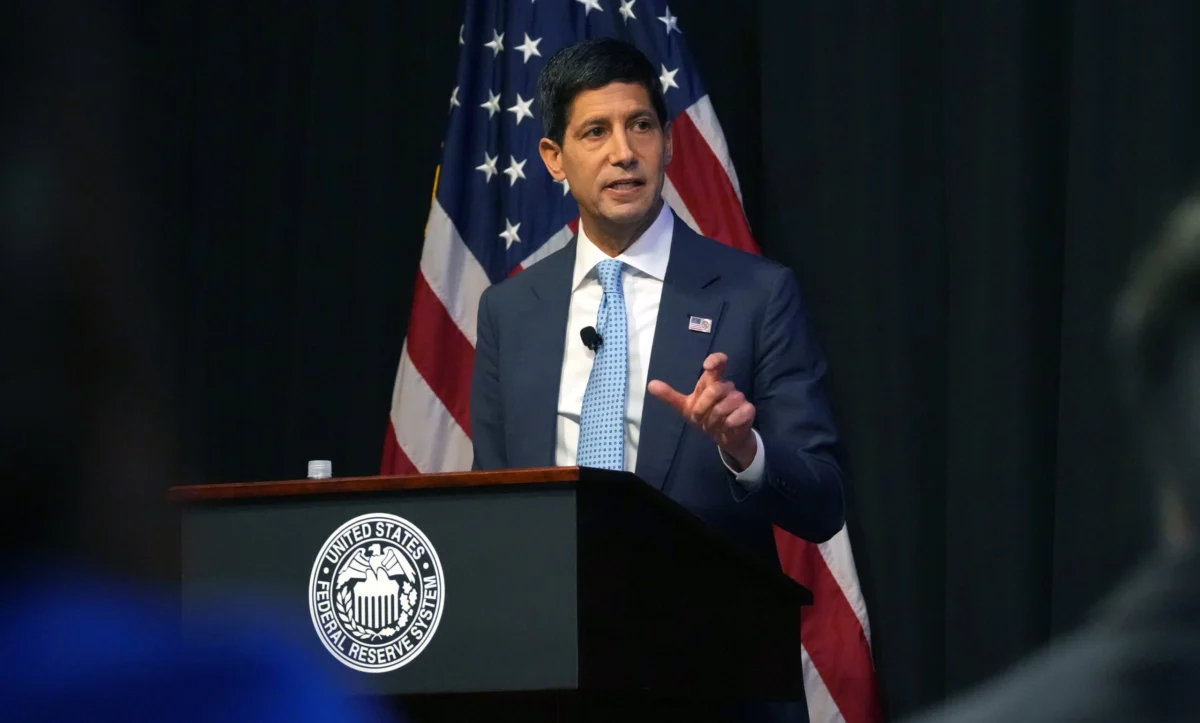
Artificial intelligence is about to sweep through the economy. The Federal Reserve is bracing for impact. "We are at a hinge point in the U.S. economy," Fed Chairman Kevin Warsh declared at a pivotal conference he convened in San Francisco on Monday, November 17, 2026. This stark assessment underscored a central bank grappling with unprecedented technological transformation, the precise timing and mechanisms of which remain shrouded in uncertainty, making the implications for interest rates, inflation, and employment profoundly complex.
The event, titled "AI and the Future of the American Economy," brought together an eclectic mix of economists, technologists, and policymakers. It marked a significant departure from the Federal Reserve’s traditional, often insular, approach to economic analysis. Under Warsh’s leadership, the Fed is proactively seeking external perspectives to understand how rapidly advancing AI capabilities will reshape productivity, labor markets, and the broader economic landscape. The conference served as the first public forum for Warsh’s specialized AI task force, where the new Fed chairman publicly posed the critical questions that Americans will ultimately expect him to answer through monetary policy. While he offered hints at his private concerns regarding potential mass job losses among white-collar workers, Warsh largely deferred detailed speculation to the diverse array of experts assembled to advise the central bank.
Warsh’s Vision: Modernizing the Central Bank’s Approach
Kevin Warsh’s appointment as Federal Reserve Chairman earlier in 2026 was widely seen as a mandate for change. Known for his long-standing critiques of the Fed as an institution prone to insularity and outdated methodologies, Warsh has consistently advocated for a more agile and externally connected central bank. His vision extends beyond mere policy adjustments; he aims to fundamentally recalibrate how the Fed identifies emerging economic trends and integrates them into its decision-making framework. This philosophy underpins the establishment of five distinct task forces, each dedicated to a crucial aspect of Fed policymaking, with the AI task force being arguably the most forward-looking.
The rationale behind drawing expertise from outside the institution is twofold. Firstly, the rapid pace of AI development often outstrips the traditional academic research cycles that typically inform central bank analysis. Secondly, Warsh believes that a diversity of thought, spanning venture capital, technology leadership, and academic economics, is essential to grasp the multifaceted implications of a technology poised to redefine virtually every sector. This proactive engagement reflects a recognition that AI is not merely a cyclical economic phenomenon but a structural shift demanding a novel policy response.
Navigating the Job Market: Displacement and Transformation
A central theme of Monday’s discussions revolved around the future of work, particularly the vulnerability of white-collar professions to automation. Warsh repeatedly invoked the historical precedent of the "China Shock" – the profound economic restructuring that followed China’s entry into the World Trade Organization in 2001. This period saw a dramatic increase in low-cost manufacturing imports, leading to significant price drops for goods like clothing and furniture in the U.S. However, this came at a severe social cost: a widely cited estimate from researchers like David Autor, David Dorn, and Gordon Hanson found that the U.S. lost approximately one million manufacturing jobs and 2.4 million jobs overall in the years that followed, concentrating economic pain in specific regions and communities.
Warsh suggested to panelists that the widespread adoption of AI could trigger a similar, albeit service-sector-focused, shock. "I don’t want to hold this too tightly," Warsh cautioned, "But if in some ways over the last generation or generation and a half, the China shock, for lack of a better word, lowered prices of goods in the United States, the way that I heard you talking about the philosophy of this new technology is it might do something for services." This implies a scenario where AI could perform complex legal, administrative, financial, or creative tasks more cheaply and efficiently than human workers, leading to disinflationary pressures on services but also substantial job displacement.
Marc Andreessen, a prominent venture capitalist and one of the three official members of Warsh’s AI task force, offered a nuanced perspective on this potential displacement. Andreessen, known for his techno-optimism, acknowledged AI’s transformative power but posited that government regulation in heavily controlled sectors like healthcare and education might prevent the U.S. economy from experiencing the technology’s full, disruptive effects on employment. "To the extent our economy is a free market economy, then maybe you could see the, let’s say, extremely rapid displacement scenarios people are talking about," Andreessen stated. "But we’ve mostly outlawed the kind of job transition that… both the utopians the doomers talk about." His argument suggests that existing regulatory frameworks, designed to protect specific industries and professions, could inadvertently act as a brake on AI-driven job destruction, even if they also limit productivity gains. This perspective contrasts with other analyses, such as those from McKinsey & Company, which in 2023 estimated that generative AI could automate tasks equivalent to 4.5 trillion dollars in work annually, impacting a significant portion of the global workforce, with up to 30% of current work activities across all occupations potentially automatable. The World Economic Forum, in its 2023 Future of Jobs Report, also projected that while AI would create new roles, it would also lead to a net displacement of millions of jobs, particularly those involving routine cognitive tasks.
Inflationary Pressures and Disinflationary Potential: A Monetary Policy Conundrum
The immediate economic impact of AI is presenting the Fed with a significant challenge to its dual mandate of maximizing employment and maintaining price stability. While long-term AI adoption is widely anticipated to be disinflationary due to efficiency gains, the current phase is characterized by massive investment. The technology’s rapid advancement is fueling a veritable arms race among AI firms, leading to unprecedented capital expenditure. This week alone provides a stark illustration: AI lab Anthropic is poised to price its initial public offering (IPO) shares on Wednesday, November 19, with expectations of raising as much as $64 billion at an astounding $1.4 trillion valuation. This IPO follows a pre-market price range of $70 to $78 per share, reflecting intense investor demand.
Such vast spending, concentrated in the technology sector, is creating inflationary pressures. The demand for advanced semiconductors, specialized data center infrastructure, and highly skilled AI talent is driving up costs across the supply chain. This surge in demand, particularly for critical components like NVIDIA’s H100 GPUs and the energy required to power AI models, risks overheating the economy. Consequently, the Federal Reserve is actively contemplating raising interest rates in December to temper this speculative fervor and slow down the rate of price increases, even as the broader economy shows signs of moderating. This short-term inflationary impulse, driven by investment, stands in sharp contrast to the potential for long-term disinflation that AI-driven productivity gains in services could bring. Warsh explicitly questioned panelists whether "we should expect disinflation over the medium term, from what AI could do to services," to which they largely conceded it was a plausible scenario. This suggests a future where the Fed might eventually consider lowering interest rates to combat AI-induced disinflation, creating a complex and potentially volatile trajectory for monetary policy.
The Infrastructure Battle: Data Centers and Public Backlash
Compounding the Fed’s challenge is a growing public backlash against the physical infrastructure essential for AI’s proliferation: data centers. The November 3 midterm elections saw voters in several states enact an array of state-level measures designed to slow down or outright block the construction of these energy-intensive facilities. These ballot initiatives often stem from local concerns about environmental impact, noise pollution, land use, and strain on local power grids.
One of the few prominent Democrats willing to publicly challenge this anti-data center trend was Gina Raimondo, former Secretary of Commerce under President Joe Biden and former Governor of Rhode Island. Speaking at Warsh’s conference, Raimondo described the passage of so many anti-data center measures as "a very troubling sign." She emphatically stated that stopping AI "would be very bad for America" and, paradoxically, for the very people who voted for such measures, implying a shortsightedness that could hamper national competitiveness and economic growth. Warsh refrained from publicly endorsing Raimondo’s view, and how such a sentiment might translate into specific monetary policy actions remains unclear. However, the growing tension between technological advancement and public sentiment on infrastructure highlights a new dimension of complexity for policymakers, as the physical requirements of AI directly intersect with local political and environmental concerns. The ability to deploy AI at scale is contingent on robust data center infrastructure, making these local disputes a potential bottleneck for national AI strategy and economic growth.
The AI Task Force: Assembling External Expertise
The composition and structure of Warsh’s AI task force underscore his commitment to integrating diverse, non-traditional perspectives into the Fed’s analytical framework. The public heard directly from Marc Andreessen on Monday. Andreessen’s long-standing friendship with Warsh, stemming from their shared Stanford University connections (Warsh attended with Andreessen’s wife), exemplifies the network Warsh is leveraging. The task force also includes Stanford economist Chad Jones, a highly respected scholar in economic growth theory, who is currently on leave and working at Anthropic. His direct involvement with a leading AI lab provides invaluable, real-time insights, though he was unable to speak during the conference due to Anthropic’s pre-IPO blackout period. The third member, Xbox CEO Asha Sharma, a leader in consumer technology, did not attend the event, but her perspective on user adoption and practical application of AI is expected to be crucial.
This blend of venture capital, academic economics, and industry leadership is intended to provide a holistic view of AI’s potential impact on productivity and jobs. Andreessen, despite his optimism about AI, voiced concerns that heavy regulation in sectors like healthcare and education might inadvertently prevent the U.S. economy from fully realizing AI’s job-transforming potential. His argument suggests that while technology could replace many roles, existing societal and regulatory structures might artificially preserve jobs, thereby limiting both the disruptive "doomer" scenarios and the utopian vision of massive productivity gains.
Forward Path: From Task Force to Policy Action
The San Francisco conference represents merely the initial public phase of a multi-stage process. Over the next few months, the three official members of the AI task force are expected to synthesize their diverse points of view and findings into a comprehensive report for Chairman Warsh. This report will then serve as a critical input for internal deliberations within the Federal Reserve System. The Fed’s extensive cadre of Ph.D. economists, traditionally responsible for weighing in on all matters affecting the U.S. and global economies, will then debate these results.
The subsequent challenge will be to translate these insights into concrete monetary policy adjustments. This could involve recalibrating the Fed’s inflation targets, re-evaluating its employment metrics to account for AI-driven job displacement and creation, or developing new tools to manage the unique economic dynamics unleashed by advanced AI. The path from task force discussion to policy implementation is typically lengthy and involves extensive research, internal debate, and consensus-building among the Federal Open Market Committee (FOMC) members. However, the extraordinary pace of AI development, "growing bigger every day" as Warsh noted, suggests that the Fed may need to accelerate its decision-making process. Traditional economic models and forecasting methodologies, often reliant on historical data, may prove inadequate in anticipating the scale and speed of AI’s impact, forcing the Fed to operate with a greater degree of uncertainty and agility than ever before.
Broader Implications and Global Context
The Federal Reserve’s proactive engagement with AI signals a profound shift in central banking. The economic implications of AI extend far beyond domestic interest rates and employment figures; they touch upon global competitiveness, national security, and societal equity. The potential for AI to dramatically alter global supply chains, trade balances, and geopolitical power dynamics adds another layer of complexity. Nations that embrace and effectively integrate AI could see significant boosts in productivity and economic influence, while those that lag could face economic stagnation and widening disparities.
Warsh’s leadership in convening this critical discussion positions the U.S. Federal Reserve at the forefront of understanding and responding to this epochal technological wave. The outcomes of the task force’s work and the subsequent policy decisions will not only shape the American economy for decades to come but could also set a precedent for how central banks worldwide navigate the promises and perils of artificial intelligence. The decisions made by Warsh and his fellow Fed members in the coming months will require not only economic acumen but also a deep conviction about the trajectory of technology and its profound implications for humanity.