Gilang Muhammad
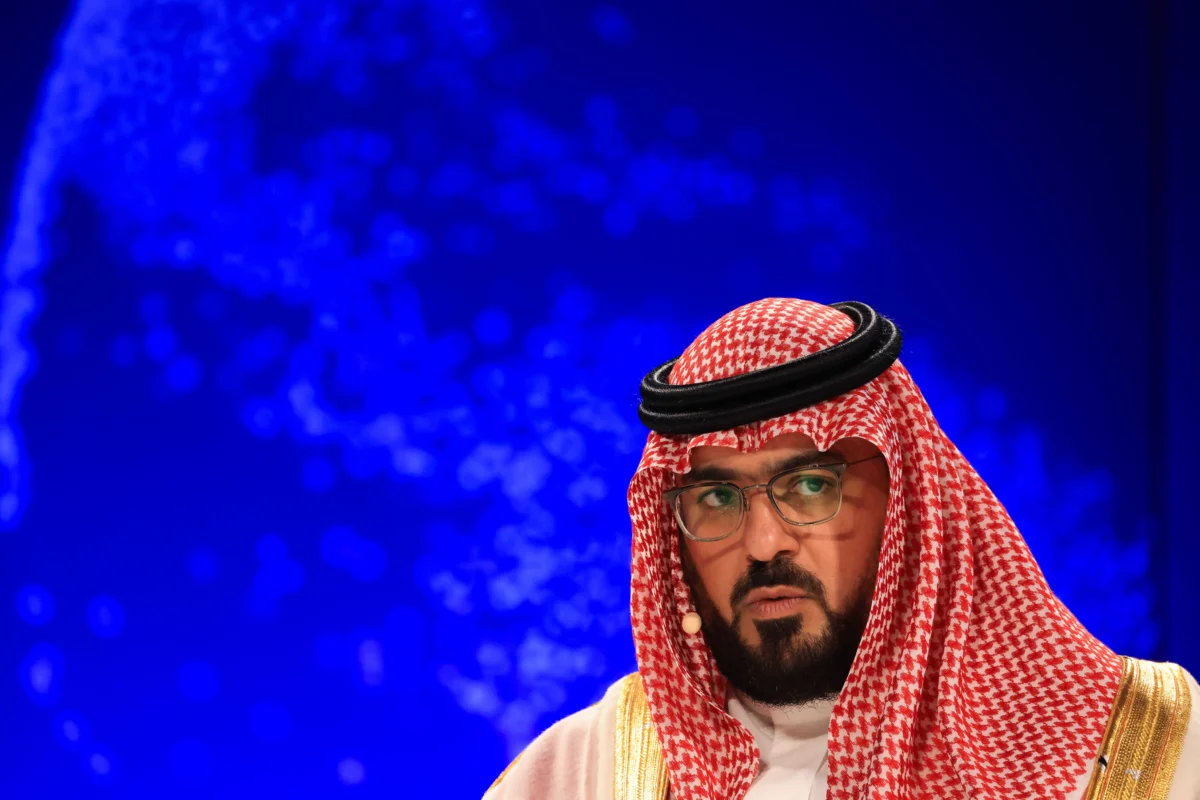
Riyadh, Saudi Arabia – In a significant recalibration of its ambitious economic transformation agenda, Saudi Arabia has shifted its strategy from "spending and delivery at any cost" to a more judicious "spending and delivery at the right cost," according to Economy Minister Faisal Alibrahim. This pivot comes as the Kingdom grapples with a sharp economic contraction and the persistent shadow of regional instability, underscored by ongoing Houthi attacks targeting civilian and energy infrastructure. The minister emphasized Saudi Arabia’s unwavering commitment to achieving long-term sustainable stability in the region, a goal he asserted the Kingdom would "stop at nothing" to realize.
The revised economic approach signals a more pragmatic phase for Vision 2030, the transformative blueprint launched in 2016 by Crown Prince Mohammed bin Salman to reduce the Kingdom’s reliance on oil revenues. While the initial years were characterized by a monumental capital spending spree, spearheaded largely by the Public Investment Fund (PIF), recent economic headwinds and geopolitical complexities have necessitated a re-evaluation of priorities and expenditure.
Vision 2030’s Evolving Economic Imperative
Since its inception in 2016, Vision 2030 has been the bedrock of Saudi Arabia’s economic diversification efforts. The plan aims to foster a dynamic, diversified economy by developing non-oil sectors, attracting foreign direct investment (FDI), boosting the private sector’s contribution to GDP, and creating millions of new jobs for a rapidly growing young population. Central to this vision has been a series of "giga-projects" – sprawling, futuristic developments designed to transform the Kingdom’s landscape and economic profile. Projects like NEOM, the Red Sea Project, Qiddiya, and Diriyah Gate were initially conceived with multi-hundred-billion-dollar price tags, reflecting an unprecedented scale of ambition.
The Public Investment Fund (PIF), Saudi Arabia’s sovereign wealth fund, has been the primary engine driving these initiatives, growing its assets from approximately $150 billion in 2015 to over $700 billion today. Its mandate was to invest both domestically in strategic projects and internationally to diversify the Kingdom’s asset base. This era was largely characterized by a "build it and they will come" philosophy, where the focus was on rapid execution and groundbreaking development, often with less immediate concern for cost-efficiency.
However, as Minister Alibrahim elaborated to CNBC, this initial phase has given way to a more disciplined approach. "The phase we’re in today is one where every riyal is deployed with greater precision," he stated. This shift is driven by a recognition that while government spending was crucial for initial economic restructuring, the long-term goal is to lessen dependence on state expenditure and foster a robust, private sector-led economy. "Right now, that is shifting from spending and delivery at any cost to spending and delivering at the right cost. We’re moving towards a policy-first approach to many of our policy areas and objectives. We’re also creating a clearer business environment, one that aligns the regulatory environment in the Kingdom with international laws."

A tangible example of this policy-first approach is the recent announcement of a 15% minimum effective tax rate on multinational profits, set to take effect from January 2027. This move aligns Saudi Arabia with the global OECD-led Pillar Two initiative, which aims to ensure large multinational corporations pay a minimum level of tax regardless of where they operate. Alibrahim highlighted that this measure would "create a clearer environment for the private sector to operate," signaling the Kingdom’s commitment to regulatory transparency and international standards to attract sustained external investment.
Scaling Back Ambitions: A Pragmatic Reassessment
The transition to a "right cost" strategy has inevitably led to a reassessment of several flagship projects. While the overarching goals of Vision 2030 remain intact, some initiatives are undergoing significant scaling back, delays, or even outright cancellations to ensure fiscal prudence and commercial viability.
Among the most prominent adjustments are those impacting NEOM, the futuristic megacity planned for the Tabuk province. Originally envisioned as a $500 billion marvel, its core component, "The Line," a 170-kilometer-long linear city, has seen its initial population targets for 2030 reportedly scaled back from 1.5 million to just 300,000 residents. Other components of NEOM, such as Trojena, a planned mountain resort intended to host the 2029 Asian Winter Games, have also faced delays, with the Kingdom postponing its hosting of the event. Similarly, funding from the PIF was withdrawn from the LIV Golf tournament, prompting the breakaway league to secure a new lead investor. In Riyadh, plans for the massive Mukaab skyscraper, part of the New Murabba project, have been halted, according to various reports.
These adjustments underscore a pivot from purely aspirational development to a more financially sustainable model, prioritizing projects with clearer commercial prospects and immediate returns on investment. Akanksha Samdani, lead economist at Oxford Economics, noted that Vision 2030 is "entering a new phase focused on returns." She added that the government is "managing fiscal pressures and shifting budgetary spending towards essential services and strategic priorities, while PIF is becoming more selective in its capital allocation and seeking greater private-sector participation." While some giga-projects are being scaled back or delayed, investment continues in critical sectors like manufacturing, logistics, tourism, mining, and technology, reflecting a diversified approach within the broader diversification strategy.
Navigating the Geopolitical Storm: The Houthi Challenge
The economic recalibration is occurring against a backdrop of persistent geopolitical instability, primarily stemming from the ongoing conflict in Yemen. Iran-backed Houthi militants have repeatedly launched drone and missile attacks against Saudi civilian and energy infrastructure, posing a significant threat to regional security and the Kingdom’s economic ambitions. These attacks have not only claimed lives and injured dozens but have also repeatedly sent ripples through global oil markets, highlighting the vulnerability of critical supply chains.

The history of Houthi aggression against Saudi Arabia is extensive, with notable incidents including the devastating 2019 drone attacks on the Abqaiq and Khurais oil facilities, which temporarily halved the Kingdom’s oil output and underscored the sophistication of the Houthi arsenal. More recently, targets have included critical installations such as the PIF tower, Riyadh Airport, and the country’s largest oil refinery. Such attacks have tangible economic consequences; for instance, the danger forced Saudi Arabia to postpone its major international investor conference, the Future Investment Initiative (FII), widely known as "Davos in the Desert," which was scheduled to host some of the biggest names in global finance.
Minister Alibrahim acknowledged the profound impact of these aggressions, stating, "The human cost of crisis has been real, and so has been the economic cost." However, he also emphasized Saudi Arabia’s resilience and adaptive measures. The Kingdom’s energy sector has reportedly restored production to near pre-crisis levels thanks to significant infrastructure investments. Furthermore, to mitigate risks associated with airport strikes, Saudi Arabia has strategically shifted its import and export hub from the east to the west of the country via land-based transport, successfully restoring cargo levels. These adaptations, Alibrahim noted, underscore the critical importance of economic diversification, as a broader economic base can absorb shocks more effectively than one solely reliant on a single commodity or vulnerable infrastructure.
Neil Quilliam, managing director of consultancy Azure Strategy, highlighted the gravity of the situation, observing that investors are "assessing whether Houthi attacks demonstrate a persistent vulnerability that could increase the cost and complexity of delivering Vision 2030." He added that the Houthis "have repeatedly demonstrated an ability to target important economic infrastructure and expose weaknesses in Saudi air defenses," challenging "the assumption that Saudi Arabia has insulated itself from regional instability." The economic impact, Quilliam suggested, might be less about physical damage and more about a potential erosion of confidence in Saudi Arabia as a destination for tourism, entertainment, and sports – sectors crucial to Vision 2030 and vital for attracting foreign capital and expatriate talent.
Economic Performance and Future Outlook
The dual pressures of economic recalibration and geopolitical threats have left their mark on Saudi Arabia’s recent economic performance. Real GDP contracted by 3.8% in the third quarter, according to government figures. This contraction was largely driven by a significant 20.4% year-on-year decline in oil activities, primarily due to the Kingdom’s adherence to OPEC+ production cuts aimed at stabilizing global oil markets. This was only partially offset by a modest 1.9% rise in non-oil activities, highlighting the ongoing challenge of achieving substantial non-oil growth. Furthermore, net foreign direct investment inflows, a crucial metric for Vision 2030’s success, dropped by a substantial 19.5% year-on-year in the second quarter.
Looking ahead, official forecasts from the Saudi Ministry of Finance project an overall economic contraction of around 2.1% for the current year, followed by an optimistic rebound of 10.9% next year. This rebound hinges on assumptions of increased oil production, continued progress in non-oil sectors, and the successful implementation of key Vision 2030 initiatives.
However, independent assessments offer a more cautious outlook. Advisory group Oxford Economics forecasts a more negative trajectory, predicting the Saudi economy will shrink by 3.4% this year and a further 4% in 2027. This pessimistic forecast is largely attributed to escalating attacks on energy infrastructure, which could continue to deter investment and disrupt economic activity. Despite these external challenges, Oxford Economics acknowledges that a new minimum wage and continued Vision 2030 spending are expected to provide some support for incomes and domestic demand, mitigating the severity of the contraction. Samdani of Oxford Economics concluded that their forecasts "already assume that some of the Vision 2030 targets will be achieved later than originally planned. But the overarching goal of economic diversification remains unchanged."

Implications and The Path Forward
Saudi Arabia’s strategic pivot reflects a mature and adaptive approach to its ambitious Vision 2030. The shift from "any cost" to "right cost" spending underscores a commitment to fiscal responsibility and a more sustainable development model, essential for long-term economic health. By streamlining mega-projects and focusing on greater efficiency, the Kingdom aims to optimize resource allocation and ensure that investments yield tangible returns.
The enduring challenge posed by Houthi attacks, however, casts a long shadow over these economic aspirations. The minister’s pledge to "stop at nothing" for regional stability highlights the inextricable link between security and prosperity. For Vision 2030 to fully materialize, Saudi Arabia must not only implement astute economic policies but also effectively mitigate external threats that can derail investment, disrupt trade, and erode investor confidence. The attacks serve as a stark reminder that even the most meticulously planned economic transformations can be vulnerable to geopolitical volatility.
The coming years will be crucial in demonstrating Saudi Arabia’s capacity to balance its economic ambitions with the realities of a complex regional security landscape. Success will hinge on its ability to attract and retain private sector investment, diversify revenue streams, create sustainable employment opportunities, and continue its assertive diplomacy to foster a more stable environment. The journey of Vision 2030 is far from over, but it is unequivocally entering a more challenging, yet potentially more resilient, phase.