Gilang Muhammad
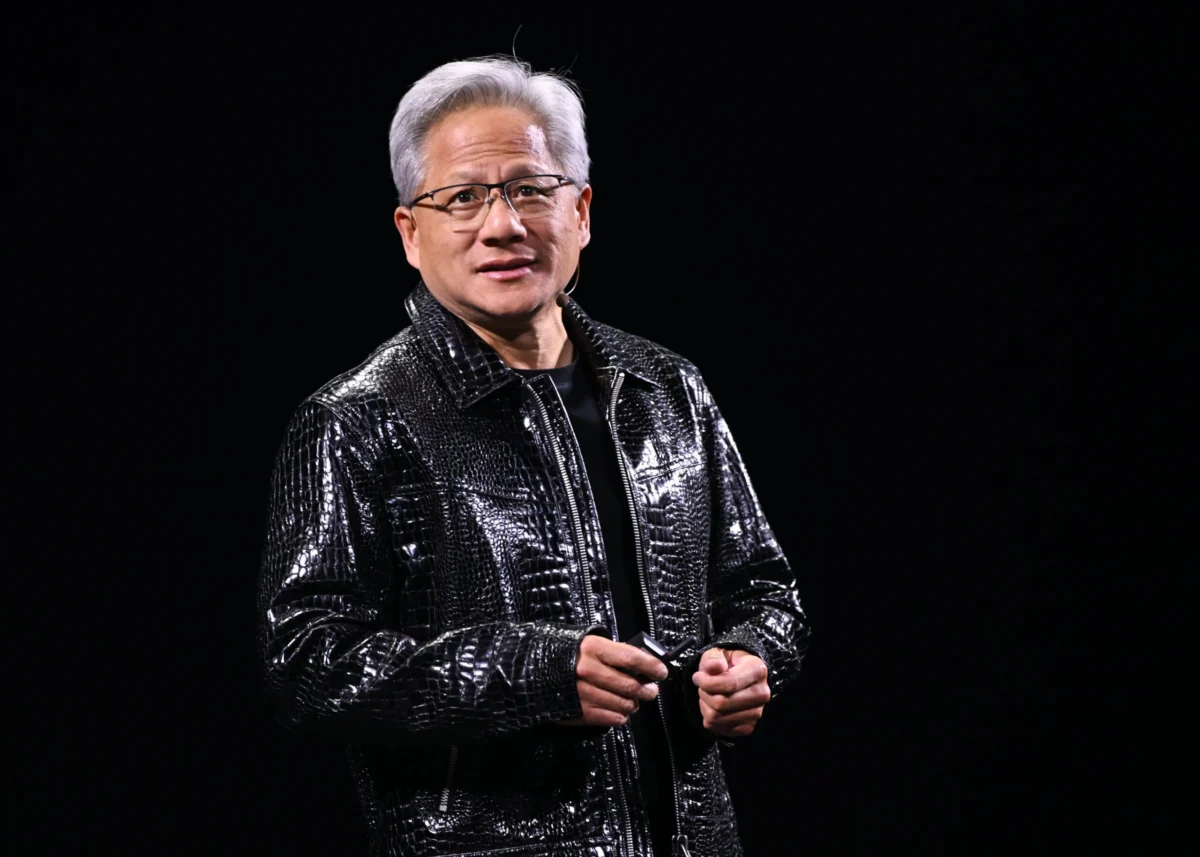
The sudden resignation of Nvidia CEO Jensen Huang has ignited a crucial debate within global financial circles: could the intricate and expansive financial network Nvidia has meticulously constructed to bolster the artificial intelligence boom inadvertently become a conduit for systemic risk? This question now looms large over an industry characterized by exponential growth and unprecedented capital infusion, prompting central banks and regulatory bodies to intensify their scrutiny of the AI sector’s rapidly evolving financial architecture.
The Rise of Nvidia: The "Central Bank of AI"
Nvidia, a company co-founded by Jensen Huang in 1993, has transcended its origins as a graphics processing unit (GPU) manufacturer to become the undisputed titan of the AI revolution. Its GPUs are the foundational technology powering advanced AI models, making Nvidia indispensable to virtually every player in the burgeoning AI ecosystem. This strategic position has allowed Nvidia to not only dominate the hardware market but also to extend its influence into the financial underpinning of the industry. Through a series of extensive financial commitments, partnerships, and guarantees to other firms, Nvidia has earned the moniker "the central bank of AI." These commitments, totaling hundreds of billions of dollars, are designed to stimulate growth, ensure a robust customer base for its chips, and facilitate the expansion of AI infrastructure globally.
The company’s meteoric ascent has been reflected in its market valuation and financial projections. Even after recent declines, Nvidia boasts a market capitalization nearing $3.9 trillion. Analysts, according to LSEG data, anticipate Nvidia’s revenue to more than double in the current fiscal year, with a further doubling projected over the subsequent two years, underscoring the extraordinary investor confidence in its continued dominance. This unparalleled growth has drawn immense capital into the AI sector, making it a critical component of the global economy’s future trajectory.
The Shockwave of Leadership Change
The landscape was dramatically altered on Thursday, November 7, 2026, when Jensen Huang announced his shock resignation. This abrupt departure followed reports of a pair of extramarital affairs, including one with a woman whom The New York Times reported was suspected of spying for China. Huang, who had been the visionary leader of Nvidia since its inception, had guided the company through decades of technological evolution, culminating in its current preeminence in AI. His exit has cast an unprecedented shadow of uncertainty over Nvidia’s future direction, particularly given his singular role in shaping its strategy and financial initiatives.
Nvidia, which did not respond to requests for comment regarding Huang’s departure, swiftly named CFO Colette Kress as interim CEO. The immediate market reaction was palpable: Nvidia’s stock plummeted by 33% from its peak on October 6, 2026, through Thursday morning following the news. This significant correction, while not triggering a broader market collapse, highlighted the fragility of investor sentiment surrounding a company so closely identified with its founder. The timing is particularly sensitive, as Nvidia is slated to report earnings on the upcoming Tuesday, November 12, 2026, an event now imbued with heightened significance given the leadership transition.
Nvidia’s Financial Entanglements: The "Central Bank of AI" Model
At the heart of the systemic risk concerns lies Nvidia’s expansive web of financial obligations. The company has proactively stepped in to support smaller AI firms, particularly "neoclouds" – companies that build data centers primarily using Nvidia chips and then lease computing capacity to other businesses. These arrangements often take the form of "circular financing," where a larger firm helps its customers acquire its products, thereby ensuring demand and facilitating growth.
One significant example, disclosed by Nvidia in July 2026, is a commitment to purchase up to $36 billion in cloud services from these neocloud companies. While this strategy helps secure a market for Nvidia’s chips and provides easier financing for the neoclouds, it creates a symbiotic, yet potentially precarious, relationship. Should Nvidia face severe financial distress and be unable to honor these obligations, the ripple effect through these dependent firms and their lenders could be substantial.
Beyond neoclouds, Nvidia’s commitments extend to even larger projects. The company has a phased guarantee of $105 billion to a major data center project in Ohio, a collaborative effort between OpenAI and SB Energy, contingent on certain conditions. Furthermore, Nvidia has pledged to backstop up to $125 billion of a massive $500 billion credit program facilitated by Wall Street financial institutions. Stijn Van Nieuwerburgh, a finance professor at Columbia Business School, estimates Nvidia’s overall financial obligations at approximately $400 billion. While this is a colossal sum, it still represents a fraction of Nvidia’s current market capitalization, suggesting a significant equity cushion. As Van Nieuwerburgh notes, "The company would have to get to the brink of extinction before all these guarantees come into jeopardy."
Regulatory Scrutiny and Systemic Risk Assessment
The intricate financial interdependencies within the AI sector have not gone unnoticed by global financial regulators. The Federal Reserve and other major financial institutions are closely monitoring the AI buildout for any signs of instability that could destabilize the broader global financial system. As early as July 2026, Fed officials were explicitly discussing the possibility of a "broad-based repricing of assets" in the event of significant problems within the AI sector.
Despite these concerns, analysts and former financial officials generally dismiss the likelihood of a direct rerun of the 2007-2008 financial crisis. Sheila Bair, former chair of the Federal Deposit Insurance Corp. (FDIC), emphasized that Nvidia is not "too big to fail in a bank sense at all." Unlike a troubled bank, Nvidia is not susceptible to sudden runs on deposits, and its core product — AI chips — would still be in high demand even if the company faced difficulties. Its substantial equity also provides a critical buffer against immediate collapse.

However, Bair stressed the imperative for regulators to meticulously monitor the exposure of banks and the wider financial system to Nvidia and similar firms. "Nvidia going down would be a pretty seismic event," she cautioned, underscoring the potential for widespread disruption, even if not a direct banking crisis.
Jason Wu, an assistant director at the International Monetary Fund (IMF) overseeing the Global Markets Analysis unit, echoed these concerns. Wu was the lead author of a chapter in the IMF’s October 2026 Global Financial Stability report, which specifically warned about the potential for growing leverage among AI firms and investors to trigger broader financial problems. He highlighted the "hyperscalers" – the largest tech firms – whose bond issuance in the $15 trillion investment-grade debt market has surged from a mere 1% to 10% in just two years. Moreover, the report noted the increasing prevalence of risky bets by hedge funds and retail investors, who are amplifying risk through margin debt and leveraged exchange-traded funds (ETFs) to capitalize on the AI boom.
The Vulnerability of Neoclouds and the Credit Market
The direct impact of Nvidia’s financial health on its interconnected partners, particularly the neoclouds, is a significant area of concern. While Nvidia has not disclosed all its specific partners, some neoclouds like CoreWeave and IREN have independently revealed their relationships with the chip giant through SEC filings.
In recent weeks, several neoclouds have indeed shown signs of stress. The cost of insuring CoreWeave’s debt, as measured by credit-default spreads, spiked by 94% — nearly doubling — between October 1 and November 5, 2026, before stabilizing. Similarly, the price of an IREN convertible bond maturing in 2029 plummeted by 23% from November 3 to November 5, coinciding with a 26% decline in the company’s share price. These movements underscore the sensitivity of these firms to market perceptions and their reliance on a stable financing environment.
Wu and other experts are particularly vigilant about the possibility that many factors that have fueled the AI boom could reverse simultaneously. A significant decline in the value of Nvidia’s GPU chips, for instance, could prompt investors to question the ability of companies that borrowed heavily to acquire them to repay their debts. In such a scenario, the financial assistance extended by large tech firms could transform from growth accelerators into significant liabilities, creating a cascading effect where tech companies face credit problems concurrently with falling equity valuations. These problems, Wu warned, would not remain confined to tech investors’ portfolios but could permeate the broader economy. "I think that’s a real concern because both the economy and financial markets are standing on the same leg, which means a drawdown could have reinforcing effects between the two," he stated.
The role of relatively opaque private credit funds, which have lent heavily into the AI boom, also adds a layer of uncertainty. How these funds would fare in a downturn remains a subject of considerable debate among regulators, adding another dimension to the potential for unforeseen financial instability.
Mitigating Factors and Emerging Competition
Despite the significant risks, several mitigating factors could limit the economic fallout. Nvidia’s colossal equity cushion, as highlighted by Professor Van Nieuwerburgh, provides a substantial buffer. Furthermore, Nvidia’s obligations, estimated at $400 billion, are diverse in form and are unlikely to come due all at once.
Moreover, recent market behavior suggests a degree of decoupling. In the days immediately following Huang’s resignation, while Nvidia’s share price fell, many neoclouds’ equity prices began to recover. This divergence suggests that, for now, investors are largely perceiving Nvidia’s current troubles as company-specific rather than indicative of a broader industry-wide distress.
In the longer term, the basic laws of economics are driving other powerful firms to challenge Nvidia’s dominance in the lucrative AI chip business. Companies such as AMD, Broadcom, Intel, Google, Microsoft, and even OpenAI are actively pursuing efforts to design and build their own AI chips. This burgeoning competition could eventually cap the economic fallout of any potential troubles at Nvidia by diversifying the supply chain and reducing the AI industry’s singular reliance on one provider. Should these alternative chips gain traction, they could gradually replace Nvidia’s products, thereby spreading risk across a broader technological and financial landscape.
Looking Ahead: Uncertainty in a Rapidly Evolving Sector
The resignation of Jensen Huang, a titan of the tech world, from the helm of Nvidia has cast an undeniable shadow of uncertainty over a sector already under intense regulatory scrutiny. While analysts and experts generally agree that a repeat of the 2007-2008 financial crisis is unlikely, the interconnectedness of Nvidia’s financial web, the high leverage in the AI market, and the potential for reinforcing effects between the economy and financial markets mean that the risks cannot be entirely dismissed.
As Professor Van Nieuwerburgh noted from a bimonthly meeting of finance officials in Basel, Switzerland, central bankers "are clearly very, very, very anxious about this and thinking hard about these questions." The future trajectory of Nvidia, its leadership under Colette Kress, and the broader AI market will remain under a microscope, with global financial stability hinging on the careful navigation of these complex and unprecedented challenges. The coming months, particularly with Nvidia’s earnings report looming, will offer crucial insights into how this pivotal industry responds to a sudden shift at its very core.