Gilang Muhammad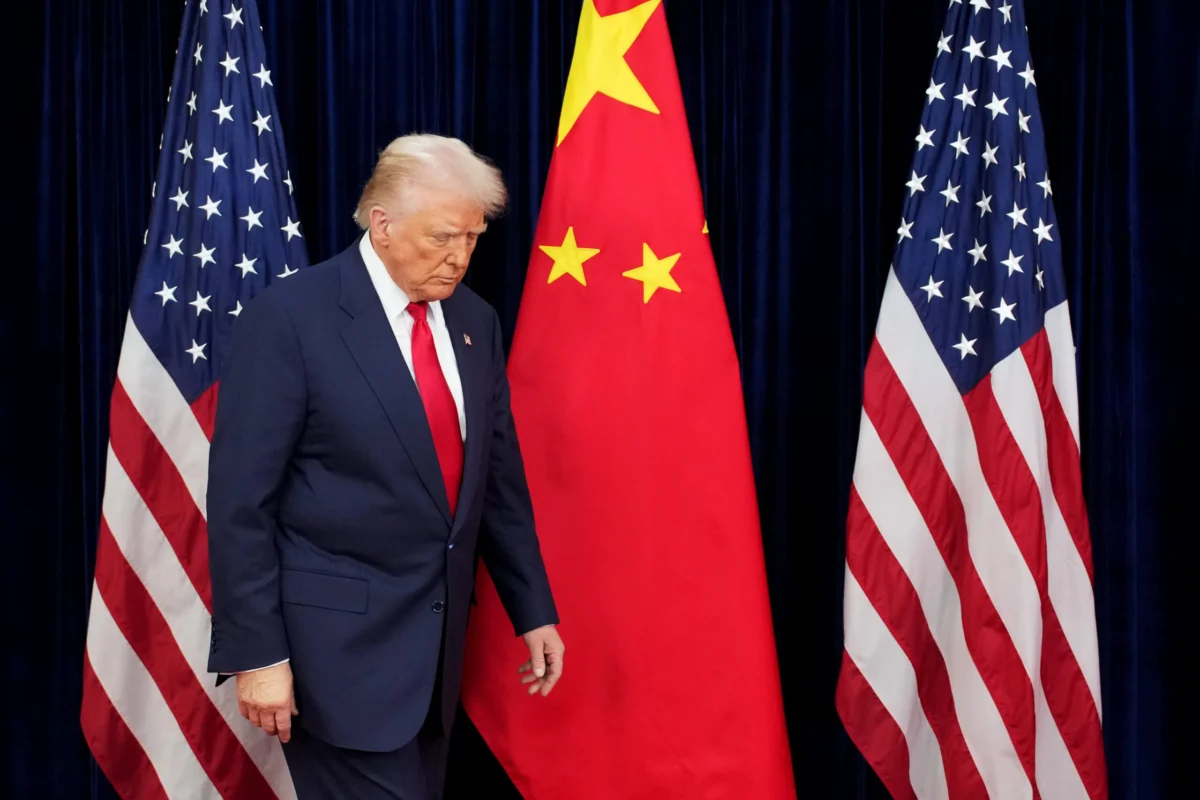
U.S. President Donald Trump has indicated that his eagerly anticipated trip to China, initially slated for late March, could face a delay as Washington seeks to exert pressure on Beijing to facilitate the reopening of the crucial Strait of Hormuz. This potential postponement underscores a renewed flashpoint in an already intricate and often fraught bilateral relationship, even as Treasury Secretary Scott Bessent presented a different rationale for any rescheduling.
The high-stakes summit, where President Trump was scheduled to meet with Chinese leader Xi Jinping from March 31 to April 2, represents a critical juncture for U.S.-China relations. It follows months of delicate diplomatic maneuvering and comes amidst escalating geopolitical tensions in the Middle East. In an interview with the Financial Times on Sunday, President Trump explicitly stated his expectation for China’s assistance in unblocking the Strait of Hormuz prior to his arrival in Beijing. He emphasized that the two-week window leading up to the meeting was a "long time" and that Washington desired clarity on the issue before proceeding. "We may delay," Trump told the FT, without providing further specifics on the timing or conditions for such a postponement.
The Strategic Imperative of the Strait of Hormuz
The Strait of Hormuz, a narrow maritime chokepoint between the Persian Gulf and the Gulf of Oman, holds immense strategic importance for global energy security. Roughly one-fifth of the world’s daily oil supply, along with significant volumes of liquefied natural gas (LNG), transits through this waterway. Any disruption to its passage has immediate and far-reaching implications for international oil markets, supply chains, and global economic stability.
The current crisis stems from an ongoing conflict in Iran, which has led to severe disruptions in the strait’s navigability and heightened security risks for commercial shipping. The precise nature and extent of the "war effort in Iran" that Bessent referenced are subjects of intense international scrutiny, but the U.S. has been actively coordinating responses to ensure regional stability and safeguard global commerce. President Trump’s appeals for assistance in securing the strait have extended to several European and Asian nations, with China being a particularly significant focus given its substantial energy consumption.
Conflicting Narratives from Washington
The President’s remarks, however, were swiftly followed by a seemingly contradictory explanation from his own administration. Speaking to CNBC on Monday from Paris, where he was meeting with his Chinese counterpart He Lifeng for preparatory talks ahead of the planned summit, Treasury Secretary Scott Bessent offered an alternative perspective. Bessent suggested that any delay to the Trump-Xi meeting would likely be for "logistical reasons," such as the President needing to remain in Washington to coordinate the ongoing war effort in Iran.
"If the meetings are delayed, it wouldn’t be delayed because the president demanded that China police the Strait of Hormuz," Bessent asserted in an interview with CNBC’s Brian Sullivan. "If the meeting, for some reason, is rescheduled, it would be rescheduled because of logistics." This divergence in messaging from the U.S. administration highlights either a deliberate strategic ambiguity or an internal disagreement regarding the primary drivers behind the potential delay. Beijing, for its part, has yet to officially confirm the dates for the summit, typically announcing such high-level plans closer to their scheduled commencement.
A History of High-Stakes Engagement
This proposed visit to China would mark the first time a U.S. president has traveled to the country since Trump’s initial term in 2017. It comes just five months after the two leaders last met in the South Korean city of Busan on October 30, 2025. That previous encounter yielded a crucial one-year truce in a protracted trade war that had seen tit-for-tat tariffs briefly escalate to triple-digit levels, severely impacting global supply chains and economic growth. The Busan meeting was hailed as a step towards de-escalation, offering a fragile détente in a relationship characterized by intense competition and occasional confrontation.
Chinese top diplomat Wang Yi had earlier this month indicated that the agenda for the upcoming exchange was already "on the table," suggesting that both sides had been actively engaged in detailed preparations for the summit. The breadth of issues expected to be discussed spans trade imbalances, technological competition, regional security concerns, and now, critically, the stability of the global energy supply.

China’s Energy Resilience: A Counter-Narrative
President Trump’s assertion that China sourced approximately 90% of its oil through the Strait of Hormuz, framing Beijing’s cooperation as a matter of self-interest, has been met with scrutiny from energy analysts and geopolitical experts. While China is the world’s largest oil importer, its energy strategy over the past two decades has focused significantly on diversification and building robust strategic reserves, arguably insulating it more effectively from prolonged disruptions than implied by the President’s comments.
As of January, Beijing reportedly held an estimated 1.2 billion barrels of onshore crude stockpiles, a substantial reserve capable of meeting the country’s demand for three to four months. This strategic foresight significantly cushions the blow of any short-to-medium term supply shocks. Furthermore, data compiled by experts like Rush Doshi, director of the China Strategy Initiative at the Council on Foreign Relations, indicates that seaborne oil imports through the Strait of Hormuz now account for less than half of China’s total oil shipments. Nomura, a leading financial services group, has also estimated that oil flows through Hormuz represent a comparatively modest 6.6% of China’s total energy consumption.
Adding another layer of complexity to the U.S. demand, satellite imagery tracked by various maritime research firms suggests that Iran has continued to ship substantial amounts of crude oil to China since the war broke out late last month. This data potentially undermines the premise that China is experiencing a severe or immediate energy crisis due to the strait’s disruption, thereby weakening the leverage of the U.S. demand for immediate naval assistance.
A "Bluff" and Shifting Energy Dynamics
Edward Fishman, a senior fellow at the Council on Foreign Relations, dismissed President Trump’s remarks as a "bluff," expressing skepticism that Beijing would comply with a demand to dispatch naval vessels to help reopen the Strait of Hormuz. Fishman also doubted the President’s seriousness about canceling the Beijing summit altogether.
Fishman further highlighted a crucial long-term trend: "The bet that China made over a decade ago on clean energy – becoming the world’s biggest producer of solar panels, batteries and electric vehicles – is clearly paying off right now." He argued that Beijing stands to gain significant strategic advantage as world leaders accelerate their pivot to alternative energy sources in the wake of the Iran conflict and other global energy shocks. "And that’s going to give China a huge amount of leverage, because they’re the ones who hold the key to all of those technologies," Fishman concluded, underscoring a fundamental shift in global energy dynamics that could reshape geopolitical influence.
Escalating Trade Tensions Ahead of Summit
The uncertainty surrounding the summit’s timing is further compounded by a fresh round of trade investigations launched by the U.S. against a broad swath of countries, including China. These probes target alleged excess capacity and failures to address forced labor practices. The timing of these investigations, coming just weeks before the proposed summit, suggests an attempt by Washington to ratchet up pressure on Beijing across multiple fronts.
In a strongly worded statement on Monday, China’s commerce ministry sharply criticized the Trump administration, asserting that it had "once again abused the Section 301 investigation process to override domestic law over international rules." The ministry unequivocally labeled the probes as "extremely unilateral, arbitrary and discriminatory." Beijing confirmed that it had formally lodged representations with Washington against these investigations, urging the U.S. side to "immediately correct its wrong practices and meet China halfway," advocating for dialogue and negotiated solutions. The ministry concluded by stating its intent to closely monitor the progress of the investigations and vowed to take unspecified measures to defend China’s legitimate interests, signaling potential retaliatory actions should the U.S. proceed with tariffs or other punitive measures.
The interplay between the Strait of Hormuz crisis, the conflicting statements from the U.S. administration, China’s robust energy position, and renewed trade tensions paints a picture of a highly complex and volatile geopolitical landscape. The fate of the U.S.-China summit, and indeed the broader trajectory of their bilateral relationship, hangs in the balance, with profound implications for global stability and economic prosperity. The world watches closely to see whether diplomacy can navigate these turbulent waters or if the pressures will lead to further escalation.