Clara Shinta
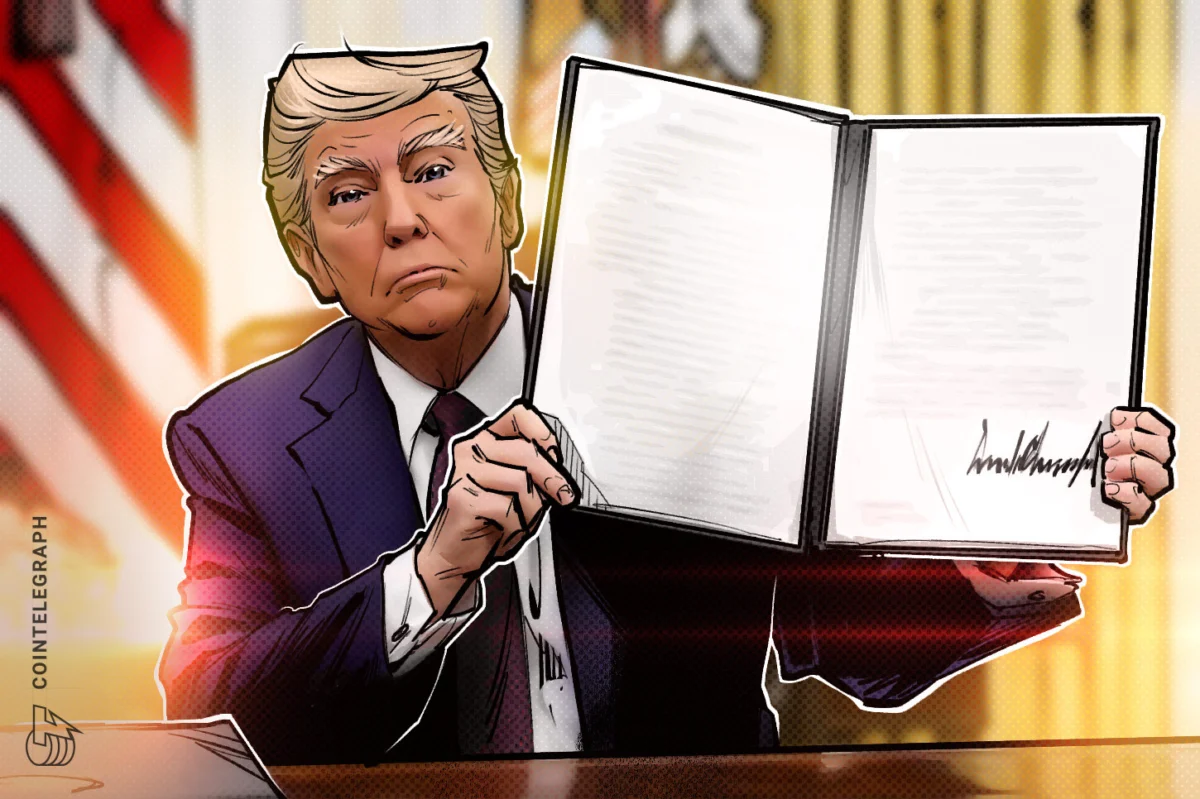
Former President Donald Trump, in a recent statement posted on his Truth Social platform, revealed his intention to establish an "AI Force" and appoint a dedicated artificial intelligence czar should he return to the White House. The announcement, made on a Saturday, outlined a vision for managing the burgeoning AI sector in a manner that fosters innovation without imposing what he described as stifling regulations, a sentiment echoed by various media outlets including Newsweek. Trump’s proposal immediately drew parallels to his previous creation of the Space Force, an initiative he characterized as a "tremendous SUCCESS" during his first term. The former president emphasized that the future AI Czar would need to be an individual of "High I.Q.," a specific criterion he included in his social media post, signaling a preference for intellectually exceptional candidates for this critical role.
The immediate details surrounding the proposed "AI Force" remain largely undefined. Trump did not elaborate on whether this new entity would function as a military command, a civilian agency, or an entirely new department within the federal government, a point of ambiguity highlighted by The New York Times. Efforts to seek clarification from White House officials following the announcement did not yield immediate responses, leaving many questions about the structure, scope, and mandate of the envisioned AI Force unanswered. This lack of initial detail has fueled speculation across political and technological circles regarding the practical implementation and potential impact of such a significant governmental reorganization in the domain of artificial intelligence.
The Broader Context: A Global Race for AI Governance
Trump’s announcement comes at a pivotal moment when the global conversation around artificial intelligence is intensifying, marked by both immense optimism regarding its potential benefits and profound warnings about its inherent risks. The rapid advancements in generative AI, large language models, and autonomous systems have thrust AI governance to the forefront of national and international policy agendas. Governments worldwide are grappling with how to harness AI’s transformative power for economic growth, scientific discovery, and national security, while simultaneously mitigating potential downsides such as job displacement, ethical dilemmas, bias amplification, and even existential threats to humanity.
In the United States, discussions about AI regulation have been ongoing across various branches of government. The Biden administration, for instance, has issued an Executive Order on the Safe, Secure, and Trustworthy Development and Use of Artificial Intelligence, alongside the White House Blueprint for an AI Bill of Rights, aiming to guide responsible AI development. Congressional committees have held numerous hearings, exploring legislative frameworks that balance innovation with safety, privacy, and accountability. Organizations like the National Institute of Standards and Technology (NIST) have been developing AI risk management frameworks to provide voluntary guidance to developers and users. Trump’s proposal, therefore, enters an already crowded and complex landscape of policy initiatives and expert debates, seeking to establish a distinct and potentially more centralized approach.
Drawing Parallels: The Space Force Precedent
The explicit comparison made by Trump between the proposed "AI Force" and the Space Force offers crucial insight into his administrative philosophy regarding emerging strategic domains. The United States Space Force was established in December 2019, under the Trump administration, as the sixth and newest branch of the U.S. Armed Forces. Its stated mission is to protect U.S. interests in space, deter aggression in the space domain, and conduct space operations. Before its creation, space operations were primarily managed by various units within the Air Force.
The formation of the Space Force was met with a mix of support and skepticism. Proponents argued it was a necessary and timely move to consolidate expertise, streamline command, and elevate the importance of space as a warfighting domain, particularly in response to perceived threats from adversaries like China and Russia. Critics, however, questioned its necessity, arguing that it duplicated existing capabilities within the Air Force and would incur significant bureaucratic costs without clear strategic advantages. Despite initial controversy, the Space Force has since established its operational framework, focusing on areas such as satellite operations, missile warning, and space domain awareness. Trump’s labeling of it as a "tremendous SUCCESS" reflects his belief in creating dedicated, high-profile entities to address what he perceives as critical national priorities. This precedent suggests that an "AI Force" might similarly be envisioned as a distinct, potentially powerful, and highly focused governmental body, possibly with a national security or strategic imperative at its core.
AI’s Perceived Dangers and the Call for a "Slowdown"
The timing of Trump’s announcement is particularly noteworthy, as it coincides with escalating warnings from prominent figures within the artificial intelligence community about the technology’s potential dangers. Just days prior to Trump’s Truth Social post, Anthropic CEO Dario Amodei publicly presented a three-step proposal advocating for a deliberate slowdown in the pace of AI development. Amodei, a leading voice in AI safety research, argued that unchecked acceleration in AI capabilities risks outrunning humanity’s capacity to comprehend and control these increasingly sophisticated systems. His proposal outlined measures designed to foster safer development, including rigorous evaluation protocols, enhanced transparency, and collaborative industry efforts to manage risk.
Anthropic, a company at the forefront of AI research, has already begun implementing aspects of Amodei’s vision. The company announced its partnership with Accenture, designating the global professional services firm as its first "embedded evaluator." This collaboration aims to integrate independent scrutiny directly into Anthropic’s AI development processes, effectively moving ahead with the first step of Amodei’s proposal. The role of an embedded evaluator involves assessing AI models for potential biases, safety vulnerabilities, and societal impacts throughout their lifecycle, thereby institutionalizing a cautious approach to deployment.
The debate over AI development speed and regulation has sharply divided industry leaders. Sam Altman, CEO of OpenAI, the company behind ChatGPT, and Elon Musk, CEO of SpaceX and Tesla, both responded positively to Amodei’s call for a more measured pace. Both Altman and Musk have, on various occasions, expressed concerns about the unbridled advancement of AI, emphasizing the need for robust safety mechanisms and potentially global regulatory frameworks. Their endorsements lend significant weight to the "slowdown" argument, reflecting a growing consensus among some of the most influential figures in the AI space that proactive risk management is paramount.
Conversely, Jensen Huang, CEO of Nvidia, a semiconductor giant crucial to AI’s computational infrastructure, has voiced a differing perspective. Huang, whose company stands to benefit immensely from accelerated AI development, has argued that extensive regulation is not yet necessary and could stifle the very innovation that promises immense societal benefits. His stance reflects a segment of the industry that believes the benefits of rapid progress outweigh the immediate risks, or that existing frameworks and market forces are sufficient to guide responsible development without heavy-handed government intervention. This divergence of opinion underscores the complexity of crafting a universally accepted approach to AI governance, highlighting the diverse interests and philosophical viewpoints at play.
Implications and Challenges of an "AI Force"
The proposal for an "AI Force" and a dedicated AI Czar, while currently light on specifics, carries several significant implications and potential challenges.
1. Governance Model and Bureaucracy: Creating a new federal "force" or agency specifically for AI would represent a substantial restructuring of how the U.S. government approaches technological oversight. While a dedicated body could centralize expertise and accelerate decision-making, it also risks creating bureaucratic redundancies with existing departments, such as the Department of Commerce, Department of Defense, or the National Science Foundation, which already have AI-related mandates. The effectiveness would heavily depend on its precise structure, funding, and relationship with other agencies.
2. Innovation vs. Regulation: Trump’s stated goal of managing the sector "without adding regulations that could slow innovation" presents a delicate balancing act. The challenge lies in defining what constitutes "stifling" regulation versus "responsible" oversight. Many experts argue that some level of regulation is necessary to build public trust, ensure ethical development, and prevent catastrophic failures, which in turn can foster sustainable innovation. An "AI Force" aiming to accelerate innovation might prioritize deregulation, potentially raising concerns among safety advocates and civil liberties groups.
3. National Security and Global Leadership: The "Force" designation, particularly when compared to Space Force, suggests a potential emphasis on AI’s national security implications. This could involve leading efforts in AI-driven defense systems, intelligence gathering, and cyber warfare, positioning the U.S. to maintain its technological edge against geopolitical rivals. Such a focus would align with global trends where major powers are increasingly viewing AI as a critical component of national power and strategic competition.
4. The Role of an AI Czar: The appointment of an AI Czar, especially one selected based on "High I.Q." as specified by Trump, would place a single individual at the helm of a vast and complex technological domain. This role could involve coordinating federal AI policy, advising the president, and potentially leading the "AI Force." The success of such a czar would depend heavily on their technical acumen, policy expertise, political savvy, and ability to navigate the diverse interests of industry, academia, and government. However, centralizing so much authority in one position could also create a single point of failure or limit the diversity of perspectives informing policy.
5. Practical Implementation Hurdles: Even if broadly supported, the creation of an "AI Force" would face significant practical hurdles. These include securing congressional approval, establishing a budget, recruiting top talent in a highly competitive market, and defining its legal and operational boundaries. The precise definition of "AI" itself is constantly evolving, making it challenging to delineate the exact scope of such an entity’s jurisdiction.
Broader Impact and Future Outlook
The announcement by former President Trump adds a new dimension to the ongoing national and international debate on AI governance. It signals a potential future direction for U.S. policy that favors a dedicated, centralized, and potentially militarily-aligned approach to artificial intelligence. This contrasts with more distributed or multi-agency models often discussed by current policymakers and international bodies.
The coming months and years will likely see intensified discussions around these proposals. Stakeholders from the technology industry, academic institutions, civil society organizations, and international partners will scrutinize the details, or lack thereof, of any such plan. The eventual form of AI governance in the United States, whether through a new "AI Force," an expanded role for existing agencies, or a combination of approaches, will have profound implications for economic competitiveness, national security, ethical AI development, and the future trajectory of this transformative technology both domestically and on the global stage. The ultimate challenge will be to devise a framework that is agile enough to adapt to AI’s rapid evolution, robust enough to mitigate its risks, and visionary enough to unlock its full potential for the benefit of all.