Gilang Muhammad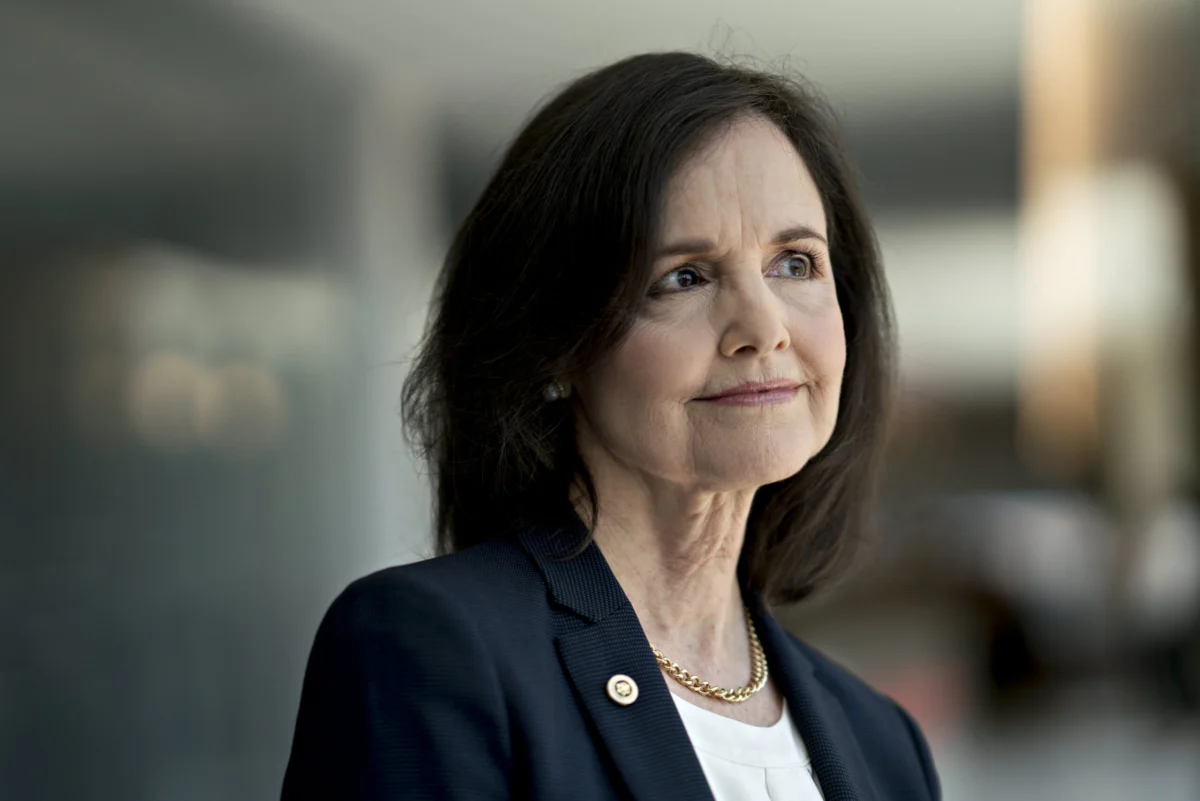
The U.S. Treasury Department confirmed Shelton’s appointment, stating she will advise Secretary Bessent specifically on currency policy, with a pronounced focus on evaluating financial conditions in China. This appointment places a figure previously deemed too unorthodox for a central bank governance role into a key advisory position within the nation’s principal financial agency, particularly at a time of heightened economic tension and strategic competition with Beijing. Her new role does not require Senate approval, a procedural pathway that allows the administration to bypass the legislative scrutiny that derailed her previous high-profile nomination.
Background on Judy Shelton’s Economic Philosophy and Controversies
Judy Shelton gained national prominence, and considerable scrutiny, during her 2019 nomination by then-President Donald Trump to serve on the Federal Reserve Board of Governors. Her economic philosophy is rooted in a skepticism of modern central banking and a strong advocacy for a return to a gold-backed monetary standard, positions largely at odds with mainstream economic thought and the current global financial system.
Shelton has historically questioned the very necessity of an independent central bank, a cornerstone of modern economic stability. She has argued that the Federal Reserve’s expansive powers, particularly its ability to influence interest rates and engage in quantitative easing, represent an undue interference in free markets and potentially undermine democratic accountability. Her support for the gold standard, where the value of a currency is directly tied to a specific amount of gold, harks back to an era pre-dating the Bretton Woods system’s collapse in the early 1970s. Proponents of the gold standard argue it prevents governments from inflating the money supply, thus maintaining price stability. However, the vast majority of economists and central bankers contend that a gold standard severely restricts a central bank’s ability to respond to economic crises, manage liquidity, and conduct counter-cyclical monetary policy, potentially exacerbating recessions and leading to deflationary spirals.
During her nomination process, critics pointed to her shifting views on monetary policy, particularly her apparent alignment with President Trump’s preferences for lower interest rates. Before 2016, Shelton had been a vocal critic of the Federal Reserve’s low-interest-rate policies, advocating for tighter monetary conditions. However, once nominated by an administration that consistently pushed for lower rates, she appeared to pivot, suggesting that the Fed should consider cutting rates to zero or even negative territory, seemingly to align with the political objectives of the president rather than a consistent, independent economic framework. This perceived flexibility raised significant concerns about her commitment to the Fed’s political independence, a principle widely considered essential for the central bank’s credibility and effectiveness.
Her academic and think tank background further illustrates her intellectual leanings. She holds a Ph.D. in business administration from the University of Utah and has been a senior fellow at the Independent Institute, a free-market think tank, and previously at the Hoover Institution at Stanford University. Her published works include "The Coming Soviet Crash" (1989), which analyzed the internal economic weaknesses of the Soviet Union, and "Money Meltdown" (1994), which advocated for a unified international monetary regime. These publications showcase her long-standing interest in international finance, currency stability, and the structural integrity of national economies, albeit often through a lens that challenges conventional wisdom.
The Failed Federal Reserve Nomination: A Detailed Chronology
President Donald Trump first announced his intention to nominate Judy Shelton to the Federal Reserve Board of Governors in July 2019. The nomination was part of a broader effort by the Trump administration to reshape the Federal Reserve with individuals who might be more amenable to the president’s calls for lower interest rates and a less independent central bank. The move immediately triggered strong reactions from across the political spectrum, setting the stage for a contentious confirmation battle.
The Senate Banking Committee held her confirmation hearing in February 2020, where senators grilled her extensively on her past statements regarding the gold standard, Federal Reserve independence, and her perceived policy shifts. Democrats on the committee voiced unanimous opposition, citing her "radical" and "unpredictable" views that they believed would undermine the Fed’s credibility and capacity to manage the economy. Senator Sherrod Brown (D-OH), a ranking member of the committee, was particularly vocal, stating that Shelton’s "disqualifying views" made her unfit for a role at the central bank.
Crucially, Shelton also faced significant pushback from a handful of Republican senators, whose defection ultimately sealed the fate of her nomination. Senators Susan Collins (R-ME) and Lisa Murkowski (R-AK) publicly expressed their reservations, citing concerns about her commitment to the Federal Reserve’s independence and her advocacy for the gold standard. Senator Mitt Romney (R-UT) also signaled his opposition. These Republican senators, often considered centrists or institutionalists, prioritized the Fed’s autonomy over partisan loyalty, especially given the sensitivity of monetary policy during economic uncertainty.
The vote to advance her nomination out of the Senate Banking Committee was a narrow 13-12, purely along party lines, with all Republicans supporting her. However, the full Senate vote proved more challenging. In November 2020, as the Trump administration neared its end, a procedural vote to limit debate on her nomination (known as cloture) failed by a vote of 47-50. This defeat came after Senators Murkowski, Collins, and Lamar Alexander (R-TN) announced their opposition, alongside all Democrats. The absence of two Republican senators due to COVID-19 isolation further complicated matters for the administration, though even with their presence, the outcome would likely have been the same given the declared opposition. The nomination was subsequently returned to the White House without a full Senate vote. The bipartisan rejection underscored the deep-seated concerns within the legislative branch about the qualifications and policy leanings of a candidate for such a critical economic post.
The New Role at Treasury: Focus on Currency Policy and China
Shelton’s appointment as a counselor to Treasury Secretary Scott Bessent, a role that does not require Senate confirmation, represents a strategic move to bring her expertise into the administration without facing a repeat of the difficult confirmation process. Her designated focus on "currency policy" and "evaluating financial conditions in China" is particularly noteworthy.
While Shelton is not widely recognized as a "China expert" in the traditional sense, her extensive background in analyzing international monetary and financial conditions provides a relevant foundation. The Treasury Department, in its announcement, highlighted that "Throughout her career, she has specialized in analyzing the internal monetary and financial conditions of nations and their impact on exchange rates." This emphasis suggests that her role will leverage her broader analytical skills concerning national economies and their interplay with global currency markets, rather than deep regional geopolitical or trade expertise.
The focus on China is critical given the multifaceted and often fraught economic relationship between the United States and the world’s second-largest economy. Issues such as currency manipulation, trade imbalances, intellectual property theft, and strategic competition over technology and global influence are perennial concerns. The U.S. Treasury has a statutory mandate to monitor foreign exchange practices and periodically assesses whether countries are manipulating their currencies to gain an unfair trade advantage. A counselor with Shelton’s views on international monetary regimes and the stability of national currencies could bring a particular perspective to these evaluations, potentially advocating for more assertive or unconventional approaches to U.S.-China currency diplomacy. Her long-standing call for a "unified international monetary regime" could also inform how the Treasury approaches multilateral discussions on global financial architecture, especially in a context where China’s economic power is growing.
Turmoil at the Treasury and the Rise of Unconfirmed Counselors
Shelton’s appointment comes amidst a period described as "turmoil" regarding high-level personnel within the Treasury Department. A recent Wall Street Journal report cataloged significant turnover, noting that seven Senate-confirmed officials had departed the department through the end of August, with only one of those positions subsequently filled. This level of attrition and unfulfilled vacancies can impact institutional memory, policy consistency, and the department’s capacity to execute its diverse mandates effectively.
The reliance on non-Senate-confirmed "counselors" appears to be a growing trend, offering administrations a mechanism to bring in ideologically aligned or personally trusted advisors without the often-arduous process of Senate vetting. Secretary Bessent recently named David Zervos, former chief market strategist at Jefferies, to a similar counselor position, underscoring this pattern. While such roles can provide valuable external perspectives and specialized expertise, a proliferation of unconfirmed advisors can also raise questions about accountability, transparency, and the balance of power between the executive and legislative branches in staffing key government functions. These counselors, while influential, do not undergo the same level of public scrutiny regarding their financial disclosures, potential conflicts of interest, or policy views as Senate-confirmed officials.
Broader Implications and Analysis
Judy Shelton’s appointment to the Treasury carries several significant implications, touching upon monetary policy, U.S.-China relations, and the dynamics of executive branch appointments.
Monetary Policy and Central Bank Independence: While her role is at the Treasury and not the Federal Reserve, the Treasury’s currency policy directly interacts with the Fed’s monetary policy. The U.S. Treasury is responsible for managing the national debt, overseeing the financial system, and advising the president on economic policy, including international finance. Any advice Shelton provides on currency matters, especially concerning exchange rates and the stability of the dollar, could indirectly influence the broader economic policy landscape and potentially create friction with the Federal Reserve if her views clash significantly with the central bank’s independent mandate. Her past skepticism of Fed independence suggests she might advocate for Treasury policies that challenge the prevailing consensus on monetary autonomy.
U.S.-China Economic Relations: The specific focus on China elevates the significance of her role. The United States has long pressured China on issues related to its currency, particularly accusations of undervaluing the yuan to boost its exports. While the formal designation of China as a currency manipulator has varied across administrations, the underlying economic tensions persist. Shelton’s background, though not China-specific, could lead to a more hawkish or critical stance from the Treasury regarding China’s financial practices. Given her emphasis on sound money and her critiques of managed currencies, she might advocate for stronger measures or more robust monitoring of China’s financial conditions and exchange rate policies. This could intensify economic rhetoric or policy actions against Beijing, potentially impacting global trade and investment flows.
Executive Branch Appointments and Legislative Oversight: The use of unconfirmed counselor positions to bring in individuals who have faced Senate opposition highlights a broader trend in executive governance. It allows an administration to implement its policy preferences and ideological leanings by bypassing the checks and balances inherent in the confirmation process. While legally permissible, it raises questions about the spirit of legislative oversight for influential roles. Such appointments can be seen as an attempt to circumvent the will of Congress when a nominee is deemed too controversial for a Senate-confirmed position, potentially leading to a less transparent and accountable advisory apparatus within the executive branch.
Potential Reactions: While official reactions to this specific appointment have yet to fully emerge, it is highly probable that previous critics of Shelton’s economic views will reiterate their concerns. Advocates for Federal Reserve independence and mainstream economists are likely to express apprehension about the influence of an individual with unconventional views in a key advisory role, particularly on sensitive currency matters. Conversely, supporters of Shelton and those who advocate for more heterodox approaches to economic policy might laud the appointment as an effort to introduce fresh perspectives and challenge established norms within government.
In conclusion, Judy Shelton’s appointment as a counselor to Treasury Secretary Scott Bessent is more than a mere personnel change; it represents a deliberate strategic decision to integrate a figure with a history of controversial economic ideas into a critical advisory capacity. Her focus on currency policy and China ensures her influence will be felt in areas central to U.S. economic stability and international relations, all while operating outside the direct purview of Senate confirmation. This move underscores the administration’s willingness to tap advisors who align with its broader economic philosophy, potentially signaling a more assertive or unconventional approach to global financial diplomacy, especially concerning the complex economic relationship with China.